Why Candidate Engagement Is Becoming the Biggest Competitive Advantage in Hiring
Two companies are hiring a senior data engineer. Both post on the same job boards, search the same platforms, and identify the same pool of fifty qualified candidates. Company A sends a well-crafted template to all fifty, receives four responses, screens two, and makes one offer that the candidate accepts after three weeks of deliberation. Total time to hire: forty-seven days. Company B sends a personalized message to each of the fifty candidates, but the personalization is not about inserting names into a template. It is about referencing each candidate's specific work, asking a genuine question about their current challenges, and building a conversation before mentioning the role. Company B receives eighteen responses, screens twelve, interviews six, and makes two offers, both accepted within a week of extension. Total time to hire: twenty-nine days. Both companies had access to the same talent. The difference was not who they found. It was how they engaged them. Rajesh, the data engineer who received messages from both companies, described the difference plainly. Company A's message told him about the role. Company B's message told him they understood his career. He engaged with Company B because they engaged with him first. This dynamic is playing out
across every industry and every seniority level, and it is redefining what competitive advantage means in talent acquisition. The companies that treat engagement as a strategic capability are outperforming those that treat it as an operational afterthought, and the gap is widening.
The talent acquisition landscape has undergone a structural shift that has made candidate engagement the primary differentiator in hiring outcomes. A decade ago, competitive advantage in recruiting came primarily from access: access to better job boards, larger candidate databases, more sophisticated search tools, or more established employer brands. These advantages produced real differences in hiring outcomes, but they have been progressively neutralized by technology and market dynamics. Today, every company with a recruiting budget has access to the same platforms, the same candidate pools, and broadly similar search capabilities. The tools that once conferred advantage are now table stakes. When every competitor can find the same candidates, the variable that determines who actually hires them is not sourcing capability but engagement quality. According to SHRM's talent acquisition research, seventy-eight percent of talent acquisition leaders now identify candidate engagement quality as the single most important factor in their ability to compete for top talent, up from thirty-four percent five years ago. This shift reflects a fundamental reality: candidates, especially high-caliber candidates with multiple options, choose employers based on the experience of being recruited, not just the attractiveness of the role. The engagement experience has become the de facto employer brand, because it is the most direct and personal interaction a candidate has with the organization before they become an employee. Understanding the difference between AI sourcing and AI recruiting is critical in this context. Sourcing gets you to the candidate. Engagement gets the candidate to yes. Organizations that invest heavily in sourcing but underinvest in engagement are spending money to create opportunities they then fail to convert. Huntlo's platform addresses this imbalance by providing the intelligence and automation needed to deliver high-quality engagement at scale, ensuring that the candidates sourced through AI-powered discovery are converted through AI-supported relationship building.
The Old Advantages Have Been Neutralized
The advantages that historically separated winning recruiting organizations from average ones have been systematically eroded by three forces. The first force is platform democratization. The candidate databases, job boards, and professional networks that once required enterprise budgets to access are now available to organizations of every size. A startup with a single recruiter and a LinkedIn subscription can access the same candidate pool as a Fortune 500 company with a talent acquisition team of fifty. The second force is information symmetry. Candidates today have unprecedented access to information about employers, compensation benchmarks, company culture, and hiring processes. They can research a role, compare it against competing opportunities, and form opinions about an employer before they ever speak to a recruiter. This information symmetry means that candidates arrive at the first interaction with significantly more leverage and discernment than they had a decade ago, and they
evaluate the recruiter's engagement quality against the standard set by every other recruiter who has contacted them. The third force is the expectation economy. Consumer experiences from Amazon, Netflix, and Spotify have trained professionals to expect personalization, responsiveness, and seamless interaction in every domain of their professional lives, including recruiting. A candidate who receives a generic, template-driven message from a recruiter in 2026 experiences that message against the baseline of the personalized, context-aware interactions they receive from every other service they use. According to McKinsey's organizational insights, the expectation economy has raised the candidate experience threshold to a level where only engagement that is genuinely personalized, consistently timely, and relationally authentic meets the standard that high-caliber candidates now expect as a minimum. Organizations that fail to meet this threshold do not just lose individual candidates. They lose access to entire talent segments, because candidates share their recruiting experiences with peers, and a reputation for poor engagement compounds over time into a structural disadvantage.
The neutralization of traditional advantages means that competitive differentiation in hiring now comes from the one variable that cannot be commoditized: the quality of the human relationship between the recruiter and the candidate. This quality is not a function of budget, brand, or technology alone. It is a function of the recruiter's ability to understand the candidate's context, communicate with relevance and authenticity, and maintain a consistent, trust-building relationship throughout the hiring process. These capabilities are distinctly human, but they are severely constrained by the operational realities of modern recruiting. A recruiter managing thirty active candidates cannot deliver the same quality of engagement to each one that they could deliver to five. The result is that most candidates in most pipelines receive engagement that falls below the quality threshold needed to sustain their interest and trust. This is the operational constraint that AI is designed to solve. The teams that simply accumulate more tools without addressing this fundamental engagement gap often discover they have more tools but the same hiring problems, because the tools optimize sourcing and workflow efficiency without addressing the relational quality that determines conversion. The organizations that will lead the next phase of talent acquisition are those that recognize engagement quality as their primary competitive advantage and invest accordingly, deploying AI to amplify their recruiters' ability to deliver genuine, personalized, consistent engagement to every candidate in the pipeline. This investment is especially critical when hiring for niche and technical roles, where the candidate pool is small, every candidate matters, and the engagement quality required to attract and close top talent is significantly higher than for high-volume roles. In these contexts, engagement is not just a competitive advantage. It is a survival requirement, because the candidates who matter most have the least tolerance for generic, impersonal recruiting experiences.
Engagement as a Hiring Moat: Why It Is Hard to Copy
A competitive moat is something that gives an organization a durable advantage that competitors cannot easily replicate. In talent acquisition, candidate engagement quality is emerging as
precisely this kind of moat, for reasons that are not immediately obvious but are structurally significant. The first reason is that engagement quality is a compound capability. It is not a single tool or technique but a system of interconnected practices: candidate research, signal interpretation, message personalization, conversation management, timing optimization, and trust-building across multiple interactions. Copying any individual practice is relatively easy. Copying the integrated system that makes them work together is extremely difficult, because the system requires organizational alignment between recruiting strategy, technology investment, recruiter training, and performance measurement. Competitors can buy the same tools, but they cannot replicate the organizational commitment and operational discipline that transforms those tools into a coherent engagement system. The second reason is that engagement quality produces data advantages that compound over time. Every candidate interaction generates signals about what works and what does not, which candidates respond to which approaches, and what timing produces the best outcomes. Organizations that invest in engagement build a proprietary data asset that makes their engagement progressively more effective, creating a virtuous cycle that competitors who start later cannot easily replicate. According to LinkedIn's recruiting resources, organizations with mature engagement programs are two to three times more effective at converting passive candidates than those with basic or no engagement programs, and the gap widens as the data asset compounds over successive hiring cycles.
The third reason engagement quality functions as a moat is that it creates candidate network effects. Candidates who experience high-quality engagement become advocates who refer peers, share positive experiences on professional networks, and create a reputation halo that makes future sourcing and engagement more effective. This network effect is self-reinforcing: better engagement produces better hires, better hires produce stronger teams, stronger teams attract more candidate interest, and more candidate interest makes engagement more effective because candidates approach the organization with positive pre-existing expectations. The research on this effect is clear: data shows that referrals outperform cold outreach not solely because referred candidates are better qualified, but because the referral relationship provides the engagement quality and trust that formal recruiting often lacks. Organizations that build engagement systems that deliver referral-quality experiences to every candidate capture this network effect at scale, creating a talent acquisition advantage that is extremely difficult for competitors to match through sourcing alone. The practical question for recruiting leaders is how to build this engagement moat given the operational constraints of their teams. The first step is understanding the engagement economics: how much engagement each candidate requires, how many touchpoints are needed, and what quality threshold produces conversion. Research on how many followups one hire actually needs provides a starting point, but the deeper insight is that engagement economics vary by role, candidate segment, and hiring stage. The recruiters asking whether AI will replace their jobs should recognize that building an engagement moat makes recruiters more valuable, not less, because the moat is built on human relationship skills that AI supports but cannot replicate. Huntlo's platform provides the infrastructure for this moat. As an agentic AI recruiting
platform, Huntlo maintains the continuous intelligence layer, the signal monitoring, the contextual briefings, and the adaptive engagement recommendations that enable recruiters to deliver high-quality engagement to every candidate in the pipeline. The moat is built by the recruiter. Huntlo provides the foundation.
The Business Case for Engagement as a Strategic Investment
The case for treating candidate engagement as a strategic investment rather than an operational cost rests on four measurable business outcomes. The first outcome is time-to-fill reduction. Organizations that invest in engagement quality consistently fill roles faster because higher engagement quality produces higher response rates, faster candidate progression through stages, and fewer delays caused by candidate disengagement. According to Gartner's HR trends research, organizations with mature engagement programs reduce their average time-to-fill by thirty to forty-five percent compared to organizations with basic engagement practices, because the candidates in their pipelines are more responsive, more committed, and less likely to withdraw or go silent mid-process. The second outcome is offer acceptance rate improvement. Candidates who have been engaged consistently throughout the hiring process develop trust, emotional investment, and a clear understanding of the role and the organization that makes them significantly more likely to accept an offer when it is extended. The offer is not a surprise or a transaction but the culmination of a relationship that has been building for weeks. The third outcome is cost-per-hire reduction. Higher engagement quality means fewer candidates need to be sourced, screened, and interviewed to produce a single hire, because a higher percentage of engaged candidates progress through the pipeline to offer and acceptance. Fewer candidates in the pipeline means less recruiter time, less hiring manager time, and lower total cost per successful hire. The fourth outcome is quality-of-hire improvement. Candidates who are hired through a high-engagement process make better long-term employees because the engagement process has given both the candidate and the employer more complete information about the potential fit, reducing the likelihood of mismatched hires that result in early turnover.
The cumulative financial impact of these four outcomes is substantial. A mid-size enterprise hiring two hundred people per year can reasonably expect to save several million dollars annually through engagement-driven improvements in time-to-fill, acceptance rates, cost-per-hire, and first-year retention. These savings are not theoretical. They are being realized by organizations that have made the strategic decision to treat engagement quality as a core talent acquisition capability. However, the effectiveness of engagement-driven strategies depends entirely on the quality of the candidate intelligence that feeds them. Teams that have struggled with outdated candidate data in AI tools understand that engagement based on stale or incomplete intelligence will underperform regardless of the recruiter's skill, because the personalization and relevance that drive engagement quality require current, accurate data about each candidate's situation. When evaluating engagement platforms, use the framework for evaluating an AI sourcing tool before buying to ensure that data freshness, contextual depth, and engagement continuity are core capabilities rather than add-ons.
Building the Moat: From Competitive Theory to Operational Reality
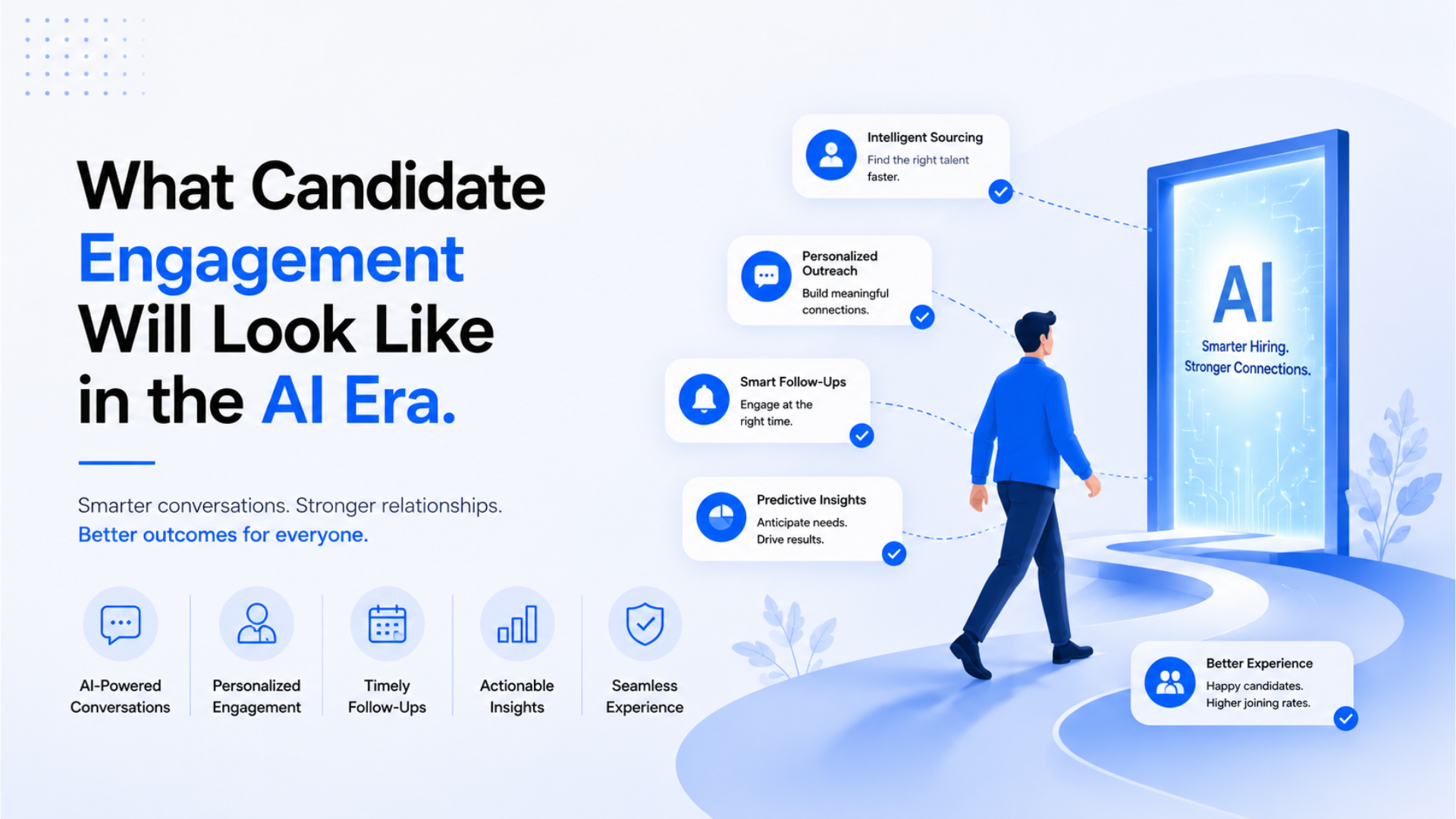
The strategic logic for engagement as a competitive advantage is compelling, but the operational challenge of building it is where most organizations stall. The gap between knowing that engagement matters and delivering engagement consistently at scale is where recruiting teams lose the advantage they could have built. The reason for this gap is that high-quality engagement requires three things that are in short supply: time, information, and consistency. Recruiters need time to research each candidate, formulate personalized messages, and maintain ongoing dialogue. They need information about the candidate's current situation, career priorities, and engagement signals to make each interaction relevant. And they need consistency across the entire pipeline, ensuring that every candidate receives the same quality of engagement regardless of where they rank in the recruiter's priority list. These three requirements are fundamentally at odds with the operational realities of modern recruiting, where the ratio of candidates to recruiters continues to grow and the expectation for faster hiring continues to intensify. According to Deloitte's talent research, the organizations that successfully bridge this gap are those that deploy AI not as a replacement for recruiter engagement but as an amplifier of it, using AI to provide the time savings, information depth, and consistency enforcement that human effort alone cannot deliver at scale. The result is an engagement system where the recruiter's human judgment and relationship skills are applied consistently to every candidate, supported by AI that handles the operational burden of research, signal monitoring, and contextual preparation.
This is precisely the model that Huntlo's platform delivers. According to EY's technology insights, AI-powered engagement platforms are the most effective vehicle for this investment, because they provide the scalability and consistency that human effort alone cannot achieve while preserving the authentic human connection that makes engagement effective. Huntlo delivers this capability today by providing a continuous intelligence layer that maintains awareness of every candidate's journey, engagement history, and current context, and by generating personalized engagement recommendations that the recruiter refines and delivers with their own voice and judgment. Every candidate interaction is an opportunity to build competitive advantage. Huntlo ensures none of those opportunities are wasted. Start building your engagement moat with Huntlo.