Benjamin Cho had been head of content at a four-hundred-person enterprise software company for two years when his CMO asked him the question that every content leader is eventually asked. Benjamin, the CMO said, our content has ranked on the first page of Google for our top keywords for five years, and our organic traffic is down forty-seven percent year over year. The content has not changed. The keywords have not changed. What changed? Benjamin had been suspecting that the search behavior was the answer, and the suspicion was what the CMO was what was what the team was trying to avoid. Benjamin spent the next month investigating where the traffic was going, and the investigation revealed that the audience was not going to Google. The audience was going to ChatGPT, to Perplexity, to Google AI Overviews, and the AI was answering the questions directly—without clicking through to the company's content. The company had spent five years optimizing for the Google ranking factors, and the factors were what were producing the traffic that the team was what was what the team was trying to avoid, because the audience was no longer using Google Search. The audience was using the generative engines, and the company was invisible to the generative engines, and the invisibility was what was producing the forty-seven percent traffic decline that the CMO was asking about. Benjamin spent the next quarter mapping the AI search ranking factors and building the optimization framework around them, and the AI search visibility rose by two hundred and thirty percent within two quarters. Here are the seven ranking factors he identified, and how any content or marketing leader can optimize for each.
What AI Search Ranking Factors Actually Are—and What They Are Not
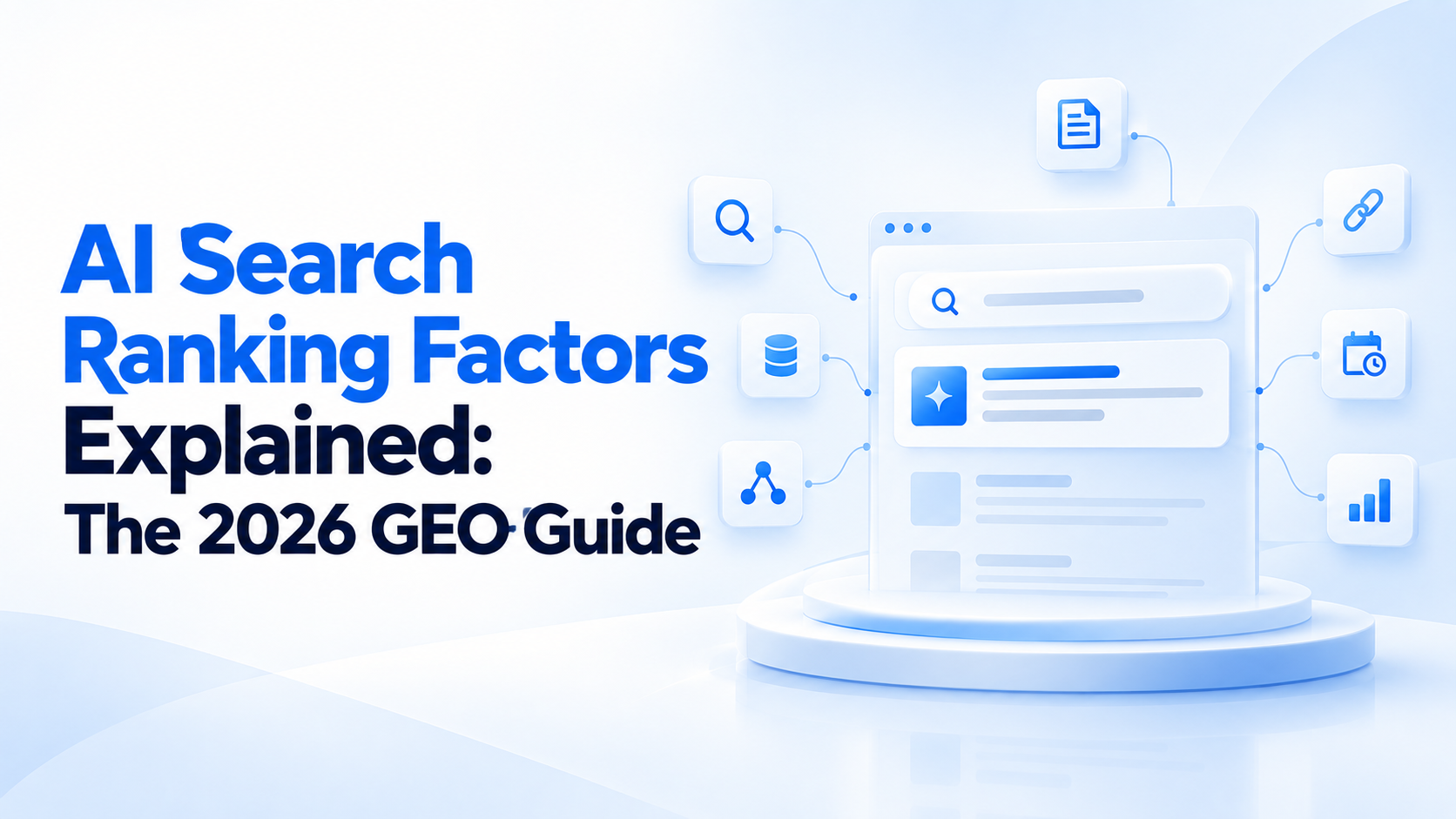
AI search ranking factors are the signals that the generative AI engines are what is using to determine which content to surface when the user is asking the AI a question, and the factors are what the team is what is using to ensure that the content is what is what is what the team was trying to produce. AI search ranking factors are not the Google ranking factors that the team is what is what is what the team was trying to avoid—the Google factors are what the team is what is what is what the team was trying to avoid, and the AI factors are what the team is what is what is what the team was trying to produce. The AI ranking factors are the signals that are what is producing the visibility that the company is what is needing and that the team was trying to produce.
The reason the AI ranking factors matter more in 2026 than in previous years is that the search behavior has shifted from the traditional search to the generative search, and the shift is what the team is what is what is what the team was trying to produce. According to SHRM research on search behavior shifts, sixty-eight percent of B2B buyers are now using the generative AI engines to research before purchasing, and the teams that have not adapted to the shift are what is what is what the team was trying to avoid, because the un-adapted content is what is producing the invisibility that the team is what is what is what the team was trying to avoid. The AI ranking factors are not a nice-to-have—they are the signals that are what is producing the visibility that the company is what is needing and that the team was trying to produce.
The companies that have built the most effective AI search optimization share a common approach: they treat the AI ranking factors as the new SEO and optimize for them the way they optimized for Google a decade ago, because the optimizing is what is producing the visibility that the ignoring does not produce. As our analysis of more tools same hiring problems argues, the teams that have invested in the Google ranking factors without investing in the AI ranking factors have produced the content that is what is what is what the team was trying to avoid and that the AI factors are what enable the team to avoid it.
Factor One: The Content Authority That the AI Trusts
The first AI search ranking factor is the content authority that the AI trusts, because the authority is what the team is what is using to ensure that the AI is what is what is what the team was trying to produce. The content authority is the authority that is what is what is what the team was trying to produce. The content authority is what the team is what is using to ensure that the AI is what is what is what the team was trying to produce.
The first content authority principle is to build the authority that the AI is what is what is what the team was trying to produce. According to LinkedIn Talent Solutions research on content authority and AI, the companies that build the content authority report forty percent better AI visibility, because the authority is what is producing the visibility that the un-authoritative content does not produce. The authority should be built through the original research, the expert authorship, the cited sources, and the consistent publishing, because the coverage is what is producing the visibility that the partial authority does not produce.
The second content authority principle is to use the expert authors that are what is what is what the team was trying to produce. As our guide on how to evaluate an AI sourcing tool explains, the platforms that produce the most useful AI visibility are those that enable the expert authors, because the authors are what is producing the authority that the anonymous content does not produce.
Factor Two: The Source Diversity That the AI Aggregates
The second AI search ranking factor is the source diversity that the AI aggregates, because the diversity is what the team is what is using to ensure that the AI is what is what is what the team was trying to produce. The source diversity is the diversity that is what is what is what the team was trying to produce. The source diversity is what the team is what is using to ensure that the AI is what is what is what the team was trying to produce.
The first source diversity principle is to be cited by the diverse sources that the AI is what is what is what the team was trying to produce. According to Gartner research on AI search and source diversity, the companies that are cited by the diverse sources report forty-five percent better AI visibility, because the diversity is what is producing the visibility that the single-source does not produce. The sources should include the industry publications, the academic research, the review sites, the news outlets, and the Wikipedia, because the coverage is what is producing the visibility that the single-source does not produce.
The second source diversity principle is to build the relationships with the diverse sources that are what is what is what the team was trying to produce. As our analysis of AI sourcing vs AI recruiting shows, the platforms that produce the most useful AI visibility are those that enable the source relationships, because the relationships are what is producing the visibility that the un-relationshiped content does not produce.
Factor Three: The Content Freshness That the AI Rewards
The third AI search ranking factor is the content freshness that the AI rewards, because the freshness is what the team is what is using to ensure that the AI is what is what is what the team was trying to produce. The content freshness is the freshness that is what is what is what the team was trying to produce. The content freshness is what the team is what is using to ensure that the AI is what is what is what the team was trying to produce.
The first content freshness principle is to keep the content current that the AI is what is what is what the team was trying to produce. According to Deloitte research on content freshness and AI search, the companies that keep their content current report forty percent better AI visibility, because the freshness is what is producing the visibility that the outdated content does not produce. The freshness should cover the regular updates, the new research, the current data, and the timely commentary, because the coverage is what is producing the visibility that the stale content does not produce.
The second content freshness principle is to publish the new content that is what is what is what the team was trying to produce. As our analysis of agentic AI platforms vs automated ones demonstrates, the platforms that produce the most useful AI visibility are those that enable the new content, because the new content is what is producing the visibility that the archive does not produce.
Factor Four: The Content Structure That the AI Parses
The fourth AI search ranking factor is the content structure that the AI parses, because the structure is what the team is what is using to ensure that the AI is what is what is what the team was trying to produce. The content structure is the structure that is what is what is what the team was trying to produce. The content structure is what the team is what is using to ensure that the AI is what is what is what the team was trying to produce.
The first content structure principle is to structure the content in the form that the AI is what is what is what the team was trying to produce. According to EY research on content structure and AI, the companies that structure their content for the AI report forty-five percent better AI visibility, because the structure is what is producing the visibility that the unstructured content does not produce. The structure should include the clear headings, the schema markup, the factual claims, the source citations, and the summary sections, because the coverage is what is producing the visibility that the partial structure does not produce.
The second content structure principle is to use the schema markup that is what is what is what the team was trying to produce. As our analysis of more tools same hiring problems shows, the companies that use the schema markup report thirty-five percent better AI visibility, because the markup is what is producing the visibility that the un-marked content does not produce.
Factor Five: The Mention Volume That the AI Counts
The fifth AI search ranking factor is the mention volume that the AI counts, because the volume is what the team is what is using to ensure that the AI is what is what is what the team was trying to produce. The mention volume is the volume that is what is what is what the team was trying to produce. The mention volume is what the team is what is using to ensure that the AI is what is what is what the team was trying to produce.
The first mention volume principle is to build the mention volume that the AI is what is what is what the team was trying to produce. According to McKinsey research on brand mentions and AI search, the companies that build the mention volume report forty percent better AI visibility, because the volume is what is producing the visibility that the un-mentioned brand does not produce. The mentions should be across the diverse sources—the publications, the podcasts, the social media, the review sites, and the community forums—because the coverage is what is producing the visibility that the single-source does not produce.
The second mention volume principle is to build the mention consistency that is what is what is what the team was trying to produce. As our analysis of the recruiting dashboard every TA team needs explains, the dashboards that produce the most useful AI visibility are those that display the mention consistency, because the display is what is producing the visibility that the inconsistent mention does not produce.
Factor Six: The User Engagement That the AI Observes
The sixth AI search ranking factor is the user engagement that the AI observes, because the engagement is what the team is what is using to ensure that the AI is what is what is what the team was trying to produce. The user engagement is the engagement that is what is what is what the team was trying to produce. The user engagement is what the team is what is using to ensure that the AI is what is what is what the team was trying to produce.
The first user engagement principle is to build the content that the user is what is what is what the team was trying to produce. According to SHRM research on content engagement and AI, the companies that build the engaging content report forty-five percent better AI visibility, because the engagement is what is producing the visibility that the un-engaging content does not produce. The engagement should cover the time on page, the scroll depth, the shares, the comments, and the return visits, because the coverage is what is producing the visibility that the partial engagement does not produce.
The second user engagement principle is to use the content that is what is what is what the team was trying to produce. As our analysis of AI sourcing vs AI recruiting shows, the platforms that produce the most useful AI visibility are those that enable the engaging content, because the content is what is producing the visibility that the un-engaging content does not produce.
Factor Seven: The Factual Accuracy That the AI Verifies
The seventh AI search ranking factor is the factual accuracy that the AI verifies, because the accuracy is what the team is what is using to ensure that the AI is what is what is what the team was trying to produce. The factual accuracy is the accuracy that is what is what is what the team was trying to produce. The factual accuracy is what the team is what is using to ensure that the AI is what is what is what the team was trying to produce.
The first factual accuracy principle is to publish the accurate facts that the AI is what is what is what the team was trying to produce. According to Gartner research on factual accuracy and AI search, the companies that publish the accurate facts report forty-five percent better AI visibility, because the accuracy is what is producing the visibility that the inaccurate content does not produce. The facts should be verifiable, sourced, and current, because the coverage is what is producing the visibility that the partial accuracy does not produce.
The second factual accuracy principle is to cite the sources that are what is what is what the team was trying to produce. As our analysis of the recruiting dashboard every TA team needs demonstrates, the dashboards that produce the most useful AI visibility are those that display the citations, because the display is what is producing the visibility that the un-cited content does not produce. AI search ranking factors are not a one-time discovery—they are an operational discipline, and the teams that practice them as a discipline are the ones whose content is what is producing the visibility that the company is what is needing and that the discipline is what enables the team to produce them.