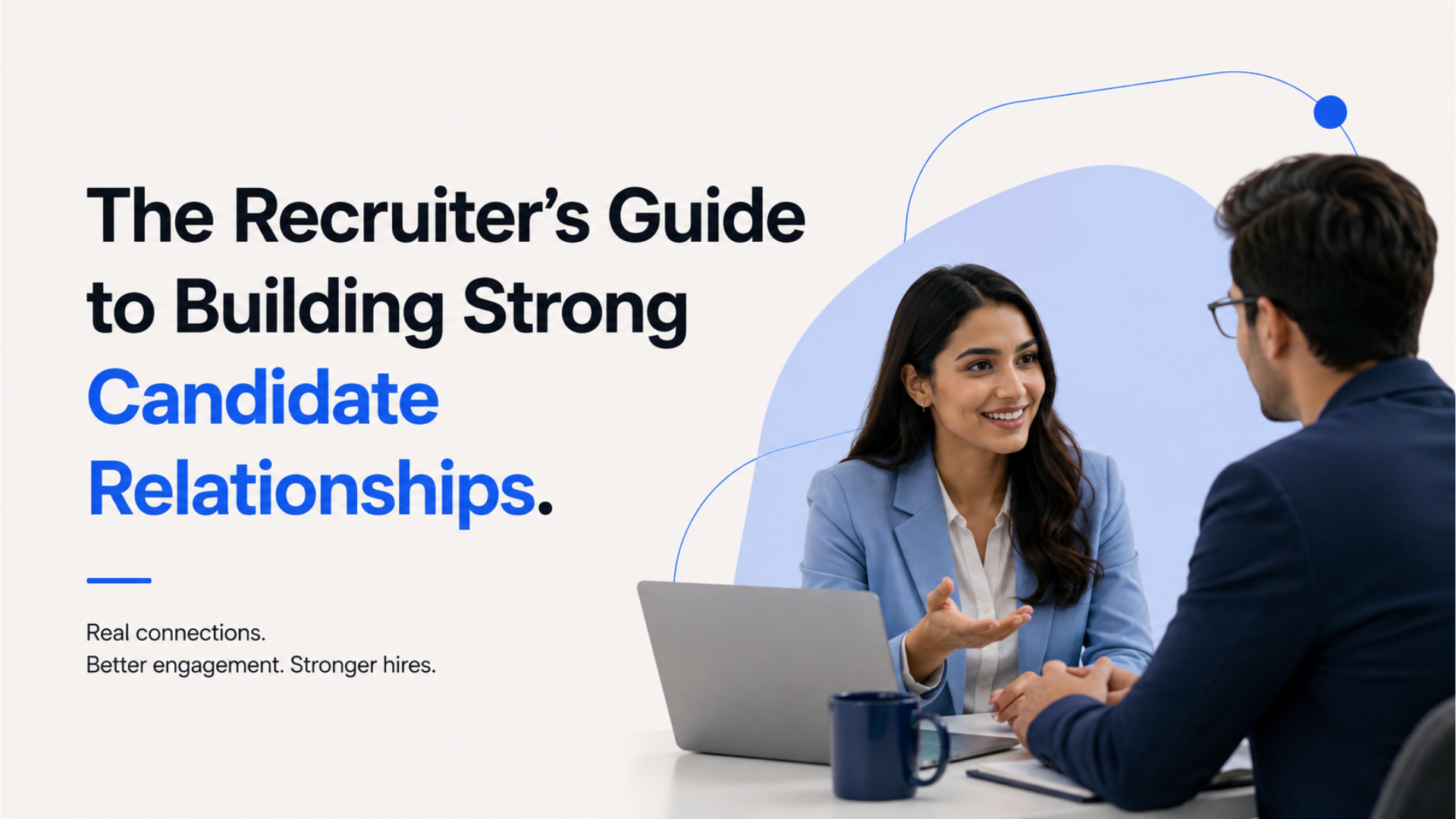
Chris had been recruiting for eight years, and the pattern was unmistakable. Every time she looked back at her best hires, the ones who performed well, stayed long, and referred other great people, the common thread was never the job description or the compensation package. It was the relationship. She had built genuine rapport before the offer, maintained it through the hiring process, and continued it after the start date. One hire in particular stood out. Nadia had initially declined the role. The timing was wrong, she said. Chris did not push. She sent a brief note thanking Nadia for her time, shared an article about a topic they had discussed, and stayed in touch with an occasional, genuinely relevant message over the next five months. When the timing became right, Nadia reached out to Chris directly. She did not apply through the careers page. She did not respond to a job posting. She emailed the recruiter she trusted. That is what a strong candidate relationship looks like. It is not a technique. It is a compounding asset that makes every future hire easier than the last.
Most recruiting training focuses on the mechanics of the hiring process: how to write job descriptions, how to conduct screening calls, how to coordinate interview schedules, and how to negotiate offers. These skills are necessary but insufficient. They manage the transaction of hiring without building the relationship that determines whether the transaction completes successfully. The recruiters who consistently achieve the best outcomes, higher offer acceptance rates, lower candidate dropout, stronger employer brand, and more referral hires, are those who invest deliberately in the relationship dimension of their work. According to SHRM's talent acquisition research, candidate perception of recruiter relationship quality is the single strongest predictor of offer acceptance, surpassing compensation, role scope, and even employer brand. The relationship the candidate builds with the recruiter is, for most candidates, the most tangible and personal experience they have with the organization, and they extrapolate from that experience to form expectations about what it would be like to work
there. A recruiter who builds a strong relationship does not just fill one role. They build a pipeline of trust that generates returns for years.
Why Relationships Matter More Than Job Descriptions
The conventional recruiting funnel treats candidates as inputs to a process: source, screen, interview, offer, and hire. This funnel is efficient at managing volume but poor at building the kind of candidate conviction that survives competing offers, lengthy processes, and the natural uncertainty that accompanies any career move. A candidate who evaluates your opportunity purely on the basis of the job description and compensation package is making a rational, transactional calculation that any competitor can match or beat. A candidate who has developed a relationship with the recruiter is making a calculation that includes trust, respect, and the belief that the organization behind the opportunity is genuinely interested in them as a person. This relational dimension creates a preference that is far more durable than any transactional advantage, because it cannot be easily replicated by a competitor who reaches the candidate later with a slightly better offer. The candidate does not choose your opportunity because it is objectively the best. They choose it because the relationship they have built with you makes it feel like the right fit, and that feeling is resistant to competitive counteroffers in a way that compensation differentials are not.
This relational advantage compounds over time. A candidate who had a positive recruiting experience, even one that did not result in a hire, becomes a potential source of future talent through referrals, re-engagement, and employer brand advocacy. A candidate who felt treated as a credential rather than a person becomes a detractor who discourages others from engaging. The difference between these two outcomes is almost entirely determined by the quality of the relationship the recruiter built during the process. The recruiters who understand the difference between AI sourcing and AI recruiting see this clearly. Sourcing generates candidates. The relationship the recruiter builds with those candidates determines whether they become hires, advocates, or ghosts. According to McKinsey's organizational insights organizations that systematically invest in candidate relationship quality see thirty to forty percent higher offer acceptance rates and twenty-five percent more referral hires, because the relational approach to recruiting generates compounding returns that transactional approaches cannot match. This is the same dynamic that explains why referrals outperform cold outreach so dramatically. A referral arrives with a pre-existing relationship and the trust it provides. The challenge for modern recruiting teams is to build that same trust at scale with every candidate, not just the ones who come through personal connections.
The Trust Equation in Candidate Relationships
Trust is the foundation of every strong candidate relationship, and trust in recruiting is built through four specific components: credibility, reliability, intimacy, and self-orientation. Credibility means the recruiter demonstrates genuine knowledge of the role, the team, and the market. A recruiter who can speak intelligently about the technical challenges of the position,
the dynamics of the team, and the strategic context of the hire immediately establishes credibility with a candidate who is evaluating whether this opportunity is worth their time. Reliability means the recruiter does what they say they will do, when they say they will do it. Every followed-through commitment, every on-time follow-up, every delivered piece of promised information, adds a brick to the foundation of trust. Every broken commitment, every delayed follow-up, every forgotten promise, removes one. Intimacy means the recruiter creates a space where the candidate feels safe sharing their real priorities, concerns, and constraints. Most candidates do not reveal their true decision-making criteria in a first conversation. They test the recruiter first, sharing partial information and observing whether the recruiter listens, remembers, and responds with empathy. The recruiter who passes this test earns access to the information that makes genuine personalization possible.
The fourth component, self-orientation, is the one that most commonly undermines trust. Self-orientation refers to the degree to which the recruiter's actions appear driven by their own needs, filling the role, closing the metric, pleasing the hiring manager, versus the candidate's needs, finding the right fit, making a good decision, advancing their career. Candidates are remarkably perceptive at detecting self-orientation. A recruiter who pushes for a quick hiring decision because their metric depends on it, who glosses over potential concerns because they need the candidate to advance, or who disappears after the candidate expresses hesitation about the compensation, immediately signals high self-orientation and erodes the trust they have built. The most trusted recruiters are those who consistently demonstrate that the candidate's interests come first, even when that means slowing the process, addressing uncomfortable topics, or acknowledging that the opportunity might not be the right fit. This is particularly important for niche and technical roles where candidates are evaluating the recruiter's credibility against their own domain expertise. A candidate with deep technical knowledge will quickly detect a recruiter who is reciting talking points rather than demonstrating genuine understanding. The recruiters who build the strongest relationships in these specialized contexts are those who invest in understanding the candidate's world well enough to have authentic conversations about it.
Listening as a Recruiting Superpower
The most important relationship-building skill in recruiting is not persuasion, not charisma, and not industry knowledge. It is listening. Most recruiter-candidate conversations follow a predictable pattern: the recruiter asks a series of questions, the candidate answers, and the recruiter immediately pivots to the next topic or begins talking about the opportunity. This question-then-pivot approach extracts information but does not build a relationship, because the candidate does not feel heard. They feel interviewed. Genuine listening is different. It involves asking a question, receiving the answer, reflecting it back to confirm understanding, and then exploring the answer more deeply before moving on. When a candidate mentions they are looking for a role with more strategic impact, a relational recruiter does not immediately say that this role offers exactly that. They ask what strategic impact looks like to the candidate, what has been missing in their current role, and what would tell them that a new
role would be different. This deeper exploration serves two purposes. It gives the recruiter the specific information they need to position the opportunity effectively, and it demonstrates to the candidate that the recruiter is genuinely interested in their success, not just in filling a slot.
The impact of genuine listening on candidate trust and engagement is substantial. Candidates who feel heard during the initial conversation are significantly more likely to share their real concerns, which gives the recruiter the information they need to address those concerns proactively in subsequent interactions. Candidates who feel heard are also more likely to forgive process delays, because they trust that the delay is not a sign of disinterest. And candidates who feel heard are far more likely to refer peers, because the experience of being genuinely listened to is rare enough in recruiting that it stands out as noteworthy. Understanding how many followups one hire actually needs is useful, but the quality of listening that informs each follow-up matters more than the number. A single follow-up that references something specific the candidate shared, demonstrates that the recruiter was listening, and is worth more than ten generic check-ins. This is one reason adding technology without improving the quality of human interaction often fails. Organizations that invest in tools without training recruiters to listen better frequently find they have more tools but the same hiring problems, a dynamic explored in the analysis of teams with more tools but the same hiring problems. The tool amplifies whatever the recruiter puts into it. If the recruiter is not listening, the tool will generate generic output regardless of how sophisticated it is.
Consistency: The Invisible Foundation of Trust
Trust is not built in a single moment. It is built through consistent behavior over time, and inconsistency is its most corrosive enemy. A candidate who receives a fast, personalized first follow-up, a thorough and thoughtful second interaction, and then a generic third message that demonstrates no memory of the prior conversation experiences a trust violation that is often more damaging than consistently mediocre communication. The inconsistency tells the candidate that the early personalization was performative rather than genuine, and once that perception takes hold, it is very difficult to reverse. Consistency means that every interaction, from the first outreach to the post-hire check-in, meets the same standard of personalization, timeliness, and respect for the candidate's time and priorities. This standard should not depend on which recruiter handles the candidate, what time of day it is, or how busy the team is. It should be a non-negotiable characteristic of every touchpoint in the process.
Maintaining this level of consistency at scale is one of the greatest operational challenges in recruiting, and it is precisely where AI-powered engagement systems deliver the most value. An agentic AI recruiting platform can maintain a detailed, continuously updated profile of every candidate, including conversation history, expressed interests, concerns, and engagement patterns. When a follow-up is generated, the AI draws on this profile to ensure that the message is consistent with every prior interaction, referencing specific topics, addressing known concerns, and maintaining the tone and personalization level the candidate has come to expect. This consistency is especially valuable when multiple recruiters are involved in the
same hiring process, because the AI ensures that the candidate's experience is seamless regardless of which team member they are interacting with. According to LinkedIn's recruiting resources candidates who experience consistent communication quality across multiple touchpoints and team members are fifty percent more likely to rate their recruiting experience positively, and positive recruiting experience is strongly correlated with offer acceptance and referral likelihood. The recruiters wondering whether AI will replace their jobs should recognize that AI's greatest value in relationship building is not replacing the recruiter but ensuring that the recruiter's relationship quality does not degrade under the pressure of volume and workload.
Turning Rejections Into Lasting Relationships
Most recruiting processes treat candidate rejection as an endpoint. The candidate declines or is not selected, the file is closed, and both parties move on. This approach wastes one of the most valuable assets in recruiting: a candidate who was interested enough to engage deeply with your organization. A candidate who reached the final round but was not selected, or who declined because the timing was wrong, has already invested significant time and emotional energy in evaluating your company. They have formed impressions of your team, your culture, and your process. They have likely formed a relationship with the recruiter. Closing the file on this candidate means throwing away all of that invested relationship capital and starting from zero with every new candidate. The alternative, maintaining the relationship after the rejection, transforms a sunk cost into a long-term asset. A brief, genuine message thanking the candidate for their time, acknowledging the specific value they brought to the process, and expressing interest in staying connected, takes minutes to send but can generate returns for years. The candidate who was treated well after a rejection is far more likely to re-engage when the timing is right, refer peers to the recruiter, and speak positively about the company in their professional network.
This long-term relational approach represents a fundamental shift from transactional to relationship-based recruiting, and it is one of the most impactful changes a recruiting team can make. The challenge is operational. Maintaining relationships with hundreds or thousands of past candidates requires systematic processes and technology that most teams do not have. AI makes it feasible by maintaining awareness of past candidates, tracking their career movements, and identifying when a previously engaged candidate becomes relevant to a new opportunity. However, this capability depends entirely on the quality of the underlying data. Teams that have struggled with outdated candidate data in AI tools cannot maintain long-term relationships because their system does not have an accurate, current view of where each past candidate is in their career. Before investing in relationship-management technology, organizations should ensure their data infrastructure is capable of supporting it, using a rigorous evaluation approach such as the framework for evaluating an AI sourcing tool before buying, adapted for relationship management capabilities. The recruiters who treat every candidate interaction as an investment in a long-term relationship, rather than a transaction with a defined endpoint, are building a talent network that compounds in value over time, delivering
faster hires, higher quality candidates, and stronger employer brand with each passing quarter.
Scaling Relationship Quality With AI
The central tension in candidate relationship building is between quality and scale. Every recruiter knows that high-quality relationships produce better hiring outcomes. Every recruiter also knows that they cannot build deeply personalized relationships with dozens of simultaneous candidates using manual processes alone. Something has to give, and what usually gives is relationship quality. As the recruiter's workload increases, follow-ups become less personalized, interactions become shorter, and the overall candidate experience becomes more transactional. AI resolves this tension by handling the information-processing and communication-drafting work that makes personalized engagement possible at scale. The AI maintains detailed profiles, detects engagement signals, generates context-aware message drafts, and recommends optimal timing for each interaction. The recruiter reviews, refines, and adds the human judgment that transforms a well-informed draft into a genuinely personal message. The result is not less human engagement. It is more, because candidates who would have received nothing but generic templates under the old system now receive personalized, relevant communication that demonstrates the recruiter's genuine interest and attention.
The organizations achieving the best hiring outcomes are those that have integrated AI into a coherent relationship-building strategy rather than deploying it as a standalone tactic. According to Gartner's HR trends research the most effective recruiting teams use AI to enhance three specific relationship capabilities. First, memory: the ability to recall and reference every prior interaction with each candidate, which demonstrates that the recruiter values the relationship enough to remember it. Second, anticipation: the ability to predict what each candidate needs at each stage, whether it is information, reassurance, or a gentle nudge, and deliver it proactively. Third, continuity: the ability to maintain a consistent experience across time, channels, and team members, so the relationship does not degrade as the process evolves. These three capabilities, memory, anticipation, and continuity, are the building blocks of scalable relationship quality, and they are all significantly enhanced by AI. EY's technology insights highlight that enterprises with mature AI-driven relationship management are achieving candidate satisfaction scores twenty to thirty percent higher than their peers, not because the AI is more personable but because it enables the human recruiter to be more present, more informed, and more responsive than manual processes would ever allow. Deloitte's talent research concludes that the future of recruiting belongs to organizations that treat candidate relationships as their most valuable strategic asset, and that AI is the enabling technology that makes investing in that asset practical and scalable for teams of every size.
Every great hire starts with a great relationship. Not a great job description, not a great compensation package, not a great employer brand video. A great relationship between a recruiter and a candidate, built on trust, sustained by consistency, and deepened by genuine listening. The recruiters who build these relationships do not just fill roles. They build talent networks
that generate compounding returns: faster hires, higher acceptance rates, more referrals, and stronger employer brand perception. The challenge has never been understanding that relationships matter. It has been building them at scale without sacrificing the quality that makes them valuable. Huntlo.ai provides the intelligence layer that makes scalable relationship quality possible, maintaining the memory, anticipation, and continuity that transform individual interactions into lasting professional connections. Stop treating candidates as transactions. Start building relationships that last. Build them with Huntlo.