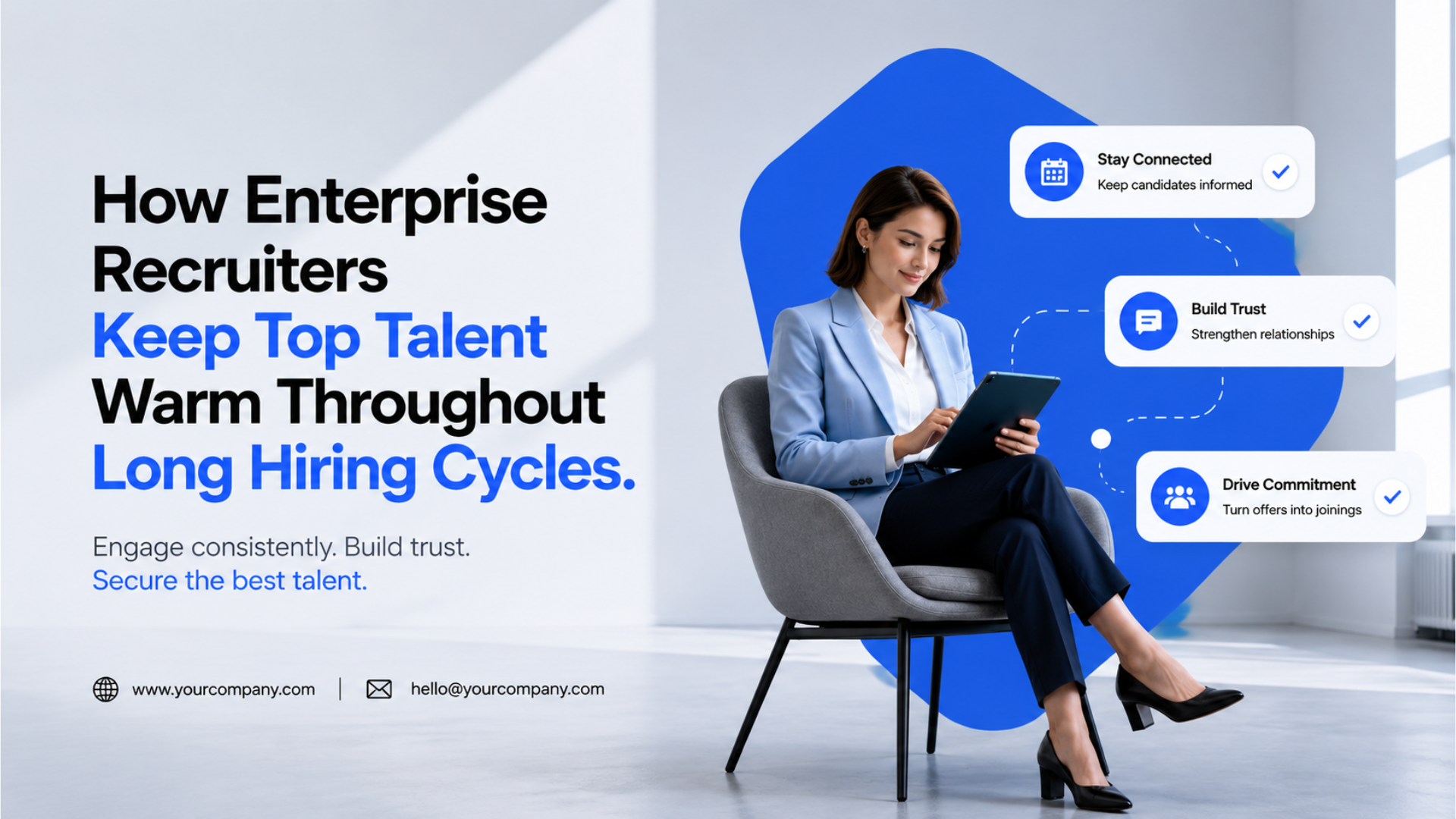
Rachel is recruiting for a VP of Data at a Fortune financial services company. The role requires eight interview rounds across four business units, three background checks, a security clearance review, and compensation approval from the chief human resources officer. The entire process, from first contact to offer, will take approximately ten weeks. In the third week, Rachel’s top candidate, a data leader at a competing bank, messages to ask about the timeline. Rachel provides an honest estimate. In the fifth week, the candidate has not responded to Rachel’s last two messages. She calls and leaves a voicemail. No reply. In the seventh week, the candidate sends a brief message: she has accepted a role elsewhere. The process that was designed to ensure thoroughness has produced the outcome it was supposed to prevent. The best candidate was lost not because the role was unattractive or the compensation was inadequate. She was lost because ten weeks is a very long time to keep someone interested in an opportunity they cannot yet touch, feel, or experience, and the communication between the milestones was not sufficient to sustain her engagement. Rachel is not a bad recruiter. She is an enterprise recruiter operating with a communication strategy designed for a three-week process being applied to a ten-week one.
Enterprise hiring processes are long by design, and for legitimate reasons. Senior and specialized roles require multiple stakeholder evaluations, cross-functional alignment, security and compliance reviews, and compensation approvals that involve multiple levels of leadership. These requirements are not bureaucratic excess. They reflect the reality of hiring decisions that carry significant organizational impact, and the thoroughness they demand is appropriate to the stakes involved. The problem is not the length of the process. The problem is that most enterprise recruiting teams have not adapted their candidate engagement strategies to match
the length of their hiring cycles. They apply the same communication approach, a few touchpoints between major milestones, to a ten-week process that they would apply to a three-week process, and the result is predictable: candidates disengage during the long gaps between interactions, and the best candidates, the ones with the most options, disengage fastest. According to SHRM's talent acquisition research, enterprise organizations report that candidate dropout rates increase by roughly ten percent for every additional week of hiring process beyond the fourth week, which means a ten-week process will lose thirty to fifty percent more candidates than a four-week process, even when the candidates who start the process are equally qualified and equally interested. This is not because long processes are inherently unattractive. It is because most long processes fail to maintain candidate engagement during the extended gaps between milestones, and the candidates who have the most alternatives are the first to exercise them. Huntlo's AI-powered engagement platform addresses this enterprise challenge directly, providing the signal-based timing, contextual personalization, and adaptive cadence that keep candidates warm, interested, and committed through hiring cycles of any length. The recruiters who understand the difference between AI sourcing and AI recruiting recognize this gap clearly. Sourcing initiates the relationship. The engagement that follows, sustained over weeks rather than days, is what determines whether the candidate is still interested when the offer finally arrives.
Where Candidates Go Cold in Long Hiring Processes
Candidate disengagement in enterprise hiring processes is not random. It concentrates at three predictable points, each of which corresponds to a period where the candidate is investing in the process but receiving little in return. The first cold point is between the screening call and the first interview. After an enthusiastic initial conversation, the candidate enters a waiting period that often lasts five to ten business days while the recruiter coordinates schedules across multiple stakeholders. During this gap, the candidate's initial enthusiasm decays. They continue their current job, they explore other opportunities, and the enterprise role transitions from an exciting prospect to one of several options under consideration. If the recruiter does not maintain communication during this gap, the candidate's emotional investment in the opportunity weakens, and by the time the interview is scheduled, they may be significantly less engaged than they were after the screening call. The second cold point is between interview rounds. Enterprise processes often involve multiple interviews spread across several weeks, and the gaps between rounds are the most dangerous periods in the entire process. The candidate has invested time and energy in preparing for and participating in interviews, but they receive minimal feedback and no concrete signal of their standing. From the candidate's perspective, they are giving more than they are getting, and this imbalance creates the psychological conditions for disengagement. The third cold point is between the final interview and the offer. This gap, which in enterprise processes can last two to four weeks due to approval chains and calibration meetings, is where the most qualified candidates are most likely to be lost. They have completed the most demanding part of the process, they have formed a positive impression of the role and the team, and they are ready to make a decision. But instead of
receiving an offer, they receive silence, and during that silence, competitors who move faster present offers that the candidate, tired of waiting, finds increasingly attractive.
These three cold points share a common characteristic: they are all periods where the candidate is waiting for the organization to act, and the organization's internal processes take longer than the candidate's patience allows. The solution is not to shorten the process, which is often not possible given the legitimate requirements of enterprise hiring. The solution is to fill the waiting periods with meaningful engagement that maintains the candidate's interest, momentum, and trust. Understanding how many followups one hire actually needs provides a useful baseline, but in long enterprise cycles the follow-up strategy must be designed specifically for the extended timeline, with more touchpoints, more varied content, and more intentional momentum maintenance than a shorter process would require. The enterprise teams that simply add more tools without redesigning their engagement approach for long cycles often discover they have more tools but the same hiring problems, a pattern explored in the analysis of organizations with more tools but the same hiring problems. What is needed is not more tools but an engagement system specifically designed to maintain warmth over extended periods, one that delivers relevant, personalized communication at a cadence calibrated to the length of the process rather than the recruiter's available time. For teams hiring for niche and technical roles, where the candidate pool is small and the hiring process is typically longer due to specialized evaluation requirements, maintaining candidate warmth is especially critical because there is no deep bench of alternatives to replace the candidates who disengage. Every lost candidate in a small talent pool extends the search by weeks and increases the organizational cost of the vacancy proportionally.
What Keeping Warm Actually Means
Keeping a candidate warm is commonly understood as sending periodic check-in messages to prevent the candidate from forgetting about the opportunity. This understanding is incomplete and, when implemented literally, counterproductive. Sending periodic check-in messages, especially generic ones that provide no new information or value, does not keep the candidate warm. It reminds the candidate that they are waiting, which reinforces their sense of stasis and makes the process feel longer rather than shorter. True warmth is not about reminding the candidate that the opportunity exists. It is about continuously deepening the candidate's understanding of and connection to the opportunity, so that by the time the offer arrives, they are not deciding whether they want the role. They are deciding whether the specific terms of the offer match the role they have already decided they want. This distinction is the difference between a candidate who negotiates the offer and one who declines it. The candidate who has been kept genuinely warm has spent weeks building a mental model of the role, the team, the culture, and their potential future at the organization. The offer is the final piece of that model, not the beginning of it. The candidate who has received only periodic check-ins has no such model. The offer is their first concrete exposure to what the opportunity actually looks like, and they must evaluate it from scratch, comparing it against competing offers that may have been presented with far more context and engagement. According to McKinsey's
organizational insights candidates who have been kept genuinely warm through sustained, value-adding engagement accept offers at twenty-five to thirty-five percent higher rates than those who receive only check-in messages, because they have already committed to the opportunity intellectually and emotionally before the offer arrives. The warmth is not just about frequency. It is about depth. Each touchpoint should add something to the candidate's understanding of the role or the organization that they did not have before.
The practical implication is that keeping a candidate warm through a long enterprise cycle requires a content strategy, not just a communication schedule. The recruiter needs a pipeline of relevant, valuable information to share with the candidate at each stage of the process: details about the team's current projects and challenges, insights about the organization's strategic direction, introductions to future colleagues or stakeholders, and specific information about how the candidate's skills and experience would apply to the role's biggest challenges. This content must be personalized, not generic. A candidate who expressed interest in building a data platform from scratch during their screening call should receive information about the organization's data infrastructure plans, not a generic overview of the company's technology stack. A candidate who is concerned about organizational politics should receive context about the team's decision-making culture and reporting structure. This level of personalized, content-rich engagement is what keeps candidates genuinely warm, but it is also what makes long-cycle engagement so demanding for recruiters. Generating and delivering this volume of personalized content for ten or more candidates simultaneously, each at a different stage of a long process with different information needs, is beyond what manual processes can sustain. Huntlo's platform addresses this by maintaining a contextual intelligence layer that tracks each candidate's expressed interests, concerns, and career priorities, and generates content recommendations that are specifically calibrated to add value at the candidate's current stage of the process. This is why referred candidates have historically shown stronger engagement throughout long hiring cycles. The referring employee naturally provides this continuous, personalized, value-adding information as part of their ongoing relationship with the candidate. Research confirms that referrals outperform cold outreach in sustained engagement precisely because the referring relationship provides the content-rich communication that long processes demand. Huntlo's AI-powered platform gives every candidate this referral-quality experience by generating the relevant, personalized content that keeps them genuinely warm throughout extended enterprise hiring cycles.
The Engagement Cadence That Sustains Interest Over Weeks
Maintaining candidate engagement over a long enterprise hiring cycle requires a carefully designed cadence that balances two competing needs: the candidate's need for meaningful communication and their need for space. Too little communication, and the candidate disengages. Too much communication, and the candidate feels pressured or annoyed, particularly during the early stages when they are still evaluating whether the opportunity is worth their time. The optimal cadence varies by stage, candidate engagement level, and the specific dynamics of the hiring process, but there are general principles that apply to most enterprise
engagements. During the first week after initial contact, the cadence should be relatively high, with two to three substantive touchpoints that build on the initial conversation and begin establishing the recruiter's responsiveness and the opportunity's relevance. During the middle weeks, when the candidate is moving through interview rounds and the process is active, the cadence can moderate to one to two touchpoints per week, focused on interview preparation, feedback, and value-adding information about the role and team. During the final weeks, between the last interview and the offer, the cadence should increase again, because this is the highest-risk period for candidate loss and the engagement must be at its most attentive and proactive. Within this general framework, the specific timing and content of each touchpoint should be driven by the candidate's individual engagement signals rather than a fixed schedule. A candidate who has just opened a previous message and visited the company careers page is signaling high receptivity and should receive the next touchpoint promptly. A candidate who has not engaged with recent communication may need a higher-value, lower-pressure touchpoint, such as a relevant article or an informal introduction, to rekindle their interest without creating the sense of being pursued.
This signal-driven, stage-adaptive cadence is precisely what AI-powered engagement systems are designed to deliver. Huntlo provides this capability as an agentic AI recruiting platform that monitors each candidate's real-time engagement signals and adjusts communication timing and content accordingly, ensuring that the cadence is always calibrated to the individual candidate's needs and behavior rather than applied as a one-size-fits-all schedule. According to LinkedIn's recruiting resources AI-powered cadence optimization is producing thirty to forty percent improvements in sustained engagement rates for enterprise hiring processes lasting longer than six weeks, because the system ensures that communication arrives at the right moment for each individual candidate rather than at a moment determined by the recruiter's availability. The recruiters asking whether AI will replace their jobs should note that cadence optimization is a perfect example of AI augmenting rather than replacing the recruiter. The AI handles the signal monitoring and timing calculations. The recruiter handles the content personalization, empathy, and strategic judgment that determine whether each touchpoint actually adds value. However, the accuracy of the AI's timing recommendations depends entirely on the quality and freshness of the candidate data it is analyzing. Teams that have experienced outdated candidate data in AI tools know that signal-based cadence optimization operating on stale data will produce recommendations that miss the mark. When evaluating platforms, use the framework for evaluating an AI sourcing tool before buying to ensure data freshness and signal detection accuracy are core capabilities. Huntlo maintains a continuously updated candidate intelligence layer that ensures every cadence recommendation is grounded in current, accurate behavioral data, making the engagement feel natural and responsive rather than automated and intrusive.
How AI Maintains Warmth Without Burning Out Recruiters
The core challenge of long-cycle candidate engagement is sustainability. Maintaining the level of personalized, value-adding communication described above for a handful of candidates
over a three-week process is manageable for most recruiters. Maintaining it for fifteen to twenty candidates over a ten-week process is not, because the cumulative demand for content, timing optimization, and personalization exceeds what manual processes can deliver without significant quality degradation. This is the point where AI-powered engagement systems become not just valuable but essential. The AI handles four categories of work that are necessary for sustained warmth but that do not require human judgment. First, it monitors engagement signals continuously for every candidate, detecting the early shifts in responsiveness and sentiment that predict disengagement before it becomes visible. Second, it maintains the contextual memory of every candidate's interactions, concerns, and interests that enables personalized follow-ups without manual research. Third, it generates content recommendations that are specifically designed to add value at the candidate's current stage, drawing on the candidate's profile and the organization's knowledge base to suggest relevant information about the team, the role, and the strategic context. Fourth, it optimizes the timing of every touchpoint based on the candidate's behavioral signals, ensuring that communication arrives when the candidate is most receptive. These four capabilities, operating simultaneously for every candidate in the pipeline, create an engagement system that maintains consistent warmth regardless of process length or recruiter workload. According to Gartner's HR trends research enterprise organizations deploying AI-powered engagement systems for long-cycle hiring report forty to fifty percent reductions in candidate dropout rates and twenty to thirty percent improvements in offer acceptance rates, because the system ensures that candidates who enter a ten-week process are still engaged and enthusiastic when the offer arrives at the end of it. The compounding effect of these improvements is especially significant for enterprise organizations, where the cost of a failed senior hire, including the vacancy cost, the search cost, and the opportunity cost of a delayed strategic initiative, can exceed two to three times the candidate's annual compensation.
The practical impact of AI-powered warmth maintenance extends beyond individual hiring outcomes. When enterprise recruiters can maintain candidate engagement consistently across long processes, they build a reputation in the talent market for professionalism and respect that attracts higher-quality candidates for future searches. Senior candidates talk to each other, and the candidate who had a positive, well-managed ten-week experience with one enterprise recruiter will mention that experience to peers who are considering similar opportunities, creating a pipeline of warm inbound interest that no amount of sourcing can replicate. Conversely, the candidate who was left to go cold during a long process will share that experience too, and the damage to the employer's reputation will make future recruiting for similar roles more difficult and more expensive. EY's technology insights report that enterprises with mature AI-powered engagement systems are achieving thirty to forty percent lower cost per hire for senior roles, because the reduced dropout rates and improved offer acceptance rates mean fewer searches are needed to fill each role, and the strengthened reputation reduces the sourcing investment required to attract high-quality candidates. Deloitte's talent research concludes that the ability to maintain candidate warmth throughout long hiring cycles is emerging as the defining capability of elite enterprise talent acquisition teams, because long hiring
cycles are a structural feature of enterprise recruiting that cannot be eliminated, and the teams that learn to maintain engagement within those cycles will consistently outperform those that treat the length of the process as an excuse for communication failures. Your best candidates did not stop being valuable just because your approval process takes ten weeks. Huntlo ensures they never feel like they did. Keep your talent warm with Huntlo.