Marcus stared at the dashboard on Monday morning and felt a familiar frustration. Two hundred and fourteen candidates sourced in the last thirty days. Eighteen responses. Nine phone screens completed. Three offers extended. One accepted. The funnel numbers told a story of massive waste, and he had seen the same pattern play out across three different companies over six years. The sourcing was solid. The job descriptions were clear. The compensation was competitive. Yet somehow, between identification and hire, the vast majority of candidates simply vanished. Some never responded to the first message. Others engaged briefly and then went silent after the initial conversation. A few made it deep into the process only to withdraw citing vague reasons that probably masked deeper disengagement. Marcus knew the problem was not the candidates and it was not entirely the recruiters either. The problem was the system. Recruitment teams were designed to source, screen, and schedule, but nowhere in that sequence was there a dedicated, resourced, and measured function for keeping candidates genuinely engaged from first touch to start date.
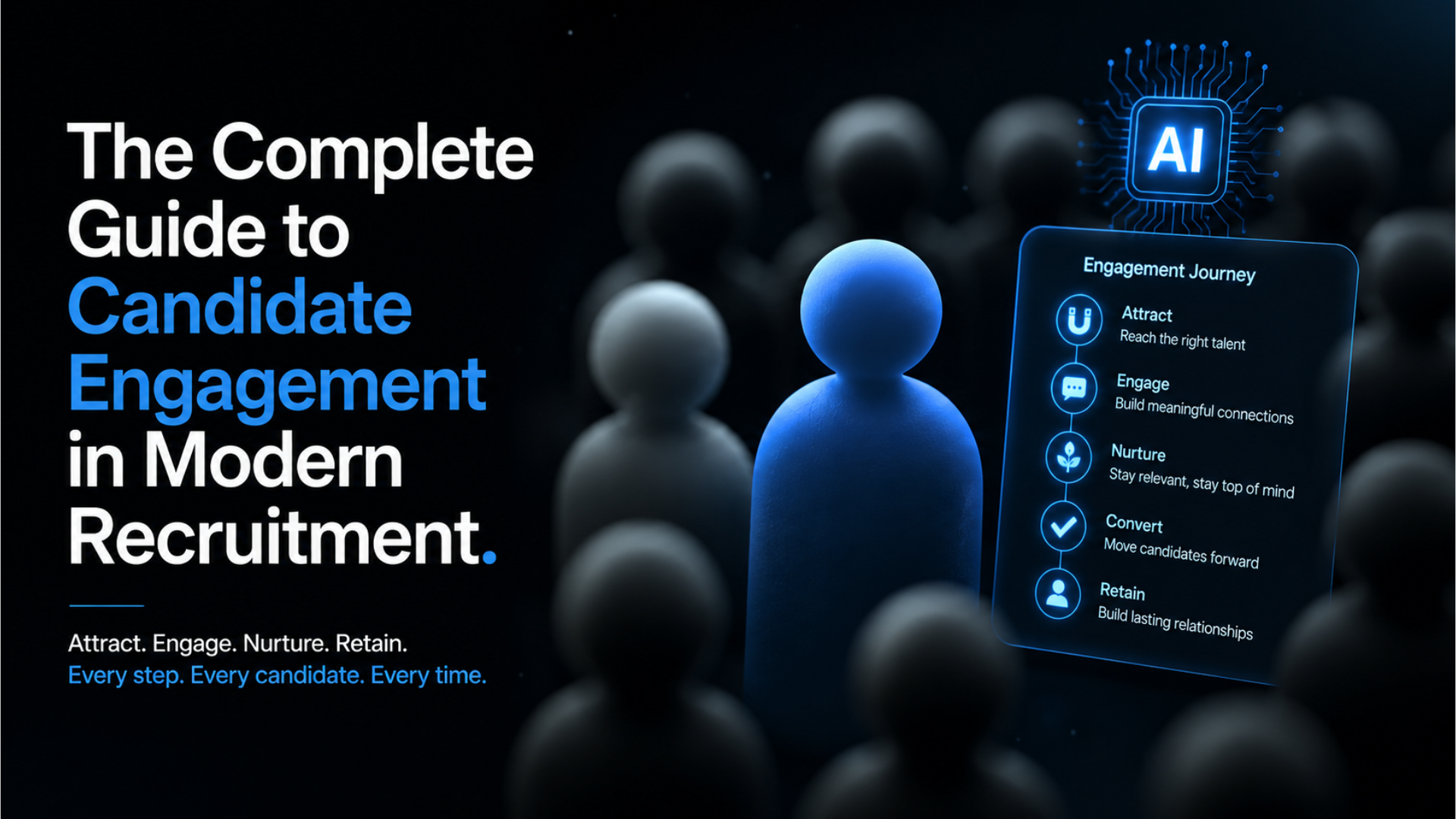
Candidate engagement is the invisible infrastructure of every successful hiring process. It is not a single tactic or a line item in a recruiting playbook. It is the continuous, intentional practice of building and maintaining a candidate's interest, trust, and momentum throughout their entire interaction with your organization. When engagement is strong, candidates
respond faster, share more information, advance through stages more reliably, and accept offers at higher rates. When it is weak, even the best-sourced and most qualified candidates disappear without explanation. According to SHRM's talent acquisition research, seventy-six percent of hiring managers and recruiters report that candidate engagement is the single biggest challenge they face, surpassing sourcing difficulty, compensation competition, and skill shortages. Despite this, engagement remains one of the least systematically addressed aspects of recruiting, with most teams relying on individual recruiter effort rather than structured processes and technology to maintain candidate connection.
What Candidate Engagement Actually Means Today
The definition of candidate engagement has shifted significantly over the past decade. In an earlier era, engagement meant responsiveness. A candidate who replied to messages, showed up for interviews, and returned calls was considered engaged. That definition is no longer sufficient. Today, genuine candidate engagement means active, willing participation in the hiring process driven by the candidate's own interest and trust in the opportunity. It is the difference between a candidate who responds because they feel obligated and one who responds because they are genuinely curious and excited about the possibility of joining your team. This distinction matters because the behaviors that signal genuine engagement, proactive questions, sharing of career context, willingness to invest time in the process, are fundamentally different from the behaviors that signal mere compliance, brief replies, missed calls, and withdrawn availability.
Modern candidate engagement operates across three dimensions. The first is informational engagement: the candidate's understanding of the role, the team, and the company. Candidates who are well-informed about what they are potentially signing up for engage more deeply because they can make a meaningful evaluation rather than guessing. The second is emotional engagement: the candidate's sense of connection, respect, and excitement about the opportunity. This dimension is built through personalized communication, timely follow-ups, and genuine attention to the candidate's priorities. The third is behavioral engagement: the candidate's actual actions, responding promptly, preparing for interviews, sharing references, and moving through stages without excessive delay. All three dimensions must be present for engagement to produce reliable hiring outcomes. A candidate who understands the role but feels no emotional connection will disengage at the first competing offer. A candidate who is excited but poorly informed will withdraw when they discover a mismatch late in the process. The recruiters who understand the difference between AI sourcing and AI recruiting recognize this instinctively. Sourcing creates the initial connection, but engagement sustains and deepens it. Without sustained engagement, sourcing is just an expensive exercise in generating unresponsive contact lists.
The Real Cost of Disengaged Candidates
The financial impact of poor candidate engagement is staggering and frequently
underestimated. When candidates disengage, the direct cost includes the sourcing effort that went into identifying and initially contacting them, the recruiter time spent on early-stage conversations, and the hiring manager time invested in screening calls. But the indirect costs are far larger. A position that remains open for an additional four to six weeks because candidates keep dropping out costs the organization in lost productivity, overworked team members, and delayed strategic initiatives. McKinsey's people and organization insights estimate that a single unfilled mid-level position costs an organization between fifteen thousand and twenty-five thousand dollars per month in lost productivity and associated costs. For senior and specialized roles, that figure can exceed fifty thousand dollars per month. When candidate disengagement extends time to fill by even a few weeks, the cumulative cost quickly dwarfs the investment required to build a proper engagement infrastructure.
Beyond the direct financial cost, poor engagement damages employer brand in ways that compound over time. Candidates who disengage often share their experience with peers, and in professional networks, negative recruiting experiences travel fast. A candidate who felt ignored after a promising first conversation, who received generic follow-ups that demonstrated no memory of their discussion, or who was left in the dark about next steps, becomes a detractor rather than a neutral party. They tell colleagues, post on forums, and develop a negative association with the company that persists for years. This brand damage makes future sourcing harder and more expensive, creating a vicious cycle where poor engagement today reduces the pool of willing candidates tomorrow. The organizations that recognize this dynamic, particularly those competing for niche and technical roles where talent pools are small and interconnected, invest heavily in engagement not because it is a nice-to-have but because it is a strategic imperative that directly determines their ability to attract top talent over time.
Building an Engagement-First Sourcing Strategy
Most recruitment teams approach sourcing and engagement as separate activities. First they source, identifying and contacting candidates, and then they engage, following up with those who respond. This sequential approach creates a fundamental problem: the sourcing messages are designed to generate responses rather than to initiate engagement, and the engagement begins only after the candidate has already formed an impression based on a message that was optimized for open rates rather than connection. An engagement-first strategy flips this model. Instead of treating engagement as a phase that begins after sourcing, it treats engagement as the core principle that informs every interaction from the very first touchpoint. The initial message is not just a request to connect. It is the beginning of a relationship, and it is crafted with the same care and intentionality that a good follow-up would receive.
In practice, an engagement-first sourcing strategy means that every outbound message demonstrates awareness of the candidate's specific background, references concrete reasons why the opportunity might be relevant to their career trajectory, and invites a genuine conversation rather than a transactional screening call. It means that the first response from a candidate triggers an immediate, personalized acknowledgment rather than a generic reply. And it
means that the cadence of subsequent interactions is determined by the candidate's engagement signals rather than by a fixed schedule. This approach is remarkably similar to how referral-based hiring works, which explains why referrals outperform cold outreach so consistently. A referral creates an immediate context of trust and relevance that cold outreach lacks. An engagement-first strategy aims to replicate that context for every candidate, not just those who come through personal connections. The shift from sequence to integration requires both a mindset change and a technology change, as manual processes cannot sustain the level of personalization and responsiveness that engagement-first sourcing demands at any meaningful scale.
How AI Transforms Candidate Engagement
Artificial intelligence is not just improving candidate engagement. It is fundamentally expanding what is possible. The core capability that AI brings to engagement is the ability to process and act on far more information about each candidate than any human recruiter could manage simultaneously. An AI system can monitor a candidate's email engagement patterns, track their interaction with employer content across platforms, analyze the sentiment and topics of prior conversations, and use all of this information to determine the optimal timing, channel, and content for the next interaction. This is not automation. Automation sends the same message to everyone on a schedule. AI generates a unique, contextually appropriate interaction for each candidate based on their individual behavior and preferences. The distinction is critical, and it is the same distinction that separates an agentic AI recruiting platform from a basic outreach tool.
The practical applications of AI in candidate engagement span the entire hiring funnel. During the initial contact phase, AI can analyze a candidate's public professional profile and generate outreach messages that reference specific projects, skills, and career patterns, achieving a level of personalization that would take a human recruiter thirty to forty-five minutes per candidate. During the follow-up phase, AI can detect engagement signals such as email opens, LinkedIn profile views, and application page visits, and use these signals to trigger timely, relevant follow-ups that maintain the candidate's interest without creating pressure. During the interview phase, AI can provide recruiters with pre-interview briefings that include candidate-specific talking points, and post-interview summaries that highlight areas where the candidate expressed particular interest or concern. According to LinkedIn's recruiting resources, organizations using AI-powered engagement tools report thirty to fifty percent improvements in candidate response rates and twenty to thirty percent reductions in time to fill. However, the organizations that simply layer AI onto existing broken processes often find they have more tools but the same problems, a pattern explored in the article about having more tools but the same hiring problems. The AI must be part of a coherent engagement strategy, not a patch applied over an engagement gap.
Personalization at Scale Without Losing the Human Touch
The most common concern about AI-driven engagement is that it will make interactions feel robotic and impersonal. This concern is understandable but misplaced when AI is implemented correctly. The goal of AI in engagement is not to replace human interaction but to amplify it. AI handles the data processing, signal detection, and initial draft generation that enable recruiters to deliver personalized experiences to far more candidates than they could reach manually. The recruiter then reviews, refines, and adds the human judgment that transforms a well-informed message into a genuinely compelling one. The result is not less human engagement but more. Candidates who would have received nothing but a generic template under the old system now receive a message that demonstrates real awareness of their background and priorities, even if the initial draft was generated by AI and refined by a recruiter in minutes rather than hours.
This hybrid model of AI-generated intelligence combined with human judgment is particularly powerful for follow-up sequences. Understanding how many followups one hire actually needs is important, but equally important is ensuring that each follow-up is worthy of the candidate's attention. AI can analyze the content of prior conversations and generate follow-up recommendations that reference specific topics the candidate discussed, provide answers to questions they raised, or share information that aligns with their expressed interests. The recruiter reviews these recommendations, adds personal context that only a human could provide, and sends a message that is both data-informed and genuinely personal. This approach scales the quality of engagement rather than diluting it. Candidates experience interactions that feel thoughtful and individualized even as the organization engages with hundreds or thousands of candidates simultaneously. The recruiters who worry about whether AI will replace their jobs should take note: the AI does not replace the recruiter. It replaces the manual, repetitive tasks that prevent the recruiter from engaging meaningfully with more candidates, and in doing so, it makes the recruiter's role more valuable, not less.
Measuring Engagement: The Metrics That Actually Matter
You cannot improve what you do not measure, and most recruiting teams measure candidate engagement poorly or not at all. The standard recruiting metrics, time to fill, cost per hire, offer acceptance rate, are outcome metrics. They tell you whether hiring succeeded but not whether engagement was the reason. A position can be filled quickly despite poor engagement if the market happens to deliver an eager candidate. Conversely, a position can take months to fill despite excellent engagement if the role is exceptionally difficult. To manage engagement effectively, teams need leading indicators that measure the health of candidate relationships before the outcome is determined. The most valuable of these indicators include response rate by outreach attempt, which measures whether engagement is building or declining across the sequence; time to first response, which measures the candidate's urgency and interest level; conversation depth score, which measures the quality of information exchanged during interactions; and stage progression rate, which measures whether candidates who enter one stage reliably advance to the next.
These engagement metrics provide early warning signals that allow recruiting leaders to intervene before candidates disengage irreversibly. If response rates drop significantly between the second and third outreach attempts, the follow-up content or timing may need adjustment. If time to first response is increasing across the pipeline, the value proposition may not be resonating. If conversation depth scores are low, the initial outreach may not be setting up substantive conversations. Gartner's HR trends research identifies real-time engagement analytics as one of the most impactful capabilities in modern recruiting technology, because it transforms engagement from a subjective, feel-based assessment into a data-driven, improvable process. However, the quality of these metrics depends entirely on the quality of the data feeding them. Teams that have struggled with outdated candidate data in AI tools know that even the most sophisticated analytics will produce misleading results if the underlying data is stale, incomplete, or inaccurate. Before investing in engagement measurement, organizations must ensure their candidate data infrastructure is reliable and current.
From Transactional to Relational Recruiting
The ultimate direction of candidate engagement is a shift from transactional recruiting to relational recruiting. Transactional recruiting treats each hire as a discrete transaction: source, screen, interview, offer, and close. The candidate is a resource to be acquired, and the process is optimized for efficiency. Relational recruiting treats each candidate interaction as part of an ongoing relationship that may span years. The candidate is a professional connection whose value extends beyond any single hiring opportunity. This shift is not purely philosophical. It has profound practical implications for how recruiting teams operate, how they measure success, and how they invest their time and technology. A relational approach means maintaining contact with strong candidates who were not the right fit for a specific role but who may be ideal for future opportunities. It means providing value to candidates even when there is no immediate hiring need, through market insights, career content, and genuine professional support.
AI makes relational recruiting feasible at scale for the first time. An AI system can maintain awareness of thousands of past candidates, monitor their career movements, and identify when a previously engaged candidate becomes relevant to a new opportunity. This ongoing relationship management was previously possible only for the small handful of candidates that an individual recruiter could remember and track manually. Now it can be applied to an entire talent community. The organizations leading this shift are seeing dramatic compounding returns: faster time to fill for future roles, higher offer acceptance rates, and stronger employer brand perception as candidates experience consistent, valuable interaction over time rather than sporadic, transactional outreach only when a position opens. EY's technology insights highlight that companies building persistent candidate engagement capabilities are outperforming peers in talent acquisition metrics by thirty to forty percent, because they are not starting from zero every time they hire. When evaluating solutions for this kind of relational engagement, teams should use a rigorous framework such as the one for evaluating an AI sourcing tool before buying, ensuring the platform can maintain long-term candidate
intelligence rather than simply executing short-term outreach campaigns. Deloitte's talent research confirms that the organizations achieving the best long-term hiring outcomes are those that have shifted from filling roles to building talent relationships, and that this shift is being accelerated by AI capabilities that make relational recruiting operationally viable for teams of any size.
Candidate engagement is not a tactic. It is the operating system of effective recruiting. Every sourced contact, every follow-up message, every interview interaction, and every offer conversation is either building or eroding engagement, and the cumulative effect of those micro-interactions determines whether your hiring funnel converts or leaks. The old approach of treating engagement as a secondary concern, something that happens between the real work of sourcing and screening, produces the results that most teams have learned to accept as normal: low response rates, high dropout rates, and long time to fill. A new approach is available. It combines engagement-first strategy, AI-powered personalization, multi-signal timing, and relational thinking to create a recruiting experience that candidates actually want to participate in. Huntlo.ai provides the intelligence layer that makes this approach operational, from the first outreach to the fiftieth follow-up, across every channel and every candidate. Stop treating engagement as an afterthought. Make it your advantage. Make it happen with Huntlo.