Aisha completed her final round of interviews for a Head of Product role at a well-funded healthtech startup on a Tuesday afternoon. The interviews had gone exceptionally well. The CEO told her she was exactly the kind of leader they were looking for. The VP of Engineering said he could already see how she would transform their roadmap process. Aisha left the building excited and mentally preparing for the offer conversation she expected within days. Wednesday passed with no communication. Thursday passed. Friday came and went. By the following Tuesday, a full week after her final interview, Aisha had heard nothing. She sent a polite email to the recruiter asking about timelines. The recruiter responded Wednesday afternoon with a brief message saying the team was still discussing and would be in touch soon. Aisha waited another week. During that second week, a competitor reached out with a similar role, moved her through two fast rounds, and extended an offer. She accepted it the same day. The original startup finally called with their offer on Thursday of the second week, four days too late. The interview experience had been flawless. The post-interview experience
had been catastrophic. The startup lost a transformational hire not because of the role, the compensation, or the team. They lost her because they went silent after the interview.
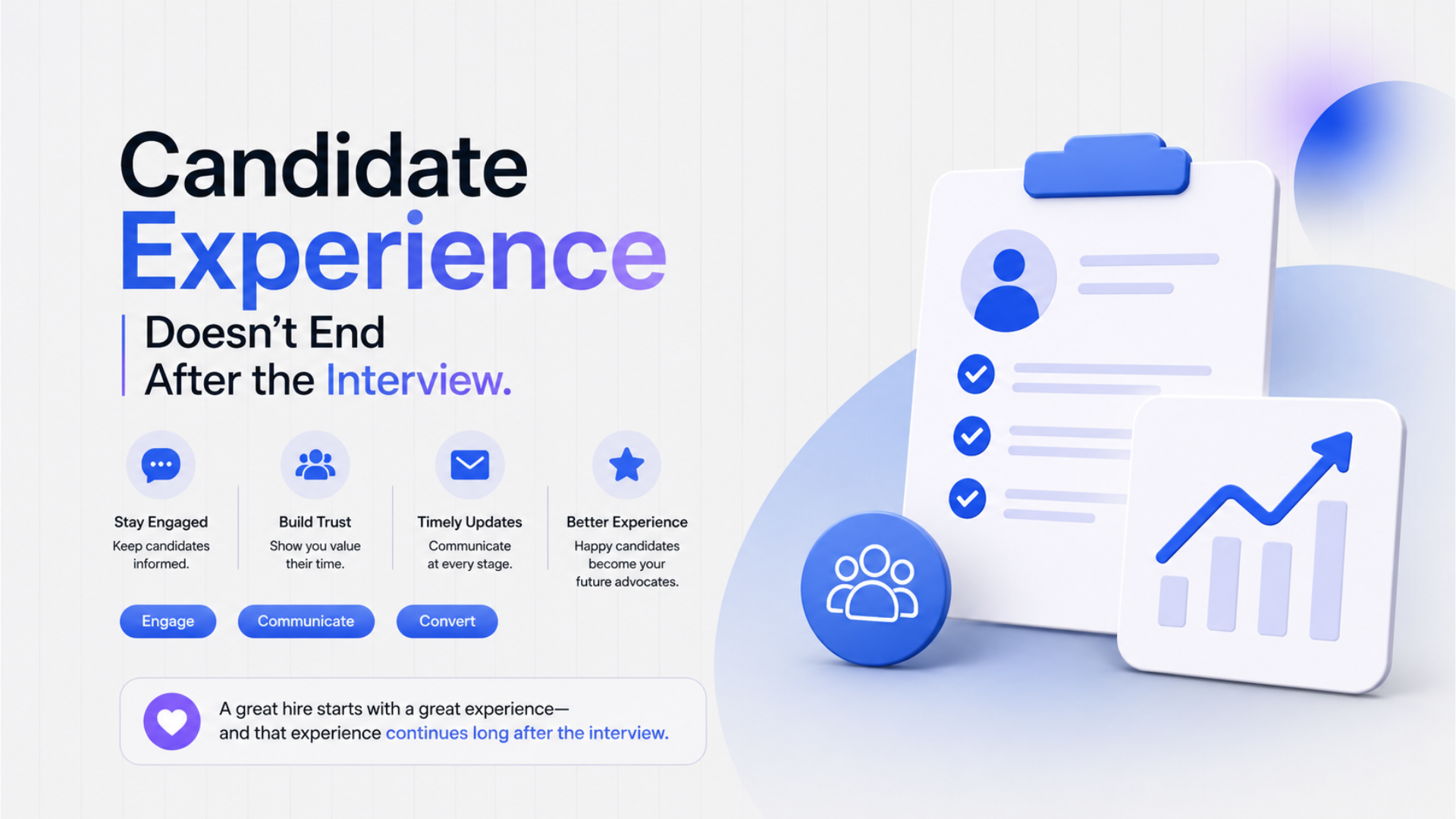
Aisha's story is not unusual. It is representative of the most common and most costly failure mode in talent acquisition: the post-interview gap. Most recruiting organizations invest significant time and resources in creating a positive interview experience. They design structured interview processes, train interviewers, prepare candidates with detailed briefing materials, and collect real-time feedback after each round. This investment is worthwhile, but it creates a false sense of completion. The interview feels like the main event, and once it is over, the organization relaxes its engagement intensity, assuming that a positive interview experience will sustain the candidate's interest and commitment through the post-interview phase. This assumption is wrong, and the data shows exactly how wrong it is. According to SHRM's talent acquisition research, forty-five percent of candidates who have a positive interview experience but a poor post-interview experience withdraw before an offer is extended or decline an offer when one is extended, because the post-interview silence or inconsistency undermines the trust and excitement that the interview built. The post-interview phase is not a cooldown period. It is the most consequential phase of the hiring process, because it is where the candidate's emotional trajectory, built through weeks of engagement and a positive interview experience, either sustains and deepens or collapses. Understanding the difference between AI sourcing and AI recruiting is relevant here because sourcing and interviewing generate the opportunity, but the post-interview engagement determines whether that opportunity converts into a hire. Huntlo's platform is designed to maintain the intensity and quality of candidate engagement through every phase of the process, including the post-interview phase where most organizations drop the ball.
The Post-Interview Danger Zone: Where Candidates Are Actually Lost
The post-interview phase encompasses four distinct stages, each with its own risks and engagement requirements. The first stage is the decision period, the time between the final interview and the decision to proceed or not. This is typically the most dangerous stage because the candidate is in a state of heightened vulnerability and uncertainty. They have invested significant time and emotional energy in the interview process, and they are waiting for a signal that their investment was worthwhile. If that signal does not arrive promptly, the candidate begins to reinterpret their experience, questioning whether the interview went as well as they thought, wondering whether the organization is pursuing other candidates more aggressively, and gradually disengaging emotionally from the opportunity. The second stage is the offer preparation period, the time between the decision to extend an offer and the actual offer presentation. This stage is often handled poorly because the internal focus shifts to offer construction and approval, with the candidate treated as a passive recipient rather than an active participant. The candidate who receives proactive communication during this period, information about the timeline, updates on the offer components being discussed, and expressions of continued interest, arrives at the offer conversation with confidence and trust. The candidate who receives silence arrives with anxiety and skepticism. According to McKinsey's
organizational insights, candidates who receive proactive communication during the offer preparation period are thirty-five to fifty percent more likely to accept the offer when it is presented, because the communication has maintained the trust and excitement that the interview process built.
The third stage is the offer and negotiation phase, where the candidate makes their final decision. This is the most communication-intensive stage of the entire hiring process, yet many organizations treat it as a purely transactional exchange of numbers. The candidate is evaluating not just the compensation but the entire experience of being recruited, and the communication quality during negotiation is the strongest signal they have about how the organization will treat them as an employee. A negotiation that is handled with transparency, responsiveness, and genuine attention to the candidate's priorities produces a candidate who feels respected and valued, which dramatically increases acceptance probability. A negotiation that is handled with delays, opacity, or a take-it-or-leave-it attitude produces a candidate who feels processed, which drives them toward competing offers regardless of the financial terms. The fourth stage is the pre-boarding period between offer acceptance and day one. This is the stage that most organizations neglect entirely, treating the accepted offer as the end of the candidate experience rather than the beginning of the employee experience. Candidates who receive no communication during pre-boarding experience acceptance regret, re-engage with competing opportunities, and in some cases withdraw before their start date. The pattern of teams accumulating tools without solving this engagement gap is familiar: they end up with more tools but the same hiring problems, because the tools focus on the sourcing and interview phases while the post-interview phase remains unaddressed. The teams that lose candidates in this phase are the ones who treat research on how many followups one hire actually needs as a pre-interview concern, when in reality the post-interview follow-ups are the ones that most directly determine whether a candidate accepts, stays committed, and actually shows up on day one.
Why the Post-Interview Phase Is Systematically Underinvested
The systematic underinvestment in post-interview engagement is driven by three structural factors that exist in most recruiting organizations. The first factor is process design. Most hiring processes are designed around internal milestones, screening complete, interviews scheduled, feedback collected, offer approved, rather than around the candidate's experience of the process. Once the interview milestone is passed, the process shifts to internal deliberation and approval workflows that are invisible to the candidate. The candidate experiences this shift as a communication gap, because no one has designed the process to maintain candidate-facing communication during the internal deliberation phase. The second factor is measurement. Most recruiting dashboards track metrics that emphasize the interview phase, interview-to-offer conversion, interview satisfaction scores, and time-to-interview, while the post-interview phase is measured only by the final outcome, offer accepted or declined. This measurement gap means that recruiting leaders cannot see the post-interview communication failures that are driving candidate withdrawal and decline, because their dashboards do not surface the
intermediate signals, response times, communication frequency, and candidate engagement levels, that would reveal the problem. The third factor is incentive alignment. Recruiters are typically measured and compensated based on hires made, not on the quality of the candidate experience at every stage. A recruiter who invests heavily in post-interview engagement receives the same credit for a hire as one who lets the process go silent and gets lucky. According to LinkedIn's recruiting resources, organizations that add post-interview engagement metrics to their recruiter scorecards, measuring communication timeliness, candidate satisfaction after the interview, and pre-boarding engagement quality, see fifteen to twenty-five percent improvements in offer acceptance rates within a single quarter, because the metrics create accountability for the phase that was previously invisible.
These three structural factors, process design, measurement gaps, and incentive misalignment, create a self-reinforcing cycle of underinvestment. Because the post-interview phase is not designed into the process, it is not measured. Because it is not measured, it is not incentivized. Because it is not incentivized, recruiters prioritize other activities. And because recruiters prioritize other activities, the post-interview phase remains underinvested, and the cycle continues. Breaking this cycle requires all three factors to be addressed simultaneously: the process must be redesigned to include candidate-facing communication at every post-interview stage, the measurement system must track post-interview engagement quality, and the incentive structure must reward recruiters for maintaining candidate experience excellence through the entire process, not just through the interview. This is especially important when hiring for niche and technical roles, where the post-interview phase is often longer due to multiple stakeholder approvals and specialized assessment requirements, and where the candidates have competing options and minimal patience for communication gaps. The recruiters who are most effective in the post-interview phase are the ones who understand that their job does not end when the interview ends. The recruiters asking whether AI will replace their jobs should recognize that the post-interview engagement skills, the ability to maintain trust, manage uncertainty, and advocate for the candidate through internal deliberations, are among the most valuable and least replaceable capabilities a recruiter possesses. Huntlo's platform supports these capabilities by maintaining continuous candidate engagement through the post-interview phase, providing timely communication recommendations and monitoring for the disengagement signals that precede withdrawal or decline. As an agentic AI recruiting platform, Huntlo does not wait for the recruiter to remember to follow up. It actively monitors the candidate's journey and prompts the recruiter to engage at the moments that matter most.
Designing a Post-Interview Experience That Sustains and Converts
A well-designed post-interview experience is built on three principles: proactive communication, transparent timelines, and continued personalization. Proactive communication means the recruiter reaches out to the candidate before the candidate feels the need to reach out to the recruiter. If the decision timeline is five business days, the recruiter communicates that timeline at the end of the final interview and then follows up on day five with an update, even
if the update is that the decision has been delayed by two days with a new specific timeline. The candidate never has to wonder whether the process is still active. Transparent timelines mean the recruiter provides honest, specific information about when the candidate can expect to hear back, what the next steps are, and what factors are being considered in the decision. Vague statements like “we will be in touch soon” create more anxiety than no communication at all, because they raise expectations without setting a clear timeframe for fulfillment. Continued personalization means the recruiter's post-interview communication demonstrates awareness of the candidate's specific experience, referencing specific conversations from the interviews, addressing the candidate's individual concerns, and connecting the opportunity to the career priorities the candidate expressed during the process. According to Gartner's HR trends research, candidates who receive proactive, transparent, and personalized post-interview communication are forty to sixty percent less likely to withdraw before an offer and twenty-five to thirty-five percent more likely to accept an offer when it is extended, because the communication sustains the trust and emotional investment that the interview process built.
The operational challenge of delivering this experience at scale is significant. A recruiter managing multiple candidates at different post-interview stages must remember each candidate's timeline, track internal decision progress, and craft personalized updates for each one, all while managing the operational demands of other open roles and active candidates. Without systematic support, this is impossible to do consistently, and the candidates who receive the least attention are often the ones most likely to be lost, because they are the ones who interpret communication gaps as a signal of diminished interest. The quality of the candidate intelligence that informs post-interview communication is critical. Teams that have encountered outdated candidate data in AI tools know that post-interview communication based on stale context will feel hollow, because the candidate expects the recruiter to reference the conversations and concerns from their recent interviews, not from a profile that has not been updated. When evaluating platforms, use the framework for evaluating an AI sourcing tool before buying to ensure that real-time context updating and post-interview engagement support are core capabilities. Research consistently confirms that referred candidates have better post-interview experiences, and data shows that referrals outperform cold outreach in part because the referring employee maintains communication with the candidate through the post-interview phase, providing updates and reassurance that formal recruiting often fails to deliver. Huntlo's platform gives every candidate this referral-quality post-interview experience by maintaining continuous engagement, providing the recruiter with timely follow-up recommendations, and ensuring that the personalization and relevance that characterized the interview phase continue seamlessly through the decision, offer, negotiation, and pre-boarding phases.
From Accepted Offer to Day One: The Final Test of Experience Quality
The pre-boarding period between offer acceptance and day one is the final stage of the candidate experience, and it is the stage where the fewest organizations maintain engagement. The
common assumption is that an accepted offer means the candidate is committed and the recruiter's work is done. This assumption is dangerous for two reasons. First, acceptance is not finality. Candidates who have accepted offers continue to be courted by other employers, and candidates who experience a communication void between acceptance and start date are significantly more susceptible to counteroffers and competing opportunities. Second, the pre-boarding experience sets the candidate's expectations for the employee experience. A candidate who receives regular, informative, and welcoming communication during pre-boarding arrives on day one with confidence, enthusiasm, and a positive orientation toward the organization. A candidate who receives nothing arrives with uncertainty, anxiety, and a lingering question about whether the organization values them as much as they thought when they accepted the offer. According to Deloitte's talent research, organizations that maintain structured pre-boarding communication programs, providing regular updates, welcoming messages from future teammates, and practical information about the first week, report twenty to thirty percent higher new-hire satisfaction scores and ten to fifteen percent lower first-week no-show rates, because the pre-boarding experience confirms the candidate's decision and builds anticipation rather than doubt.
The pre-boarding phase also represents a strategic opportunity that most organizations waste. It is the only phase of the hiring process where the candidate is fully committed and fully available for engagement, because they have accepted the offer and are no longer evaluating competing options. This makes it the ideal time to deepen the relationship, accelerate the candidate's integration into the team's culture and context, and begin the process of turning a new hire into a productive and engaged employee. Organizations that invest in pre-boarding engagement, sharing team updates, introducing the candidate to future colleagues, providing relevant reading materials, and maintaining regular touchpoints, create a foundation of connection and context that accelerates the new hire's effectiveness from day one. According to EY's technology insights, AI-powered engagement platforms are making this level of pre-boarding support operationally viable for the first time, by maintaining communication schedules, generating personalized touchpoints, and monitoring for the disengagement signals that precede pre-boarding withdrawal. Huntlo's platform extends the candidate experience seamlessly from the first message through the interview, the offer, the negotiation, and the pre-boarding period, ensuring that the quality of engagement that attracted the candidate continues uninterrupted until they become an employee. The candidate experience does not end after the interview. The companies that understand this are the ones that close the candidates they want, at the offer stage and on day one. Huntlo makes the full journey possible. Start engaging beyond the interview with Huntlo.