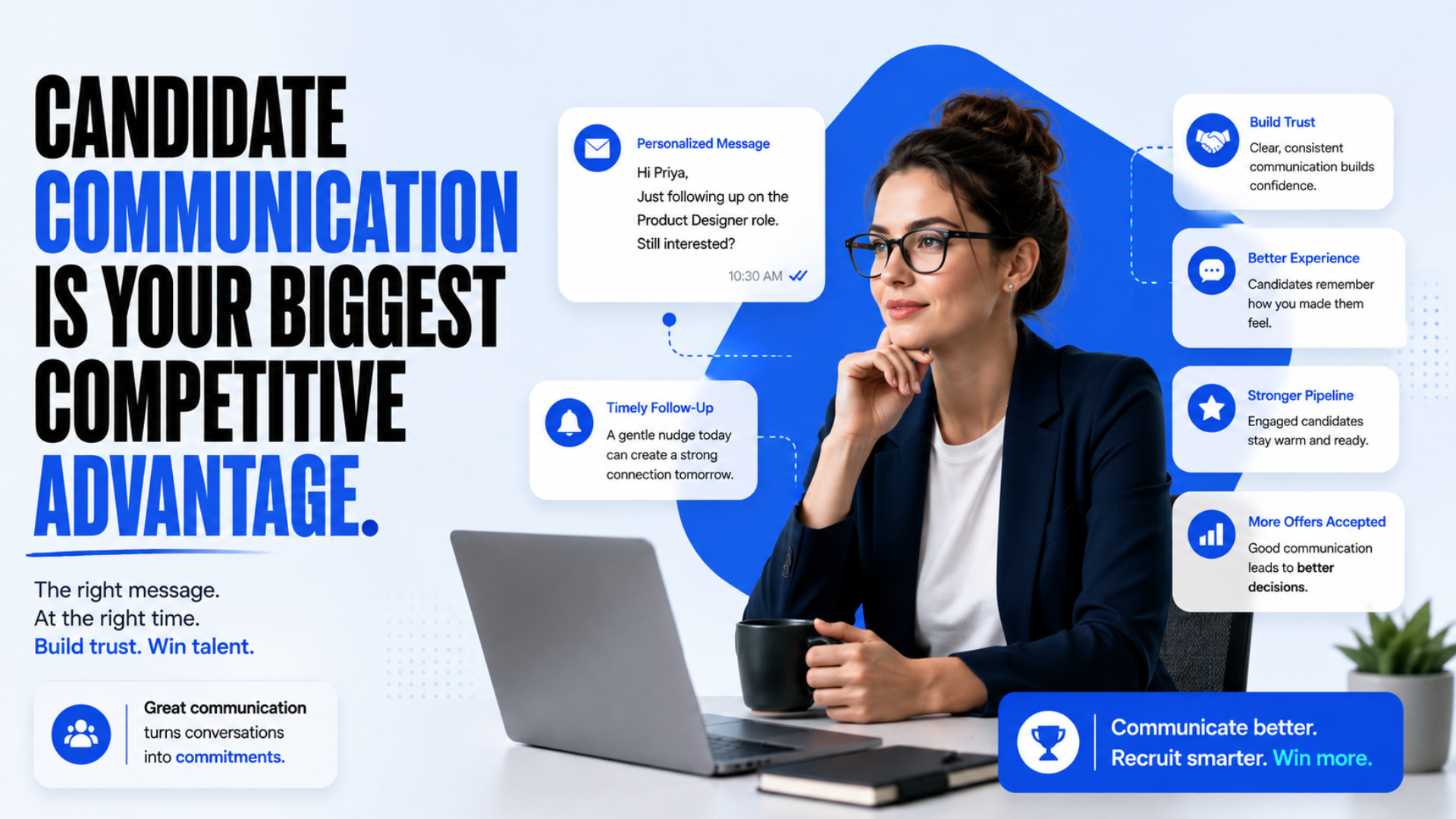
Priya had two offers on the table. The compensation was nearly identical, within three thousand dollars on base and comparable equity. Both companies operated in the same sector, offered remote flexibility, and had comparable brand recognition. Her decision came down to something neither company put in their offer letter: how they made her feel during the hiring process. Company A had responded to her initial application within four hours, sent a personalized message referencing her open-source contributions before the screening call, and provided detailed interview feedback within twenty-four hours of each round. Company B had taken five days to respond to her application, sent a generic template for the screening call, and left her waiting eight days after the final interview with no update. Priya chose Company A. She did not choose the higher offer. She did not choose the bigger brand. She chose the company that made her feel informed, valued, and respected at every stage. Company B never learned why they lost her. They assumed the offer was not competitive enough and raised the band for the next candidate. The real reason they lost was invisible to them, because they had never invested in the one thing that would have made the difference.
The recruiting industry spends enormous energy competing on factors that candidates rank lower than employers assume. Compensation, title, and employer brand receive the bulk of strategic attention and budget, while the quality of candidate communication, the daily, stage-by-stage experience of interacting with the recruiting team, is treated as an operational afterthought. This is a strategic error of the first order, because the evidence consistently shows that communication quality is the most influential factor in candidate decision-making when compensation and role scope are broadly comparable, which they are in the vast majority of competitive hiring situations. According to SHRM's talent acquisition research, the quality of
pre-offer communication is the single strongest predictor of offer acceptance, outperforming compensation, role title, and employer brand in multivariate analysis. The reason is straightforward: communication is the lens through which candidates evaluate everything else. A generous offer delivered through slow, generic, inconsistent communication feels risky. A competitive offer delivered through fast, personalized, attentive communication feels like an opportunity worth committing to. The offer is the same. The communication changes the candidate's perception of the offer, and perception drives the decision. This insight is not new, but its implications for recruiting strategy are still underappreciated. If communication is the primary decision driver, then communication is where competitive advantage should be built, and that requires a fundamentally different approach to how recruiting teams invest their time, technology, and attention.
Why Communication Beats Compensation in Candidate Decisions
The dominance of communication in candidate decision-making is not a hypothesis. It is a repeatedly validated finding across industry surveys, candidate experience studies, and behavioral research. The mechanism is both psychological and practical. Psychologically, communication quality serves as a proxy for organizational culture and management quality. When a candidate experiences fast, thoughtful, personalized communication from a recruiting team, they instinctively extrapolate that experience to the broader organization. If the recruiters are this responsive and attentive, they reason, the team must be well-run, the management must be competent, and the culture must value its people. Conversely, when communication is slow, generic, or inconsistent, the candidate extrapolates in the opposite direction, inferring disorganization, poor management, and a culture that does not prioritize its people. This heuristic is so powerful that it overrides objective differences in compensation. A candidate will accept ten thousand dollars less from an organization that communicated well because the communication has created a sense of trust and belonging that money alone cannot establish. According to McKinsey's organizational insights candidates who rate their communication experience in the top quartile are three to four times more likely to accept an offer than those who rate it in the bottom quartile, even when the lower-rated experience came with a higher compensation package. The practical reason communication beats compensation is equally important. Candidates rarely make decisions based on a single factor. They evaluate the total opportunity: the role, the team, the growth trajectory, the culture, and the compensation. Communication influences every one of these evaluations because it is the primary mechanism through which information about the role, the team, and the culture is delivered. A recruiter who provides detailed, specific information about the team structure, the technical challenges, and the growth path in their follow-up communications is not just being thorough. They are actively shaping the candidate's evaluation of the opportunity in a way that a compensation-focused strategy cannot. The recruiters who understand the difference between AI sourcing and AI recruiting see this clearly. Sourcing gets candidates into the pipeline. The communication that follows, its quality, speed, and relevance, is what actually converts them into hires.
This communication advantage is also the most durable competitive moat available to a recruiting team. Compensation can be matched by any competitor with a larger budget. Employer brand can be replicated through marketing spend. Role scope is often similar across competing opportunities for the same type of position. But communication quality, the specific way your recruiting team engages with each candidate at each stage of the process, is extraordinarily difficult to replicate because it depends on the interplay of technology, process, and human judgment that is unique to your organization. A competitor can copy your compensation structure in a day. They cannot copy the depth of contextual understanding, the consistency of engagement, and the timing precision that a well-designed communication system delivers to every candidate. This durability is what makes communication the most strategically valuable investment a recruiting team can make. The challenge is that building this advantage at scale, across every candidate and every stage, requires capabilities that manual processes simply cannot deliver consistently. That is where AI-powered communication platforms like Huntlo enter the equation. Huntlo's intelligence layer provides signal-based timing that ensures every follow-up arrives when the candidate is most receptive, contextual personalization that makes every message reference the candidate's specific conversations and concerns, and adaptive cadence that adjusts communication frequency to each candidate's individual engagement rhythm. These capabilities transform communication from a recruiter-dependent activity into a system-dependent one, ensuring that the competitive advantage is built into the infrastructure rather than residing in the unpredictable availability of individual recruiters. According to LinkedIn's recruiting resources organizations using AI-powered communication platforms report that candidates consistently rate their experience higher than candidates interacting with competitors using manual processes, even when the competitor offers higher compensation.
What Candidates Actually Evaluate When They Compare Opportunities
When a candidate is comparing two or more opportunities simultaneously, which is the case for any competitive hire, they are not running a spreadsheet analysis of compensation, benefits, and title. They are running a holistic evaluation that weighs dozens of conscious and subconscious signals, and communication quality generates more of those signals than any other single factor. The first signal is speed. How quickly did the company respond to the initial expression of interest? How fast was the screening call scheduled? How promptly was interview feedback delivered? Speed communicates organizational priority. A company that responds within hours is signaling that the candidate matters. A company that takes days is signaling that the candidate is one of many and that the hiring process is not a priority. The second signal is specificity. Does the recruiter's communication reference the candidate's actual background, or does it read like a template that could apply to anyone? Does the recruiter remember details from prior conversations, or do they ask the same questions repeatedly? Specificity communicates attentiveness and respect. The third signal is consistency. Is the communication steady and reliable, or does it come in bursts followed by long silences? Consistency communicates organizational reliability. A candidate who experiences consistent
communication assumes the organization is well-managed. A candidate who experiences erratic communication assumes the opposite, and they are usually right.
The fourth signal is transparency. Does the communication provide honest, specific information about the role, the process, and the timeline, or does it rely on vague assurances and corporate language? Transparency builds trust, and trust is the foundation on which acceptance decisions are made. The fifth signal is proactivity. Does the recruiter anticipate the candidate's questions and address them before they are asked, or does the candidate have to drag information out of the process at every stage? Proactive communication signals competence and confidence, while reactive communication suggests an organization that is disorganized or uncertain. These five signals, speed, specificity, consistency, transparency, and proactivity, are the criteria by which candidates actually evaluate competing opportunities, and they are all communication-driven. A recruiting team that excels on all five will consistently win competitive hiring situations against teams that offer higher compensation but underperform on communication. The challenge is delivering all five signals at scale, across every candidate, at every stage. Manual processes can deliver these signals for a handful of high-priority candidates, but they cannot deliver them consistently for twenty or more candidates simultaneously. Understanding how many followups one hire actually needs is useful for calibrating volume, but each of those follow-ups must embody all five signals if it is going to function as a competitive advantage rather than just a checkbox. This is precisely the challenge that platforms like Huntlo are designed to solve. By automating signal detection, generating contextually personalized drafts, and optimizing timing for each individual candidate, Huntlo ensures that every candidate interaction, not just the ones the recruiter has time to craft manually, delivers the speed, specificity, consistency, transparency, and proactivity that win hiring decisions. The teams that simply add more tools without upgrading to intelligent systems often discover they have more tools but the same hiring problems, a pattern explored in the analysis of organizations with more tools but the same hiring problems. The competitive advantage requires an integrated system, not a collection of point solutions.
The Communication Practices That Separate Winners from Runners-Up
The recruiting teams that consistently win competitive hiring situations share a set of communication practices that distinguish them from the teams that regularly lose candidates to competitors. The first practice is sub-twenty-four-hour response time for every candidate interaction. This does not mean every message requires a detailed, researched response within twenty-four hours. It means every candidate receives an acknowledgment that their message has been received and that a substantive response is coming. This acknowledgment alone eliminates the anxiety and uncertainty that cause candidates to disengage. The second practice is stage-specific information delivery. At each stage of the hiring process, the candidate has different information needs. Before the screening call, they need to understand the role scope and why they were identified as a fit. After the screening call, they need to know what comes next, what the timeline looks like, and what the interviewers will focus on. After each interview, they need specific feedback, not just a pass or fail verdict. Winners deliver this
information proactively, before the candidate asks, and in a format that demonstrates genuine understanding of the candidate's individual situation and concerns. The third practice is concern surfacing and resolution. The best recruiting teams do not wait for candidates to raise objections. They anticipate the most common concerns, compensation, relocation, team stability, growth trajectory, and address them proactively in their communications. This preemptive approach prevents concerns from becoming decision blockers and demonstrates a level of attentiveness that most candidates never experience.
The fourth practice is competitive awareness without competitive anxiety. Winners acknowledge that the candidate is evaluating multiple opportunities and use that awareness to sharpen their communication rather than to create pressure. They provide information that helps the candidate make an informed decision, they respect the candidate's evaluation process, and they maintain consistent communication regardless of whether they believe they are the candidate's first choice. This confidence is itself a signal of organizational quality, and it is far more effective than the anxious, pressure-heavy communication that losing teams deploy when they sense they are behind. The fifth practice is post-decision communication that reinforces the candidate's choice. The communication advantage does not end at offer acceptance. The period between acceptance and start date is where many organizations lose candidates to counteroffers or buyer's remorse, and the teams that maintain engagement through this period, providing relevant information, facilitating connections with future teammates, and demonstrating continued investment in the candidate's success, convert acceptances into actual joins at significantly higher rates. The recruiters asking whether AI will replace their jobs should note that every one of these practices requires human judgment, empathy, and strategic thinking. AI does not replace these capabilities. It creates the capacity for recruiters to exercise them consistently by handling the informational and operational work that currently consumes their time. Huntlo's platform, as an agentic AI recruiting platform, operates precisely this way: it monitors engagement signals, generates contextually grounded recommendations, and handles the timing and research burden, freeing the recruiter to focus on the human elements of communication, the empathy, the strategic framing, and the relationship building, that no AI can replicate. This is the division of labor that transforms communication from a sporadic strength into a systematic competitive advantage.
How AI Turns Communication Into a Scalable Advantage
The fundamental barrier to building a communication-based competitive advantage has always been scalability. Any talented recruiter can deliver exceptional communication to three or four high-priority candidates. The challenge is delivering it to twenty or thirty candidates simultaneously, across multiple stages, with the speed, specificity, consistency, transparency, and proactivity that winning requires. This is a capacity problem, and AI is the solution. AI-powered communication platforms maintain real-time awareness of every candidate's engagement status, generate personalized follow-up recommendations grounded in each candidate's specific interaction history, and optimize the timing of every touchpoint based on behavioral signals rather than recruiter availability. The result is a communication system that delivers
the same quality of engagement to the twentieth candidate in the pipeline as it does to the first, something that no manual process has ever achieved. According to Gartner's HR trends research the organizations achieving the highest offer acceptance rates are not those with the largest recruiting teams or the biggest compensation budgets. They are the ones that have deployed AI-powered communication systems that ensure every candidate, regardless of pipeline position or recruiter workload, receives consistent, personalized, and timely engagement throughout the entire hiring process.
The scalability of AI-powered communication also creates a compounding advantage. Each candidate interaction generates data that improves the system's recommendations for future interactions. The AI learns which message types, timing patterns, and personalization approaches produce the best outcomes for different candidate profiles and different stages of the hiring process. Over time, the system becomes more effective, delivering increasingly precise and impactful communication recommendations that continuously improve candidate engagement metrics. This learning loop is self-reinforcing: better communication produces better data, better data produces better recommendations, and better recommendations produce even better communication. Organizations that invest early in this capability build a lead that becomes progressively harder for competitors to close, because the accumulated learning and refined processes represent a form of institutional intelligence that cannot be purchased or replicated quickly. The quality of this learning, however, depends entirely on the quality of the data feeding it. Teams that have experienced the frustration of outdated candidate data in AI tools understand that AI-powered communication based on stale or inaccurate data will produce recommendations that miss the mark, potentially damaging the candidate relationship rather than strengthening it. When evaluating platforms, use the framework for evaluating an AI sourcing tool before buying to ensure data freshness and signal accuracy are core capabilities rather than afterthoughts. Huntlo's approach to this challenge is to maintain a continuously updated candidate intelligence layer that aggregates interaction data, engagement signals, and behavioral patterns in real time, ensuring that every communication recommendation is grounded in the most current information available. This is especially critical for niche and technical roles where the candidate pool is small, competition is intense, and a single mistimed or irrelevant communication can cost you the hire. In these markets, the margin for error is minimal, and the communication advantage is not a nice-to-have. It is the difference between filling the role and watching it sit open for months.
Building a Communication Advantage That Competitors Cannot Copy
The most valuable competitive advantages are those that are difficult to observe, understand, and replicate. A compensation structure is published on Glassdoor within days. An employer branding campaign is visible to everyone. But the specific way your recruiting team communicates with each candidate, the timing, the personalization, the signal detection, the adaptive cadence, is invisible to competitors. They can see that you are winning competitive hiring situations, but they cannot see exactly why. This invisibility is what makes a communication-based advantage so durable and so strategically valuable. Building this advantage requires
three investments. The first is technology investment. The AI-powered platform that provides signal detection, contextual personalization, and adaptive cadence is the foundation. Without it, the advantage depends on individual recruiter skill and available time, neither of which is scalable or reliable. The second is process investment. The team must define clear communication standards for each stage of the hiring process: maximum response times, minimum personalization requirements, proactive information delivery expectations, and concern resolution protocols. These standards create the target that the technology helps the team hit consistently. The third is culture investment. The recruiting team must internalize the principle that communication is not an operational task but a strategic weapon, and that every candidate interaction is an opportunity to strengthen the organization's competitive position in the talent market. This cultural shift is the hardest investment to make, but it is also the most important, because technology and process without cultural commitment will produce inconsistent results.
The organizations that have made all three investments are now operating at a level that their competitors cannot match through traditional means. They close positions faster because their communication maintains candidate momentum through every stage. They achieve higher acceptance rates because their communication builds trust and conviction that compensation alone cannot establish. They reduce candidate dropout because their communication prevents the disengagement that leads to ghosting and withdrawal. And they do all of this at scale, across every candidate, regardless of recruiter workload or hiring volume. This is why referred candidates have historically outperformed cold-sourced candidates. The referring employee provides the context, consistency, and proactive information delivery that the recruiting team delivers for cold candidates through a well-designed system. Research consistently shows that referrals outperform cold outreach because the communication experience is inherently more personalized and consistent. Huntlo's platform is designed to give every candidate this referral-quality communication experience, closing the gap between referred and cold-sourced candidate engagement by ensuring that every candidate, regardless of source, receives fast, specific, consistent, transparent, and proactive communication at every stage. EY's technology insights report that enterprises with mature AI-powered communication systems are achieving twenty-five to thirty-five percent higher close rates than their peers, and that the gap is widening as early adopters accumulate data and refine their systems. Deloitte's talent research concludes that communication-based competitive advantage in recruiting is the most underinvested and highest-ROI strategic opportunity available to talent acquisition leaders today, because it requires commitment and capability rather than just budget, and that makes it a moat that money alone cannot cross. Your competitors can match your offer. They cannot match the experience of being genuinely understood, consistently informed, and proactively supported throughout the hiring process. That experience is your advantage. Build it with Huntlo.