Most recruiting outreach operates on a binary model. A candidate is either a stranger you have never contacted — cold — or a prospect you are actively pitching for a specific open role. There is no intermediate stage, no process for building familiarity and trust before making the ask. The first message introduces the recruiter, describes the opportunity, and requests a conversation, all in a single touchpoint. For the small percentage of candidates who happen to be actively looking at that exact moment, this approach works. For the much larger percentage of passive candidates who might be interested under the right circumstances but are not currently in job-search mode, it does not. Top recruiters understand this distinction and operate differently. They treat candidate engagement as a progression rather than an event, investing in the in-between stages that most recruiters skip entirely. The result is a pipeline of candidates who feel genuinely approached rather than mass-targeted — a subtle but critical difference that shapes every interaction that follows and produces meaningfully higher conversion rates at every stage of the hiring funnel.
The Temperature Spectrum: Cold, Warm, and Hot — And Why the Middle Matters Most
In recruiting, the terms cold, warm, and hot are used frequently but defined inconsistently. A useful framework for understanding candidate temperature is to think of it along two dimensions: awareness and receptivity. A cold candidate is someone who has no awareness of the recruiter or the hiring organization and has given no signal of receptivity to a career move. They do not know who you are, they have not interacted with your
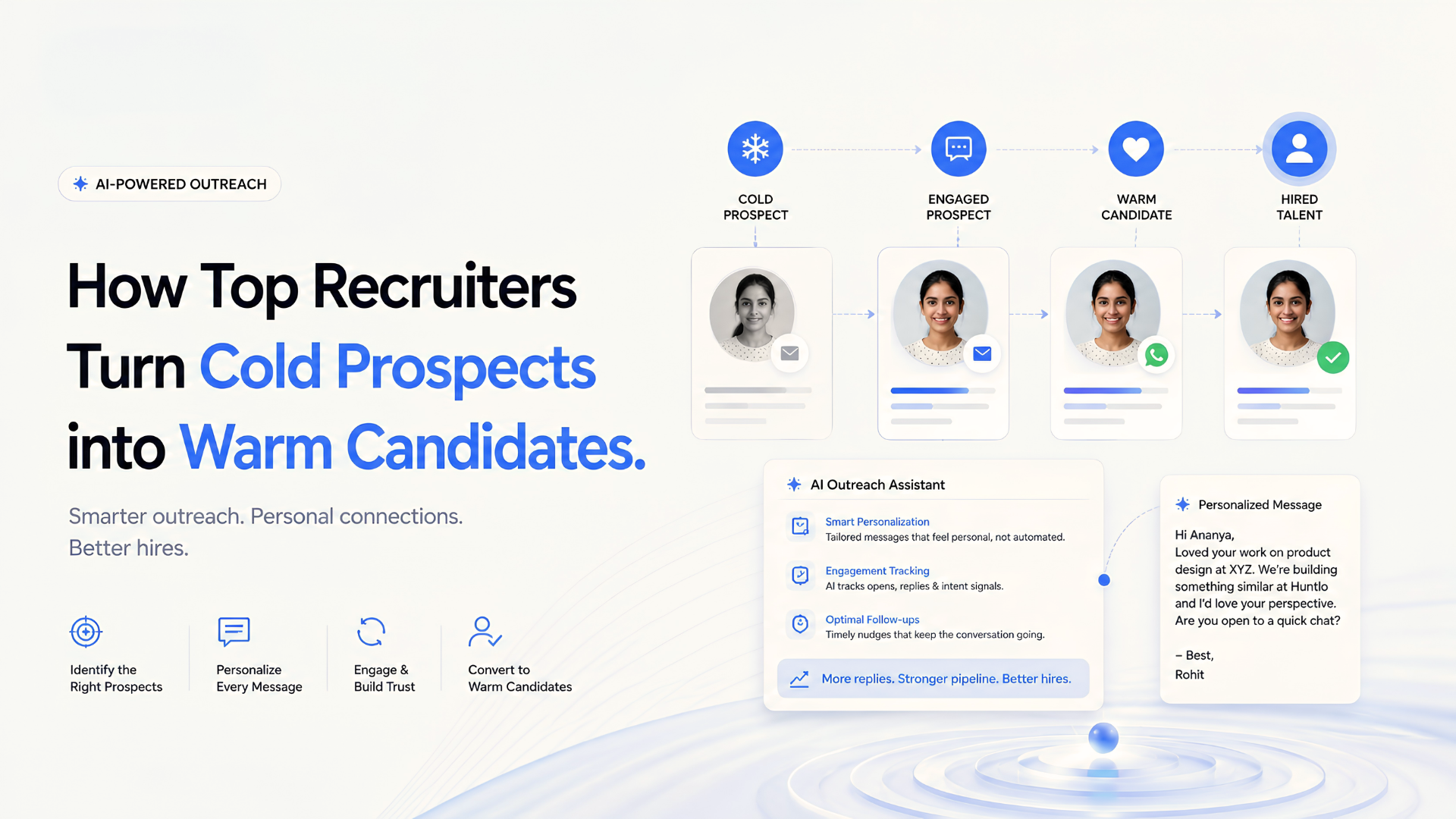
company, and their professional profile shows no indication that they are open to new opportunities. A warm candidate is someone who has some level of awareness or positive association — they may have seen your company’s content, attended an event where your team spoke, connected with someone on your team on LinkedIn, or had a prior positive interaction with your organization — even if that interaction was not directly related to a job opportunity. A hot candidate is someone who is actively expressing interest: they have applied, responded to outreach, asked for more information, or been referred by a trusted connection. Most recruitment outreach is designed to convert cold candidates directly into hot ones — to go from zero awareness to active interest in a single message. This is the equivalent of proposing marriage on a first date. It occasionally works, but the success rate is low, and the experience is awkward for everyone involved when it doesn’t.
The middle stage — the warm stage — is where the vast majority of recruiting potential lives and where almost no one invests effort. According to LinkedIn’s talent trends research, approximately seventy to eighty percent of the professional workforce is not actively looking for a job at any given time, but a significant portion of those passive candidates are open to the right opportunity if it is presented by someone they perceive as credible and relevant. The challenge is not making passive candidates interested in new opportunities. It is earning the credibility and relevance that makes them willing to engage with you when you do present one. That credibility and relevance is built during the warm stage, through a series of low-pressure, value-adding interactions that transform an unknown recruiter into a familiar professional contact. The warm stage is not about selling a job. It is about building the relationship that makes selling a job possible.
The First Rule of Warming: Give Before You Ask
The single most important principle that separates top recruiters from average ones in the warming process is the principle of giving before asking. Average recruiters lead with the ask. Their first message is about the role, the company, and what they need from the candidate. Top recruiters lead with value. Their first interaction — which may not even be a direct message — is about something the candidate would find useful, interesting, or relevant. This could take many forms: sharing an article or research paper relevant to the candidate’s field, commenting thoughtfully on a piece of content the candidate has published, connecting the candidate with someone in their network who is working on a similar challenge, or sending a brief note that references a specific accomplishment and offers a genuine insight or observation without any request attached. The key is that the interaction creates value for the candidate without extracting anything in return. No request for a call, no request for a resume, no pitch for a role. Just a professional interaction that leaves the candidate with a positive impression of the recruiter’s knowledge, credibility, and thoughtfulness.
This approach works because it leverages a fundamental principle of human psychology that is well-documented in the sales and marketing literature: reciprocity. When someone provides value without asking for anything in return, the recipient feels a natural, often unconscious, inclination to reciprocate. This does not mean the candidate will immediately
respond with interest in a job opportunity. But it means that when the recruiter does eventually reach out with a specific opportunity, the candidate’s default response is not “who is this person and why are they emailing me” but rather “this is the person who shared that interesting article last month, they seem like they know what they are talking about.” That shift in perception — from unknown stranger to known, credible contact — is the entire point of the warming process, and it cannot be achieved by leading with the ask. The fact that referrals consistently outperform cold outreach in recruiting is partly explained by this same principle: a referral comes with pre-existing warmth because the referring party has already established trust and credibility with the candidate. Value-first warming recreates that warmth artificially, building a positive association that makes the eventual outreach feel like a continuation of an existing relationship rather than a cold introduction.
The Multi-Touch Warming Sequence: A Practical Framework
Top recruiters do not rely on a single interaction to warm a candidate. They use a structured sequence of touches that progressively builds familiarity, credibility, and relevance over a period of days or weeks. The exact structure of this sequence varies based on the candidate’s seniority, the role being recruited for, and the channels available, but a practical framework that works across most contexts involves four stages. The first stage is observation and research. Before any direct contact, the recruiter studies the candidate’s professional presence: their LinkedIn activity, published work, conference talks, GitHub contributions, or any other publicly available signals. The goal is not just to find facts to reference in a message but to develop a genuine understanding of what the candidate cares about professionally, what challenges they are working on, and what kind of information or connection might be genuinely valuable to them.
The second stage is the low-commitment first touch. This is the first direct interaction, and it is designed to be noticed without creating pressure. A thoughtful comment on the candidate’s LinkedIn post, a brief connection request with a personalized note that references something specific, or a short email that shares a relevant resource — the format matters less than the intent, which is to create a positive first impression without asking for anything. The third stage is the value-add follow-up. A few days to a week after the first touch, the recruiter sends a second interaction that adds additional value: a different piece of relevant content, an introduction to someone in the recruiter’s network, or an observation about a trend or development in the candidate’s field that connects to something the candidate has worked on. This second touch is critical because it signals that the first touch was not a one-off automation but part of a genuine pattern of engagement. Candidates recognize patterns, and a recruiter who appears twice with useful, relevant information is perceived very differently from one who appears once with a generic pitch.
The fourth stage is the transition to direct outreach. After two or three value-adding interactions, the recruiter is no longer a stranger. They are a professional contact who has demonstrated knowledge, relevance, and generosity. The direct outreach at this point — “I wanted to reach out because we are building a team around the kind of challenges you have been working on, and I think you would find the conversation worth your time” — lands
very differently than the same message would have landed if it were the first contact. The distinction between sourcing and recruiting is relevant here. Sourcing identifies candidates. Recruiting engages them. And the warming process is the bridge between the two — the mechanism that converts a name in a search result into a person who is willing to have a conversation. As explored in What’s the Difference Between AI Sourcing and AI Recruiting?, many organizations invest heavily in the sourcing side of this equation while underinvesting in the recruiting side, resulting in large candidate lists that produce few actual conversations. The warming process is how organizations close that gap.
Why Most Warming Efforts Fail: The Patience and Metrics Problem
If the warming process is so effective, why do most recruiters and recruitment organizations not practice it? The answer comes down to two structural barriers: patience and metrics. Warming takes time. A properly executed warming sequence for a senior candidate might span two to four weeks from the first touch to the direct outreach. In a recruitment environment where hiring managers want to see candidate profiles within days and where recruiter performance is measured by time-to-fill and activity volume, investing two to four weeks in warming a candidate who may or may not eventually be interested feels like an unaffordable luxury. The recruiter’s incentive structure — often tied to the number of candidates sourced, messages sent, and interviews scheduled — rewards immediate activity, not patient relationship-building. A recruiter who spends an hour warming five candidates and eventually converts two of them into conversations looks worse on a weekly activity report than a recruiter who sends fifty generic messages and converts one, even though the first recruiter’s approach produced a higher-quality pipeline with a better long-term yield.
This metrics problem is compounded by the fact that warming activities are difficult to measure with traditional recruiting KPIs. How do you quantify the value of a thoughtful LinkedIn comment that does not immediately produce a response? How do you track the downstream effect of sharing a research paper with a candidate who does not engage this month but responds to outreach three months later because they remember the interaction? The answer is that you cannot track it with standard recruiting metrics, which means most organizations do not measure it, which means most organizations do not incentivize it, which means most recruiters do not do it. According to McKinsey’s research on organizational talent practices, the most significant performance gaps in talent acquisition are not caused by a lack of individual recruiter skill but by organizational systems and metrics that reward the wrong behaviors. When the system measures messages sent rather than relationships built, recruiters optimize for messages sent. When the system measures time-to-fill rather than candidate quality, recruiters optimize for speed over warmth. Changing the warming behavior requires changing the metrics and incentives that drive it, which is a leadership decision, not a training decision.
Using AI to Warm Candidates at Scale Without Losing the Human Element
The patience and metrics problems are real, but they are increasingly solvable through AI. The reason warming has historically required so much manual time is that each stage of the process — research, first touch, value-add follow-up, transition to direct outreach — requires human judgment and effort. AI changes this equation by automating the research and initial touch stages while preserving the human element at the decision points that matter most. An AI system can analyze a candidate’s profile across multiple platforms, identify the most relevant angles for engagement, generate a personalized first-touch message, and schedule the appropriate follow-up sequence — all without the recruiter spending more than a few minutes on review and approval. This dramatically reduces the time cost of warming, making it feasible to run warming sequences for dozens or hundreds of candidates simultaneously rather than just the handful that a recruiter could manage manually.
The critical design principle for AI-assisted warming is that the AI handles the data-intensive, repetitive aspects of the process while the recruiter handles the relationship-intensive, judgment-dependent aspects. The AI identifies which candidates to warm, what to reference in the first touch, and when to send each follow-up. The recruiter reviews the AI-generated interactions for quality and accuracy, steps in personally for high-priority candidates where a direct human touch adds meaningful value, and manages the transition from warming to active recruiting when the candidate is ready to engage. This division of labor is the practical expression of the shift from automated tools to agentic systems. Automated tools execute tasks. Agentic systems manage processes. The warming process is fundamentally a process, not a task, and it requires the kind of intelligent, context-aware orchestration that agentic AI systems provide. HBR’s research on hiring and candidate experience has consistently found that candidates can distinguish between outreach that feels personal and human and outreach that feels automated and transactional, and that the quality of the initial interaction — the warmth with which it is delivered — is one of the strongest predictors of whether a candidate will engage, regardless of how strong the opportunity itself may be.
Building a Warming Engine with Huntlo
The warming process described in this article is powerful, but implementing it manually across a significant candidate pipeline is beyond what most recruitment teams can sustain. The research, content creation, sequencing, and timing that effective warming requires demand more time, attention, and consistency than individual recruiters can deliver while also managing their other responsibilities. This is where a purpose-built platform that embeds warming into the recruitment workflow creates transformative value. Huntlo was designed to support the full candidate engagement lifecycle, from initial sourcing through warming through active outreach through screening, and its architecture reflects the understanding that the warming stage is not an optional add-on but a critical part of the process that determines the quality and quantity of downstream conversations.
Huntlo’s AI sourcing engine identifies candidates across more than fifty platforms and evaluates their profiles for genuine role fit, career trajectory alignment, and signals of openness. Its multi-channel outreach capability reaches candidates through email,
LinkedIn, SMS, and WhatsApp — the channels where candidates are actually active, not just the channels that are most convenient for the recruiter. Its AI-generated outreach messages are personalized to each candidate’s specific context, creating the kind of value-first, relevance-driven interactions that the warming process requires. And its automated follow-up sequences execute the multi-touch progression that transforms cold profiles into warm contacts, with each touchpoint adding new information or a new angle rather than simply repeating the original message. The AI voice interview capability then provides a natural next step for candidates who have been warmed and are ready to engage: a convenient, conversational screening experience that respects their time and provides genuine value in return for their participation. This end-to-end approach — sourcing, warming, outreach, screening, and pipeline management — is what turns an outreach program from a volume-driven numbers game into a relationship-driven growth engine.
The challenge that many organizations face when trying to improve their outreach results is that they attempt to solve the problem at the message level — rewriting templates, adjusting subject lines, experimenting with different calls to action — when the real problem exists at the system level. The system is designed for cold outreach, and no amount of template optimization will produce the results that a warming-first system delivers. As described in The ATS Mistake Companies Keep Repeating, organizations repeatedly invest in new tools while preserving the underlying process flaws that limit their effectiveness. The same dynamic applies to outreach: adding a new messaging tool to a process that skips the warming stage will produce the same cold-outreach results, just through a different interface. Top recruiters understand this intuitively. They know that the conversation is won or lost before the first message is sent, in the research, planning, and relationship-building that determines whether the candidate perceives the outreach as a welcome connection or an unwelcome intrusion. The difference between these two perceptions is the difference between a pipeline full of engaged candidates and a pipeline full of unreturned messages. The warming process is how you build the former instead of the latter.
Related Topics:
Should Recruiters Worry About AI Replacing Their Jobs?
More Tools, Same Hiring Problems
Do AI Recruiting Tools Work for Niche or Technical Roles?