Marcus Chen, Senior Director of Engineering Hiring at a Series C logistics startup, had a problem that kept him up at night. His team of twelve recruiters could screen roughly forty candidates per week using traditional phone interviews, but the quality of those screens varied enormously depending on which recruiter conducted them. One recruiter might probe deeply into system design knowledge while another focused on cultural fit, and neither approach was consistently applied. Marcus knew that this inconsistency was costing them good hires. A standout candidate who happened to get a surface-level screener might never advance, while a mediocre candidate who connected with an enthusiastic interviewer might sail through. He had tried structured interview scorecards, calibration sessions, and even recorded interview reviews, but the variability persisted because the fundamental challenge was human: no two interviewers ask questions the same way, evaluate answers with the same criteria, or make decisions based on the same priorities. When a colleague mentioned that AI-powered interviewing platforms had moved well beyond the clunky chatbot screeners of a few years ago, Marcus was intrigued but cautious. He had seen those early tools, and they were not impressive. What he did not yet know was how far the technology had progressed and what it meant for the next generation of technical hiring.
Why Chatbot-Style Interviewing Failed to Deliver
The first wave of AI interviewing tools arrived with considerable fanfare but underwhelming results. These early platforms were essentially scripted chatbots that asked predetermined questions and evaluated responses against rigid keyword-matching rubrics. A candidate who mentioned specific technologies or frameworks would score well, while one who described equivalent concepts using different terminology might be flagged as lacking relevant experience. The problem was not that the concept was wrong but that the execution was too simplistic to capture the nuance of a real technical conversation. Candidates quickly learned to
game these systems by incorporating relevant keywords into their responses, reducing the tools to elaborate keyword scanners rather than meaningful assessments.
Several high-profile failures damaged the reputation of AI interviewing before the technology had a fair chance to mature. News stories about candidates being rejected by automated systems for reasons they could not understand fueled public skepticism. The SHRM documented multiple cases where AI interview tools showed measurable bias against candidates with certain speech patterns, accents, or communication styles, raising serious fairness concerns. These early missteps were valuable learning experiences for the industry, but they created a lasting perception that AI interviewing was fundamentally flawed, a perception that the current generation of tools is still working to overcome.
The core limitation of chatbot-style interviewing was its inability to adapt. A skilled human interviewer adjusts their questions based on the candidate's responses, probing areas of strength to assess depth and exploring gaps to understand whether they represent true weaknesses or simply areas the candidate has not had the opportunity to develop. Early AI tools could not do this. They followed a fixed script regardless of what the candidate said, making the conversation feel stilted and superficial. This is why many organizations found that why AI tools have outdated candidate data described their experience perfectly: the tools they purchased quickly became obsolete as the market moved toward more sophisticated approaches.
What Modern AI Interviewing Actually Looks Like
Today's AI interviewing platforms operate on fundamentally different principles than their chatbot predecessors. Instead of following fixed scripts, they use adaptive questioning engines that select each subsequent question based on the candidate's previous responses, demonstrated knowledge areas, and the specific competencies the hiring team has prioritized. If a candidate gives a strong answer about database optimization, the system might follow up with a question about distributed query handling to assess whether the initial response reflected surface-level knowledge or deep expertise. This adaptive approach mirrors what a skilled human interviewer does naturally, but it does so consistently for every candidate.
Multi-modal assessment represents another major advance. Modern platforms evaluate candidates across multiple communication channels simultaneously: the content of their verbal responses, the structure and clarity of their written communication, their problem-solving approach when given real-time challenges, and even non-verbal cues during video interactions. This multi-dimensional analysis provides a richer picture of each candidate than any single assessment method could deliver. Gartner reports that organizations using multi-modal AI interview platforms report significantly higher correlation between interview scores and subsequent job performance compared to organizations relying on traditional single-method approaches.
The technology behind these platforms has evolved considerably. Natural language processing models can now understand context, follow complex technical arguments, and evaluate
the quality of a candidate's reasoning rather than just checking for keyword presence. Computer vision systems can analyze coding sessions in real time, tracking how candidates approach problems, where they struggle, and how they recover from errors. McKinsey has noted that the combination of these capabilities is creating interview experiences that many candidates actually prefer to traditional formats because they feel more objective and less dependent on the particular interviewer they happen to get.
Adaptive Assessment Engines in Practice
Adaptive assessment engines work by maintaining a dynamic model of each candidate's demonstrated capabilities throughout the interview. Rather than scoring each answer in isolation, the system builds an evolving profile that incorporates every response, adjustment, and clarification the candidate provides. Early questions establish a baseline, and subsequent questions are selected to refine the assessment by probing areas where more data is needed. If a candidate demonstrates strong system design skills but says little about operational experience, the engine will naturally steer the conversation toward operational scenarios to fill that gap.
This approach has practical implications for both candidates and hiring teams. Candidates benefit because they are assessed on what they actually know, not on whether they happened to prepare for the specific questions a human interviewer chose to ask. A candidate who has deep expertise in machine learning but limited frontend experience will be evaluated on their ML knowledge rather than being penalized for struggling with a frontend question that may not even be relevant to the role. For hiring teams, the benefit is consistency: every candidate for the same role is assessed against the same competency framework with the same adaptive logic, eliminating the variability that plagues human-led interview processes. Understanding how to evaluate an AI sourcing tool becomes critical here, because the quality of the assessment engine directly determines the quality of hiring decisions.
The adaptive approach also enables more efficient use of interview time. Traditional structured interviews allocate the same time to every topic area regardless of the candidate's background. An adaptive engine can spend more time exploring areas where the candidate's capabilities are most relevant to the role and less time on areas that are already clearly demonstrated or clearly outside the role's requirements. Deloitte has found that adaptive AI interviews typically reach the same or better assessment quality in thirty to forty percent less time than traditional structured interviews, a significant efficiency gain when screening large candidate volumes.
Real-Time Skill Evaluation Through Live Coding and Projects
One of the most impactful applications of AI in interviewing is real-time skill evaluation. Rather than asking candidates to describe their experience and hoping their self-assessment is accurate, AI platforms can present live coding challenges, case studies, or simulation
exercises and evaluate performance as it happens. These are not the simple algorithmic puzzles of online coding platforms. Modern AI-driven assessments present realistic work scenarios that mirror the actual challenges a candidate would face in the role, from debugging production incidents to designing system architectures for specific business requirements.
The evaluation goes far beyond checking whether the candidate produces the correct output. AI systems analyze the candidate's approach, including how they break down complex problems, whether they consider edge cases and failure modes, how they communicate their thinking process, and whether they ask clarifying questions before diving into a solution. These behavioral signals are often more predictive of job performance than the final answer itself, because they reveal how a candidate thinks, not just what they know. LinkedIn research indicates that hiring managers who use AI-evaluated work samples report higher confidence in their hiring decisions compared to those relying primarily on resume review and conversational interviews.
Live evaluation also addresses one of the oldest challenges in technical hiring: the disconnect between what candidates claim they can do and what they can actually do. A candidate who lists twelve technologies on their resume may genuinely have experience with all of them, but without practical assessment, the hiring team has no way to know the depth of that experience. AI interview platforms that include real-time skill evaluation provide direct evidence of capability, turning hiring from an exercise in belief and inference into one of observation and measurement. This shift represents a fundamental improvement in hiring accuracy, and it is one reason why more tools same hiring problems resonates with so many talent leaders who have accumulated a drawer full of point solutions that each address only one piece of the assessment puzzle.
Voice and Video Analysis: The Next Layer of Assessment
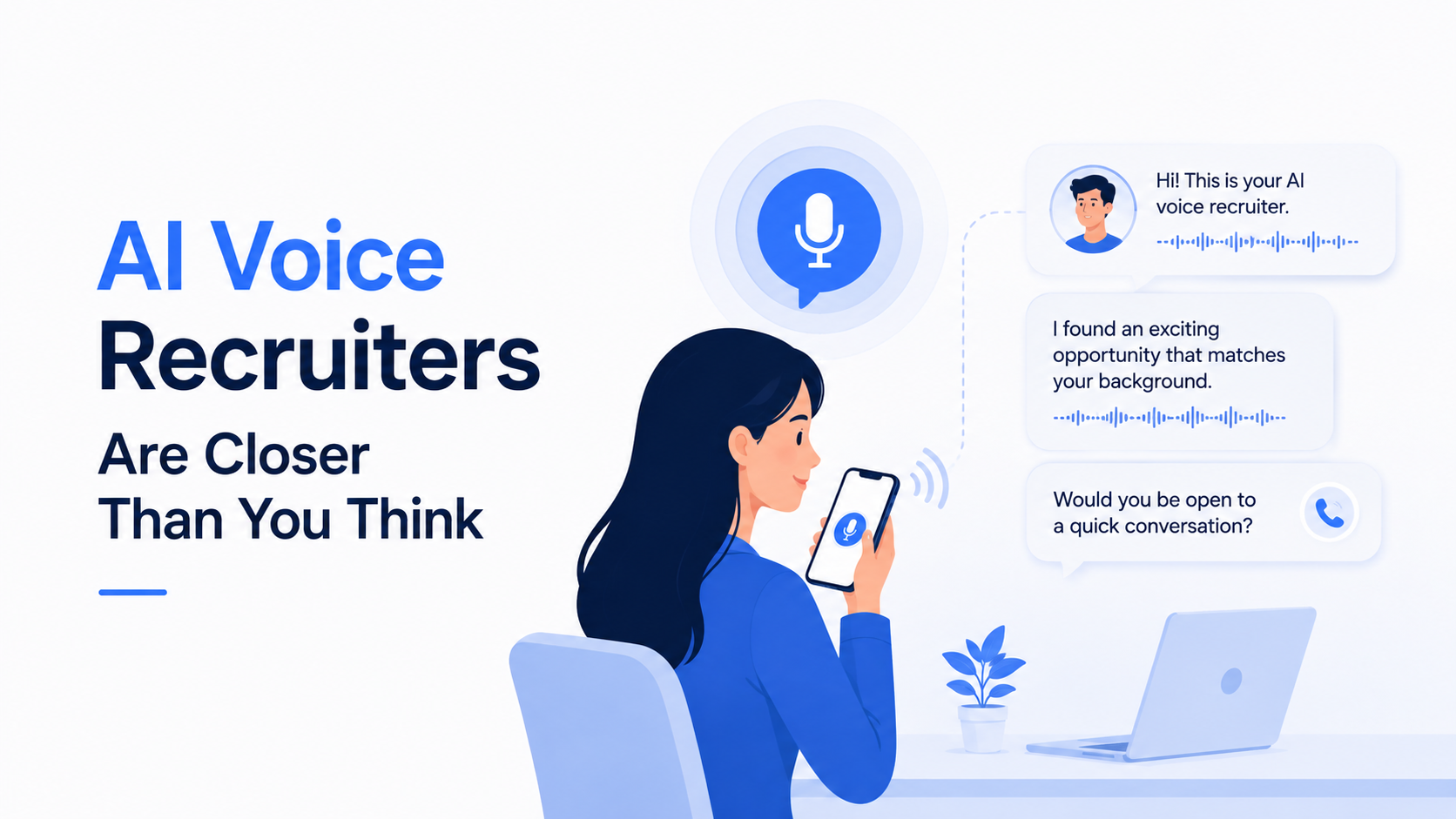
Beyond text and code evaluation, AI interviewing platforms are increasingly incorporating voice and video analysis to assess communication skills, presentation ability, and role-specific competencies. For customer-facing roles, this might include evaluating tone clarity, pace, and the ability to explain complex topics in accessible language. For leadership positions, it might assess executive presence, the ability to structure persuasive arguments, and responsiveness to challenging questions. These assessments are not about judging appearance or background but about evaluating communication effectiveness in contexts that directly relate to job performance.
The technology has improved dramatically from the early days of crude sentiment analysis. Modern voice analysis can detect patterns in speech that correlate with expertise and preparation, such as the use of structured arguments, appropriate technical vocabulary, and the ability to maintain coherent explanations under time pressure. Video analysis can track engagement indicators like eye contact during presentations, responsiveness to follow-up questions, and the ability to adapt communication style based on the audience. EY has observed that organizations using AI-powered communication assessments for client-facing roles report
measurable improvements in new-hire performance metrics during the first six months, suggesting that the assessments are effectively identifying candidates with stronger communication capabilities.
However, voice and video analysis also raises important ethical considerations that organizations must address proactively. Bias can creep into these systems through training data that does not adequately represent diverse communication styles, regional accents, or neurodivergent speech patterns. Responsible implementation requires regular bias auditing, transparent communication with candidates about what is being assessed and why, and human oversight of any automated scoring that influences hiring decisions. Gartner recommends that organizations establish clear policies about which voice and video metrics are used in scoring versus which are used only for informational purposes, ensuring that candidates are not disadvantaged by factors unrelated to their ability to perform the job.
How AI Interviewing Improves Candidate Experience
A common assumption is that candidates prefer human interviewers over AI-driven processes. The reality is more nuanced. Many candidates, particularly those who have been through poorly conducted human interview processes, report that AI interviewing feels fairer and less arbitrary. When every candidate faces the same adaptive assessment engine, there is no risk of having a bad interview because the interviewer was distracted, unprepared, or unconsciously biased. The process is standardized, transparent, and focused on relevant competencies rather than the subjective impressions that often drive human hiring decisions.
Scheduling flexibility is another significant candidate experience improvement. AI interview platforms typically offer on-demand assessment windows, allowing candidates to complete interviews at times that work for their schedules rather than coordinating across multiple time zones with human interviewers. This is particularly valuable for passive candidates who are currently employed and may find it difficult to schedule live interviews during working hours. The ability to start an interview on a weeknight or weekend, without the pressure of a live audience, can make the difference between engaging a strong passive candidate and losing them to a competitor with a more flexible process.
Feedback quality also improves with AI interviewing. Human interviewers often provide minimal or generic feedback to candidates, either because they lack the time to write detailed evaluations or because their organizations discourage substantive feedback for legal reasons. AI platforms can generate specific, competency-based feedback for every candidate, explaining what was assessed, how they performed relative to the role requirements, and what development areas were identified. LinkedIn has found that candidates who receive detailed feedback after an AI interview are significantly more likely to reapply for future roles and to recommend the company to their network, turning the interview process itself into an employer branding opportunity rather than a candidate filtering mechanism.
Integrating AI Interviews into the Full Hiring Pipeline
AI interviewing delivers the most value when it is integrated into the broader hiring workflow rather than deployed as an isolated screening step. The most effective implementations connect AI interview data to the same candidate profiles that sourcing tools and applicant tracking systems maintain, creating a unified view of each candidate from first contact through final offer. This integration means that insights from the AI interview, such as specific competency scores or areas of concern, flow directly to the human recruiters and hiring managers who conduct later-stage conversations, making those conversations more focused and productive.
The positioning of AI interviewing within the pipeline matters significantly. Some organizations use it as a top-of-funnel screen to reduce the volume of candidates that human interviewers need to evaluate. Others use it as a mid-funnel assessment that provides structured evaluation data between an initial recruiter screen and a final hiring manager interview. The right placement depends on the organization's hiring volume, the complexity of the roles being filled, and the level of human involvement desired in the process. Understanding AI sourcing vs AI recruiting helps clarify where AI interviewing fits: it is fundamentally a recruiting and evaluation tool, not a sourcing tool, and it works best when candidates have already been sourced and qualified at a basic level.
Data continuity across pipeline stages is essential. When an AI interview platform generates competency scores, those scores should be accessible to downstream reviewers in the same format and context they were generated. Too often, valuable assessment data is trapped in the AI platform and must be manually summarized or exported, creating friction and information loss. McKinsey advises organizations to evaluate AI interview platforms not just on their assessment capabilities but on their integration quality, because a platform that produces excellent insights in isolation but cannot share them effectively with the rest of the hiring tech stack will create more problems than it solves.
Addressing Bias and Fairness in AI-Driven Interviews
Bias in AI interviewing is the most important challenge the industry must address, and responsible vendors are taking it seriously. Modern platforms undergo regular third-party bias audits that evaluate whether the system produces systematically different outcomes for candidates of different genders, ethnicities, ages, or educational backgrounds when controlling for actual competency. These audits examine not just the final scores but the intermediate decision points in the adaptive engine, checking whether the system asks different questions, applies different evaluation criteria, or reaches different conclusions based on candidate characteristics that should be irrelevant to the assessment.
Transparency is a critical component of fair AI interviewing. Candidates should know what is being assessed, how their responses are being evaluated, and what data points are being
collected. Leading platforms now provide candidate-facing explanations of their methodology and offer candidates the ability to request human review of any AI-generated assessment they believe may be inaccurate. Industry bodies have published guidelines recommending that all organizations using AI in hiring provide candidates with clear disclosure statements and opt-out pathways for AI-evaluated interview components.
Human oversight remains essential even in the most advanced AI interviewing implementations. The technology should inform and support human decision-making, not replace it entirely. Best practices include having trained reviewers spot-check AI assessments for accuracy, establishing appeal processes for candidates who disagree with their results, and regularly comparing AI hiring outcomes with human hiring outcomes to identify any systematic discrepancies. Organizations that treat AI interviewing as a completely autonomous decision-making system rather than a decision-support tool are misusing the technology and exposing themselves to both legal risk and reputational damage. why referrals outperform cold outreach shows that even in highly relationship-driven hiring processes, structured assessment consistently improves outcomes, and the same principle applies to AI-assisted interviewing: structured, data-driven evaluation enhances human judgment rather than substituting for it.
Measuring ROI on AI Interviewing Investments
Organizations evaluating AI interviewing platforms need to look beyond simple time-to-hire reductions and consider the full spectrum of value the technology delivers. The most measurable benefit is often recruiter time savings: when AI handles initial screening and structured assessment, recruiters spend less time on low-value screening activities and more time on the high-value interactions that drive successful hires. For organizations conducting hundreds of interviews per quarter, this time savings can be equivalent to adding several recruiter FTEs without increasing headcount, a benefit that compounds as hiring volume grows.
Quality-of-hire improvement is a more difficult but ultimately more valuable metric. AI interviewing platforms that provide consistent, competency-based assessments enable organizations to make hiring decisions based on demonstrated capability rather than interviewer impression, which typically leads to better job performance, faster ramp times, and lower early turnover. Deloitte has found that organizations using AI interview platforms with strong validation data report fifteen to twenty-five percent improvements in new-hire performance scores during the first year, though these gains depend heavily on how well the assessment criteria are calibrated to actual job requirements.
Cost-per-hire reduction is the metric that most directly justifies the investment. When AI interviewing reduces the number of human interview hours required per hire, improves offer acceptance rates through better candidate experience, and decreases early-stage turnover through better assessment quality, the cumulative effect on cost-per-hire can be significant. However, realizing these benefits requires thoughtful implementation. Organizations that simply layer an AI interview tool on top of an unchanged hiring process without adjusting downstream stages often see limited returns because the efficiency gains at the interview stage are
absorbed by inefficiencies elsewhere. Industry analysts recommend that organizations view AI interviewing not as a point solution but as a catalyst for rethinking the entire hiring workflow, because the technology's full value is only realized when the surrounding process is optimized to take advantage of the richer assessment data it produces.