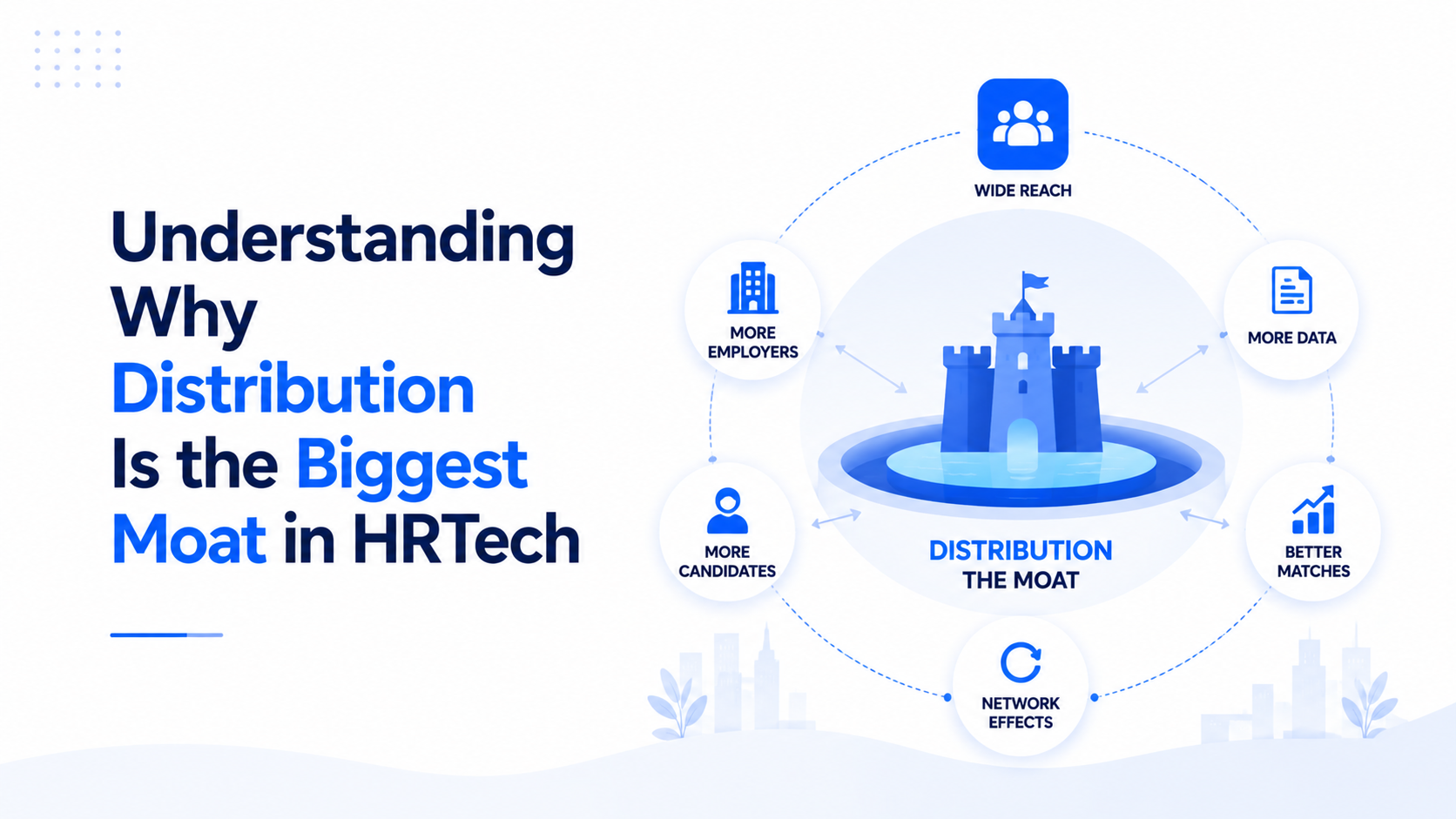
Aisha Kapoor had spent two years building what she believed was the most technically advanced candidate screening platform in the market. Her AI models could evaluate candidate fit with higher accuracy than any competitor she had benchmarked against, her platform processed screening conversations in real time, and her engineering team had built integration capabilities that connected to every major ATS and HRIS system on the market. When she pitched to her twentieth enterprise prospect, a fast-growing technology company with four hundred employees, she was confident. The prospect's hiring leader had already evaluated three competing platforms and had told Aisha privately that her product was clearly the most capable. Three weeks later, the prospect signed a contract with one of those competing platforms. The reason had nothing to do with technology. The competing platform was already being used by the prospect's largest customer, and that customer had recommended it because their hiring teams were already trained on the interface, their data was already integrated, and their workflows were already configured. The competing platform had won not because it was better but because it was already distributed into the prospect's professional network. Aisha's experience illustrates the most underappreciated dynamic in HRTech: distribution, not technology, is the primary determinant of which companies win.
The Technology Paradox in HRTech: Why Better Products Lose
The HRTech market is filled with companies that have superior technology and inferior market positions. These companies have built impressive AI capabilities, elegant user interfaces, and robust integration frameworks, yet they struggle to win enterprise deals against competitors with demonstrably inferior products. The reason is not that enterprise buyers are irrational or that sales teams are ineffective. It is that technology advantages in HRTech are
inherently temporary and easily replicated, while distribution advantages are structural and durable. A company that develops a better candidate matching algorithm will see that algorithm replicated by competitors within six to twelve months, because the fundamental techniques of machine learning are well understood and the data required to train competitive models is increasingly accessible. A company that builds a better user interface will see that interface copied within a product cycle, because design patterns are observable and replicable. But a company that has built relationships with five hundred enterprise HR leaders, established partnerships with twenty staffing firms, and created a referral network where existing customers actively recommend the product to peers has an advantage that cannot be replicated by any amount of engineering effort.
This dynamic is not unique to HRTech, but it is particularly pronounced in the category because of how HRTech buying decisions are made. Enterprise HR technology purchases are not made by individual technologists evaluating feature matrices. They are made by committees of HR leaders, IT decision-makers, procurement teams, and business stakeholders who are influenced by peer recommendations, industry reputation, and existing relationships at least as much as by product capabilities. When a VP of Talent Acquisition is evaluating candidate screening platforms, she does not start by comparing algorithm accuracy scores. She starts by asking her peers at other companies what they use, whether they are satisfied, and whether they would recommend it. If three of her peers at comparable companies are using the same platform and report positive experiences, that platform has an enormous advantage in the evaluation process, regardless of whether a competing platform has marginally better technology. This peer-driven buying behavior means that distribution, specifically the breadth and depth of a company's presence in the professional networks of potential buyers, is the primary determinant of deal outcomes.
The technology paradox also manifests in the gap between product quality and market share. The HRTech companies with the largest market shares in most sub-segments are not the companies with the best products according to analyst evaluations, user reviews, or benchmarking studies. They are the companies with the most established distribution networks, the largest sales organizations, the deepest partner ecosystems, and the strongest brand recognition. These distribution advantages create a self-reinforcing cycle where market share begets more market share, because large installed bases generate more peer references, more case studies, more integrations with complementary systems, and more data to improve products. The company with the largest distribution network has an advantage that compounds over time, while the company with the best technology but limited distribution must spend disproportionately on sales and marketing to overcome the distribution disadvantage, which compresses margins and slows growth. According to McKinsey, the top three HRTech vendors by market share in any given sub-segment outperform the average vendor by forty to sixty percent on deal conversion rates, not because their products are forty to sixty percent better, but because their distribution advantages create preferential access to buyers that smaller competitors cannot match regardless of product quality.
What Distribution Actually Means in the HRTech Context
Distribution in HRTech is commonly misunderstood as simply having a large sales team or spending heavily on marketing. While sales capacity and marketing spend are components of distribution, they are the least durable and most easily replicated components. True distribution in HRTech means having systematic, structural advantages in how you reach, influence, and convert buyers that competitors cannot replicate by spending more money or hiring more salespeople. The most powerful form of HRTech distribution is embedded distribution, where the product reaches buyers through channels that are integrated into their existing professional workflows rather than through outbound sales and marketing efforts. A candidate screening tool that is embedded within an ATS that recruiters already use every day has embedded distribution, because the recruiter encounters the tool as part of their existing workflow rather than as a separate purchase decision. A hiring analytics platform that is recommended by a staffing firm that manages twenty percent of a company's contingent workforce has embedded distribution, because the recommendation comes from a trusted advisor who is already embedded in the company's hiring operations.
The second form of HRTech distribution is network distribution, where the product spreads through professional relationships rather than through direct sales efforts. Network distribution operates through the peer-to-peer connections that exist among HR leaders, talent acquisition professionals, and hiring managers across companies and industries. When a talent leader at one company has a positive experience with an HRTech platform and recommends it to a former colleague who has moved to another company, that recommendation carries more weight than any sales pitch, because it comes from a trusted source with no financial incentive to recommend the product. Network distribution is particularly powerful in HRTech because the HR community is relatively tight-knit, with active professional networks, conferences, and online communities where practitioners share experiences and recommendations. A platform that generates enthusiastic advocates among its user base will benefit from a steady stream of inbound interest from potential buyers who have already been pre-sold by peer recommendations, which dramatically reduces customer acquisition costs and shortens sales cycles. According to Gartner, HRTech platforms where more than thirty percent of new pipeline originates from peer referrals and network recommendations have thirty to forty percent lower customer acquisition costs and twenty to thirty percent shorter sales cycles than platforms that rely primarily on outbound sales and marketing.
The third form of HRTech distribution is ecosystem distribution, where the product reaches buyers through partnerships, integrations, and alliances with other companies in the HR and talent ecosystem. Ecosystem distribution includes technology partnerships where the product is available as an integrated feature within a larger platform, channel partnerships where staffing firms, HR consultancies, or system integrators recommend or resell the product to their clients, and data partnerships where the product is enriched by data from complementary sources that make it more valuable to buyers. Ecosystem distribution is powerful because it
allows the HRTech company to reach buyers through channels that have already established trust and credibility with those buyers. A staffing firm that has managed a company's contingent workforce for five years has a level of trust and access that no HRTech company's sales team can match, regardless of how skilled or persistent they are. When that staffing firm recommends an HRTech product, the recommendation is received with a level of trust that transforms the sales dynamic from persuasive selling to trusted advisory. AI sourcing vs AI recruiting illustrates how the distinction between distribution and technology applies across the recruiting technology landscape, because the platforms that dominate candidate sourcing and recruiting are not those with the most sophisticated algorithms but those with the deepest integration into the channels through which enterprises actually discover and engage talent.
The Three Distribution Channels That Win in HRTech
Among the various distribution channels available to HRTech companies, three have proven to be consistently more effective and more durable than the rest. The first is the direct enterprise sales channel, but with an important qualification. Not all direct sales approaches are equally effective. The direct sales channels that create durable distribution advantages are those that build deep, multi-threaded relationships within client organizations rather than single-threaded relationships with individual buyers. A sales approach that connects with only the hiring leader is vulnerable to that leader's departure or change of priorities. A sales approach that builds relationships with the hiring leader, the HR technology team, the finance stakeholder who approves the budget, and the business unit leaders who are the ultimate consumers of hiring outcomes creates a web of relationships that survives individual personnel changes and creates expansion opportunities across the organization. Multi-threaded enterprise relationships take longer to build but are far more durable and far more valuable as distribution assets, because they provide multiple points of contact, multiple sources of information about client needs, and multiple advocates within the organization who can champion the product during renewal and expansion decisions.
The second high-value distribution channel is the partner and channel ecosystem. HRTech companies that build networks of staffing firms, HR consultancies, payroll providers, and benefits administrators as channel partners create distribution reach that far exceeds what their direct sales team could achieve alone. The key to building an effective channel ecosystem is selecting partners whose clients have overlapping needs with the HRTech product's value proposition and whose existing client relationships create natural introduction opportunities. A payroll provider that serves thousands of mid-market companies has direct relationships with the HR and finance leaders at those companies, and a recommendation from the payroll provider to add a complementary HRTech capability carries enormous weight because the payroll provider is already a trusted vendor managing a critical business function. The most successful HRTech channel programs are those that make the partner's job easy by providing pre-built integration, co-branded marketing materials, and revenue-sharing models that align the partner's financial incentives with the HRTech company's growth objectives. When
these conditions are met, the partner becomes an extension of the HRTech company's sales force, but with credibility and access that the company's own sales team could never achieve independently. According to LinkedIn, HRTech companies with active channel programs that generate more than twenty percent of new business through partners grow thirty to fifty percent faster than companies relying solely on direct sales, because the channel provides access to buyer networks and trust relationships that direct sales cannot replicate.
The third high-value distribution channel is product-led growth through user adoption. In enterprise HRTech, product-led growth operates differently than in consumer software, because the end users who adopt the product are often not the people who make the purchasing decision. A recruiter who uses a free or low-cost candidate sourcing tool, finds it valuable, and advocates for the enterprise to purchase the full platform is driving product-led growth. A hiring manager who uses an AI interview analysis tool provided by a recruiting team and then requests it for their own department is driving product-led expansion. Product-led growth in HRTech is powerful because it creates bottom-up demand that complements the top-down sales approach. When end users are enthusiastic advocates for the product, they provide the sales team with internal champions who can navigate procurement processes, answer objections from skeptical stakeholders, and drive organizational consensus around the purchasing decision. This bottom-up advocacy is particularly valuable in HRTech because the end users of HRTech products, recruiters, hiring managers, and HR business partners, are the people who experience the product's value most directly and whose testimonials carry the most credibility with decision-makers. how many follow-ups one hire needs demonstrates how product-led distribution works in practice for recruiting technology, because the platforms that achieve the widest adoption are those where individual recruiters discover value through daily use and become internal advocates who drive enterprise-wide adoption through their enthusiasm and results rather than through top-down mandates.
Why Incumbents Cannot Easily Replicate Startup Distribution
One of the most counterintuitive aspects of distribution moats in HRTech is that well-resourced incumbents often cannot replicate the distribution advantages of smaller, more focused competitors, even when the incumbent has significantly more money, more salespeople, and more brand recognition. The reason is that distribution advantages are context-specific and relationship-specific in ways that money and headcount cannot easily address. A startup that has built its distribution around a specific market segment, such as high-growth technology companies, or a specific geographic market, such as Southeast Asia, has developed a depth of understanding about that segment's needs, a density of relationships within that segment's professional network, and a reputation within that segment's community that an incumbent cannot replicate by allocating more resources to the segment. The incumbent's sales team, no matter how large, lacks the segment-specific knowledge, the existing relationships, and the community credibility that the startup has built over years of focused engagement.
Incumbents also face a structural disadvantage in distribution because their existing customer base and brand positioning create constraints on how they can go to market. An incumbent whose brand is associated with large-enterprise HRIS systems will struggle to build credibility in the mid-market or in specialized sub-segments like creative recruiting or campus hiring, because buyers in those segments perceive the incumbent as serving a different type of customer with different needs. A startup that has built its brand and distribution specifically for the mid-market or for a specialized segment faces no such constraint, because its entire brand identity, product design, and go-to-market approach are optimized for the segment it serves. This focus advantage is particularly powerful in HRTech because the market is so fragmented that no single go-to-market approach can effectively serve all segments simultaneously. The companies that build the strongest distribution moats are those that choose a specific segment, build deep distribution within that segment, and then expand incrementally into adjacent segments using the distribution advantages they have already established. According to Deloitte, HRTech companies that focus their initial distribution on a specific market segment and achieve dominance within that segment before expanding have two to three times higher conversion rates when they enter adjacent segments, because the segment-specific reputation and relationships they have built create transferable credibility that broad-market competitors lack.
The speed of distribution also matters more than the scale of distribution. A company that builds a network of fifty deeply engaged customer advocates who actively recommend the product to peers is more valuable from a distribution perspective than a company with five hundred passive customers who use the product but do not advocate for it. Advocacy-driven distribution is the most efficient and most defensible form of HRTech distribution, because advocates provide qualified leads, shorten sales cycles, reduce customer acquisition costs, and create a positive feedback loop where each new advocate makes it easier to recruit the next one. Incumbents with large but passive customer bases often struggle to generate this kind of advocacy, because their customers adopted the product through top-down mandates rather than bottom-up enthusiasm, and mandate-driven adoption rarely produces the kind of user satisfaction that drives organic advocacy. The startup that earns genuine enthusiasm from its users has a distribution asset that the incumbent cannot buy, because genuine advocacy cannot be manufactured through marketing spend or incentivized through referral programs. It must be earned through product quality, customer success, and consistent delivery of value. why referrals outperform cold outreach explains why organic referrals and peer recommendations outperform every other distribution channel in recruiting technology, because the trust transferred through a personal recommendation from a satisfied user eliminates the skepticism and evaluation friction that all other channels must overcome through persuasion and proof.
Building a Distribution Moat That Compounds Over Time
The most valuable characteristic of a distribution moat in HRTech is its ability to compound
over time. Unlike technology advantages, which depreciate as competitors catch up, distribution advantages appreciate as the network of relationships, advocates, and channel partners grows larger and more interconnected. Each new customer added to the distribution network increases the number of potential peer references, expands the pool of potential case studies and testimonials, adds another node to the professional network through which the product can spread, and generates more data that can be used to improve the product and create more satisfied users who become advocates. This compounding dynamic means that the distribution gap between the market leader and its competitors tends to widen over time rather than narrow, because the leader's distribution advantages generate more growth, which generates more distribution, which generates more growth in a self-reinforcing cycle that is extremely difficult for competitors to disrupt.
For HRTech companies seeking to build compounding distribution moats, the strategic imperative is clear. First, prioritize customer satisfaction and advocacy over customer acquisition volume. A customer who becomes an active advocate is worth far more from a distribution perspective than a customer who simply pays their subscription. Every resource invested in customer success, user experience, and outcome delivery generates distribution returns that compound over time. Second, invest in building multi-channel distribution that combines direct sales, partner channels, and product-led growth rather than relying on any single channel. Multi-channel distribution is more resilient, because a disruption in one channel can be offset by strength in others, and it is more efficient, because each channel reinforces the others by creating multiple touchpoints with potential buyers. Third, focus distribution efforts on specific market segments where depth of presence is more valuable than breadth of coverage, because segment-specific distribution creates the kind of focused reputation and relationship density that generates the highest conversion rates and the strongest advocacy. According to EY, HRTech companies that systematically measure and optimize for customer advocacy metrics, such as net promoter score, peer referral volume, and case study participation, grow their distribution networks thirty to forty percent faster than companies that optimize only for acquisition metrics like lead volume and pipeline value, because the advocacy-focused approach builds the compounding distribution assets that drive long-term market leadership.
The ultimate test of a distribution moat is whether the HRTech company can maintain its growth rate while reducing its customer acquisition cost over time. Companies with genuine distribution moats see their acquisition costs decline as their networks of advocates, partners, and brand recognition grow, because an increasing proportion of new business comes through organic channels rather than paid channels. Companies without distribution moats see their acquisition costs stay flat or increase over time, because they must continue spending on sales and marketing just to maintain their growth rate as the market becomes more competitive. This divergence in acquisition cost trajectories is the clearest financial indicator of whether a company has built a durable distribution moat or is simply buying growth through unsustainable sales and marketing investment. For investors evaluating HRTech companies, for founders building them, and for talent leaders selecting them, the question of distribution is not secondary to the question of technology. In HRTech, distribution is the primary
competitive advantage, and the companies that build the strongest distribution moats will be the companies that define the market for the next decade. agentic AI platforms vs automated ones explains how agentic AI HRTech platforms build distribution advantages by embedding autonomous agents into the daily workflows of recruiters and hiring managers, because the workflow embedding creates product-led distribution where the platform's value is experienced continuously through daily use rather than evaluated periodically through sales demonstrations.