Introduction
Recruiting has entered a period of rapid transformation.
Hiring teams are being asked to do more with less:
Fill roles faster
Improve candidate response rates
Manage larger hiring volumes
Reduce recruiter workload
Deliver better candidate experiences
At the same time, talent markets are becoming more competitive and candidate expectations continue to rise.
In response, AI sourcing tools have emerged as one of the fastest-growing categories in recruitment technology.
But an important question remains:
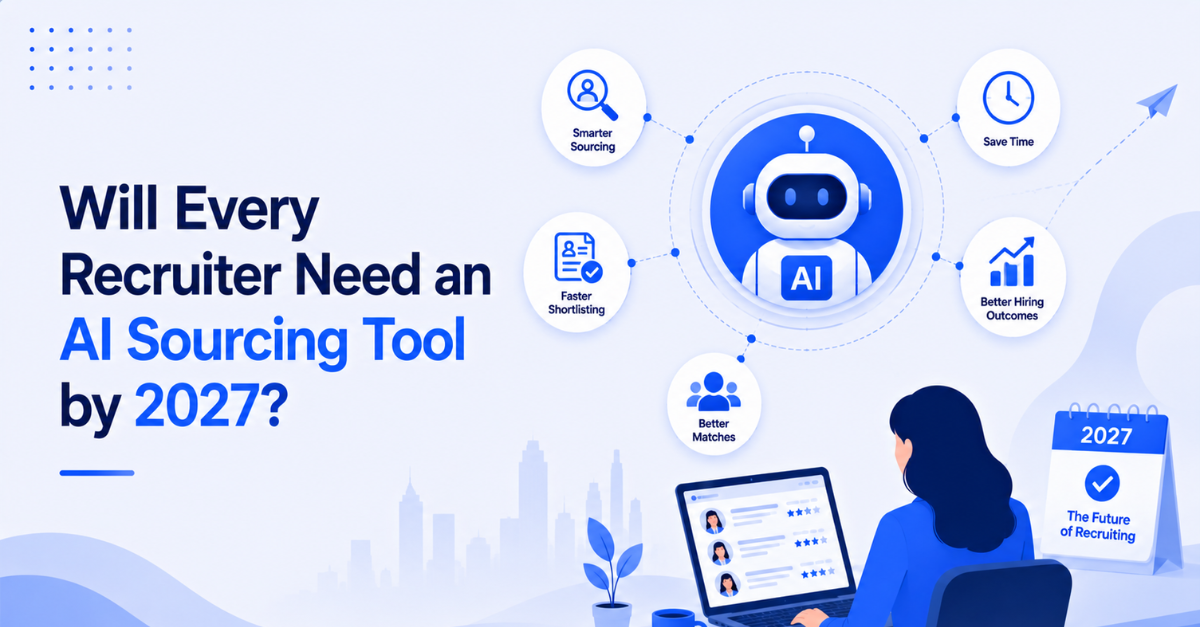
Will every recruiter need an AI sourcing tool by 2027?
The short answer is probably yes.
However, the more important question is whether sourcing alone will be enough.
By 2027, the real competitive advantage may come from technologies that automate candidate engagement, qualification, follow-ups, scheduling, and recruiting workflows—not just candidate discovery.
Let's explore why.
Why AI Adoption in Recruiting Is Accelerating
The recruiting industry is facing pressures that traditional processes struggle to handle efficiently.
Hiring Volume Continues to Grow
Many organizations are expanding hiring across:
New business units
Global capability centers (GCCs)
Distributed teams
Emerging talent markets
Recruiters are often managing more open positions than ever before.
As hiring demand increases, manual sourcing becomes increasingly difficult to scale.
Recruiter Productivity Pressures
Most recruiters spend significant time on tasks such as:
Candidate searches
Outreach
Follow-ups
Scheduling
Status updates
Pipeline management
Many of these activities are repetitive and operational rather than strategic.
AI offers a way to reduce administrative burden while improving hiring speed.
Candidate Expectations Are Changing
Modern candidates expect:
Faster responses
Personalized communication
Transparent hiring processes
Consistent follow-up
Recruiters who rely entirely on manual workflows often struggle to meet these expectations at scale.
What AI Sourcing Tools Actually Do
Before discussing the future, it's important to understand what AI sourcing tools are designed to accomplish.
Candidate Discovery
AI sourcing platforms search across multiple talent sources to identify potential candidates based on:
Skills
Experience
Job titles
Industry backgrounds
Education
Certifications
Instead of manually searching databases, recruiters receive curated candidate recommendations.
Talent Matching
Modern AI systems evaluate candidate profiles and compare them against job requirements.
This helps recruiters:
Reduce search time
Improve relevance
Expand candidate visibility
Search Automation
Many sourcing platforms automate:
Candidate identification
Talent pool creation
Candidate ranking
Market mapping
These capabilities help recruiters discover talent faster than traditional methods.
The Benefits of AI Sourcing
The popularity of AI sourcing tools is driven by several clear advantages.
Faster Sourcing
AI can process thousands of profiles significantly faster than manual searches.
This helps recruiters:
Reduce sourcing time
Build pipelines quickly
Respond faster to hiring managers
Broader Talent Visibility
Many recruiters rely heavily on familiar talent pools.
AI can uncover candidates that might otherwise be overlooked.
This expands access to:
Passive candidates
Emerging talent markets
Specialized skill sets
Reduced Manual Search Effort
Instead of spending hours filtering profiles, recruiters can focus more time on:
Candidate conversations
Hiring manager collaboration
Closing candidates
These productivity gains explain why AI sourcing adoption continues to accelerate.
Will AI Sourcing Become Standard by 2027?
Several factors suggest the answer is yes.
Market Adoption Trends
Organizations across industries are already investing heavily in AI-powered recruiting technologies.
Just as Applicant Tracking Systems became standard infrastructure, AI sourcing is moving toward becoming a baseline capability.
Competitive Pressure
Recruiters using AI can often:
Identify candidates faster
Build pipelines more efficiently
Reduce sourcing effort
As adoption increases, teams without AI tools may find themselves at a competitive disadvantage.
Technology Expectations
By 2027, many hiring leaders will likely view AI sourcing similarly to:
ATS platforms
CRM systems
LinkedIn Recruiter
Not as a competitive advantage, but as a standard operating requirement.
Where AI Sourcing Alone Falls Short
Despite its benefits, sourcing is only the beginning of the hiring process.
This is where many recruiting teams encounter their biggest bottlenecks.
Candidate Engagement
Finding candidates does not guarantee responses.
Recruiters frequently struggle with:
Low response rates
Candidate ghosting
Communication delays
The ability to engage candidates often matters more than the ability to discover them.
Qualification
After sourcing comes screening.
Recruiters must determine:
Candidate interest
Role fit
Compensation expectations
Availability
Location preferences
These conversations require significant time and effort.
Scheduling
Interview coordination remains one of recruiting's most repetitive tasks.
Even when candidates are interested, recruiters often spend hours managing:
Availability checks
Interview logistics
Reschedules
Stakeholder coordination
Pipeline Management
The larger the pipeline, the more administrative work recruiters must handle.
This creates operational complexity that sourcing tools alone cannot solve.
The Rise of Agentic AI Recruiting
The next phase of recruiting technology is already beginning to emerge.
From Sourcing to Execution
Traditional AI tools help recruiters find candidates.
Agentic AI systems help recruiters move candidates through the hiring process.
This represents a significant shift from intelligence to execution.
Workflow Automation
Agentic AI can automate activities such as:
Outreach sequences
Follow-ups
Candidate qualification
Scheduling
Status updates
Workflow progression
The result is less manual effort and faster hiring cycles.
Recruiter Augmentation
The goal is not to replace recruiters.
The goal is to increase recruiter capacity.
By automating repetitive work, recruiters can focus on:
Relationship building
Candidate experience
Strategic hiring decisions
Stakeholder management
What Recruiters Should Automate Before 2027
Organizations preparing for the future should focus on automating high-volume, repetitive tasks first.
Candidate Outreach
Personalized outreach can consume significant recruiter time.
Automation can help maintain consistency while improving response rates.
Follow-Ups
Follow-up management is one of the largest hidden productivity drains in recruiting.
Automated engagement workflows can ensure candidates remain active in the process.
Candidate Screening
Basic qualification conversations can often be automated to collect information before recruiter involvement.
Interview Coordination
Scheduling automation reduces delays while improving candidate experience.
The Recruiting Technology Stack of 2027
By 2027, the typical recruiting stack may include three major layers.
Technology Layer
Primary Purpose
ATS
Store candidate and hiring data
AI Sourcing Tools
Discover and identify talent
AI Recruiting Infrastructure
Execute recruiting workflows
The first generation organized information.
The second generation improved candidate discovery.
The third generation will automate recruiting execution.
This is where the greatest productivity gains are likely to occur.
Preparing Your Recruiting Team for the Future
Technology alone will not transform recruiting.
Organizations must also rethink processes and workflows.
Assess Current Bottlenecks
Identify where recruiters spend the most time.
Common problem areas include:
Outreach
Follow-ups
Scheduling
Candidate qualification
Focus on Automation Opportunities
Not every recruiting activity should be automated.
Start with repetitive, operational tasks that create bottlenecks.
Embrace Human-AI Collaboration
The future belongs to recruiting teams that combine:
Human judgment
Relationship-building skills
AI-driven execution
The strongest recruiting organizations will leverage both.
Conclusion
Will every recruiter need an AI sourcing tool by 2027?
Most likely, yes.
AI-powered sourcing is rapidly becoming a standard part of the recruiting toolkit.
But sourcing alone will not define recruiting success.
As candidate discovery becomes increasingly automated and commoditized, competitive advantage will shift toward recruiting execution.
The recruiting teams that outperform their peers will be those that automate:
Candidate engagement
Qualification
Follow-ups
Scheduling
Workflow management
Recruiting operations
The future of recruiting is not simply AI-powered sourcing.
It is Agentic AI Recruiting Infrastructure that helps recruiters execute hiring processes faster, more consistently, and at greater scale.
Organizations that begin preparing for that future today will be best positioned to compete in 2027 and beyond.
Frequently Asked Questions
Will recruiters need AI sourcing tools by 2027?
AI sourcing tools are likely to become standard recruiting technology by 2027, similar to ATS platforms and recruiting CRMs.
Are AI sourcing tools worth the investment?
For many recruiting teams, AI sourcing reduces manual search effort and improves recruiter productivity, making it a valuable investment.
What are the benefits of AI sourcing?
Key benefits include faster candidate discovery, broader talent visibility, improved productivity, and reduced manual sourcing work.
Will AI replace recruiters?
No. AI is more likely to automate repetitive operational tasks while recruiters continue to focus on relationships, decision-making, and stakeholder management.
What recruiting tasks can AI automate?
AI can automate sourcing, outreach, follow-ups, qualification workflows, interview scheduling, and pipeline management activities.
What is Agentic AI recruiting?
Agentic AI recruiting refers to systems that not only identify candidates but also execute recruiting workflows such as engagement, qualification, scheduling, and coordination.
How does AI improve recruiter productivity?
AI reduces time spent on repetitive tasks, allowing recruiters to focus on higher-value activities that directly influence hiring outcomes.
What is recruiting workflow automation?
Recruiting workflow automation uses AI and software to manage recruiting processes automatically, reducing manual effort and improving efficiency.
How can recruiters stay competitive?
Recruiters can stay competitive by adopting technologies that improve productivity, automate repetitive work, and enhance candidate engagement.
What technologies will shape recruiting by 2027?
Key technologies include AI sourcing platforms, recruiting automation software, conversational AI, workflow automation systems, and Agentic AI Recruiting Infrastructure.
This version is optimized for the primary keyword "AI sourcing tool for recruiters", targets MOFU search intent, and reinforces Huntlo's category narrative of moving from sourcing software to Agentic AI Recruiting Infrastructure.
Related Topics
AI Sourcing Tools: Hype vs Reality for 2026
How AI Sourcing Tools Are Reshaping Recruitment Agency Business Models
What Recruiters Actually Use AI Sourcing Tools For (Survey Insights)