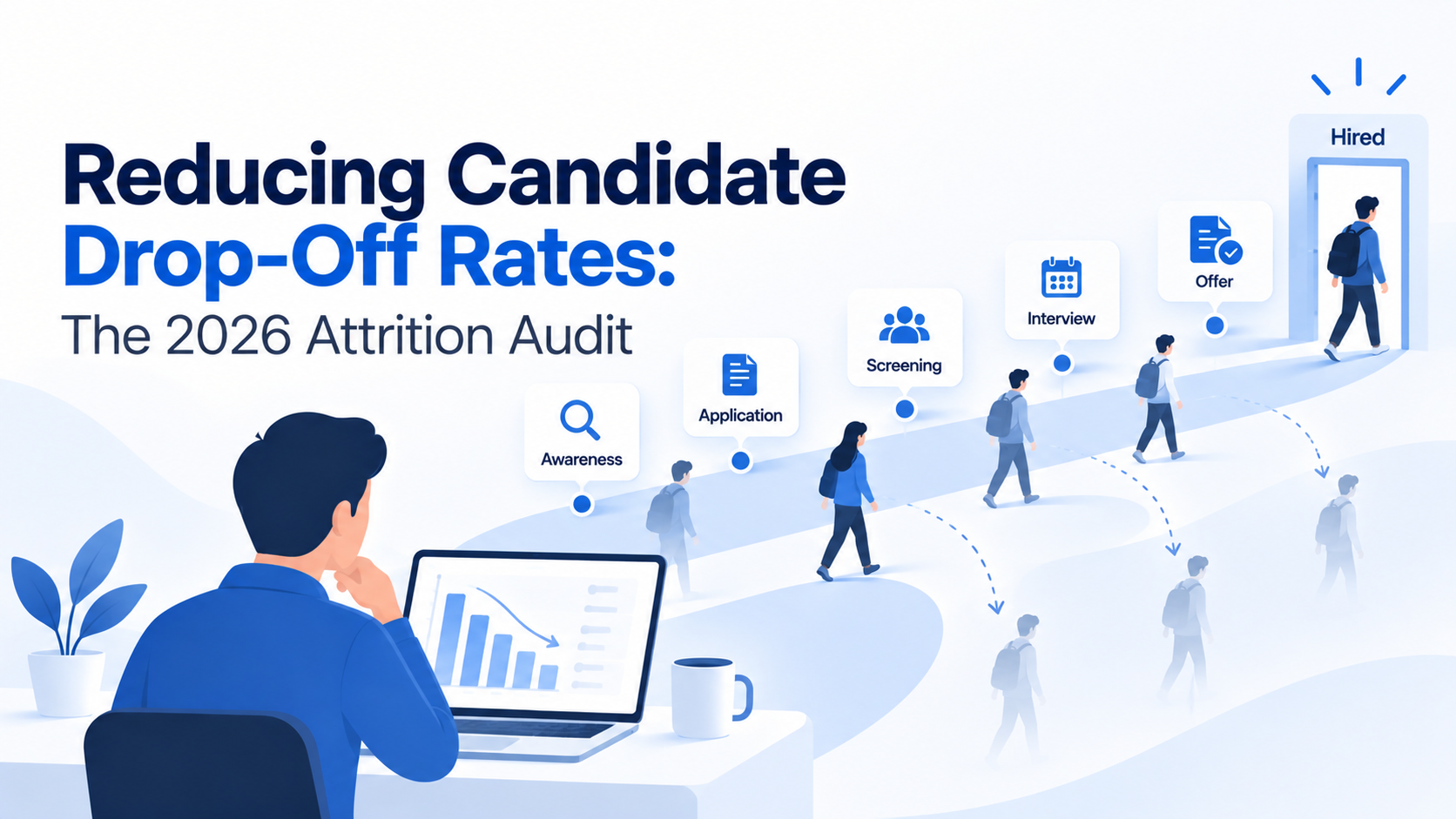
Ava had been the Head of Talent for a high-growth robotics firm for two years, and for most of that time, she operated under a "volume-first" strategy. Her team was exceptional at sourcing; they could fill a pipeline with hundreds of high-quality leads in a matter of days. However, Ava was haunted by a recurring problem: a staggering dropout rate at the mid-funnel stage. Her data showed that while 80% of candidates completed the initial screen, only 20% made it to the final interview. The drop-off was sudden and systemic. Every few weeks, a star candidate—someone who had passed the technical bar and expressed genuine excitement—would simply vanish. Ava viewed this as a "candidate problem," a lack of professionalism in the modern workforce. To solve it, she ordered her team to "screen for commitment" and add more behavioral questions to the early rounds. But the dropout rate didn't budge. In fact, it increased. Ava had been optimizing the "funnel" as a series of filters, but she had completely ignored the "journey" as an emotional experience. She finally decided to perform a "friction audit," interviewing three candidates who had recently ghosted her. The feedback was brutal. They didn't leave because of the role or the money; they left because of the "scheduling ping-pong," the redundant application forms, and a three-day "black hole" of silence after the second round. Ava realized that her funnel was a leaky bucket, and the leaks were produced by the very friction she had ignored.
Ava’s epiphany reflects the central challenge of talent acquisition in 2026. For too long, organizations have confused "conversion rates" with "candidate interest." When a candidate drops off, the immediate reaction is to assume they found another job. While that may be true, it ignores the primary driver of attrition: the Friction Gap. In an era of Talent Sovereignty, high-impact candidates are no longer passive applicants; they are sophisticated consumers of employment opportunities. They are auditing the "Operational Maturity" of the organization through every single touchpoint. When a process is fragmented, slow, or redundant, the candidate perceives a culture of dysfunction.
The most dangerous mistake a company can make is viewing drop-offs as a variable of the market rather than a result of the infrastructure. Every friction point in the recruitment funnel is a micro-decision for the candidate: "Is this role worth this amount of effort?" When the friction reaches a tipping point, the candidate doesn't send a withdrawal email—they simply stop engaging. This is not a failure of the candidate's professionalism, but a failure of the employer's systems. To stop the leak of top talent, organizations must move from a "filtering" mentality to an "orchestration" mentality, identifying and eliminating the structural errors that drive candidates away.
The Silence Gap: How Response Latency Triggers Attrition
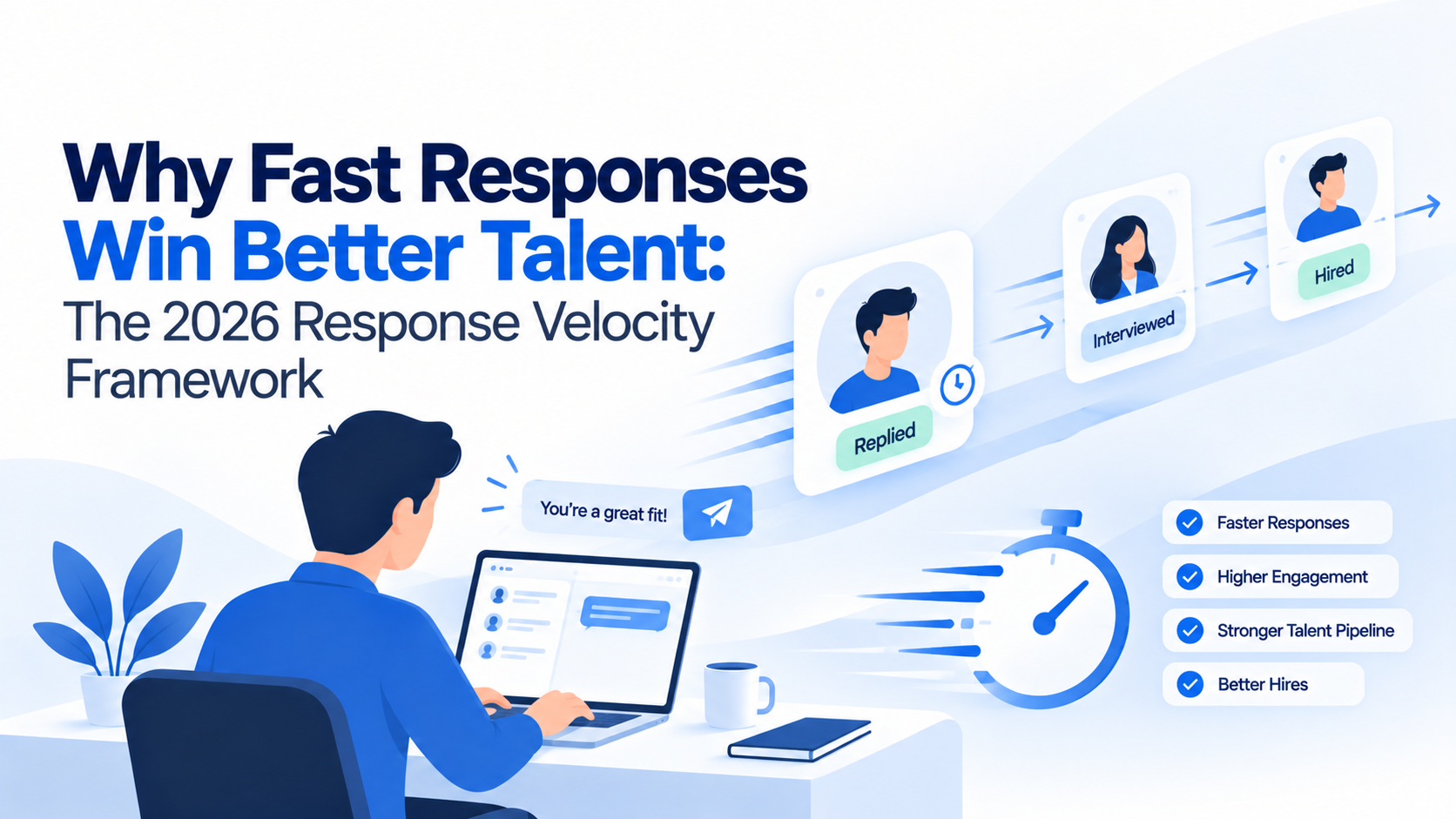
The most pervasive and damaging cause of candidate drop-off is the "Silence Gap"—the period of time where a candidate hears nothing from the employer. For the recruiter, this silence is often a byproduct of internal coordination; they are waiting for a hiring manager's feedback or a compensation committee's approval. But for the candidate, this silence is not a neutral state; it is an active source of anxiety. They are left to wonder if they were rejected, if the recruiter is incompetent, or if the company is simply indifferent to their time.
The silence is what the candidate is perceiving as a lack of respect, and the lack of respect is what the candidate is using to justify their disengagement. In the 2026 talent market, response velocity is the primary signal of a company's internal health. When a candidate enters a silence gap, their emotional investment in the role begins to decay. By the time the recruiter finally reaches back out with a "positive update," the candidate has already shifted their focus to a competitor who moved with greater urgency. This is the "Engagement-Velocity Mismatch," where the candidate is moving at the speed of a modern professional, but the company is moving at the speed of a legacy bureaucracy.
To eliminate this, organizations must implement a "Communication Heartbeat." This means moving away from "batch" updates—waiting for a final decision—and toward "pulse updates," where the recruiter provides a transparent status update even when there is no major news. The pulse is what the recruiter is using to bridge the momentum gap, and the bridging is what the team is using to prevent the candidate from entering the anxiety phase. If you are struggling to find the balance between persistence and annoyance, you should review the analysis on how many follow-ups a single hire actually needs to ensure your communication remains value-driven.
The Administrative Tax: The Cost of Process Friction
While the silence gap is an emotional trigger, "Administrative Tax" is a cognitive one. This occurs when the recruitment process is burdened by redundant, manual, or clunky requirements. Common examples include forcing candidates to create an account on a portal just to apply, requiring the same information to be entered in multiple forms, or using scheduling tools that require five emails to book a single call.
This friction is not just an inconvenience; it is a signal of operational immaturity. High-impact talent, particularly in technical roles, values efficiency and automation. When they encounter a clunky application process, they perceive it as a sign that the company's internal tools and processes are equally antiquated. The friction is what the candidate is using to judge the company's internal efficiency, and the judging is what the candidate is using to conclude that the work environment will be frustrating. In 2026, the ease of the process is a proxy for the ease of the work.
The "Scheduling Ping-Pong" is the most visible form of this tax. When a recruiter asks for availability, the candidate responds, and then the recruiter waits two days to check with a manager, the candidate experiences a loss of momentum. This coordination gap is what the candidate is perceiving as a lack of respect, and the lack of respect is what the candidate is using to justify their dropout. To solve this, companies must move toward asynchronous orchestration. You can read more about the interview scheduling best practices that eliminate these coordination gaps and preserve candidate momentum.
The Alignment Mismatch: When the Role Shifts Mid-Process
A more subtle but equally deadly cause of drop-off is the "Alignment Mismatch." This occurs when the job description (JD) says one thing, the recruiter says another, and the hiring manager says a third. This discrepancy is often a result of poor internal alignment—the recruiter is using an outdated JD, and the hiring manager has shifted the requirements without informing the TA team. When a candidate realizes the role is not what they were promised, they experience a profound loss of trust.
The misalignment is what the candidate is perceiving as a lack of internal coordination, and the lack of coordination is what the candidate is using to conclude that the company is chaotic. This distrust is amplified when the company refuses to be transparent about the compensation or the reality of the role. In 2026, candidates are hyper-aware of their market value and the reality of the roles they are pursuing. When a company avoids talking about salary or the "ugly" parts of the job until the final round, they are creating a "trust deficit."
This trust deficit is often linked to the data the recruiters are using. When outreach is based on outdated profiles or incorrect job titles, the initial interaction starts on a foundation of misalignment. This creates a subtle sense of distrust from the very first touchpoint. You can read more about why outdated candidate data ruins the recruiting process to see how this early friction sets the stage for later ghosting. The only antidote is "Decision-Grade Transparency"—providing the candidate with a clear, honest roadmap of the role and the process from the very first call.
The Technical Hurdle: Over-Testing and Candidate Fatigue
In the quest to mitigate risk, many organizations have created "Technical Hurdle" friction. This is the practice of imposing excessive, generic, or redundant testing early in the process. Forcing a senior engineer to spend ten hours on a generic take-home assignment before they have even spoken to the hiring manager is a primary trigger for drop-offs. The candidate perceives this as a lack of respect for their time and a lack of trust in their professional experience.
The fatigue is what the candidate is experiencing, and that experiencing is what produces the disengagement. In a market where top talent is courted by multiple firms, the most "testing-heavy" process is usually the first one the candidate drops. The cost of the test is what the candidate is weighing against the perceived value of the role, and the weighing is what the candidate is using to justify their dropout. When the "cost" of the interview process exceeds the "value" of the potential job, the candidate vanishes.
The solution is to move toward "Evidence-Based Evaluation." Instead of generic tests, companies should use a combination of portfolio reviews, targeted technical discussions, and shorter, high-impact assessments. The shift from "testing" to "evaluating" is what the recruiter is using to reduce the candidate's cognitive load, and the reduction is what the team is using to maintain the momentum. If you are seeing high drop-offs at the testing stage, you should perform a "friction audit" of your assessments to ensure they are not acting as a deterrent to top talent. You can find more on these common errors in the guide to candidate experience mistakes to avoid.
The Trust Deficit: Lack of Roadmap and Transparency
Many candidates drop off not because they are uninterested, but because they are anxious. This anxiety is produced by the "Lack of Roadmap." When a candidate doesn't know how many rounds are left, what the criteria for success are, or when they can expect a decision, they feel like they are navigating a maze in the dark. The uncertainty is what the candidate is perceiving as a lack of professional discipline, and the lack of discipline is what the candidate is using to justify their disengagement.
Transparency is the only antidote to this anxiety. In 2026, the most successful hiring teams provide a "Glass-Box Process." This means the candidate is given a clear, documented roadmap of the journey from the first call to the start date. The transparency is what the recruiter is using to eliminate the "asymmetric information gap," and the eliminating is what the candidate is using to maintain trust in the process. When a candidate knows exactly what to expect, they are much more likely to endure the inevitable delays of a corporate environment.
Furthermore, the trust deficit is often a result of the "Sunk Cost" fallacy. Companies often wait until the very end to discuss compensation or the "unpleasant" parts of the role. When a candidate discovers a deal-breaker in the final round, they feel that their time has been wasted. The waste is what the candidate is perceiving as a lack of respect, and the lack of respect is what the candidate is using to ghost the process. The transition to a "Transparent-First" model—where expectations are aligned at the start—is the only way to prevent final-stage attrition.
Why Infrastructure is the Only Fix for a Leaky Bucket
The reason most companies continue to suffer from high drop-off rates is that they try to solve a structural problem with "behavioral effort." They tell their recruiters to "be more communicative" or "follow up faster," but the recruiters are still using a manual infrastructure of spreadsheets and fragmented emails. The manual chase is what the recruiter is using to manage the pipeline, and the manual chase is what the response latency is what the team is absorbing. You cannot scale empathy or speed on a manual system.
The solution is a transition to an "Agentic Recruiting Infrastructure." An agentic system does not just "automate" a message; it manages the logic of the engagement. It understands the difference between a "pulse update" and a "final decision" and ensures that the communication heartbeat is maintained without human intervention. The agentic layer is what the system is using to eliminate the manual chase, and the elimination is what the response velocity is what the team is producing.
This is where the difference between "Tools" and a "Hiring OS" becomes clear. A tool helps you do a manual task slightly faster; an OS removes the manual task entirely. Many teams suffer from the "Tool Paradox," where adding more software actually increases the administrative burden. As discussed in our analysis of more tools and the same hiring problems, the proliferation of disjointed tools creates "data silos" that slow down the flow of information.
Huntlo.ai was built to provide the structural fix for the leaky bucket. By treating the recruiting process as an operating system, Huntlo.ai ensures that the la- lund of the experience is a mirror of the company's operational excellence. It removes the "scheduling ping-pong," plugs the "silence gaps," and eliminates the "administrative tax," allowing the recruiter to focus on the relational bond with the candidate. In the 2026 talent market, the companies that win are not the ones with the most "polite" recruiters, but the ones with the most frictionless infrastructure. When you solve the friction, you solve the drop-off.