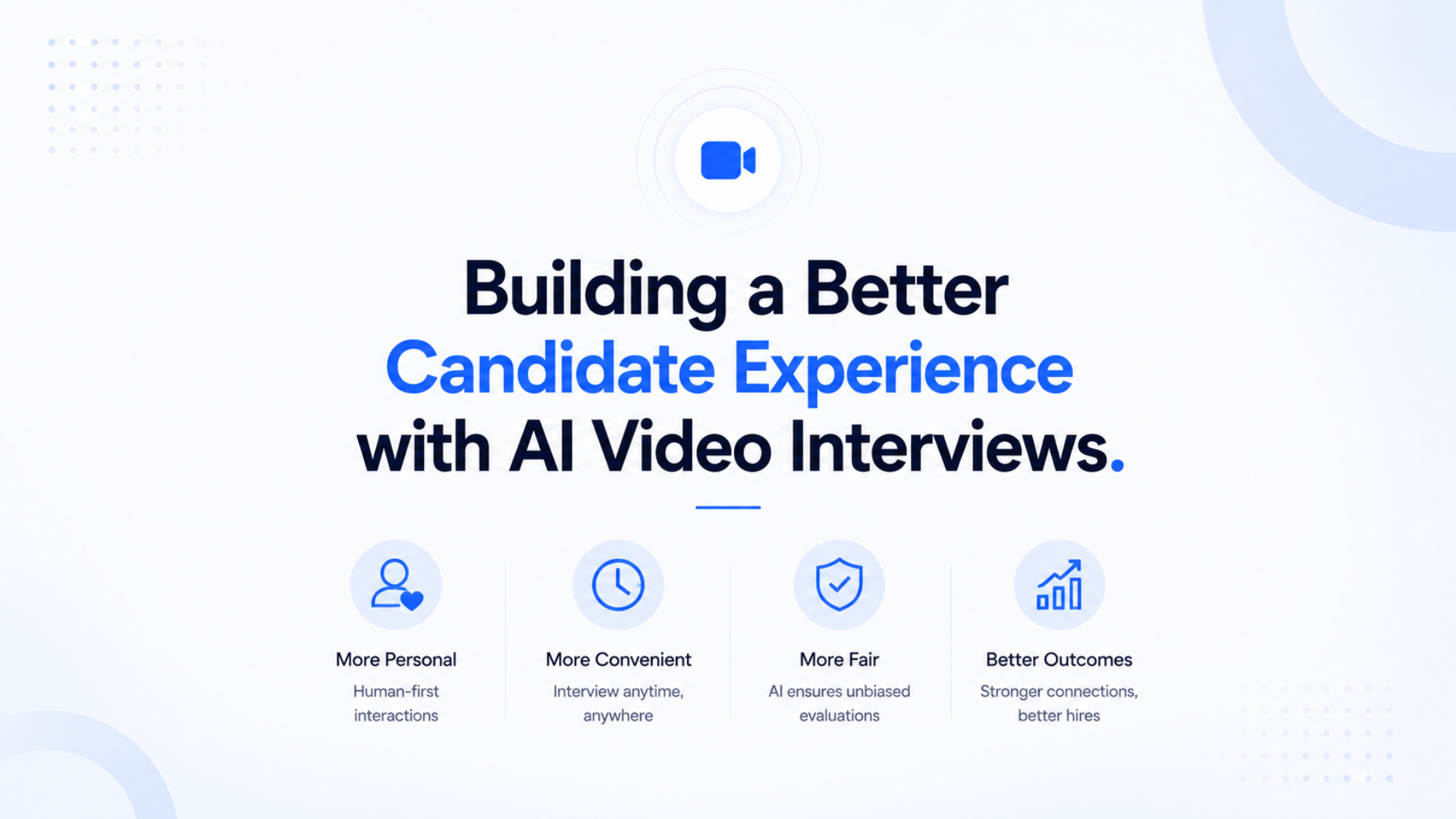
Why Candidate Experience Became a Strategic Imperative
For most of recruiting history, the candidate's experience of the hiring process was not considered a strategic variable. Candidates applied, waited, interviewed, and either received an offer or did not. Their experience along the way was incidental — a byproduct of whatever process the organization happened to run. If the experience was good, that was fortunate. If it was poor, that was the candidate's problem.
This indifference is no longer viable. The convergence of three structural changes has transformed candidate experience from a nice-to-have into a strategic recruiting capability that directly affects talent acquisition outcomes, employer brand equity, and business performance.
First, candidate voice is now public and permanent. Platforms like Glassdoor, Blind, LinkedIn, and Twitter/X give every candidate the ability to publish their hiring experience to an audience of millions. A 2024 Talent Board analysis found that 68% of candidates who had a negative interview experience shared it publicly — and that these negative reviews reduced application rates for the affected employer by an average of 14%. In competitive talent markets, a 14% reduction in application volume translates directly into a smaller, weaker candidate pool and higher cost-per-hire.
Second, the best talent has the most options and the highest expectations. Candidates who are actively recruited — senior professionals, specialized technologists, high-potential early-career talent — are typically evaluating multiple opportunities simultaneously. Their expectations for how they should be treated during the hiring process are shaped by their consumer experiences with technology platforms that are fast, responsive, transparent, and respectful of their time. A 2024 LinkedIn Global Talent Trends report found that 73% of passive candidates cited "respect for my time" as the most important factor in their decision to engage with a recruiter — ahead of compensation, role attractiveness, and company reputation.
Third, candidate experience directly predicts business outcomes. Research has established clear causal links between the quality of the hiring experience and measurable business metrics: offer acceptance rates, early attrition, referral rates, and customer satisfaction in customer-facing roles. Gallup found that candidates who rated their hiring experience as "excellent" were 4.6 times more likely to be highly engaged in their first year and 2.3 times more likely to still be with the organization after 24 months. Candidate experience is not merely a recruiting metric — it is an early indicator of employee retention and performance.
AI video interviews address candidate experience at the structural level by redesigning the most process-heavy, time-consuming, and friction-filled stage of the hiring journey: the interview. The following sections examine the five dimensions of candidate experience that AI video interviews most directly affect.
Dimension 1: Scheduling Flexibility and Respect for Candidate Time
The most immediate and tangible candidate experience improvement from AI video interviews is the elimination of the scheduling bottleneck. In traditional hiring processes, the initial screening interview requires synchronous coordination between the candidate and one or more interviewers — a coordination challenge that is especially acute for employed candidates who can only interview outside business hours, for candidates in different time zones, and for candidates with caregiving or other personal responsibilities that limit their availability.
The scheduling process itself is often a source of frustration. Candidates receive an invitation, respond with their availability, wait for the recruiter to find a matching slot, receive a confirmation, and then frequently need to reschedule when a conflict arises. Each round of this back-and-forth consumes calendar time and signals to the candidate that the organization does not respect their schedule. A 2024 SHRM survey found that "scheduling difficulty" was the second most common candidate complaint about the interview process, cited by 34% of dissatisfied candidates.
AI video interviews eliminate this friction entirely by enabling asynchronous completion. The candidate receives the AI interview invitation and completes it at whatever time is most convenient — early morning before work, during a lunch break, late evening after family responsibilities, or on a weekend. Huntlo.ai's multi-channel delivery (email, LinkedIn, WhatsApp, AI voice) ensures that the invitation arrives through the candidate's preferred communication platform, and the interview can be completed through whatever channel the candidate finds most comfortable.
The candidate experience impact is significant and consistent. A 2024 Gartner study of candidate experience at 15 enterprises that deployed AI video interviews found that candidate satisfaction with the "scheduling and logistics" dimension of the interview process improved by an average of 47%. More tellingly, the study found that the scheduling flexibility provided by AI interviews was the single most frequently cited positive experience element in post-interview candidate surveys — selected by 61% of candidates who rated their experience as "above average" or "excellent."
The scheduling flexibility advantage is especially important for candidates who are currently employed — the candidates that most organizations most want to hire. An employed candidate who can complete an AI interview on a Sunday evening does not need to take time off work, explain an interview absence to their current employer, or juggle interview scheduling with their current job responsibilities. This convenience directly affects candidate willingness to engage: a Talent Board CandE Benchmark report found that asynchronous interview options increased application completion rates by 23% among employed candidates.
Dimension 2: Consistent, Professional Treatment Regardless of Circumstances
One of the most damaging aspects of inconsistent hiring processes is that different candidates for the same role receive fundamentally different treatment — not because of their qualifications, but because of when they happen to interview, who happens to be available, and what mood the evaluator happens to be in. This inconsistency is not only unfair — it is experienced by candidates as disrespectful.
Candidates notice when they receive a thorough, well-organized interview while a peer receives a cursory, disorganized one. Candidates notice when interviewers are prepared and engaged versus distracted and unprepared. Candidates notice when the evaluation criteria seem clear and job-relevant versus arbitrary and impression-driven. And candidates share these observations — on Glassdoor, in professional networks, and in conversations with peers who are considering applying to the same organization.
AI video interviews ensure that every candidate for a given role family encounters the same professional, organized, and competency-focused interview experience. The questions are identical. The evaluation criteria are identical. The time allocated for responses is identical. The interface is identical. This consistency is not only fairer — it is experienced by candidates as more respectful because it communicates that the organization has invested in a process that takes every candidate seriously.
The How to Run Multi-Channel Outreach Without Sounding Like Spam article on the Huntlo blog explores how consistency and personalization work together to create a candidate experience that is both efficient and genuinely respectful — the combination that drives the highest engagement and satisfaction.
Dimension 3: Faster Feedback and Transparent Process Communication
The absence of timely feedback is the most common and most damaging candidate experience failure. A 2024 Glassdoor analysis of 2.3 million interview reviews found that "lack of communication after the interview" was the single most frequent complaint, appearing in 38% of all negative reviews. Candidates who invest time in preparing for and completing interviews — often taking time off work, preparing extensively, and experiencing significant anticipatory anxiety — describe the post-interview silence as the most frustrating element of the entire hiring process.
The silence is not usually intentional. It results from process bottlenecks: recruiters are overwhelmed with documentation tasks, hiring managers are slow to provide feedback, and calibration discussions get delayed by scheduling conflicts. The candidate is left waiting — sometimes for days, sometimes for weeks — with no information about the status of their candidacy.
AI video interviews address this problem at multiple levels. First, by automating the evaluation and documentation of the screening interview, AI removes the documentation bottleneck that delays feedback. The candidate's evaluation is complete the moment they finish the interview — there is no waiting for the recruiter to write notes, enter data, or synthesize observations. Second, the structured evaluation data enables faster decision-making because hiring managers can review AI-generated competency scores and response summaries immediately, without waiting for recruiter-mediated communication. Third, the structured data makes it easier to provide candidates with substantive feedback — not just "you've been advanced" or "you've been rejected," but specific information about which competencies they demonstrated strongly and where they might focus development efforts.
A Deloitte study of candidate communication at enterprises that deployed AI video interviews found that the average time from interview completion to status notification decreased from 8.3 days to 2.1 days — a 75% reduction. More importantly, the study found that candidate satisfaction with "process communication" improved by 52%, and that the improvement was driven primarily by the speed and specificity of post-interview feedback rather than by the quality of the news itself. Candidates who received prompt, specific feedback after a rejection reported significantly higher satisfaction than candidates who received delayed, generic feedback after an offer — suggesting that how the process communicates matters more than what it communicates.
Dimension 4: Reduced Interview Fatigue and Process Purgatory
Interview fatigue is a real and measurable phenomenon that degrades both candidate experience and evaluation quality. When candidates are required to complete multiple rounds of interviews — often repeating the same basic information to different evaluators — they become fatigued, their engagement declines, and the quality of their later responses suffers. This "process purgatory" is especially common in enterprise hiring, where candidates may face four to seven interview rounds spanning several weeks.
A 2024 study in the Journal of Applied Psychology found that candidate response quality — measured by specificity, depth, and behavioral evidence — declined by 22% between the first and fourth interview rounds, with the steepest decline occurring between rounds three and four. This decline is not because the candidates are less qualified in later rounds — it is because the process itself is exhausting them.
AI video interviews reduce interview fatigue through two mechanisms. First, by automating the screening layer, AI video interviews reduce the total number of human-conducted interview rounds. When the AI handles the initial structured screening — verifying qualifications, assessing core competencies, and generating evaluation data — the human interview rounds can focus on the higher-value interactions that benefit from face-to-face engagement: cultural alignment assessment, team fit evaluation, and hiring manager relationship building. The total number of interview rounds decreases, and each remaining round is more focused and more valuable.
Second, AI video interviews are typically shorter and more efficient than human-conducted screening interviews because there is no small talk, no scheduling preamble, and no post-interview wrap-up. A 45-minute human screening interview that includes 15 minutes of non-evaluation content can be replaced by a 25-minute AI interview that is entirely focused on competency assessment. The candidate spends less total time in the interview process while providing more evaluation-relevant information.
The candidate experience impact is substantial. The same Gartner study referenced earlier found that enterprises using AI video interviews reported a 39% reduction in candidates who described the interview process as "too long" or "exhausting." More importantly, the study found that the quality of candidate responses in the human interview rounds that followed AI screening was 18% higher than the quality of responses in equivalent rounds without AI screening — suggesting that reducing interview fatigue in the early stages preserves candidate energy for the later stages where human interaction matters most.
Dimension 5: Fairness Perception and Psychological Safety
Candidate experience is not only about convenience and communication — it is also about the candidate's perception of whether the process is fair. Candidates who believe they were evaluated fairly, even when they do not receive an offer, report significantly higher satisfaction and are significantly more likely to reapply, refer others, and speak positively about the organization.
A 2024 Talent Board CandE Benchmark report found that "perceived fairness of the evaluation process" was the strongest single predictor of positive candidate experience — stronger than compensation, role attractiveness, recruiter responsiveness, and employer brand reputation. Candidates who perceived the evaluation as fair were 3.4 times more likely to recommend the employer to peers and 2.1 times more likely to reapply for future opportunities.
AI video interviews enhance fairness perception through several mechanisms. The standardized question delivery communicates that every candidate faces the same assessment. The algorithmic scoring communicates that evaluation is based on objective criteria rather than subjective impression. The blind evaluation capability communicates that demographic characteristics do not influence the outcome. And the structured evaluation data provides a transparent, reviewable record of how the decision was made — a record that can be shared with candidates who request feedback.
These perceptions are not merely cosmetic. They reflect real structural differences in how AI-mediated and human-mediated evaluations operate. A McKinsey analysis found that organizations using AI screening tools reported a 28% increase in candidates rating the process as "very fair" or "completely fair" — and that this fairness perception was strongest among candidates from underrepresented groups, who have historically experienced the greatest skepticism about the fairness of hiring processes.
The What Makes an AI Recruiting Platform "Agentic" vs Just Automated article on the Huntlo blog discusses how the next generation of AI platforms is building fairness and transparency directly into the candidate interaction design — not as an afterthought but as a core architectural principle.
The Business Case: How Candidate Experience Drives Measurable Outcomes
Improving candidate experience is not an act of corporate generosity — it is a strategic investment with quantifiable returns. The evidence linking candidate experience to business outcomes is extensive and growing.
Offer acceptance rates. Candidates who report a positive hiring experience are significantly more likely to accept an offer. The LinkedIn Global Talent Trends 2025 report found that candidates who rated their interview experience as "excellent" accepted offers at a 67% rate, compared to 42% for candidates who rated their experience as "poor" or "very poor." In competitive talent markets where the best candidates have multiple offers, candidate experience is often the deciding factor.
Referral quality and volume. Candidates who have a positive hiring experience become brand ambassadors who refer other high-quality candidates. Gallup research found that candidates with positive hiring experiences were 2.8 times more likely to refer peers — and that referred candidates had 25% higher first-year performance ratings and 20% lower early attrition than non-referred candidates. The referral pipeline, which is the highest-quality and lowest-cost sourcing channel, is directly dependent on candidate experience quality.
Early attrition and new-hire engagement. The candidate's experience of the hiring process is their first experience of the organization's culture, operational competence, and respect for individuals. Candidates who feel respected, informed, and fairly treated during hiring carry those positive impressions into their employment — and candidates who feel disrespected, ignored, and unfairly treated carry those negative impressions. Gallup's data shows that candidates who rated their hiring experience as "excellent" were 4.6 times more likely to report high engagement in their first year and 38% less likely to leave within 24 months.
Employer brand equity. Every candidate who interacts with the hiring process — including the majority who are not hired — forms an impression of the employer brand. A 2024 Glassdoor analysis estimated that the average enterprise hiring process generates 15-20 candidate touchpoints per hire, including the 10-15 candidates who are not selected for every candidate who is. If even a fraction of rejected candidates share negative experiences publicly, the cumulative employer brand damage can be substantial. Conversely, organizations known for treating candidates well — even rejected candidates — attract stronger applicant pools and benefit from positive word-of-mouth in professional networks.
Customer satisfaction in customer-facing roles. For organizations where employees interact directly with customers — retail, hospitality, healthcare, financial services — there is a direct causal link between how the organization treats candidates and how those candidates (once hired) treat customers. A Harvard Business Review study of retail organizations found that stores where new hires reported positive candidate experiences had 12% higher customer satisfaction scores than stores where new hires reported negative candidate experiences. The mechanism is straightforward: employees who feel the organization treated them fairly and respectfully during hiring are more likely to treat customers fairly and respectfully during service delivery.
Where AI Video Interviews Can Damage Candidate Experience
The candidate experience benefits of AI video interviews are not automatic. Poorly designed or carelessly implemented AI interviews can actually degrade the candidate experience — sometimes severely. The following failure modes are the most common and most damaging.
Impersonal, robotic interaction design. The most frequent candidate complaint about AI interviews is that they feel "talking to a machine" — impersonal, scripted, and dehumanizing. This perception is understandable but largely avoidable. Huntlo.ai's conversational AI is designed to produce natural, responsive interactions that feel like a genuine conversation rather than a rigid questionnaire. The key design principle is that the AI should be professional and structured but not mechanical — asking thoughtful follow-up questions, acknowledging the substance of candidate responses, and maintaining a conversational tone that respects the candidate's intelligence and preparation.
Lack of transparency about AI involvement. Candidates who are not informed that they will be evaluated by AI — or who discover it unexpectedly during the interview — report significantly lower satisfaction and higher fairness concerns than candidates who are informed upfront. Transparency is both an ethical requirement and a candidate experience imperative. Best practice is to clearly disclose AI involvement in the interview invitation, explain what data is collected and how it is evaluated, and provide a human contact for candidates who have questions or concerns. The EU AI Act requires this transparency for high-risk AI systems, and New York City's Local Law 144 mandates candidate notification for automated employment decision tools.
Inadequate accessibility and technology requirements. AI video interviews that require specific browsers, high-bandwidth connections, or quiet physical spaces exclude candidates who lack these resources. A BLS analysis found that 18% of U.S. job seekers lack sufficient broadband for reliable video interviews, with higher rates among rural, older, and lower-income populations. Responsible AI interview platforms must offer alternative formats — audio-only interviews, text-based conversations, or phone-based options — to ensure equitable access. Huntlo.ai's multi-channel delivery (video, AI voice, and text) provides this accessibility by design.
No feedback or closure. AI interviews that evaluate candidates but never communicate the results — leaving candidates in the same information void they would experience in a traditional process — forfeit one of the primary candidate experience advantages of AI. The structured evaluation data generated by AI interviews makes it easier, not harder, to provide substantive feedback. Organizations that deploy AI interviews without leveraging this capability for better candidate communication are leaving significant candidate experience value on the table.
Over-automation that removes all human contact. The optimal candidate experience is not fully automated — it is AI-augmented. Candidates want the efficiency and flexibility of AI for the process-heavy stages (scheduling, screening, documentation) and the human connection and personal attention of a recruiter for the relationship-intensive stages (initial outreach, offer discussion, post-interview debrief). Organizations that automate the entire process — eliminating human recruiter contact entirely — typically see candidate satisfaction decline, especially for senior and specialized candidates who expect and value personal engagement.
Designing AI Video Interviews for Candidate-Centric Experience
The most successful AI video interview implementations are designed from the candidate's perspective first, with operational and evaluation requirements addressed within a candidate-centric framework. The following design principles, drawn from Talent Board CandE award-winning organizations and SHRM candidate experience research, guide candidate-centric AI interview design.
Principle 1: Give candidates control over when and how they engage. The most fundamental candidate experience improvement is flexibility. Let candidates choose their interview time, their communication channel, and their pace. Huntlo.ai's multi-channel delivery (email, LinkedIn, WhatsApp, AI voice) and asynchronous interview format give candidates maximum control over their engagement — which is why candidates consistently rate scheduling flexibility as the most valued AI interview feature.
Principle 2: Communicate clearly and proactively at every stage. Candidates should never wonder what is happening in their hiring process. AI interview invitations should clearly explain the format, the expected duration, the evaluation criteria, and what happens after completion. Post-interview communication should be prompt, specific, and respectful — even when the news is negative. The structured data generated by AI interviews makes proactive communication easier, not harder.
Principle 3: Make the AI interaction feel like a conversation, not an interrogation. The best AI interview experiences are those where candidates feel they had a genuine opportunity to demonstrate their capabilities, not just respond to a canned questionnaire. Huntlo.ai's conversational AI supports multi-round structured conversations with dynamic follow-up questions — creating an interview experience that approaches the depth of a human conversation while maintaining the consistency of AI evaluation.
Principle 4: Provide substantive feedback to every candidate. The structured evaluation data generated by AI interviews makes it possible to provide every candidate — including rejected candidates — with specific, actionable feedback about their performance. This feedback is not only a candidate experience differentiator; it is also a brand-building investment. Candidates who receive helpful feedback after a rejection are 2.4 times more likely to reapply and 3.1 times more likely to refer peers, according to Talent Board data.
Principle 5: Preserve human contact at the moments that matter most. The initial outreach, the offer discussion, and the post-rejection follow-up are the three moments where human contact has the greatest candidate experience impact. AI should handle the process-intensive stages — scheduling, screening, documentation — so that recruiters can invest their time in these high-impact human touchpoints.
The Campus Recruiting Use Case: Where Candidate Experience Matters Most
Campus recruiting is the hiring context where candidate experience has the most strategic impact and where AI video interviews deliver some of their most significant benefits. Campus candidates are evaluating employers as carefully as employers are evaluating them — and their evaluation is heavily influenced by the quality of the hiring process itself.
A 2024 NACE (National Association of Colleges and Employers) survey found that 82% of graduating seniors said the quality of the interview process significantly influenced their perception of the employer — and that 61% had declined or would decline an offer from an employer whose interview process they rated as "poor." For campus recruiting, where the employer brand among the next generation of talent is at stake, candidate experience is not just a hiring metric — it is a long-term brand investment.
AI video interviews transform the campus recruiting experience in several ways. First, they eliminate the compressed scheduling bottleneck that makes campus recruiting season so chaotic for both employers and students. Rather than trying to coordinate hundreds of synchronous interviews during a narrow campus visit window, employers can send AI interview invitations to thousands of students and evaluate them asynchronously — expanding the campus pipeline while reducing the logistical complexity. The Best AI Tools for Campus and Early-Career Recruiting article on the Huntlo blog examines how AI platforms are redesigning the campus recruiting experience.
Second, AI video interviews give every campus candidate the same high-quality evaluation experience — regardless of which career fair booth they visited, which campus they attended, or which recruiter happened to be present. This consistency is especially important for diversity recruiting, where candidates from underrepresented institutions may have less access to campus recruiting events and may rely more heavily on virtual and asynchronous interview formats.
Third, AI video interviews enable faster offer decisions in campus recruiting, where the most competitive candidates often receive multiple offers within days of each other. Organizations that can complete evaluation and extend offers faster — enabled by AI-accelerated screening — win a disproportionate share of the top campus talent.
How Huntlo.ai Designs for Candidate Experience
Huntlo.ai's platform is built with candidate experience as a primary design consideration, not a secondary feature. Every element of the platform architecture is intended to make the candidate's interaction with the hiring process more respectful, more flexible, and more transparent.
The conversational AI screening engine produces natural, responsive interview interactions that feel conversational rather than mechanical. The AI asks structured questions but does so in a way that acknowledges the candidate's responses, explores relevant follow-up topics, and maintains a professional but approachable tone. Multi-round conversation capabilities allow the AI to probe deeper into areas of strength or interest identified during the interview — creating an experience that candidates describe as more engaging and more respectful of their capabilities than single-question assessment formats.
Multi-channel delivery (email, LinkedIn, WhatsApp, AI voice) gives candidates control over how they engage with the hiring process. A candidate who prefers to respond via text message rather than video can do so. A candidate who wants to complete an interview by voice rather than typing can do so. This flexibility is especially valued by candidates with accessibility needs, candidates in different time zones, and candidates who are currently employed and need to manage their interview engagement around work responsibilities.
The platform's integration with 50+ sourcing platforms ensures that candidates from every sourcing channel receive a consistent, professional interview experience — whether they were sourced through LinkedIn, a job board, an employee referral, or direct outreach. Webhook-based ATS integration ensures that evaluation data flows seamlessly through the hiring process, enabling faster decisions and more prompt candidate communication.
The flat pricing model of $99 per seat per month with no usage caps supports candidate experience objectives by removing financial incentives to limit interview access. When platforms charge per-interview, organizations are incentivized to restrict AI interviews to a narrow candidate pool — forcing the majority of candidates through slower, less consistent human screening processes. Huntlo.ai's uncapped model ensures that every candidate can receive the same high-quality AI interview experience regardless of pipeline volume.
Measuring Candidate Experience: The Metrics That Matter
Enterprises that implement AI video interviews for candidate experience improvement should track specific metrics that capture the dimensions of experience that AI most directly affects.
Interview completion rate measures the percentage of candidates who begin the AI interview and complete it. Low completion rates indicate usability problems, technology barriers, or unclear communication about the interview format.
Candidate satisfaction scores — collected through post-interview surveys — should be segmented by candidate demographic, geography, and role family to identify experience disparities that may indicate accessibility or fairness issues.
Time-to-feedback measures the interval between interview completion and candidate notification. This metric directly captures the communication improvement that AI enables and should decrease significantly after implementation.
Net Promoter Score (NPS) for the hiring process measures the likelihood that candidates will recommend the employer to peers. NPS is the most strategic candidate experience metric because it directly predicts referral volume and employer brand impact.
Glassdoor and public review sentiment should be monitored for changes in interview-related feedback after AI deployment. Positive shifts in interview review sentiment are a leading indicator of employer brand improvement.
Offer acceptance rate and offer-to-start ratio are downstream business metrics that are influenced by candidate experience. Improvements in these metrics after AI deployment may partially reflect improved candidate experience — though they are also influenced by compensation, market conditions, and other factors.
The Long Game: Candidate Experience as Competitive Moat
In a talent market where the best candidates have multiple options and where information about the hiring experience is publicly visible, candidate experience is not a transient operational concern — it is a durable competitive advantage. Organizations that build a reputation for treating candidates well attract stronger applicant pools, benefit from more employee referrals, enjoy higher offer acceptance rates, and experience lower early attrition. These advantages compound over time: better candidate experience leads to better hires, who create stronger teams, who produce better business outcomes, who reinforce the employer brand that attracts the next generation of candidates.
AI video interviews are the most scalable tool available for improving candidate experience at the interview stage — the stage where candidates form their strongest and most lasting impressions of the organization. By offering scheduling flexibility, consistent professional treatment, faster feedback, reduced interview fatigue, and enhanced fairness perception, AI video interviews address the five dimensions of candidate experience that matter most.
The enterprises that invest in candidate-centric AI interview design — not just deploying the technology, but designing the interaction from the candidate's perspective — will build the kind of hiring reputation that attracts the best talent not because they pay the most or offer the most prestigious roles, but because they treat every candidate with the respect, efficiency, and transparency that great talent expects and deserves.
Related Topics
How to Run Multi-Channel Outreach Without Sounding Like Spam — How to create candidate outreach that is efficient through AI automation yet genuinely personal and respectful — the combination that drives the highest engagement and satisfaction.
Best AI Tools for Campus and Early-Career Recruiting — How AI platforms are redesigning the campus recruiting experience through asynchronous interviews, broader pipeline access, and faster offer decisions that win top early-career talent.
What Makes an AI Recruiting Platform "Agentic" vs Just Automated — How next-generation AI platforms embed fairness, transparency, and candidate-centric design directly into the architecture rather than treating them as afterthoughts.