Recruitment Has Moved Beyond Scheduling Interviews
Interview scheduling used to be one of recruitment's biggest operational headaches.
Recruiters spent hours coordinating calendars, exchanging emails, confirming candidate availability, rescheduling interviews, and following up with hiring managers. For organizations handling hundreds of applicants, particularly those recruiting for freshers jobs, internship jobs, HR jobs, or recruiter jobs, interview coordination often became a full-time responsibility in itself.
Artificial intelligence has changed that.
Modern recruiting platforms can automatically schedule interviews, answer candidate questions, send reminders, collect confirmations, and coordinate availability across multiple stakeholders without constant recruiter involvement.
Paradox AI has played a significant role in driving this transformation.
Its conversational AI assistant helped organizations automate interview scheduling while improving candidate communication throughout the hiring process. Instead of waiting for recruiters to manually coordinate interviews, candidates could interact with an AI assistant that handled scheduling almost instantly.
However, recruitment has continued evolving.
Interview automation has become an expected capability rather than a competitive advantage.
Today's recruiting teams are looking beyond scheduling automation. They want platforms capable of sourcing candidates, automating outreach, screening applicants, managing hiring workflows, and maintaining candidate engagement from the first interaction through onboarding.
According to the LinkedIn Talent Solutions, recruiter productivity continues to be one of the most important priorities for talent acquisition leaders. Meanwhile, the World Economic Forum Future of Jobs Report highlights AI-driven automation as one of the defining technologies transforming recruitment worldwide.
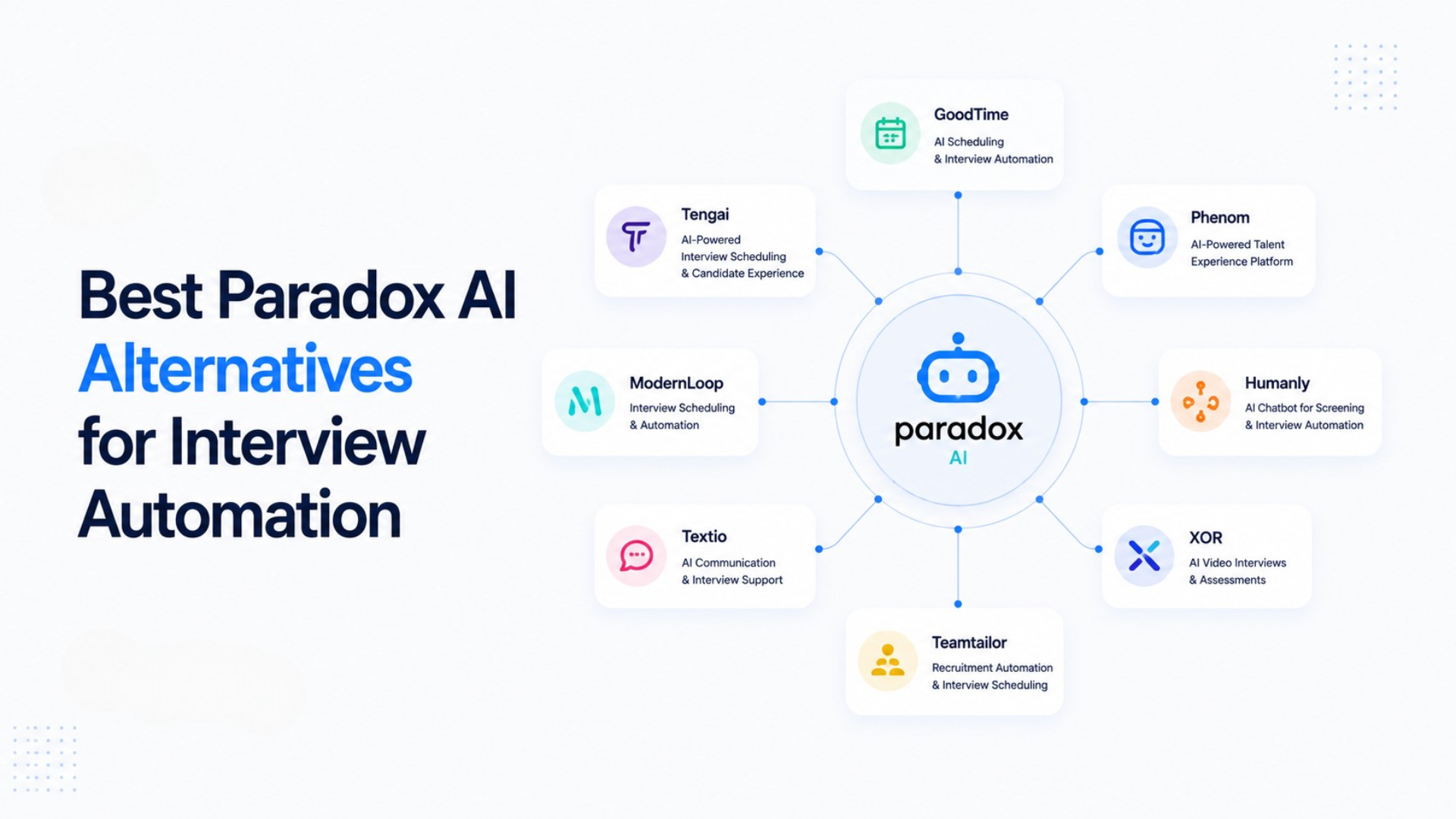
These changes explain why many organizations are evaluating Paradox AI alternatives.
Why Organizations Are Looking Beyond Paradox AI
Paradox AI remains one of the industry's leading conversational recruiting platforms.
Its AI assistant has helped organizations reduce scheduling delays, improve candidate responsiveness, and simplify communication during high-volume hiring campaigns.
For businesses managing thousands of applicants simultaneously, these capabilities continue to provide significant operational value.
Yet recruitment involves far more than scheduling interviews.
Recruiters must first identify qualified candidates.
Launch personalized outreach.
Qualify applicants.
Collaborate with hiring managers.
Track applicants through multiple interview stages.
Measure hiring performance.
Maintain long-term candidate relationships.
These responsibilities frequently require several disconnected software platforms.
Organizations increasingly want a unified recruiting ecosystem instead of a collection of specialized tools.
This shift becomes especially important for companies advertising jobs near me, work from home jobs, online jobs, part time jobs, or large-scale operational positions such as data entry jobs, where application volumes can become overwhelming without intelligent workflow automation.
The alternatives below reflect how recruitment technology is evolving beyond conversational AI alone.
Huntlo: Interview Automation Within a Complete AI Recruiting Workflow
One of the biggest differences between Huntlo and standalone interview automation platforms is that interview scheduling is treated as part of a larger recruiting journey rather than a separate feature.
Scheduling an interview only creates value after recruiters have successfully sourced candidates, initiated outreach, qualified applicants, and maintained engagement.
Huntlo connects these stages within one AI-powered recruiting platform.
Recruiters can discover candidates using AI sourcing, launch personalized outreach, automate follow-ups, conduct AI-assisted screening, coordinate interviews, and manage hiring workflows without switching between multiple systems.
Interview automation becomes a natural continuation of recruitment rather than an isolated process.
For organizations recruiting across graduate hiring programs, enterprise hiring, campus recruitment, or high-volume operational roles, this significantly reduces administrative work while improving recruiter productivity.
Companies hiring for jobs for women, work from home jobs for women, and regional recruitment campaigns also benefit from managing communication and scheduling within one platform instead of juggling multiple applications.
Rather than replacing recruiters, Huntlo allows AI to handle repetitive coordination while recruiters focus on evaluating candidates and building meaningful relationships.
That philosophy increasingly reflects where modern recruitment is heading.
Ashby: Bringing Structure to Interview Operations
Recruitment becomes increasingly difficult as hiring volumes grow.
Interview scheduling is only one challenge.
Hiring managers delay feedback.
Recruiters coordinate multiple calendars.
Leadership requests hiring reports.
Candidates expect timely communication.
Ashby approaches these operational challenges by combining Applicant Tracking, interview scheduling, workflow automation, analytics, and recruiter collaboration within one centralized system.
According to Ashby, improving operational visibility enables organizations to build more consistent and scalable hiring processes.
For organizations seeking structured interview operations alongside automation, Ashby represents one of the strongest alternatives to Paradox AI.
Greenhouse: Structured Interviews Improve Hiring Quality
Interview automation should not focus only on scheduling.
It should also improve hiring quality.
Greenhouse has become one of the industry's most respected structured hiring platforms by helping organizations standardize interview processes through scorecards, interview planning, and collaborative evaluation frameworks.
According to Greenhouse, structured interviews improve consistency while helping organizations make more objective hiring decisions.
For enterprises managing complex interview processes, Greenhouse offers significant advantages beyond automation alone.
Lever: Turning Conversations Into Long-Term Hiring Relationships
Interview automation solves an important operational problem, but it does not solve the larger challenge of maintaining candidate engagement throughout the hiring journey.
Many candidates drop out after interviews because communication slows, expectations become unclear, or follow-ups arrive too late. In competitive hiring markets, silence often sends candidates directly to competing employers.
Lever approaches recruitment from a relationship-first perspective.
By combining Applicant Tracking with Candidate Relationship Management (CRM), Lever helps recruiters continue conversations before, during, and after interviews. Instead of treating interviews as isolated milestones, recruiters can nurture candidates throughout the entire hiring process.
According to Lever, continuous candidate engagement enables organizations to reduce hiring timelines while improving acceptance rates and employer branding.
For organizations looking beyond interview scheduling toward long-term talent relationships, Lever remains a compelling alternative.
Gem: Keeping Candidates Engaged Between Interviews
One overlooked challenge in recruitment is maintaining momentum.
Scheduling interviews is important, but keeping candidates informed between interview stages often determines whether they remain engaged.
Gem specializes in helping recruiters automate personalized communication while preserving authentic candidate relationships. Recruiters can manage outreach campaigns, follow-up sequences, and engagement workflows without relying on repetitive manual communication.
This becomes particularly valuable during high-volume hiring campaigns where recruiters manage hundreds of active candidates simultaneously.
According to Gem, consistent recruiter engagement contributes to healthier talent pipelines while improving candidate experience across the recruitment lifecycle.
Organizations that already have interview automation but want stronger communication frequently evaluate Gem alongside Paradox AI.
SmartRecruiters: Collaboration Makes Interview Automation More Effective
Interview scheduling involves far more than recruiters.
Hiring managers.
Interview panels.
Department leaders.
HR coordinators.
Executives.
Candidates.
Every participant influences the recruitment experience.
SmartRecruiters approaches interview automation through collaborative hiring rather than standalone scheduling.
Its platform connects recruiters and hiring teams within one workflow, making interview coordination, communication, and decision-making significantly easier.
According to SmartRecruiters, collaborative hiring improves both recruiter efficiency and candidate satisfaction by reducing communication delays and improving visibility throughout recruitment.
For organizations with distributed hiring teams, collaboration often creates greater long-term value than automation alone.
hireEZ: AI Sourcing Before Interview Automation
No interview can be scheduled without first identifying qualified candidates.
hireEZ continues to be one of the strongest AI sourcing platforms available because it focuses on helping recruiters discover talent faster using semantic search, AI recommendations, and automation.
Instead of relying exclusively on keyword matching, recruiters can identify candidates based on skills, experience, and career progression.
According to hireEZ, AI-powered sourcing helps organizations reduce manual recruiting effort while improving candidate discovery across multiple talent sources.
For businesses where sourcing remains the primary bottleneck, hireEZ continues to be one of the strongest alternatives.
SeekOut: Better Interviews Begin With Better Candidate Matching
Interview automation improves efficiency.
Candidate quality improves hiring outcomes.
SeekOut focuses on helping recruiters identify professionals whose experience and skills closely align with hiring requirements before interviews even begin.
Its AI-powered talent intelligence platform analyzes workforce data, semantic relationships, and skills to uncover candidates who may never appear through traditional keyword searches.
According to SeekOut, skills-based sourcing enables organizations to discover specialized professionals across engineering, cybersecurity, healthcare, life sciences, and executive recruitment.
Organizations seeking higher-quality interview pipelines often consider SeekOut alongside interview automation platforms.
Eightfold AI: Intelligent Matching Before Conversations Begin
Eightfold AI expands the conversation beyond automation by emphasizing skills intelligence and workforce planning.
Rather than focusing solely on scheduling interviews, the platform helps organizations identify internal and external candidates based on transferable skills, career progression, and workforce data.
This broader perspective allows recruiters to make more informed interview decisions before candidate conversations even begin.
According to Eightfold AI, AI-driven skills intelligence supports recruiting, workforce planning, internal mobility, and long-term talent management.
For enterprises seeking strategic workforce intelligence alongside AI recruiting, Eightfold AI remains a strong alternative.
Choosing the Right Paradox AI Alternative
Interview automation is no longer the destination.
It is one component of a much larger recruitment ecosystem.
Organizations now expect recruitment software to connect sourcing, recruiter outreach, applicant tracking, interview scheduling, candidate engagement, analytics, and workflow automation into one seamless experience.
Some organizations prioritize conversational AI.
Others require enterprise collaboration.
Some focus on sourcing.
Others emphasize recruiter productivity.
Yet one trend continues reshaping recruitment technology.
Recruiters want fewer disconnected systems.
Managing separate platforms for sourcing, communication, scheduling, CRM, applicant tracking, and analytics increases complexity while reducing productivity.
This is where Huntlo differentiates itself.
Rather than treating interview automation as an isolated capability, Huntlo integrates AI-powered sourcing, personalized outreach, AI-assisted screening, interview scheduling, recruiter collaboration, and workflow automation into one connected recruiting platform.
As recruitment continues evolving, operational simplicity is becoming one of the strongest competitive advantages available to hiring teams.
Final Thoughts
Paradox AI has transformed how organizations think about conversational recruiting and interview automation.
Its AI assistant continues to help businesses automate candidate communication while reducing scheduling delays during high-volume hiring.
However, recruitment in 2026 extends well beyond scheduling interviews.
Recruiters need sourcing.
Candidates expect personalized engagement.
Hiring managers require visibility.
Leadership expects measurable hiring outcomes.
Organizations increasingly prefer platforms that connect every stage of recruitment rather than solving one operational challenge at a time.
That shift explains why so many recruiting teams are evaluating Paradox AI alternatives.
Not because interview automation has become less valuable.
But because interview automation now represents only one stage of an increasingly connected hiring process.
For organizations seeking an AI recruiting platform that combines sourcing, outreach, AI screening, interview coordination, workflow automation, and recruiter productivity within one ecosystem, Huntlo represents one of the strongest alternatives available today.
The future of recruitment belongs to platforms that automate repetitive work while allowing recruiters to focus on what technology cannot replace—building trust, evaluating people, and making exceptional hiring decisions.
Frequently Asked Questions
What is the best Paradox AI alternative in 2026?
Organizations commonly compare Huntlo with Paradox AI, Ashby, Greenhouse, Lever, SmartRecruiters, Gem, SeekOut, hireEZ, and Eightfold AI. The right platform depends on whether your priority is interview automation, sourcing, recruiter productivity, or end-to-end recruitment.
Is Paradox AI only an interview scheduling platform?
No. Paradox AI provides conversational AI capabilities that support interview scheduling, candidate communication, recruiting automation, and high-volume hiring workflows.
Why are companies investing in interview automation?
Interview automation reduces manual scheduling, improves candidate responsiveness, minimizes administrative work, and helps recruiters focus on evaluating candidates instead of coordinating calendars.
Can AI improve candidate experience during interviews?
Yes. AI can automate scheduling, send reminders, answer candidate questions, manage rescheduling, and maintain faster communication throughout the interview process, improving the overall candidate experience.
What should recruiters look for in a Paradox AI alternative?
Recruiters should evaluate sourcing capabilities, workflow automation, AI screening, recruiter outreach, applicant tracking, integrations, collaboration features, candidate engagement, and scalability rather than focusing only on interview scheduling.