As the year draws to a close, recruiting teams often face a familiar challenge: too many open roles and too little time.
Q4 hiring pressure comes from multiple directions. Organizations are racing to meet hiring targets, utilize approved budgets, fill critical vacancies, and prepare for next year's workforce plans. At the same time, recruiters must navigate holiday schedules, candidate availability issues, and increasing competition for talent.
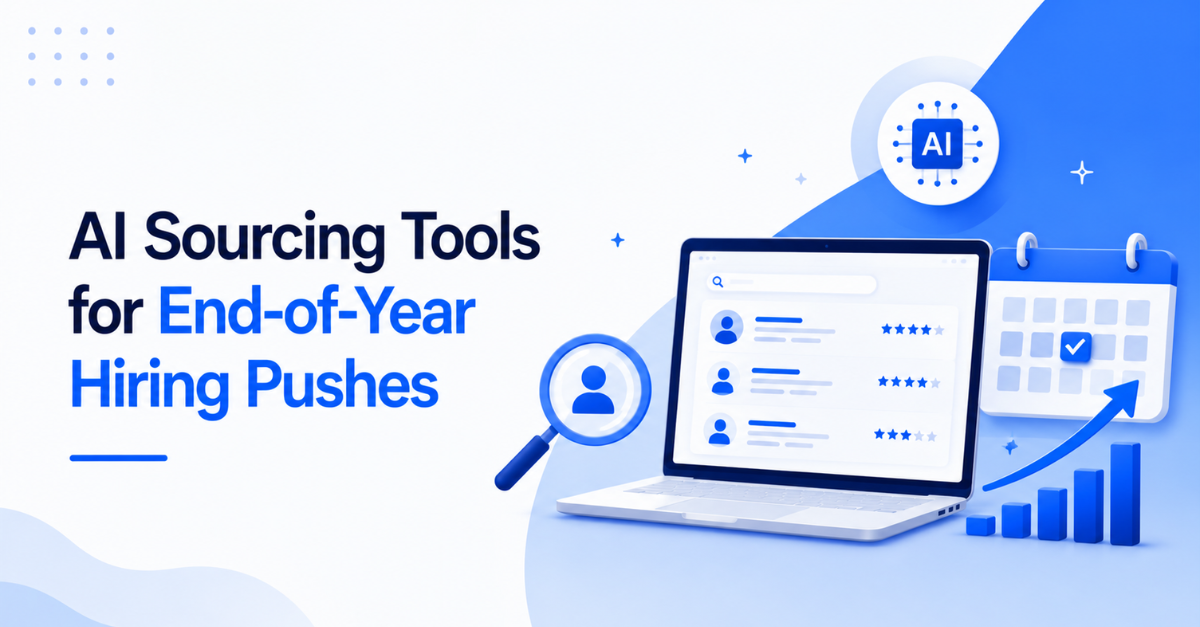
Many teams respond by investing in AI sourcing tools to find more candidates faster.
But there is a problem with that approach.
During end-of-year hiring pushes, the biggest bottleneck is rarely candidate discovery.
The real challenge is moving candidates through the hiring process quickly enough before the year ends.
This is why recruiting leaders are beginning to evaluate AI sourcing tools differently. Instead of focusing only on candidate search capabilities, they are prioritizing platforms that accelerate engagement, qualification, scheduling, and recruiting operations.
Why End-of-Year Hiring Creates Unique Challenges
End-of-year recruiting differs significantly from hiring during the rest of the year.
Hiring Deadlines
Organizations often have hiring commitments that must be completed before budget cycles close. Open requisitions that remain unfilled may impact business planning, project execution, and workforce forecasts.
Recruiters face intense pressure to shorten time-to-hire without sacrificing candidate quality.
Budget Pressures
Many companies aim to maximize approved hiring budgets before the fiscal year ends. Delayed hiring can result in lost opportunities or deferred workforce investments.
As a result, hiring managers expect recruiting teams to move faster than usual.
Workforce Planning Goals
Q4 is also when organizations begin planning for future growth.
Recruiters may simultaneously manage:
Current hiring needs
Next-year hiring plans
Internal mobility initiatives
Strategic workforce expansion
This creates significant workload pressure across recruiting teams.
How AI Sourcing Helps During Hiring Surges
AI sourcing tools can provide meaningful value during periods of increased hiring demand.
Faster Candidate Discovery
Modern AI sourcing platforms can identify relevant candidates across multiple channels and databases much faster than manual sourcing methods.
Instead of spending hours searching, recruiters can build talent pipelines in minutes.
Pipeline Expansion
During hiring surges, candidate volume matters.
AI sourcing tools help recruiters:
Discover passive candidates
Expand talent pools
Identify hard-to-find talent
Reduce manual sourcing effort
These benefits can improve the top of the recruiting funnel.
However, sourcing is only the beginning.
Once candidates enter the funnel, new bottlenecks often emerge.
The Real Hiring Bottlenecks in Q4
Most recruiting delays occur after sourcing.
Candidate Engagement
Recruiters often struggle to maintain timely communication with growing candidate pipelines.
Delays in outreach can result in:
Reduced response rates
Candidate drop-offs
Lost opportunities to competitors
Qualification
Recruiters spend significant time screening candidates, verifying qualifications, and determining role fit.
During year-end hiring pushes, manual qualification can quickly become a bottleneck.
Scheduling Delays
Interview scheduling remains one of the largest sources of hiring friction.
Common challenges include:
Coordinating multiple stakeholders
Managing holiday calendars
Handling candidate rescheduling
Tracking interview availability
Even when sourcing succeeds, scheduling delays can significantly increase time-to-hire.
Features Recruiters Should Prioritize
When evaluating AI sourcing tools for end-of-year hiring, recruiters should look beyond sourcing capabilities alone.
Outreach Automation
Automated outreach allows recruiters to engage candidates immediately after discovery.
Key capabilities include:
Personalized messaging
Multi-channel communication
Automated campaign management
Consistent candidate engagement
Follow-Up Automation
Many candidates respond after multiple touchpoints.
Automated follow-ups help recruiters maintain communication without increasing workload.
Benefits include:
Higher response rates
Reduced candidate abandonment
Improved pipeline movement
Workflow Automation
The best recruiting platforms automate repetitive tasks across the hiring process.
Examples include:
Candidate qualification
Status updates
Interview scheduling
Pipeline management
Recruiter notifications
These capabilities often generate greater hiring impact than sourcing improvements alone.
Candidate Engagement as a Hiring Accelerator
Recruiting teams frequently underestimate the role engagement plays in hiring speed.
Response Rate Improvement
Fast and consistent communication increases candidate responsiveness.
AI-powered engagement workflows ensure that candidates receive timely updates throughout the recruiting process.
Reducing Candidate Drop-Offs
Many candidates abandon hiring processes because communication slows down.
Automated engagement helps recruiters:
Maintain momentum
Keep candidates informed
Improve candidate experience
Increase conversion rates
For year-end hiring, reducing candidate drop-offs can significantly improve hiring outcomes.
Recruiting Workflow Automation for Year-End Hiring
The fastest hiring teams increasingly rely on workflow automation.
Qualification Automation
AI can help pre-screen candidates based on predefined requirements.
Benefits include:
Faster shortlisting
Reduced manual screening
Improved recruiter productivity
Interview Coordination
Scheduling automation eliminates one of recruiting's most time-consuming activities.
Automated coordination can:
Match stakeholder availability
Reduce scheduling conflicts
Accelerate interview cycles
Recruiting Operations
Recruiting operations tasks consume a large percentage of recruiter time.
Automation can support:
Candidate tracking
Workflow management
Reporting
Pipeline monitoring
Stakeholder communication
This allows recruiters to focus on higher-value activities.
Measuring Success During Hiring Pushes
Recruiting teams should evaluate technology investments using measurable outcomes.
Hiring Velocity
Hiring velocity measures how quickly candidates move through the recruiting process.
Key indicators include:
Stage progression speed
Interview turnaround time
Offer acceptance timelines
Time-to-Hire
Reducing time-to-hire is particularly important during year-end recruiting cycles.
Organizations that move faster are more likely to secure top candidates before competitors.
Recruiter Productivity
Recruiter productivity is often the most valuable metric.
Questions leaders should ask include:
How many requisitions can each recruiter manage?
How many candidates can recruiters engage simultaneously?
How much administrative work can be automated?
The answers determine whether technology creates meaningful business impact.
AI Sourcing vs Agentic AI Recruiting Infrastructure
AI sourcing tools and recruiting infrastructure platforms solve different problems.
Finding Candidates
AI sourcing focuses primarily on:
Talent discovery
Candidate search
Pipeline generation
Talent matching
These capabilities improve sourcing efficiency.
Moving Candidates Through the Hiring Process
Agentic AI Recruiting Infrastructure focuses on:
Candidate engagement
Qualification automation
Follow-up management
Scheduling coordination
Recruiting operations
This improves recruiting execution.
For organizations facing year-end hiring pressure, execution speed often matters more than sourcing volume.
Building a Faster Hiring Engine for Next Year
The lessons learned during year-end hiring can shape future recruiting success.
Lessons from Year-End Recruiting
Many recruiting teams discover that:
Candidate availability is not the primary challenge
Administrative work slows hiring
Follow-ups are inconsistent
Scheduling creates delays
These insights reveal where automation delivers the greatest value.
Future-Proof Hiring Operations
Organizations preparing for future hiring growth should invest in technologies that improve the entire recruiting workflow.
The goal should not simply be finding more candidates.
The goal should be creating a recruiting system capable of converting candidates into hires faster and more consistently.
Final Thoughts
AI sourcing tools can help recruiting teams build stronger candidate pipelines during end-of-year hiring pushes.
But sourcing alone rarely solves Q4 hiring challenges.
The fastest hiring organizations recognize that recruiting bottlenecks typically occur after candidate discovery.
To improve hiring velocity, reduce time-to-hire, and achieve year-end hiring goals, organizations must automate:
Candidate engagement
Qualification
Follow-ups
Scheduling
Recruiting operations
This is why many recruiting teams are moving beyond standalone sourcing tools and adopting Agentic AI Recruiting Infrastructure platforms.
The future of recruiting isn't simply about finding more candidates.
It's about helping recruiters move candidates through the hiring process faster, more efficiently, and at greater scale.
Frequently Asked Questions
How can AI sourcing tools help end-of-year hiring?
AI sourcing tools accelerate candidate discovery, expand talent pipelines, and reduce manual sourcing effort, helping recruiters identify candidates faster during hiring surges.
What recruiting tools improve hiring velocity?
Tools that automate candidate engagement, qualification, scheduling, and workflow management typically have the greatest impact on hiring velocity.
How do recruiters accelerate hiring?
Recruiters accelerate hiring by reducing manual tasks, improving communication speed, automating follow-ups, and streamlining interview coordination.
What causes hiring delays?
Common causes include delayed outreach, slow qualification processes, scheduling conflicts, stakeholder coordination challenges, and manual administrative work.
How can AI improve recruiter productivity?
AI reduces time spent on repetitive tasks, allowing recruiters to manage more requisitions, candidates, and hiring activities simultaneously.
What is recruiting workflow automation?
Recruiting workflow automation uses AI and software to automate candidate communication, qualification, scheduling, tracking, and other recruiting activities.
What is recruitment operations automation?
Recruitment operations automation focuses on streamlining administrative recruiting processes such as reporting, coordination, pipeline tracking, and workflow management.
What is Agentic AI recruiting?
Agentic AI recruiting uses autonomous AI systems to execute recruiting workflows, support decision-making, and automate tasks across the hiring lifecycle.
How do companies hit hiring targets faster?
Organizations improve hiring speed by automating engagement, reducing bottlenecks, improving coordination, and shortening candidate response times.
What comes after sourcing automation?
The next stage is recruiting execution automation, including engagement, qualification, scheduling, follow-ups, and recruiting operations management.
Related Topic
New Year, New Tools: Refreshing Your Sourcing Stack for 2027
How Much Time Can AI Sourcing Actually Save Recruiters?
AI Sourcing Tool Trends from Q1 2026: What Recruiters Are Adopting