Rachel Kim, SVP of Talent Acquisition at a global financial services firm, opened her 2026 planning review with a slide that showed a dramatic shift. Three years earlier, her team had been skeptical about AI recruiting, running a cautious pilot with one business unit while the rest of the organization continued with traditional sourcing methods. By the start of 2026, every recruiting team in the firm was using AI-powered tools for candidate sourcing, and the results were undeniable. Teams using AI sourcing filled positions thirty-one percent faster than those still relying on manual methods, and the quality-of-hire scores for AI-assisted placements averaged twelve points higher on the firm's internal assessment. Kim's experience mirrors a broader trend across the industry. AI recruiting has crossed the threshold from experimental technology to mainstream enterprise capability, and the organizations that have completed the transition are now reaping measurable competitive advantages in hiring speed, candidate quality, and recruiter productivity.
AI Recruiting Adoption Has Reached Mainstream Velocity
The adoption of AI in recruiting has accelerated dramatically over the past eighteen months, moving from early-adopter experimentation to mainstream enterprise deployment at a pace that has surprised even optimistic industry observers. According to McKinsey, the percentage of large enterprises using AI-powered tools in at least one stage of their recruiting process has risen from roughly thirty-five percent in early 2024 to over sixty-five percent at the start of 2026. This growth rate is significantly faster than previous HR technology adoption cycles, reflecting both the maturity of AI technology and the competitive pressure that is driving
organizations to adopt faster. The adoption pattern is also changing: rather than starting with low-risk pilot programs and expanding gradually, many organizations in 2026 are deploying AI recruiting tools across their entire talent acquisition function simultaneously, driven by the evidence from early adopters and the recognition that partial deployment limits the technology's value. The enterprises that deployed AI recruiting tools in 2024 and 2025 now have two to three years of performance data, and the results have been consistently positive enough to convince previously cautious organizations to move forward with full-scale implementations.
The geographic and industry spread of AI recruiting adoption has also broadened significantly. While AI recruiting was initially concentrated in technology companies and financial services firms in North America and Western Europe, the technology is now being deployed across virtually every industry and in every major talent market. Healthcare organizations are using AI to source specialized clinical professionals. Manufacturing companies are applying AI to high-volume production staffing. Retail chains are leveraging AI for seasonal hiring at scale. According to Gartner HR technology adoption data, the industry gap in AI recruiting adoption has narrowed by fifty percent since 2024, as organizations in traditionally lower-adoption industries recognize that their talent acquisition challenges are well-suited to AI-powered solutions. This broadening adoption is also driving vendor innovation, because serving diverse industries requires platforms to handle different hiring workflows, compliance requirements, and candidate expectations, which is pushing the technology to become more flexible and configurable while maintaining the intelligence capabilities that drive its value.
The adoption momentum is further accelerated by the shrinking gap between AI recruiting capabilities and recruiter expectations. In the early years of AI recruiting, the technology often disappointed users because the AI models produced unreliable results, required extensive training data that organizations did not have, and could not handle the complexity of real-world hiring decisions. In 2026, the most capable platforms have addressed these limitations through improved model architectures, richer training datasets, and more sophisticated handling of the nuances that make hiring decisions complex. Recruiters who were previously skeptical are becoming advocates as they experience platforms that consistently surface qualified candidates they would not have found through manual methods, provide insights that improve their conversations with hiring managers, and automate the administrative tasks that have historically consumed the majority of their working hours. The shift from skepticism to advocacy among front-line recruiting professionals is one of the most significant indicators that AI recruiting has crossed into mainstream adoption, because recruiter buy-in has historically been the barrier that prevented HR technology from delivering its full potential.
The Outcome Data From Production AI Recruiting Deployments
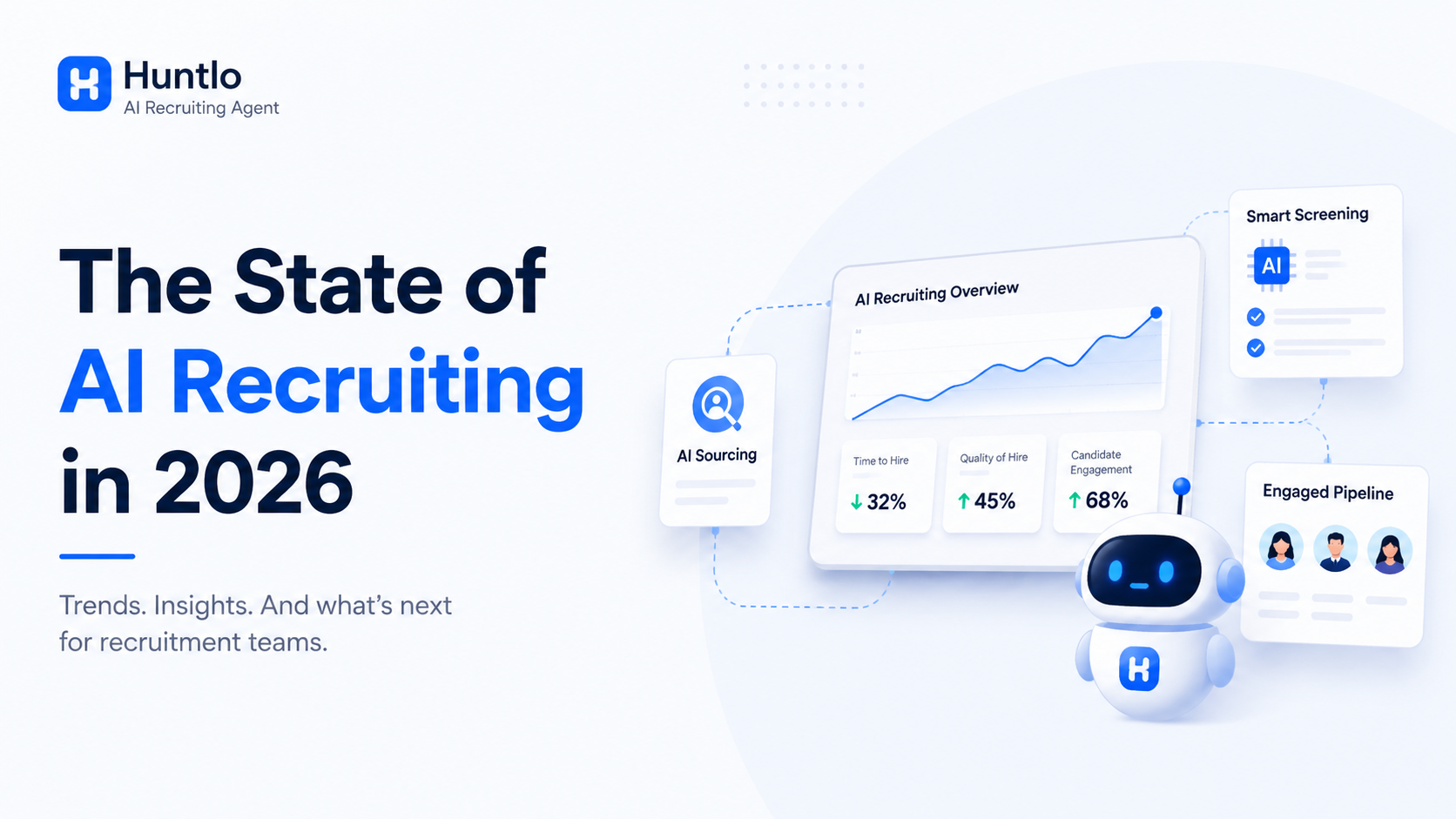
With thousands of organizations now running AI recruiting tools in production, the industry has accumulated substantial outcome data that allows for evidence-based assessment of the technology's actual impact. The results are consistent and significant. Organizations using AI-powered sourcing report twenty-five to forty percent reductions in time-to-fill for professional roles, because AI can identify and engage qualified candidates faster than manual sourcing
methods. Quality-of-hire metrics, measured by performance ratings and retention rates at the twelve-month mark, improve by ten to twenty percent for AI-assisted placements, because multi-signal AI matching produces more accurate candidate-role fit assessments than keyword-based resume screening. Recruiter productivity, measured as the number of active requisitions managed per recruiter, increases by thirty to fifty percent when AI handles sourcing, screening, and routine communication. The question of how to evaluate an AI sourcing tool before buying is now being answered with this growing body of production data, which provides benchmarks that previous generations of HR technology lacked. According to Deloitte HR technology benchmarking, organizations that conduct outcomes-based evaluations using production data from multiple reference customers make significantly better purchasing decisions than those relying on vendor demonstrations alone.
The outcome data also reveals important nuances about where AI recruiting delivers the most value. The impact is largest for high-volume hiring, where AI can process thousands of candidates efficiently, and for specialized roles, where AI can search broader talent markets than human recruiters can cover manually. For mid-range positions where the candidate pool is moderate and the evaluation criteria are straightforward, the AI advantage is smaller but still positive. The data also shows that AI recruiting tools deliver progressively better results over time, because the models learn from each hiring outcome and refine their recommendations. Organizations that have been using AI recruiting tools for two or more years report measurably better performance than organizations in their first year of deployment, a finding that has important implications for ROI calculations. According to EY workforce technology analysis, the cumulative ROI of AI recruiting tools over a three-year period is typically three to four times the first-year ROI, because the compounding effect of model learning, process optimization, and recruiter skill development produces accelerating returns. This compounding effect means that early adopters, who have been building these learning advantages since 2023 or 2024, now have a structural advantage that new adopters will need time to replicate.
The cost dimension of the outcome data is equally important for organizations making investment decisions. The total cost of deploying AI recruiting tools, including platform licenses, implementation, training, and ongoing optimization, has decreased by roughly thirty percent since 2023 as the technology has matured and competition among vendors has increased pricing pressure. Simultaneously, the value delivered per dollar invested has increased as AI models have become more accurate and more capable. The result is a significantly improved ROI profile compared to the early adoption period. Organizations deploying AI recruiting tools in 2026 can expect to achieve positive ROI within six to twelve months, compared to the twelve to eighteen months that early adopters experienced. For talent acquisition leaders building business cases for AI recruiting investment, the availability of comprehensive outcome data from peer organizations makes the financial case much easier to construct and defend than it was even two years ago, because CFOs and procurement teams can see concrete evidence of the technology's impact rather than relying on vendor projections and theoretical benefit calculations.
Data Quality Is Now the Primary Differentiator
As AI recruiting capabilities have converged across vendors, the quality of the data powering those capabilities has emerged as the primary differentiator between platforms that deliver strong results and those that underperform. Every major AI recruiting platform now uses machine learning for candidate matching, natural language processing for resume analysis, and automation for routine communication tasks. The algorithms are broadly similar. What differs is the data that flows through them. Platforms with fresh, comprehensive, and well-validated candidate data produce more accurate matches, more reliable availability assessments, and more effective outreach than platforms operating on stale or incomplete data. The concern about whether some AI recruiting tools rely on outdated candidate data has become the central evaluation question in 2026, because data quality now matters more than algorithmic sophistication in determining real-world hiring outcomes. According to SHRM talent acquisition technology research, organizations that evaluate data quality and freshness as a primary selection criterion report twenty to thirty percent higher satisfaction with their AI recruiting tools than those that focus primarily on feature comparison, because the data quality assessment predicts actual platform performance more accurately than feature checklists.
The data quality challenge has several dimensions that organizations must understand when evaluating AI recruiting platforms. The first is data freshness, the frequency with which candidate profiles are updated to reflect role changes, skill development, and availability status. Platforms that update candidate data monthly or quarterly produce significantly worse sourcing results than those that update continuously, because talent market conditions change rapidly and candidate information becomes stale quickly. The second dimension is data coverage, the breadth of the talent market that the platform can access. A platform with deep data in technology roles but limited data in healthcare or manufacturing will underperform for organizations hiring across multiple industries. The third dimension is data validation, the processes the platform uses to verify that candidate information is accurate and current. According to LinkedIn talent solutions research, platforms that invest in automated data validation and continuous monitoring produce fifteen to twenty-five percent more accurate candidate recommendations than those that rely on candidate self-reported information without validation, because verified data reduces the false-positive matches that waste recruiter time and erode confidence in the AI's recommendations.
For organizations deploying or optimizing AI recruiting tools in 2026, the practical implication is clear: invest as much attention in evaluating the data behind the platform as in evaluating the platform itself. Ask vendors specific questions about their data refresh cycles, their data coverage by geography and skill category, their validation processes, and their approach to handling data quality issues when they are detected. Request evidence that the platform's candidate data is current for the specific roles and markets that are most important to your organization. The organizations that conduct this level of data diligence before selecting an AI recruiting platform consistently make better choices and achieve stronger hiring outcomes than those that evaluate platforms based on surface-level feature comparisons. Data quality is not a glamorous evaluation criterion, but in 2026 it is the single most reliable predictor of whether an AI recruiting platform will deliver on its promises in production. The organizations that treat data quality as a primary selection criterion will gain a durable advantage
because the quality gap between leading and lagging platforms is widening as the AI models that depend on this data become more sophisticated.
How AI Is Expanding Beyond Sourcing Into Full-Cycle Recruiting
The state of AI recruiting in 2026 is defined not only by the maturation of AI sourcing capabilities but by the expansion of AI into every stage of the hiring lifecycle. Early AI recruiting tools focused primarily on candidate identification and initial outreach. The current generation of platforms extends AI capabilities into screening and assessment, using multi-signal analysis to evaluate candidate fit based on skills, experience trajectory, cultural indicators, and predicted engagement probability. Interview scheduling and coordination are increasingly AI-automated, with platforms managing complex multi-participant scheduling across time zones and availability constraints. Offer management is being enhanced by AI-powered compensation benchmarking that analyzes real-time market data to recommend competitive offer parameters. The evidence that referrals outperform cold outreach in both conversion rate and retention quality is now being leveraged by AI platforms that can systematically identify and cultivate referral opportunities by analyzing employee networks and matching them against open role requirements, turning the traditionally informal referral process into a data-driven sourcing channel. According to McKinsey recruiting technology research, organizations using AI across the full hiring lifecycle report forty to fifty percent higher overall process efficiency than those using AI only for sourcing, because the compound effect of AI optimization at each stage produces a multiplier effect that isolated stage-level optimization cannot achieve.
The full-cycle AI approach also improves the candidate experience, which has become a critical competitive factor in 2026. AI-powered platforms can provide real-time status updates, automated scheduling that eliminates the back-and-forth email exchanges that candidates find frustrating, and personalized communication that maintains candidate engagement throughout what is often a lengthy hiring process. The candidate experience improvement is not merely a feel-good benefit but a measurable driver of hiring outcomes. According to Gartner HR technology research, organizations with AI-enhanced candidate experience report fifteen to twenty percent higher offer acceptance rates, because candidates who have a positive, responsive hiring experience develop a stronger preference for the employer. The candidate experience advantage is particularly significant in competitive talent markets where top candidates typically receive multiple offers and their perception of the hiring process directly influences their acceptance decisions. For talent acquisition leaders, the expansion of AI beyond sourcing into full-cycle recruiting means that technology evaluation should cover the entire hiring experience, not just the sourcing capabilities that were the primary focus of early AI recruiting tools.
The integration of AI across the hiring lifecycle also produces richer data that improves the intelligence of the system over time. When the same platform manages sourcing, screening, engagement, and offer management, the data from each stage feeds back into the AI models,
creating a continuous learning loop. The platform learns which sourcing channels produce candidates who perform best, which screening indicators predict on-the-job success, which engagement approaches lead to offer acceptance, and which compensation strategies close offers fastest. This end-to-end data continuity produces insights that are impossible when different stages are managed by different tools, because the data connection between stages provides the causal evidence needed to optimize the entire process rather than individual stages in isolation. For organizations evaluating AI recruiting platforms in 2026, the ability to operate across the full hiring lifecycle within a single platform is an increasingly important evaluation criterion, because the compound benefits of full-cycle AI significantly exceed the benefits of AI applied to individual hiring stages. The organizations that deploy full-cycle AI recruiting platforms will build data and learning advantages that single-stage tools cannot replicate.
What the 2026 AI Recruiting Landscape Means for Your Strategy
For talent acquisition leaders developing their 2026 technology strategies, the current state of AI recruiting creates both urgency and opportunity. The urgency comes from the competitive dynamics: organizations that have already deployed and optimized AI recruiting tools are building data and learning advantages that compound over time, making it progressively more expensive for late adopters to catch up. The question of whether recruiters should worry about AI replacing their jobs is being answered by the market itself, as the data shows that AI is changing the recruiter role rather than eliminating it. Recruiters working with AI platforms spend more time on candidate relationships, hiring manager advisory, and strategic planning, and less time on manual sourcing, resume screening, and administrative coordination. The most successful recruiting teams in 2026 are those that have embraced this role evolution, developing analytical and consultative skills alongside their traditional relationship-building expertise. Organizations that invest in both AI technology and recruiter development will achieve the best outcomes because the technology and human capabilities amplify each other. According to Deloitte human capital trends research, organizations that invest in recruiter skill development alongside their AI technology deployments achieve full adoption thirty to forty percent faster and report significantly higher recruiter satisfaction and retention than those that deploy technology without parallel investment in their people.
The strategic opportunity for 2026 lies in the gap between organizations that are using AI recruiting tools and those that are using them well. The difference between deploying an AI recruiting platform and optimizing it for maximum impact is substantial. Many organizations have implemented AI tools but have not invested in the process redesign, data governance, and outcome measurement needed to realize their full potential. The organizations that treat AI recruiting as a strategic capability, with dedicated optimization resources, regular performance reviews, and continuous improvement processes, consistently outperform those that treat it as a technology project with a defined end date. This optimization gap represents an opportunity for organizations that are willing to invest in the operational discipline needed to extract maximum value from their AI recruiting investment. The practical recommendation is to establish a quarterly optimization cadence that reviews AI recruiting performance against
benchmarks, identifies areas where the platform is underperforming, and implements targeted improvements in data quality, process design, or recruiter training to close the gaps. According to LinkedIn talent solutions research, organizations that follow a structured quarterly optimization process for their AI recruiting tools improve their performance by fifteen to twenty percent per year, because the regular review cycle identifies and addresses performance degradation before it becomes significant.
Looking ahead, the trajectory of AI recruiting in 2026 suggests that the technology will continue to advance rapidly, with the most significant developments likely in predictive hiring analytics, where platforms will move beyond matching current candidates to predicting future talent needs and proactively building candidate pipelines before requisitions are even opened. The organizations that build the data foundations, organizational capabilities, and operational processes to leverage these advances will be positioned to maintain competitive hiring advantages as the technology evolves. Those that delay investment will face not only the immediate cost of slower, less efficient hiring but the longer-term strategic cost of falling behind competitors who are building compounding advantages in talent intelligence. For talent acquisition leaders, the state of AI recruiting in 2026 is clear: the technology works, the evidence is substantial, and the competitive implications of adoption timing are significant. The question is not whether to invest but how quickly and how effectively the organization can move from current state to best practice.