Julian had been a Director of Talent Acquisition for a high-growth AI infrastructure firm for two years, and he prided himself on his team's "politeness." His recruiters were trained to be warm, their emails were curated to be friendly, and they never forgot to send a "thank you" after an interview. Yet, Julian was facing a crisis: their offer acceptance rate had plummeted from 85% to 62% in a single year. He spent a month auditing his team's communication, reading hundreds of email threads, and interviewing candidates who had declined. He discovered a devastating pattern. While the recruiters were "polite," they were not "transparent." The candidates described the experience as "friendly but vague." They were told "we'll get back to you soon" and "the team is still calibrating," but they were never given a specific date, a clear reason for the delay, or a glimpse into the internal decision-making process. Julian realized that his team was confusing politeness with engagement. The politeness was what the recruiters were using to mask a lack of operational discipline, and the masking was what the candidates were perceiving as a lack of genuine interest. Julian spent the next quarter rebuilding the communication framework from the ground up, shifting from "polite updates" to "decision-grade transparency," and the acceptance rate rebounded to 90% within three months.
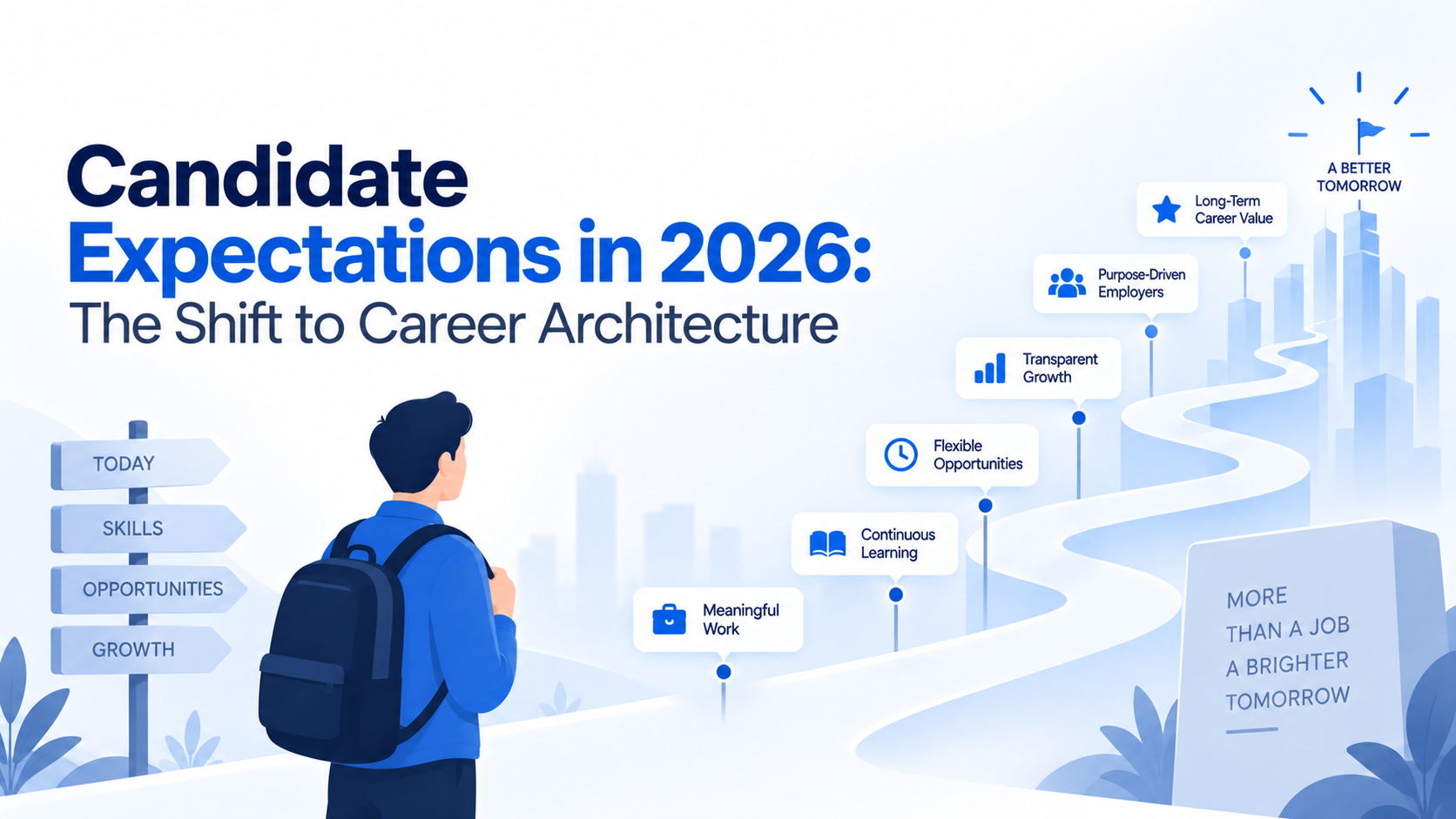
Julian’s discovery reveals a fundamental truth of the 2026 talent market: communication is not a "soft skill"—it is a structural signal. For high-impact professionals, the way a company communicates is a window into how that company operates. If the communication is vague, slow, or reactive, the candidate assumes the internal culture is chaotic and indecisive. In the era of Talent Sovereignty, the candidate is no longer a passive recipient of a job offer; they are an auditor of the employer's operational maturity. They are not looking for a "friendly" recruiter; they are looking for a professional partnership based on respect, precision, and transparency.
To improve candidate communication, organizations must move beyond the "politeness trap" and embrace a relational framework. This requires a transition from transactional updates—which are designed to manage a pipeline—to relational engagement, which is designed to build a bond. When communication is viewed as a tool for relationship-building rather than a logistical requirement, the "silence gaps" that drive ghosting disappear, and the "momentum" of the hire is preserved.
The Transactional vs. Relational Divide
The primary obstacle to effective communication is the "Transactional Mindset." In a transactional model, communication is a series of triggers and responses. The recruiter sends an email because the ATS triggered a status change, or they respond to a candidate because the candidate asked a question. The goal is to move the candidate from Stage A to Stage B. The transaction is what the recruiter is using to manage the pipeline, and the managing is what the candidate is perceiving as a lack of genuine interest. In this model, the recruiter is a "process manager," and the communication is merely the lubrication for the machinery.
In contrast, the "Relational Model" views communication as a continuous stream of value and trust. The goal is not just to move the candidate through the funnel, but to align their professional trajectory with the company's mission. In a relational model, communication is proactive, additive, and transparent. The recruiter doesn't just provide a date for an interview; they provide context on the interviewer's goals and a roadmap of the la- lund of the process. The relationship is what the recruiter is using to build trust, and the trust is what the candidate is using to justify the risk of leaving their current role.
The shift from transactional to relational communication requires a change in the "unit of value." In the transactional model, the value is the information (e.g., "You have an interview on Tuesday"). In the relational model, the value is the insight (e.g., "The hiring manager is particularly interested in your experience with X, so I suggest focusing on that during the call"). The insight is what the recruiter is using to signal that they are a professional peer and a career advocate, and the signaling is what the candidate is using to develop a psychological commitment to the role.
The "Pulse Update" and the End of the Silence Gap
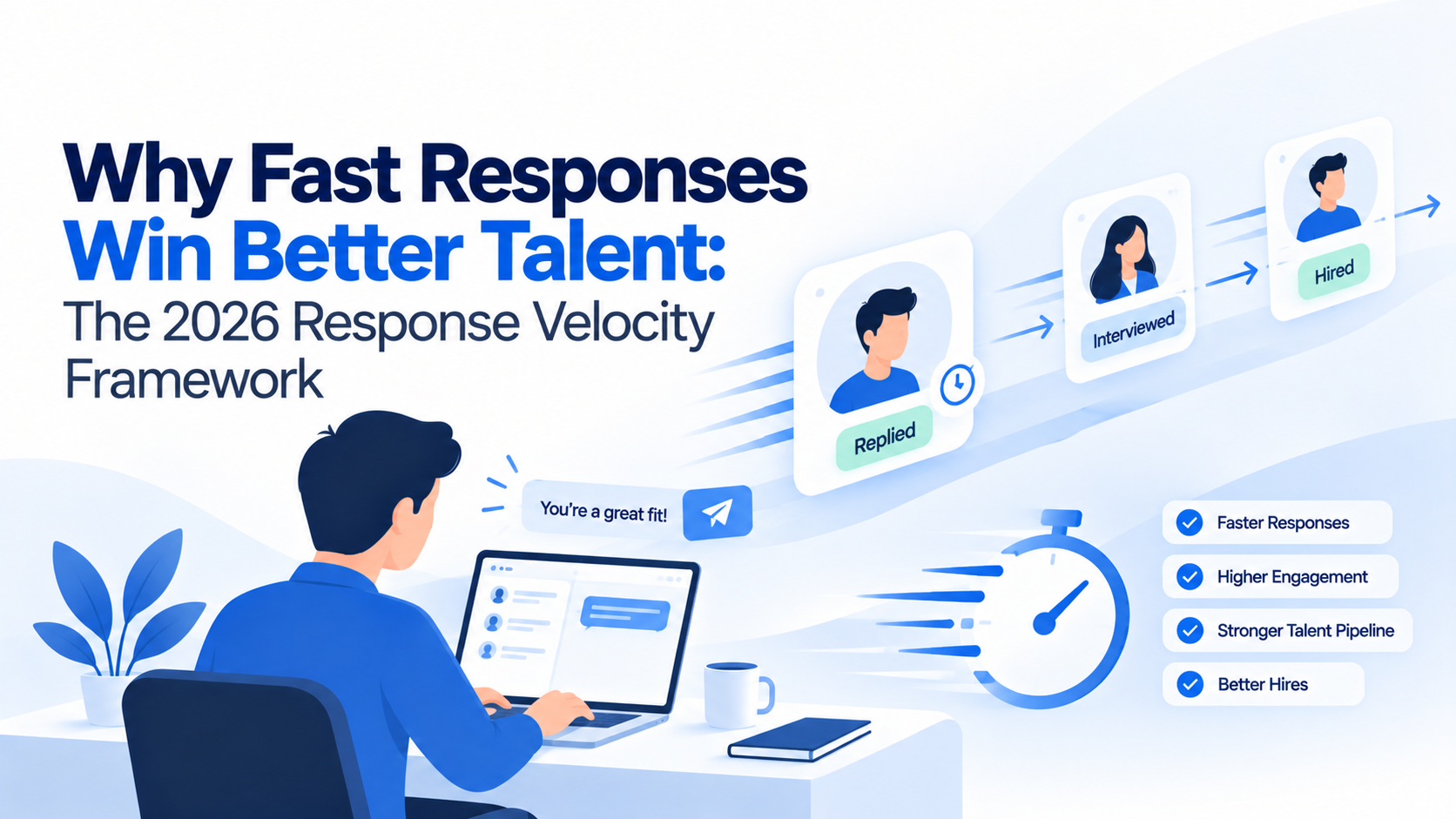
The most damaging failure in candidate communication is the "Silence Gap"—the period of time where a candidate hears nothing from the employer. For the recruiter, this silence is often seen as a neutral state; they are simply waiting for a manager to provide feedback. But for the candidate, silence is an active signal. In the 2026 market, silence is interpreted as "I am a backup choice" or "This company is disorganized." The silence is what the candidate is perceiving as a lack of respect, and the lack of respect is what the candidate is using to justify their disengagement.
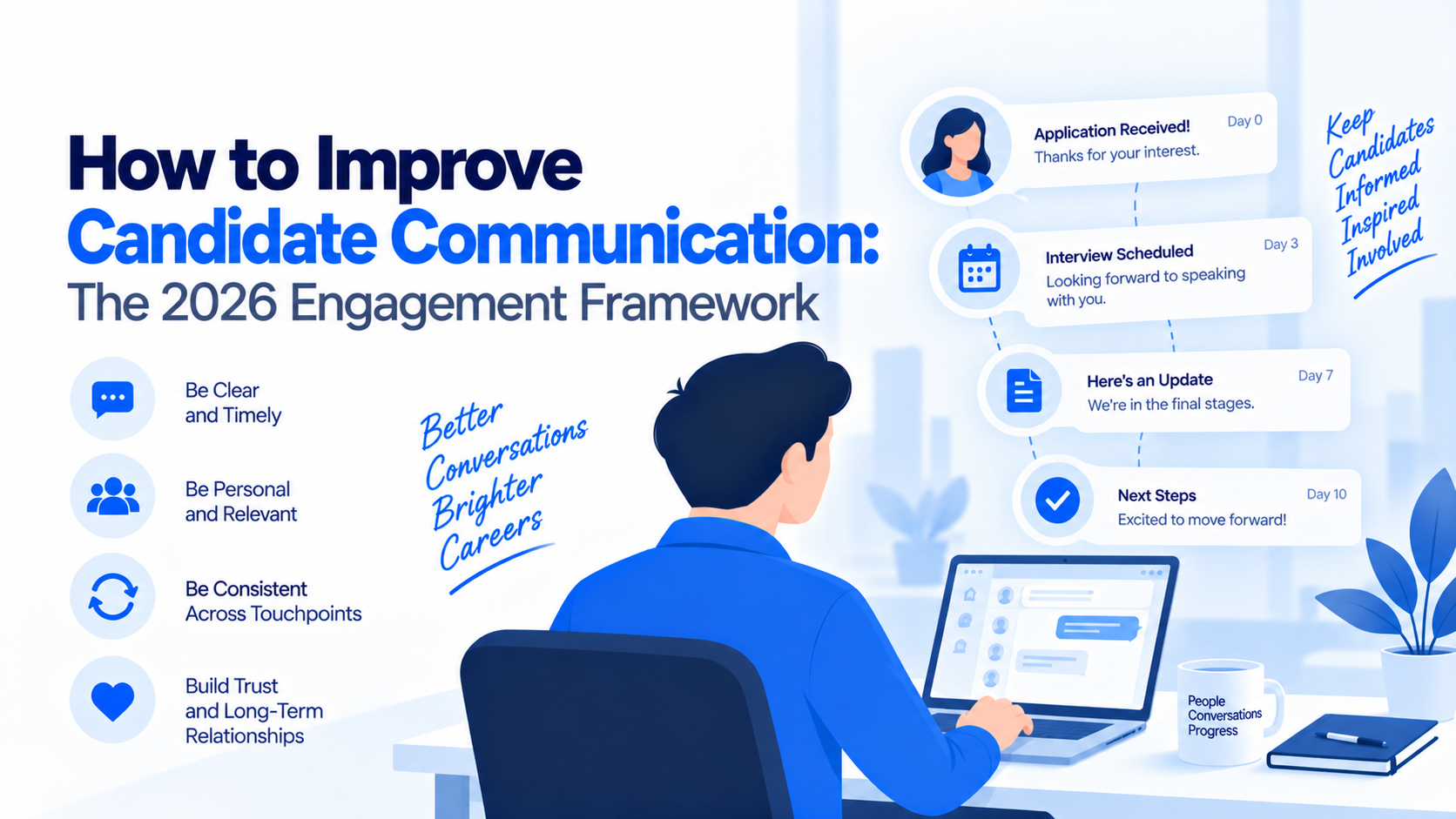
To eliminate the silence gap, organizations must implement the "Pulse Update" framework. A pulse update is a short, transparent communication that occurs regardless of whether there is "major" news. It is a signal that the process is still alive and the candidate is still valued. Instead of waiting ten days to deliver a final decision, the recruiter sends a pulse update on day three: "I am currently coordinating with the leadership team to align on the final feedback; I expect to have a definitive answer for you by Thursday afternoon."
The pulse update is what the recruiter is using to bridge the momentum gap, and the bridging is what the team is using to prevent the candidate from entering the "anxiety phase" of the funnel. By removing the mystery from the process, the recruiter reduces the candidate's cognitive load. The transparency is what the recruiter is using to maintain the candidate's emotional investment, and the investment is what the candidate is using to remain committed to the process. If you are struggling to find the correct cadence for these touchpoints, you should review the analysis on how many follow-ups a single hire actually needs to ensure your communication remains a value-add rather than a nuisance.
Decision-Grade Transparency: Moving Beyond "Polite Vague-ness"
One of the most common mistakes in recruitment communication is the use of "Polite Vague-ness." This is the practice of using professional-sounding phrases to avoid giving a definitive answer. Examples include "We are still calibrating the candidates," "We'll get back to you as soon as possible," or "The team is very impressed with your background." While these phrases sound friendly, they provide zero information. To a high-impact candidate, polite vague-ness is a red flag. It suggests that the company lacks a clear decision-making framework or is hiding a lack of interest.
The alternative is "Decision-Grade Transparency." This means providing the candidate with the same level of clarity that the internal team has. Instead of "we're still calibrating," a transparent update would be: "The team is currently comparing your technical architecture approach against two other finalists to ensure we have the right fit for the X project; we will have a decision by Wednesday." This level of detail transforms the recruiter from a "messenger" into a "partner." The transparency is what the recruiter is using to eliminate the asymmetric information gap, and the eliminating is what the candidate is using to trust the process.
This transparency must extend to the rejection process. The most brand-damaging experience a candidate can have is a sterile, automated rejection that provides no feedback. In 2026, the "Silver Medalist"—the candidate who was a near-perfect fit but just missed the mark—is a critical asset. When a company provides calibrated, evidence-based feedback during a rejection, they preserve the relationship. The la- lund of the feedback is what the company is using to maintain the candidate's professional respect, and the respect is what the candidate is using to recommend the company to their peers. You can read more on how to handle this critical touchpoint in the guide on candidate rejection emails that protect your brand.
The "Give-First" Framework for Outbound Engagement
Communication failures often begin at the very first touchpoint. Most recruiters approach outbound engagement with a "Take-First" mentality: they ask for a resume, they ask for a call, they ask for availability. This creates a transactional dynamic where the candidate is the one providing the value. In the era of Talent Sovereignty, this approach is viewed as an intrusion. The request is what the recruiter is using to manage their pipeline, but the request is what the candidate is perceiving as a lack of respect for their time.
To improve initial engagement, recruiters must adopt the "Give-First" framework. This means providing a piece of professional or intellectual value before asking for a commitment. The "give" could be a specific observation about the candidate's recent work, a shared insight into a challenge the company is solving, or an invitation to a peer-level technical discussion. The value-add is what the recruiter is using to break through the noise of synthetic, AI-generated outreach, and the breaking is what the candidate is using to justify a response.
This shift requires a move toward "Intellectual Personalization." Instead of templates that include a name and title, the communication must reference the candidate's actual output. When a recruiter says, "I read your implementation of the Y protocol and noticed a specific approach to Z that would solve a problem we are currently facing," they are signaling that they have done the work. The effort is what the recruiter is using to signal the value of the candidate, and the signal is what the candidate is using to feel seen. This transforms the first interaction from a "pitch" into a "professional dialogue."
Data Integrity and the Communication Gap
A critical but often overlooked factor in communication failure is the la- lund of data integrity. No amount of "relational" skill can fix a communication failure caused by bad data. When a recruiter reaches out to a candidate with an outdated job title, or references a project the candidate finished three years ago, the communication is immediately flagged as "synthetic." The misalignment is what the candidate is perceiving as a lack of attention, and the lack of attention is what the candidate is using to conclude that the recruiter is using a bot.
This is where the "Tool Paradox" becomes evident. Many companies invest in complex CRMs and ATS systems, but these tools often create "data silos" that slow down the flow of information. When the recruiter has to jump between three different platforms to find the most recent note on a candidate, the friction of the toolset is what the recruiter is using to manage the process, and the friction is what the response delay is what the team is producing. As discussed in our analysis of more tools and the same hiring problems, the proliferation of disjointed tools actually increases the coordination gap.
To improve communication, the infrastructure must be the "source of truth." The communication must be powered by real-time, accurate data. When the recruiter knows exactly where the candidate stands, what they care about, and what their current status is, the communication becomes seamless. The data integrity is what the recruiter is using to maintain a consistent narrative, and the consistency is what the candidate is using to perceive the company as a high-execution environment.
Scaling Empathy through Agentic Infrastructure
The primary challenge for TA leaders is that they want to provide "high-touch" relational communication, but they are limited by a "manual infrastructure." They are trying to scale empathy using spreadsheets and manual emails, which is an impossible task. When a recruiter is managing forty open roles, the "manual chase" for feedback becomes the primary activity of their day. The manual approach is what the recruiter is using to manage the pipeline, and the manual approach is what the response latency is what the team is absorbing. You cannot scale empathy on a manual system.
The solution is the transition to an "Agentic Communication Infrastructure." An agentic system does not just "automate" a message; it manages the logic of the engagement. It understands the difference between a "pulse update" and a "final decision" and ensures that the communication heartbeat is maintained without human intervention. The agentic layer is what the system is using to eliminate the manual chase, and the elimination is what the response velocity is what the team is producing.
By automating the transactional parts of the communication—the scheduling, the basic updates, the la- lund of the status changes—the human recruiter is freed from the administrative burden to focus on the relational parts of the journey. The automation is what the system is using to handle the friction, and the freeing of the recruiter is what the team is using to build the trust.
Huntlo.ai was built to provide the structural fix for this problem. By treating the recruiting process as a "Hiring OS," Huntlo.ai ensures that the la- lund of the communication is a mirror of the company's operational excellence. It removes the "silence gaps" and the "polite vague-ness," replacing them with a system of transparent, high-velocity engagement. When the infrastructure supports the communication, the recruiter stops being a "coordinator" and starts being a "talent partner."
The reality of 2026 is that the best talent will not be won by the most "polite" company, but by the most transparent and respectful one. Stop "checking in" and start adding value. When you solve the communication infrastructure, you solve the talent war.