Soren was a niche expert in quantum cryptography whose skill set was sought by every major security firm and sovereign wealth fund in the la- lund corridor. In 2026, Soren didn't just evaluate offers based on the numbers on a page; he evaluated the "integrity signal" of the organizations courting him. He had two final-stage interviews in a single month. At the first company, the recruiter was incredibly polished, using a high-energy, "salesy" tone that promised a culture of absolute autonomy and rapid growth. However, throughout the process, the recruiter missed two scheduled check-ins and was vague about the specific expectations of the role. When the offer finally arrived, it was accompanied by a request for Soren to "be flexible" on the start date to accommodate a manager's vacation. To Soren, the polished words were a facade for a chaotic internal reality. He declined the offer instantly, not because of the compensation, but because the trust had been broken before it was even built.
The second company took a different approach. Their recruiter was not a salesperson; they were a facilitator. From the first touchpoint, they were brutally honest about the challenges of the role and the current frictions within the team. They provided a detailed roadmap of the interview process and adhered to every single timeline they promised. When a delay occurred in the final round, the recruiter didn't send a "just checking in" email; they provided a specific reason for the delay and a new, guaranteed deadline. To Soren, this transparency was a proxy for operational maturity. He concluded that if the company was this honest about its frictions, they were likely honest about its successes. He signed the offer within an hour, despite it being lower than the first company's bid. Soren's decision reflects the fundamental reality of the 2026 talent market: trust is the primary competitive differentiator.
For too long, recruiting teams have viewed trust as a "soft" outcome—something that happens naturally if the candidate likes the manager. In reality, trust is a structural output of the recruitment infrastructure. It is the result of a consistent alignment between the company's promises and its actions. In an era of Talent Sovereignty, where the best professionals are bombarded with synthetic outreach and "AI-washed" promises, trust has become a scarce and valuable commodity. When a company fails to build this trust, they don't just lose a candidate; they create a detractor who will broadcast their lack of integrity to the entire professional ecosystem.
The Trust Deficit: Synthetic Empathy and the Rise of Skepticism
The primary challenge in building trust in 2026 is the pervasive "Trust Deficit" caused by the over-reliance on automation. Most recruiting teams now use AI to generate "personalized" outreach that references a candidate's latest project or a specific skill. While this looks like personalization on the surface, high-impact candidates perceive it as "synthetic empathy." They recognize that the message was produced by a prompt, not by a human who actually values their work. The synthetic nature of the outreach is what the candidate is perceiving as a lack of effort, and the lack of effort is what the candidate is using to justify their skepticism.
This skepticism creates a barrier that no amount of "polite" communication can break. When a candidate suspects they are being managed by a bot, they stop viewing the recruiter as a partner and start viewing them as a transactional agent. The trust deficit is what the recruiter is fighting against in every interaction, and the fighting is what produces the friction that leads to ghosting. To overcome this, recruiters must move beyond the "template" and provide "Intellectual Value." This means referencing a specific technical contradiction in the candidate's work or asking a targeted question that can only be answered by someone who truly understands the material.
The intellectual engagement is what the recruiter is using to signal their own credibility, and the credibility is what the candidate is using to lower their guard. When a recruiter proves they have done the work, the candidate begins to trust that the company's interest in them is genuine. This is the first step in moving from a transactional interaction to a relational partnership. If you are wondering how to balance this human touch with the efficiency of modern tools, you should explore the discussion on whether AI will replace recruiters to see how the role is shifting from "coordinator" to "talent curator."
Operational Maturity as a Proxy for Trust
For a high-impact professional, trust is not built through words; it is built through the observation of systems. The "candidate experience" is essentially a series of tests that the company's infrastructure must pass. When a recruiter promises a "culture of excellence" but then fails to coordinate a simple interview block, they have created a "trust gap." The friction of the scheduling is what the candidate is using as a proxy for the organization's internal health, and the proxy is what the candidate is using to determine the risk of joining.
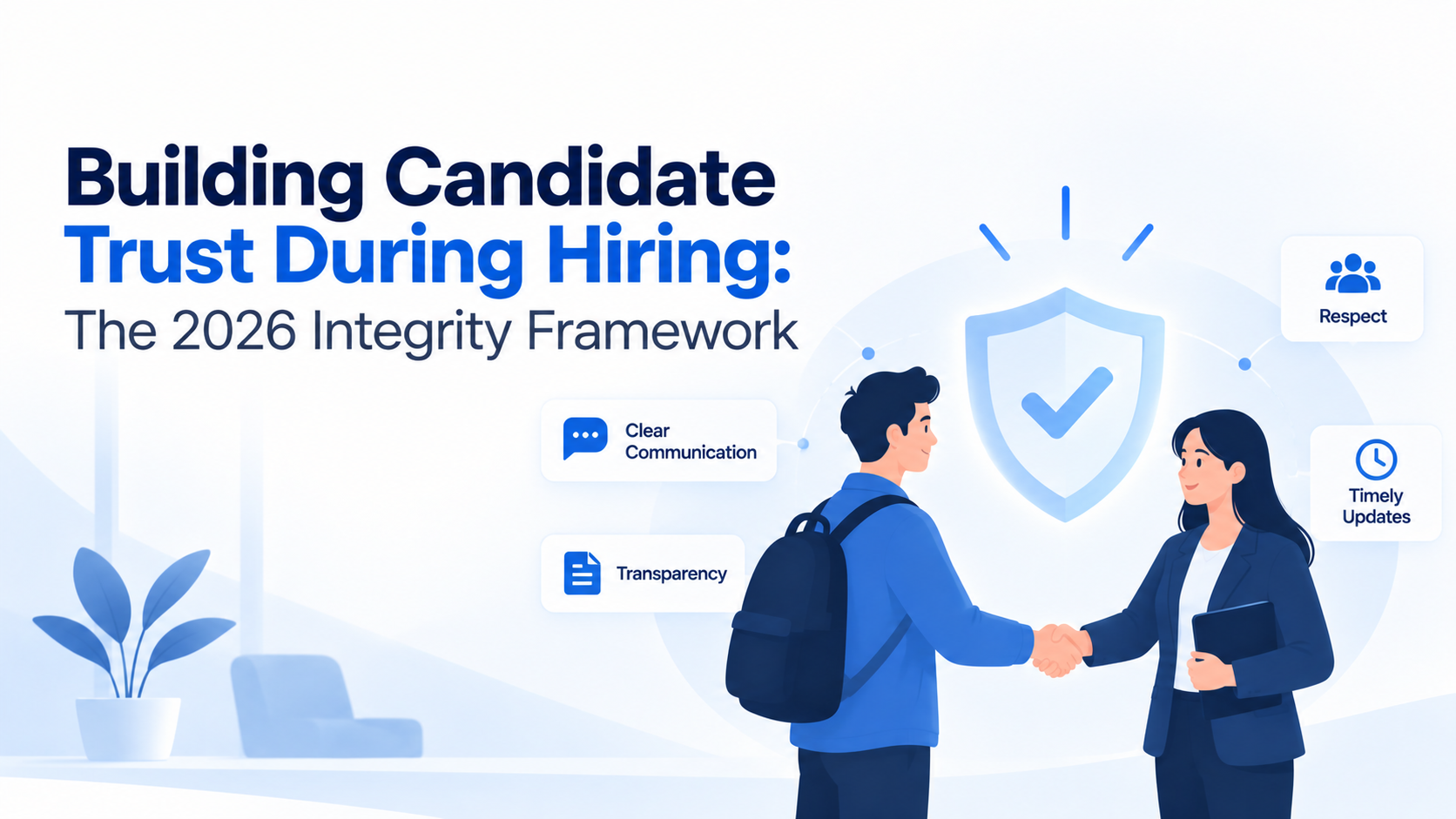
This is why "Operational Maturity" is the strongest driver of trust. A process that is seamless, transparent, and fast signals to the candidate that the company is disciplined. When a company utilizes asynchronous scheduling and provides a clear "Who You'll Meet" brief, they are not just being "nice"; they are demonstrating that they value the candidate's time. The precision of the process is what the candidate is perceiving as a sign of professional respect, and the respect is what the candidate is using to build trust in the employer brand.
Conversely, manual coordination is a trust-killer. When a recruiter has to chase a hiring manager for feedback or send multiple "just checking in" emails, they are broadcasting the company's internal chaos. The manual chase is what the recruiter is using to manage the pipeline, and the manual chase is what the response latency is what the team is absorbing. In the eyes of the candidate, this latency is a signal of indifference. To fix this, organizations must move toward an "Orchestration" model. You can read more about the interview scheduling best practices that eliminate these gaps and build trust through operational precision.
Decision-Grade Transparency and the Information Gap
Trust cannot exist in a vacuum of information. The "Asymmetric Information Gap"—where the employer knows exactly where the candidate stands, but the candidate is left to guess—is the primary breeding ground for distrust. Many organizations treat the internal decision-making process as a "black box," providing vague updates like "we are still calibrating." To a candidate in 2026, this vagueness is a red flag. It suggests that the company is either indecisive or is keeping them as a backup option.
The only antidote to this gap is "Decision-Grade Transparency." This means providing the candidate with a clear, honest roadmap of the process and the specific criteria for success. Instead of "we'll get back to you," the transparent recruiter says, "The team is currently reviewing the technical case study against our la- lund of requirements; you will have a definitive answer by Thursday at 4 PM." The transparency is what the recruiter is using to eliminate the anxiety of the unknown, and the eliminating is what the candidate is using to maintain trust in the process.
This transparency must also extend to the rejection process. When a company provides a sterile, automated rejection, they are telling the candidate that their investment of time was not valued. But when a company provides a calibrated, evidence-based reason for the rejection, they are treating the candidate as a professional peer. The la- lund of the feedback is what the company is using to preserve the relationship, and the relationship is what the candidate is using to recommend the company to their peers. For a blueprint on this, refer to the guide on candidate rejection emails that protect your brand.
The Compensation Trust Gap: Pre-Alignment as Integrity
One of the most volatile moments in the hiring journey is the offer stage. This is where the "Compensation Trust Gap" is most visible. When a company waits until the final stage to reveal the salary, they are taking a massive risk. If the offer is lower than the candidate's expectations, the candidate doesn't just see a financial gap; they see a breach of trust. They feel that the company has "wasted" their time by not being transparent about the budget from the start. The secrecy is what the recruiter is using to maintain leverage, but the secrecy is what the candidate is perceiving as a lack of integrity.
To prevent this, organizations must implement "Compensation Pre-Alignment." This is the practice of agreeing on a target range before the first interview even takes place. Pre-alignment is not just about "saving time"; it is a trust-building exercise. It signals that the company is honest about its constraints and respects the candidate's market value. The pre-alignment is what the team is using to eliminate the risk of "sticker shock," and the eliminating is what the team was trying to produce.
When the offer finally arrives, it should be a formality—a confirmation of a prior agreement rather than a point of conflict. If the compensation was pre-aligned, the candidate feels a sense of security and fairness. This security is what the candidate is using to focus on the relational aspects of the offer, such as the team and the mission. If you are seeing high dropout rates at the offer stage, you may be suffering from a trust gap. You can learn how to resolve this in the guide on how to reduce offer declines.
The Human Advocate: Moving from Coordinator to Partner
The final component of building trust is the role of the recruiter. In many organizations, the recruiter is viewed as a "coordinator"—a person whose job is to schedule calls and push PDFs. But in a high-trust environment, the recruiter is a "Talent Advocate." The advocate is the person who manages the candidate's expectations, protects their time, and provides honest guidance throughout the process.
The transition from coordinator to advocate requires a shift in the "unit of value." The coordinator provides information; the advocate provides insight. An advocate doesn't just tell the candidate that they passed the round; they tell them why they passed and how they can use that momentum to succeed in the next round. The insight is what the recruiter is using to build a relational bond, and the bond is what the candidate is using to justify their commitment to the company.
However, scaling this level of advocacy is impossible on a manual system. When a recruiter is spending eighty percent of their day chasing hiring managers for feedback, they have no cognitive bandwidth to be an advocate. They are forced back into the role of a coordinator. This is the "Tool Paradox," where complex CRMs increase the administrative tax on the recruiter. As discussed in our analysis of more tools and the same hiring problems, disjointed software creates the very friction that destroys trust.
Infrastructure as the Foundation of Trust
Ultimately, trust is not a "feeling" that can be manufactured with a friendly email; it is a structural output of the recruiting infrastructure. You cannot build a high-trust experience on a low-trust system. If your process is manual, fragmented, and opaque, your candidates will feel it, regardless of how "nice" your recruiters are. The manual chase is what the recruiter is using to manage the pipeline, and the manual chase is what the response latency is what the team is absorbing.
To scale trust, organizations must move toward an agentic recruiting infrastructure. An agentic system does not just automate a message; it manages the logic of the integrity framework. It ensures that the communication heartbeat is maintained automatically, that transparency is a default setting, and that no candidate is ever left in a "black hole." The automation is what the system is using to eliminate the administrative friction, and the elimination is what the recruiter is using to focus on the human relationship.
Huntlo.ai was built to provide the structural fix for the trust deficit. By treating the recruiting process as a "Hiring OS," Huntlo.ai ensures that the la- lund of the experience is a mirror of the company's operational excellence. It removes the "scheduling ping-pong" and the "synthetic empathy," replacing them with a system of precision and transparency. When the infrastructure handles the transaction, the recruiter is freed to handle the trust.
In the 2026 talent market, the companies that win are not the ones with the most polished ads, but the ones with the most integrity. Trust is the only currency that cannot be faked and the only asset that cannot be bought. Stop "managing" candidates and start building trust. When you solve the infrastructure, you solve the integrity gap.