Maya, the Head of Talent at a rapidly scaling infrastructure firm, stared at her Google Analytics dashboard with a growing sense of dread. Her careers page was receiving record-breaking traffic, with thousands of unique visitors arriving every month from targeted LinkedIn campaigns and industry referrals. However, the conversion rate for the roles that actually mattered—the Principal Architects and Strategic Leads—was nearly zero. The "Apply" buttons were being clicked by hundreds of generic applicants, but the high-maturity experts she desperately needed were bouncing from the page within seconds. Maya realized that while she had solved the problem of visibility, she had completely failed the problem of signaling.
The disconnect Maya experienced is a systemic failure in how modern organizations design their entry point for talent. Most careers pages are constructed as digital brochures, featuring a few generic photos of a modern office, a bland "About Us" section, and a long, static list of open positions. This approach treats the careers page as a transactional portal, a place where the company lists its demands and the applicant submits their plea for employment. This fundamentally misaligns the relationship between the employer and the potential hire from the very first touchpoint. When a company presents a generic list of roles, they are not inviting a partner; they are advertising a vacancy.
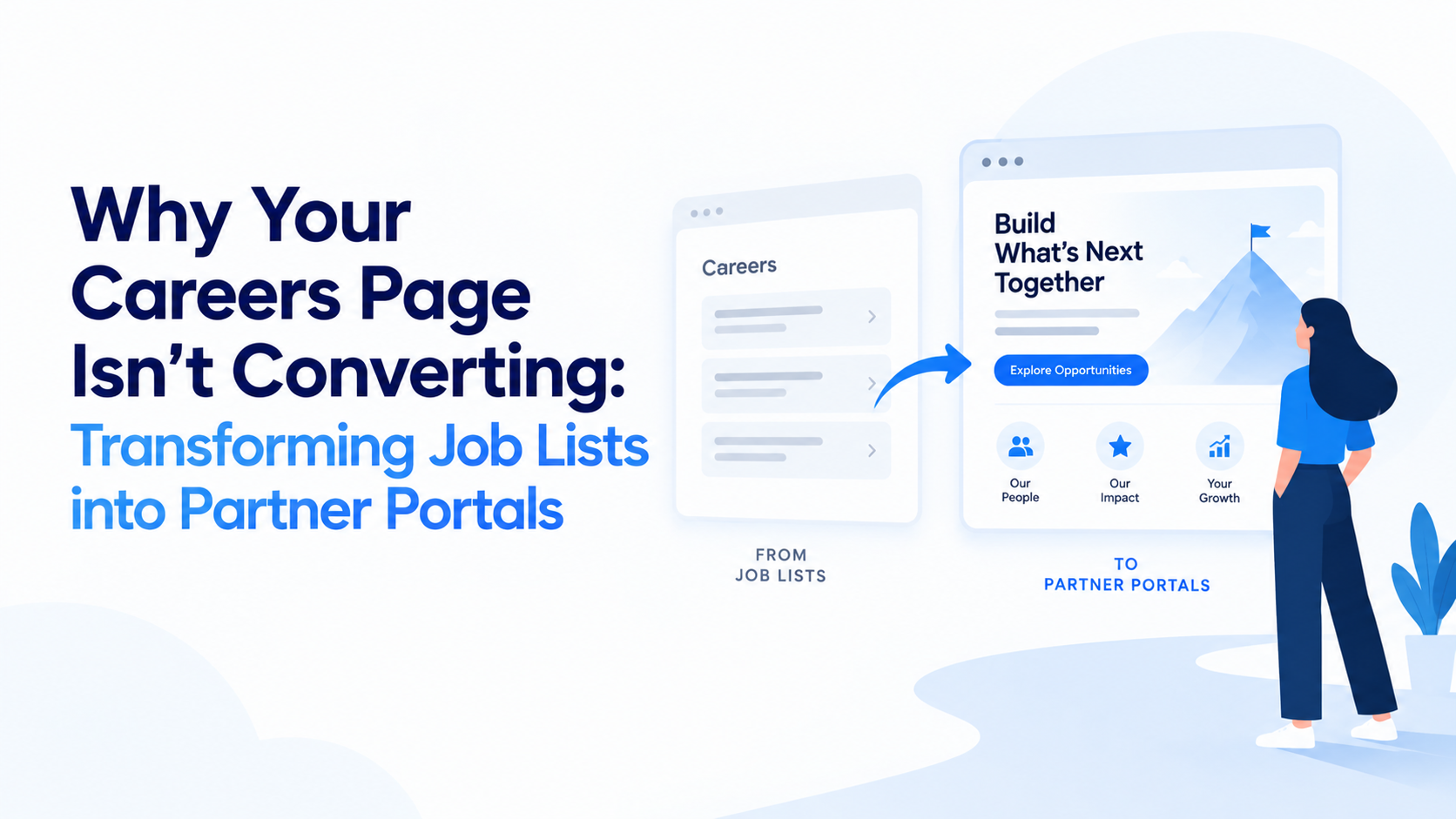
To fix this, leadership must transition from a "Job Board" mentality to a "Partnership Portal" mentality. A high-conversion careers page does not focus on the roles available, but on the operational maturity of the organization and the specific structural challenges a sovereign professional can solve. It shifts the narrative from "We are hiring" to "We are solving X, and we need a partner with Y capability." By treating the careers page as a strategic signal rather than a directory, organizations can begin to attract individuals who are aligned with the company's goals rather than its image.
The Transactional Dead-End: Why a List of Jobs is Not a Strategy
The primary reason most careers pages fail to convert top-tier talent is that they are built on the logic of the transaction rather than the logic of the relationship. For a sovereign professional, a list of job titles and bulleted requirements is the lowest form of professional communication. It signals that the organization views the role as a set of tasks to be completed rather than a strategic outcome to be achieved. The reliance on a static job list is what the visitor is perceiving as a lack of operational vision, and that lack of vision is what the professional is using to justify their immediate exit from the page.
When a careers page prioritizes a directory of roles over a narrative of impact, it attracts the "applicant" mindset rather than the "partner" mindset. The applicant is looking for a job that matches their resume; the partner is looking for a challenge that matches their expertise. By leading with a list of vacancies, the company inadvertently signals that they are looking for a tool to fill a hole in the org chart. This transactional framing tells the high-maturity expert that their autonomy will be limited by a pre-defined set of duties, which is an immediate deterrent for anyone seeking professional sovereignty.
This failure of signal is often rooted in a lack of operational maturity within the talent function. If the leadership cannot articulate the broader structural mission of the company, they default to the safety of the job list. This creates a cycle of mediocrity where the company attracts candidates who are a fit for the "job description" but a failure for the "mission." According to McKinsey's research on skills-based organizations, the most successful companies are those that move away from rigid job titles toward a fluid model of capabilities. A careers page that reflects this shift becomes a magnet for those who view their career as a series of strategic contributions.
Engineering the Signal: Replacing the "About Us" with an Operational Manifesto
The "About Us" section of most careers pages is where the conversion process goes to die. It is typically filled with sanitized corporate narratives about "innovation," "passion," and "being a family," which high-value partners view as a red flag for superficiality. These clichés are used to create a generic image of a "great place to work," but they provide zero information about how the company actually functions. The sanitized corporate narrative is what the organization is using to produce a safe image, and that safe image is what the sovereign professional is using to identify a total lack of intellectual rigor.
To convert high-maturity talent, the "About Us" must be replaced by an "Operational Manifesto." This is a transparent declaration of the company's structural philosophy, its current failures, and its path toward optimization. Instead of claiming to be "innovative," the company should describe the specific technical or operational debt it is currently fighting. When a potential partner sees a company that is honest about its struggles and clear about its logic, they perceive a level of operational maturity that is irresistible. They recognize that the organization is not trying to sell a fantasy, but is inviting them to participate in a real-world solution.
This shift in signaling transforms the careers page from a marketing tool into a professional filter. By broadcasting the "Hard Parts" of the organization, the company naturally repels those who are looking for a comfortable job and attracts those who are motivated by the process of optimization. This creates a "Proof of Work" environment where the company's authority is established through transparency rather than polish. The honesty of the signal is what the leadership is using to produce trust, and that trust is what the sovereign partner is using to envision their specific impact within the organization.
The Conversion Friction: How "Genericism" Repels the Sovereign Professional
Many companies wonder why their conversion rates drop the moment a candidate clicks from the careers page into a specific job description. The problem is usually "Signal Decay," where the high-level brand promise of the careers page is replaced by a restrictive, checklist-based job description. This creates a jarring experience where the candidate moves from a vision of "innovation" to a list of "mandatory 5+ years of experience in X." The restrictive checklist of mandatory requirements is what the candidate is perceiving as a lack of trust, and that lack of trust is what the high-maturity partner is using to reject the invitation to apply.
To eliminate this friction, the transition from the careers page to the application must be a seamless extension of the relational narrative. This requires moving away from "Requirements" and toward "Success Metrics." Instead of listing the tools the candidate must know, the company should describe the specific business result the partner is expected to produce in the first six months. This shift signals that the company values outcomes over mechanisms, which is the primary driver for any sovereign professional. When the focus is on the "win" rather than the "tool," the conversion rate for high-impact talent spikes.
Addressing this friction is a critical component of creating a memorable candidate experience. A high-maturity organization recognizes that the application process itself is a proxy for the company's internal health. If the careers page is a confusing maze of generic lists and rigid forms, the candidate concludes that the company's internal operations are equally fragmented. The fragmented user journey is what the candidate is experiencing as a lack of operational maturity, and that lack of maturity is what the professional is using to disqualify the organization entirely.
Architecting the Partnership Invitation: Moving from Requirements to Impact
The ultimate goal of a high-converting careers page is to present the "Sovereignty Gap." This is the specific intersection where the company's greatest structural need meets a professional's greatest strength. Most careers pages hide this gap behind a wall of corporate jargon; relational pages highlight it as a professional invitation. For a sovereign professional, the most attractive "benefit" a company can offer is the authority to solve a high-stakes problem. The explicit articulation of the structural gap is what the leadership is using to produce a feeling of professional trust, and that trust is what the sovereign partner is using to envision their specific impact.
To architect this invitation, the careers page should categorize roles not by department, but by the "Challenge" they solve. Instead of a "Product" category, use a "Scaling the User Loop" category. Instead of "Engineering," use "Architecting for 10x Growth." This framing shifts the candidate's focus from "Do I fit this job?" to "Can I solve this problem?" This is the core of the shift to career architecture, where the professional views their move not as a change in employment, but as a strategic evolution of their capabilities.
This approach transforms the "Apply" button from a submission of a resume into an initiation of a consultation. By framing the application as a "Proposal to solve X," the company changes the power dynamic of the interaction. It tells the candidate that they are being viewed as a peer and a partner, rather than a resource to be processed. This elevation of the candidate's status is what the organization is using to produce a high-signal pipeline, and that pipeline is what the leadership is using to ensure the structural stability of the organization.
Scaling the Experience: How a Hiring OS Bridges the Gap from Page to Pipeline
As an organization grows, the challenge of maintaining a high-fidelity signal across a complex careers page becomes a structural problem. If the page is updated once a quarter by a marketing team, it will always be out of sync with the operational reality of the hiring managers. To solve this, the company needs an infrastructure that treats the careers page as a dynamic interface of a Hiring OS. A true Hiring OS does not just track applicants; it synchronizes the "Sovereignty Gaps" in the company's current state with the external signal sent to the market.
Huntlo serves as this essential infrastructure, moving the careers page from a static website to a relational portal. By treating the intake process as an operating system, companies can ensure that the " la- lund" (Causal Chain) logic is present in every touchpoint. The OS can track which specific structural challenges are attracting the highest-maturity partners, allowing the company to iterate on the page's signal in real-time. The automation of the administrative burden is what the OS is using to produce more space for human-centric alignment, and that alignment is what the organization is using to secure high-maturity partners.
Furthermore, this approach enables the future of candidate experience, where the careers page is merely the start of a continuous alignment process. Instead of a binary "Apply/Don't Apply" choice, the page can invite candidates into asynchronous consultations or "Challenge Sprints." This transforms the careers page from a filter into a bridge, allowing the company to build relationships with sovereign professionals long before a formal role is opened. The proactive mapping of these relationships is what the system is using to produce a high-conversion pipeline.
The Metrics of Meaning: Measuring Resonance Over Traffic
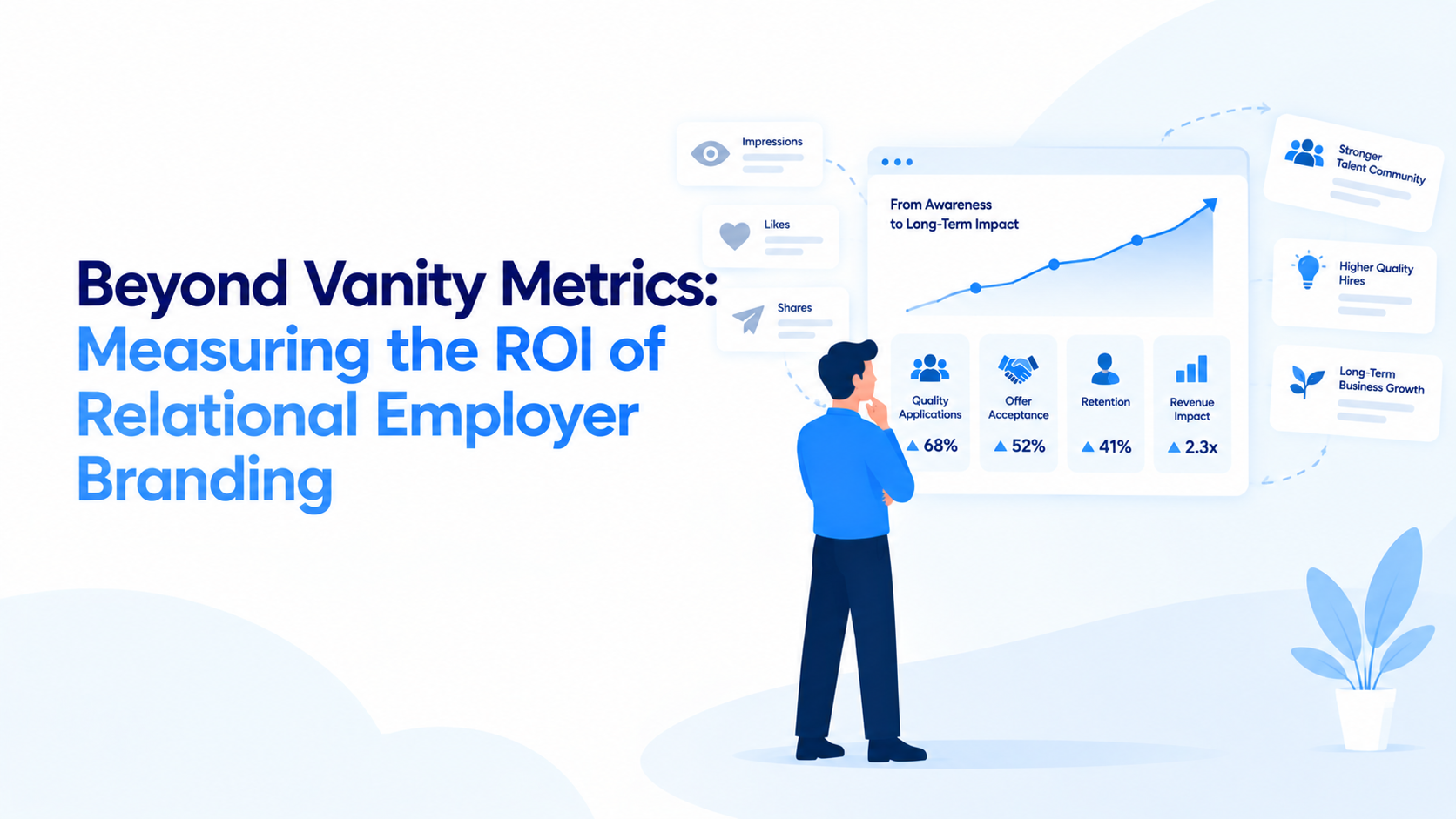
The final step in optimizing a careers page is to stop measuring "Conversion" as a percentage of traffic and start measuring it as "Alignment Density." In a transactional system, a "converting" page is one that produces a high volume of applications. In a relational system, a "converting" page is one that produces a high percentage of sovereign partners. If a page has 10,000 visitors and 1,000 applications, but only two are qualified partners, the page is a failure of signaling. The obsession with traffic is what the marketing team is using to produce a success report, and that report is what the leadership is using to ignore the lack of quality hires.
To measure true resonance, organizations must track the "Quality of Hire" back to the specific signal that attracted the partner. If candidates who were attracted by the "Operational Manifesto" have a significantly shorter time to impact than those attracted by a generic job ad, the brand signal is working. This data allow the company to stop investing in broad-spectrum visibility and start investing in high-fidelity transparency. The evidence of impact is what the talent function is using to produce a strategic budget, and that budget is what the organization is using to build an elite workforce.
This iterative approach to measurement is the only way to reduce candidate drop-off rates and ensure the long-term health of the talent pipeline. By analyzing the "Bounce Rate" of high-maturity professionals, the company can identify exactly where the signal is failing. If experts are leaving the page at the "Requirements" section, the company knows it has a trust problem. The identification of the friction is what the organization is using to produce a structural update, and that update is what the company is using to eliminate the risk of losing top talent.
Ultimately, a careers page that converts is not one that "sells" the company, but one that "signals" the company. It requires the courage to stop optimizing for the algorithm and to start optimizing for the partner. It requires the discipline to move from a transactional "Job Board" to a relational "Partnership Portal." When an organization views its careers page as the first step in a strategic alliance, it ceases to struggle with a lack of talent. Instead, it finds itself surrounded by sovereign professionals who are not just looking for a job, but are invested in the structural success of the mission. The commitment to relational signaling is what the organization is using to produce an elite culture, and that culture is what the company is using to dominate its market.