Elena, a Head of Talent at a scaling SaaS organization, stared at her LinkedIn notifications with a mixture of exhaustion and confusion. Her latest "We're Hiring" post—complete with a high-resolution photo of the office lounge and a list of "competitive benefits"—had gone viral within their industry circle. She had received over five hundred applications in forty-eight hours, yet after a weekend of screening, she found that not a single candidate possessed the structural depth required for the role. The post had succeeded as a piece of content, but it had failed as a recruitment tool because it had signaled "comfort" rather than "challenge." Elena realized that her branding was acting as a magnet for the transactional employee while remaining completely invisible to the sovereign professional.
The failure Elena experienced is a systemic result of the "Corporate Veneer" approach to LinkedIn. Most organizations treat the platform as a megaphone for corporate cheerleading, filling their feeds with "humbled and honored" announcements and polished PR narratives. This approach prioritizes the image of the company over the operational reality of the work. When a company markets itself as a "perfect culture" with "unlimited growth," it sends a generic signal that appeals to those seeking a safe harbor rather than those seeking a mission. This creates a structural misalignment where the company attracts individuals who are in love with the brand but are incapable of solving the actual problems the organization faces.
To solve this, leadership must pivot from "Employer Branding" to "Professional Signaling." Signaling is the act of providing specific, high-fidelity information that only a high-maturity partner will recognize as valuable. This requires a total abandonment of the corporate brochure model in favor of a "Proof of Work" model. A sovereign professional is not looking for a company that claims to be great; they are looking for an organization that demonstrates operational maturity by being transparent about its structural gaps and its path toward optimization. By engineering a precise signal, organizations can attract partners who are aligned with the company's goals rather than its image.
The "Cringe" Economy: Why Corporate Cheerleading Repels Sovereign Talent
The primary trap of modern LinkedIn branding is the reliance on "corporate cheerleading," a style of communication that prioritizes sentiment over substance. These posts typically focus on the emotional high of a new hire or the superficial perks of the office environment. High-performing professionals, who view their careers through the lens of talent sovereignty, typically find this content repellent because it signals a lack of intellectual rigor. The corporate veneer is what the marketing team is using to produce a generic image, and that generic image is what the sovereign professional is using to justify their disinterest.
When a company's LinkedIn presence is dominated by "culture wins" and "employee spotlights," it communicates that the organization values harmony over impact. This transactional framing tells a potential partner that the company is more interested in how things look than how they actually function. Relational hiring requires a shift toward the "Architecture of the Problem," where the focus is on the complexity of the work rather than the comfort of the workplace. Instead of posting a photo of a team lunch, a high-maturity organization posts a detailed analysis of a failed product launch and the structural changes they are making to prevent it from happening again.
This disconnect is often rooted in a fear of vulnerability within the leadership team. Many executives believe that showing structural flaws or admitting to operational debt will scare away candidates. In reality, the opposite is true for high-value partners, who are actually deterred by the absence of a problem to solve. The obsession with a "perfect" image is what the leadership is using to produce a false sense of stability, and that false sense of stability is what the partner is using to conclude that the organization has stagnated. To attract a partner, the company must be willing to broadcast its a-symmetry.
The impact of this "cringe" economy is most evident in the quality of the inbound pipeline. By optimizing for "likes" and "shares," companies inadvertently attract candidates who are motivated by social proof rather than professional challenge. This results in a pipeline filled with people who can mirror the company's language but cannot execute its strategy. According to Gartner's research on talent attraction, the most successful organizations are those that move away from generic branding and toward a "value-based" attraction model. This allows the company to filter for competency before the first conversation even begins.
Engineering Authority: Using Professional Signaling to Attract Partners
To attract a sovereign partner on LinkedIn, the organization must move from "broadcasting" to "signaling." Signaling is the process of sharing high-density operational information that acts as a filter for maturity. This means replacing the generic "We're Hiring" graphic with a "Strategic Manifesto" or a "Technical Post-Mortem." When a potential partner sees a detailed breakdown of how a company manages its deployment pipeline or how it handles strategic pivots, they perceive an organization with high operational maturity. They recognize that the company is not trying to sell a dream, but is inviting them to participate in a real-world optimization.
A high-precision signal focuses on the "Causal Chain" of the company's internal challenges. Instead of claiming "we are innovators," a relational signal would state, "Our current customer acquisition cost is rising because our lead-to-close loop is fragmented, and we are seeking a partner to re-engineer that structural chain." This framing immediately eliminates the transactional applicant who is looking for a "growth" title and attracts the sovereign professional who has a proven track record of solving that specific problem. The clarity of the challenge is what the organization is using to produce trust, and that trust is what the partner is using to justify the risk of a career move.
Integrating this level of signaling requires a shift in content ownership, moving from the HR department to the operational leaders. The most effective recruitment marketing is not written by a copywriter; it is written by the person who will actually lead the new hire. When a VP of Engineering shares a deep-dive on the company's architectural debt, they are providing a "Cultural Proxy" that allows the candidate to simulate the experience of working in the role. This transparency is what the lead is using to produce authenticity, and that authenticity is what the candidate is using to assess the cultural fit.
Furthermore, the frequency and nature of the signaling must be consistent. Relational branding is not a one-time campaign but a continuous broadcast of operational logic. By consistently sharing the "how" and "why" behind their business decisions, the organization builds a reputation for intellectual honesty. This constant stream of high-fidelity information is what the brand is using to produce a feeling of inevitability, and that inevitability is what the sovereign professional is using to prioritize this opportunity over all others.
The Executive as a Signal Node: Moving Beyond the Company Page
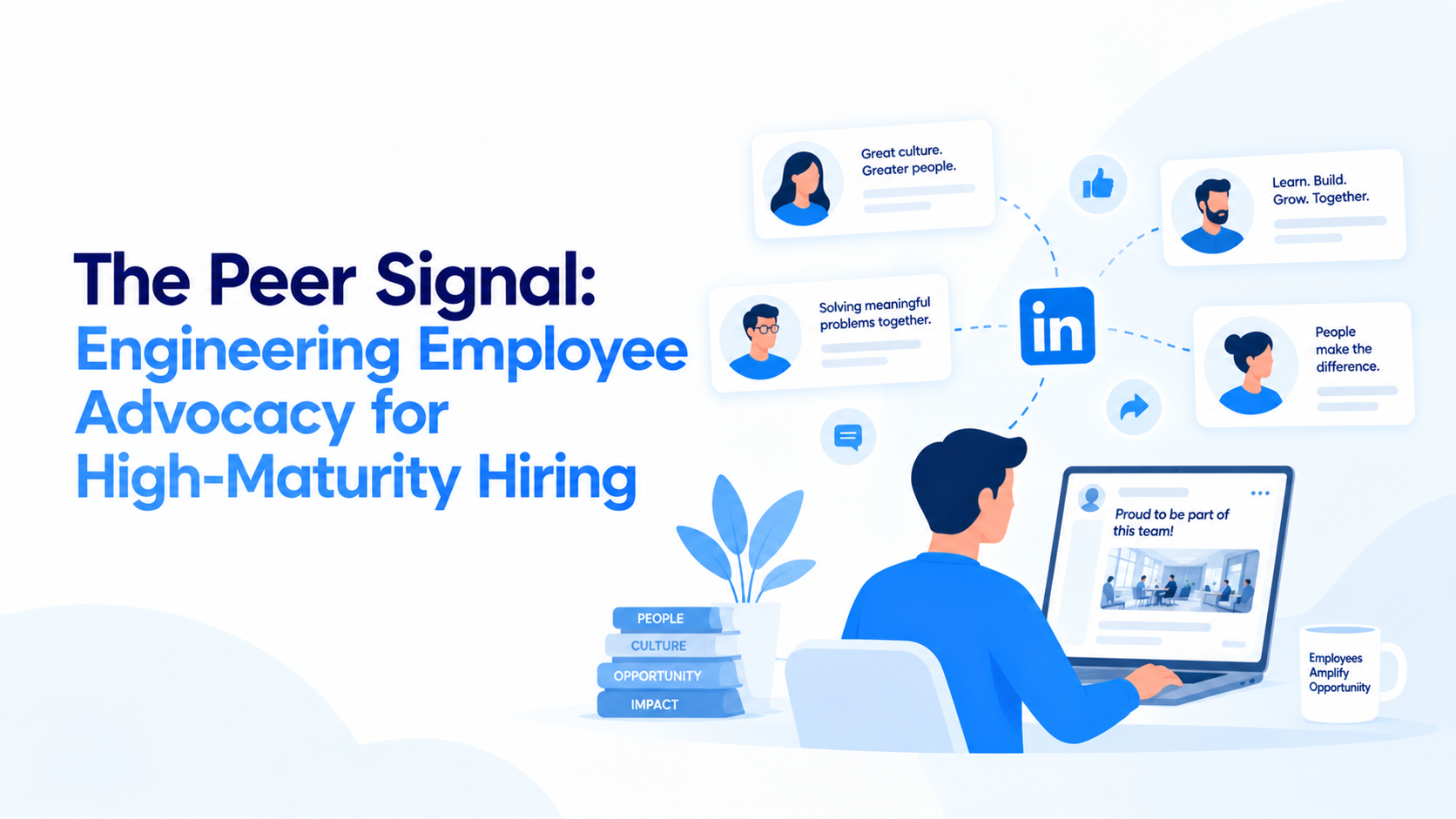
One of the greatest mistakes in LinkedIn branding is the over-reliance on the Company Page. Company Pages are, by nature, transactional nodes; they are seen as the voice of the "institution" and are therefore viewed with skepticism by high-maturity talent. To build a relational bond, the organization must leverage its executives as "Signal Nodes." A sovereign professional does not want to be recruited by a company; they want to be recruited by a peer. The personal authority of a leader is what the organization is using to produce a human connection, and that connection is what the partner is using to bypass the corporate filter.
An executive who uses LinkedIn to share their professional philosophy, their failures, and their strategic thinking becomes a magnet for similar minds. This is not "personal branding" in the sense of vanity, but "professional signaling" in the sense of authority. When a CEO posts a transparent critique of their own industry's standard practices, they are signaling a level of sovereign thinking that attracts other sovereign thinkers. The articulation of a unique philosophy is what the leader is using to produce intellectual attraction, and that attraction is what the partner is using to envision a collaborative relationship.
This shift requires executives to move away from the "I am humbled to announce" format and toward the "Here is what I am thinking about" format. Instead of announcing a promotion or a new partnership, the leader should share the structural logic that led to that result. By revealing the "thinking process" behind the "outcome," the executive demonstrates the operational maturity of the organization. The transparency of the logic is what the executive is using to produce credibility, and that credibility is what the candidate is using to commit to the interview process.
When the leadership team operates as a collective of signal nodes, the company's brand is no longer a static image but a living conversation. This transforms the recruitment process from a plea for applications into a series of high-level consultations. When a potential partner engages with a leader's content over several months, the alignment is established long before the first official outreach. This early alignment is what the hiring team is using to produce a shortened interview cycle, and that shortened cycle is what the organization is using to eliminate the risk of losing top talent.
Structural Alignment: Integrating LinkedIn into a Hiring OS
As an organization grows, the challenge of maintaining a high-fidelity signal across multiple leaders and roles becomes a structural problem. If one leader is signaling maturity while another is posting generic corporate cheerleading, the brand becomes incoherent. This is where the need for a Hiring OS becomes critical. A Hiring OS does not just track applicants; it synchronizes the "signal" sent on social platforms with the operational reality of the intake process. It ensures that the promise made in a LinkedIn post is the same promise delivered in the first interview.
Huntlo serves as the infrastructure for this synchronization, moving the recruitment process from a series of isolated posts to a continuous operational workflow. By treating hiring as an OS, companies can ensure that the principles of relational signaling are integrated into every touchpoint. This includes the ability to iterate on the "signal" based on the real-time data from the partner pipeline. If a particular executive's content is attracting the wrong type of talent, the OS provides the data necessary to adjust the "Sovereignty Gap" in the communication immediately. The data-driven iteration is what the OS is using to produce a refined signal, and that refined signal is what the company is using to eliminate waste.
Furthermore, an agentic approach to LinkedIn allows the organization to move from "reactive posting" to "proactive invitation." Instead of posting a job ad and hoping for the best, the Hiring OS allows the company to identify sovereign professionals who have already engaged with the leadership's signal nodes. This transforms LinkedIn from a billboard into a relational map. The proactive mapping is what the system is using to produce a high-conversion pipeline, and that pipeline is what the leadership is using to ensure structural stability.
By automating the mechanical aspects of tracking and outreach, the human elements of the partnership can be prioritized. The recruiter is no longer focused on "impressions" or "click-through rates," but on "alignment density." They are focused on how many of the people entering the pipeline are actual partners who have already signaled their alignment with the company's operational philosophy. This shift in focus is what the infrastructure is using to produce the future of candidate experience, as every interaction is based on mutual value rather than transactional need.
Measuring Resonance: From Vanity Metrics to Pipeline Density
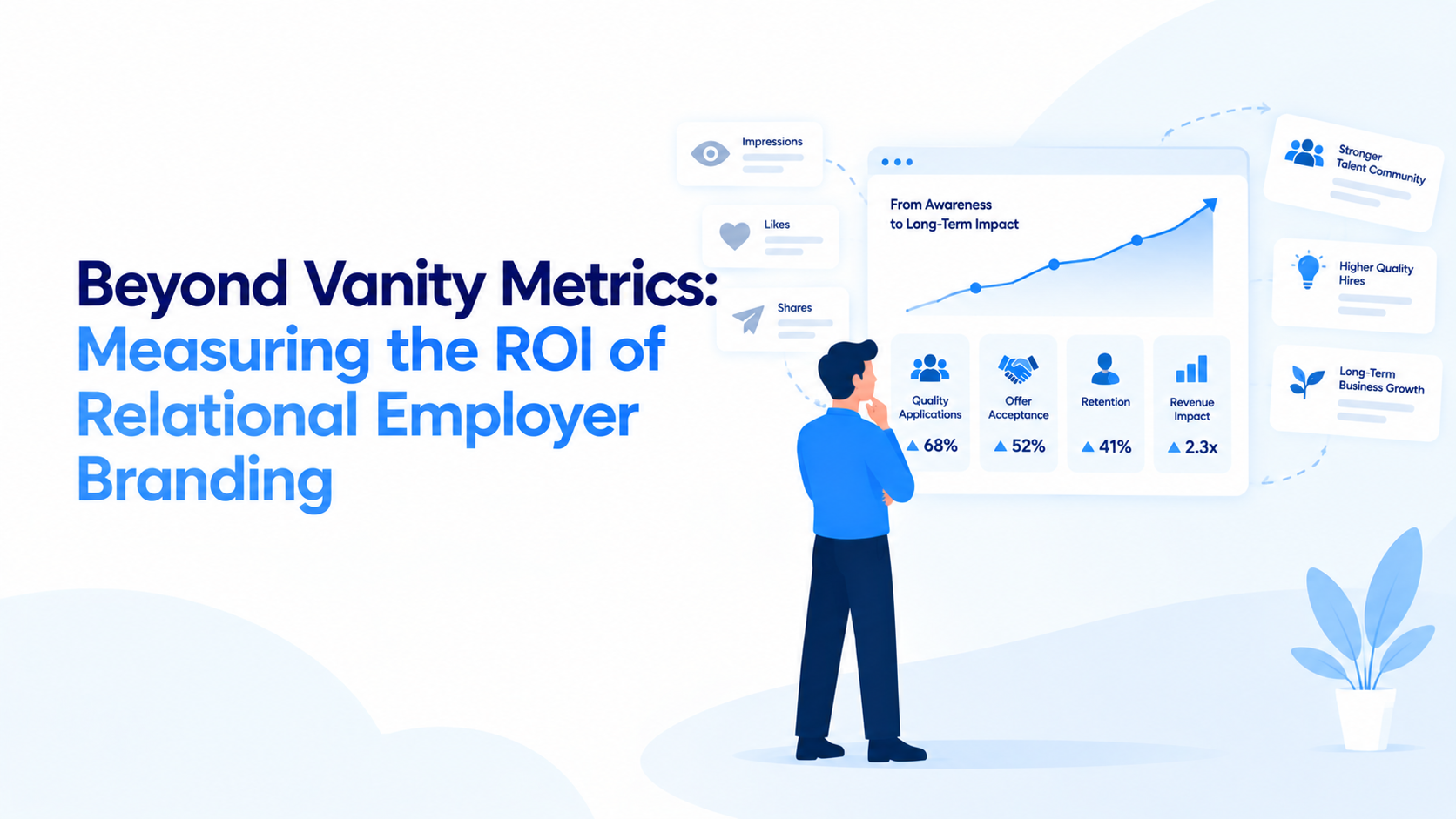
The final step in implementing relational branding on LinkedIn is to redefine how success is measured. In a transactional system, success is measured by vanity metrics: likes, shares, and the number of applications. In a relational system, these metrics are viewed as lagging indicators of potential failure. If a post gets ten thousand likes but attracts zero sovereign partners, the post was a failure of signaling. The obsession with engagement is what the social media manager is using to produce a report, and that report is what the leadership is using to ignore the lack of quality hires.
To measure true resonance, companies must track "Pipeline Density"—the percentage of inbound candidates who pass the first structural alignment check. If a high-fidelity signal is working, the total number of applications should actually decrease, while the percentage of qualified partners should increase. This is the paradox of relational branding: the more precise the signal, the smaller the crowd. The reduction in volume is what the organization is using to produce a high-quality pipeline, and that pipeline is what the recruiting team is using to reclaim their time.
This iterative approach turns LinkedIn into a strategic intelligence function. By analyzing which "Signals" attract the most impactful partners, the company gains a deeper understanding of its own operational maturity. They begin to see exactly what combination of autonomy, complexity, and growth drives the highest level of performance. This intelligence then feeds back into the company's broader strategy, allowing them to build an organization that is a natural magnet for sovereign talent.
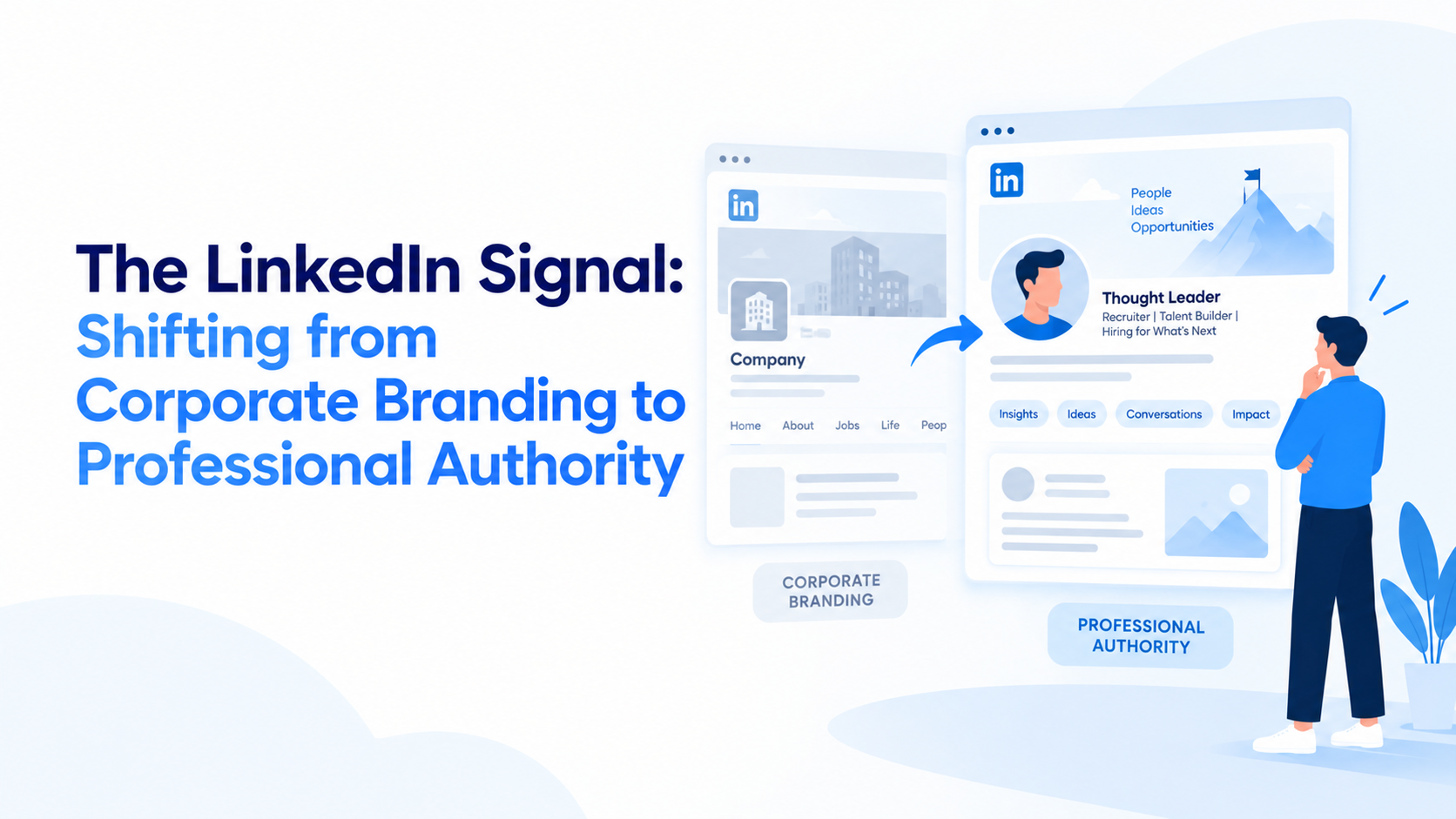
Ultimately, employer branding on LinkedIn is not about "getting noticed"; it is about "being recognized" by the right people. It requires the courage to stop optimizing for the algorithm and to start optimizing for the partner. It requires the discipline to move from a transactional "Company Page" to a relational "Professional Authority." When an organization views its LinkedIn presence as a partnership invitation, it ceases to struggle with a lack of talent. Instead, it finds itself surrounded by sovereign professionals who are not just working for a salary, but are invested in the structural success of the mission. This commitment to relational signaling is what the organization is using to produce an elite culture, and that culture is what the company is using to achieve total market sovereignty. This is the only way to reduce candidate drop-off rates and create a memorable candidate experience in an era where high-impact talent has total sovereignty over their career choices. This transition is a critical part of the shift to career architecture that defines the next decade of talent acquisition.