Chloe, a Senior Recruiter at a mid-sized logistics firm, spent her entire month meticulously crafting "personalized" outreach messages to a list of five hundred high-impact supply chain architects. She followed every piece of conventional wisdom: she mentioned a specific project from their profile, praised their career trajectory, and highlighted her company's "fast-growing environment." Despite her effort, the response rate was abysmal, barely hitting two percent, with most replies being polite, generic rejections. The frustration was mounting because the talent existed, and the compensation was competitive, yet the bridge between the recruiter and the candidate remained broken. Chloe realized that her "personalization" was merely a thin veneer over a transactional request, and the sovereign professionals she was targeting could smell the template from a mile away.
The failure Chloe experienced is a systemic byproduct of the "Transactional Sourcing" mindset that dominates modern social recruiting. Most organizations treat social platforms like LinkedIn or Twitter as digital catalogs where candidates are "leads" to be converted through a sales funnel. This approach prioritizes the volume of outreach over the precision of the signal, resulting in a cycle of spam and avoidance. When a recruiter leads with praise and perks, they are not starting a professional relationship; they are initiating a transaction. This creates a structural barrier where high-maturity talent perceives the outreach as a low-signal event, leading them to disregard the message entirely.
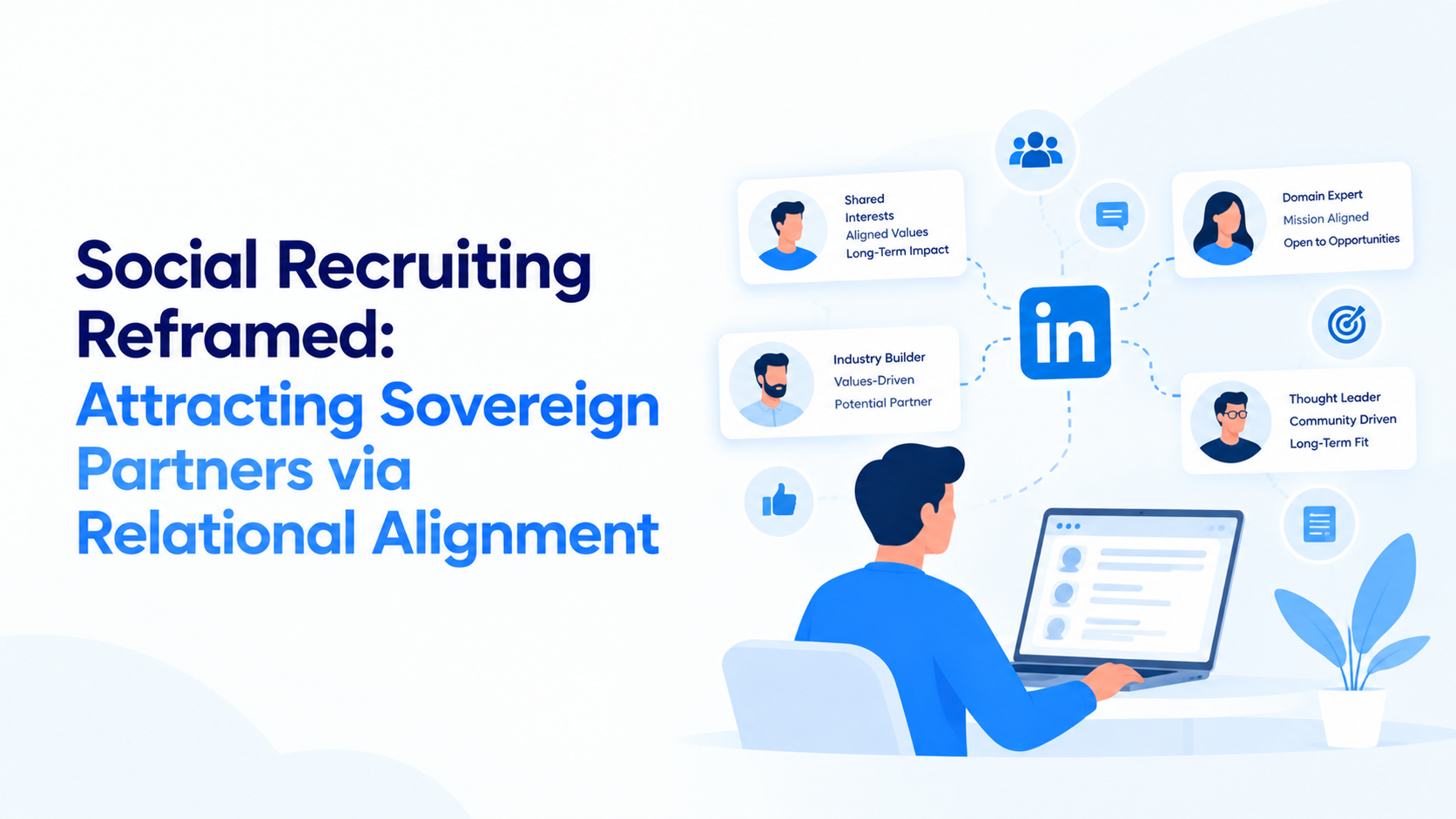
To break this cycle, leadership must shift from "Social Sourcing" to "Social Alignment." Alignment is the act of identifying a structural gap within the organization and presenting it as a professional challenge to a sovereign partner. This requires a move away from the "candidate as a target" model toward the "professional as a peer" model. By focusing on relational dynamics rather than transactional outreach, organizations can begin to exercise true talent sovereignty, attracting individuals who are motivated by the complexity of the problem rather than the competitiveness of the salary.
The Spam Cycle: Why Transactional Outreach is Failing the Market
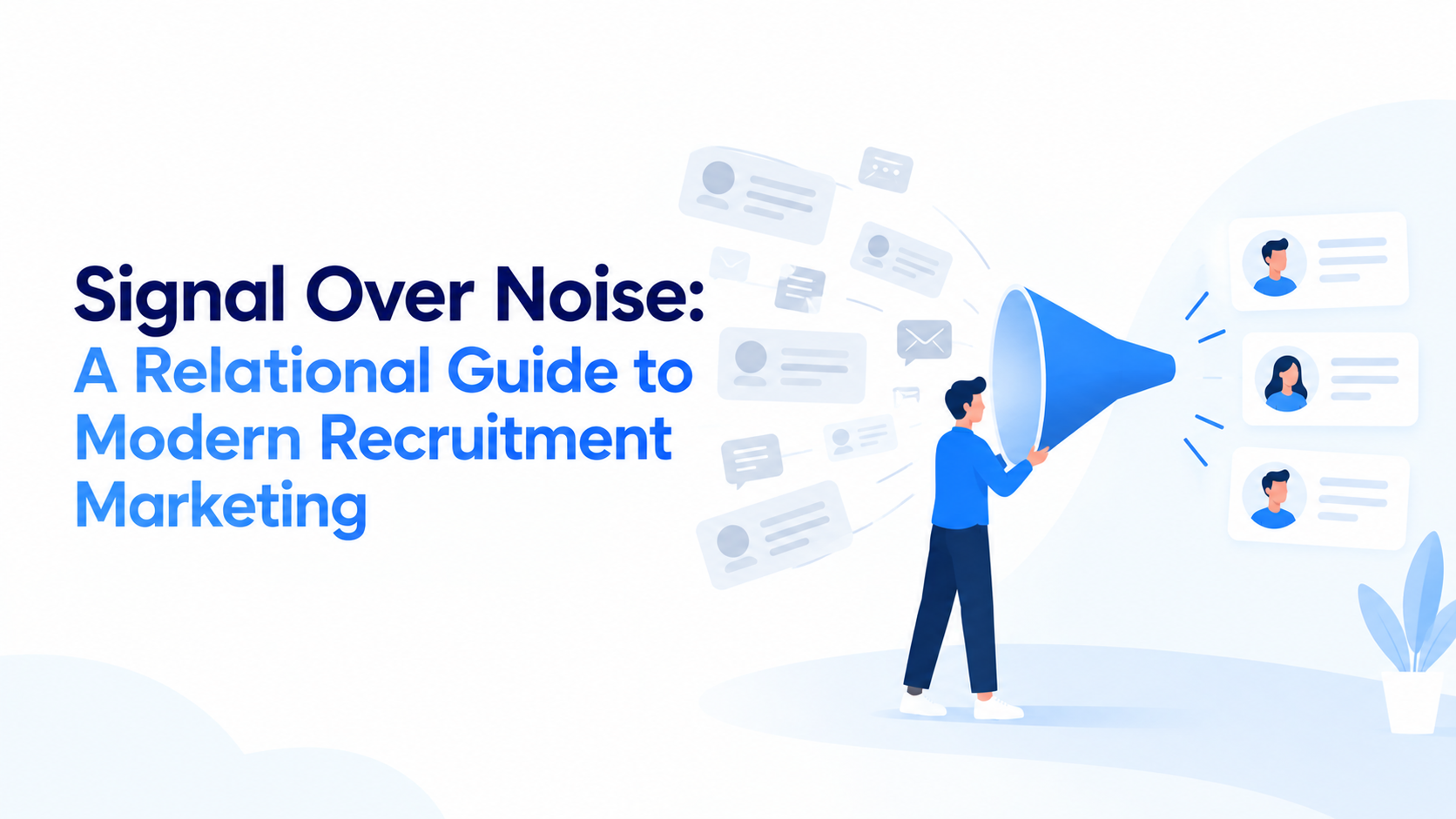
The primary reason social recruiting fails is that it relies on the logic of persuasion rather than the logic of alignment. Recruiters are often trained to "sell" the role, using adjectives like "exciting," "dynamic," and "innovative" to create an allure. However, for the sovereign professional, these words are noise; they are empty signifiers that lack operational substance. The generic praise is what the recruiter is using to produce a sense of personalization, and that sense of personalization is what the candidate is using to identify the message as a template.
When outreach is framed as a sales pitch, it immediately establishes a power imbalance where the recruiter is the seeker and the candidate is the prize. This transactional framing tells the potential partner that the company is looking for a "resource" to fill a gap, rather than a partner to help shape a strategy. Relational social recruiting requires a total rejection of the "pitch" in favor of the "proposition." Instead of telling a candidate why the company is great, the recruiter should explain why the current structural challenge is an intellectual opportunity for the professional.
This failure of signal is often rooted in a lack of operational maturity within the hiring team. If a recruiter cannot articulate the specific "Sovereignty Gap" the role is intended to fill, they default to generic templates provided by HR. This creates a cycle of mediocrity where the company attracts people who are good at responding to templates rather than people who are good at solving problems. The reliance on "personalized" templates is what the recruiting team is using to produce a standardized process, and that standardized process is what the organization is using to eliminate the very diversity of thought required for innovation.
The impact of this transactional approach is most evident in the decay of the company's digital reputation. In a hyper-connected professional ecosystem, a recruiter's poor outreach is not a private failure; it is a public signal of the company's internal health. When high-value partners share stories of low-signal outreach, they are essentially warning their peers that the organization lacks the operational maturity to understand how a real expert functions. According to SHRM's analysis of talent acquisition trends, the most successful organizations are those that move away from aggressive sourcing and toward a "pull" strategy based on professional authority.
From Sourcing to Alignment: The Psychology of the Partner-Centric Message
To attract a partner via social channels, the outreach must move from a "request for time" to an "invitation to solve." This requires a fundamental shift in the psychology of the message. A transactional message focuses on the recruiter's need: "I am looking for someone with X skills for Y role." An alignment message focuses on the partner's trajectory: "We have a structural bottleneck in Z, and your work on A suggests you have the sovereign capability to resolve it." This framing shifts the value proposition from a job offer to a professional challenge.
A high-maturity social strategy utilizes "Professional Signaling" to filter for alignment before the first meeting. This means the outreach should include a specific, high-fidelity detail about the operational reality of the role. For example, instead of mentioning "growth," the recruiter might mention the specific friction between the product team and the engineering team that the new hire will be expected to resolve. The transparency of the problem is what the recruiter is using to produce trust, and that trust is what the partner is using to justify the risk of a career conversation.
Integrating this level of detail requires the recruiter to act as a strategic consultant rather than a coordinator. They must perform a deep dive into the hiring manager's pain points to identify the "Unique Value Driver" of the role. If the recruiter cannot answer "Why would a sovereign professional leave a stable role to solve this specific problem?", they are not ready to send the message. This preparation is what the organization is using to produce a high-signal outreach, and that high-signal outreach is what the partner is using to identify the company as a peer.
Furthermore, the timing and cadence of social engagement must be relational rather than transactional. This means moving away from the "hit-and-run" style of InMail and toward a long-term engagement strategy. A relational recruiter engages with a partner's content, shares relevant insights, and builds a foundation of mutual respect before ever mentioning an open role. This early alignment is what the hiring team is using to produce a shortened interview cycle, and that shortened cycle is what the organization is using to eliminate the risk of losing top talent to a faster competitor.
Leveraging the Authority Node: Turning Executives into Talent Magnets
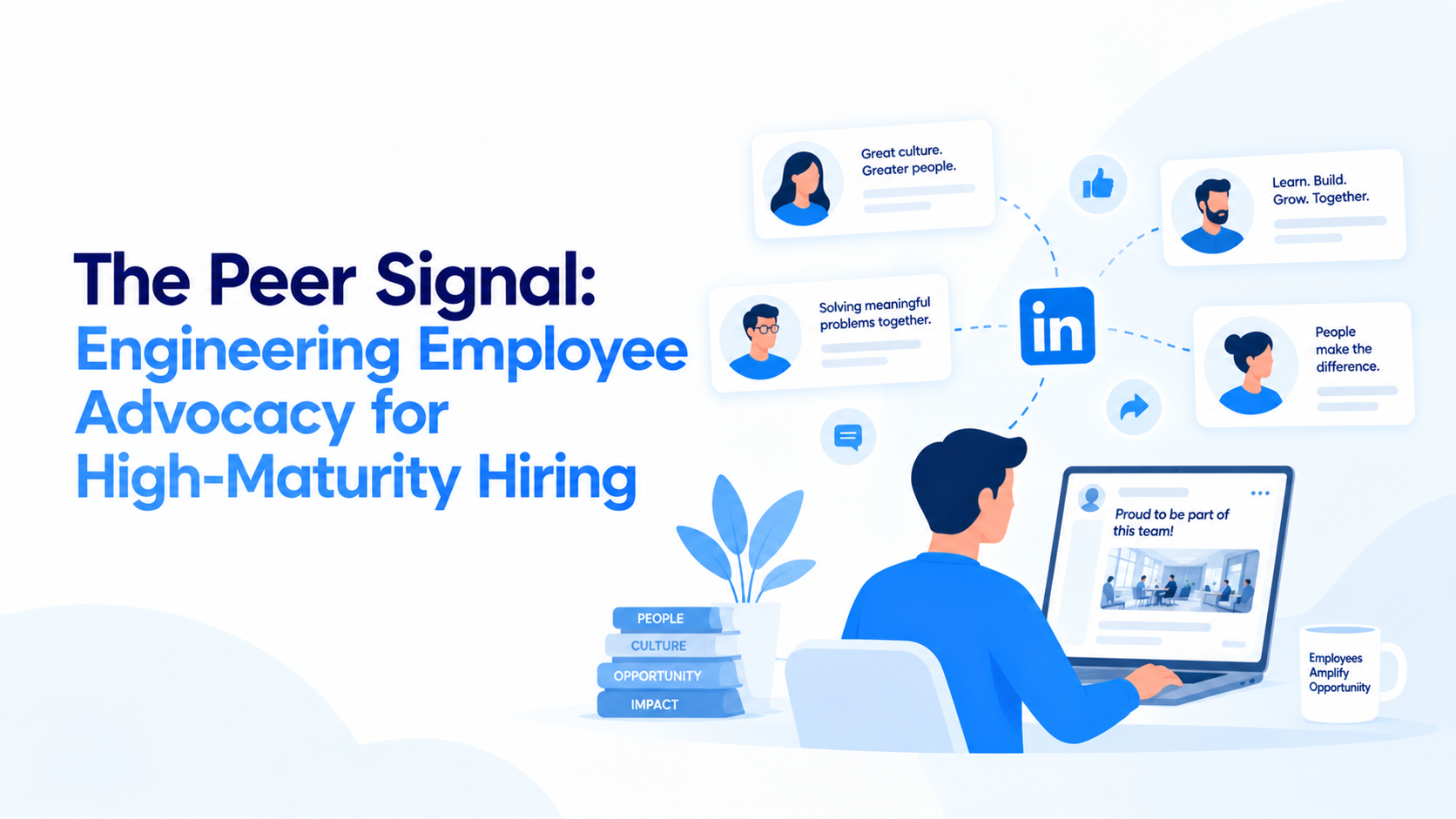
The most effective social recruiting strategy is one where the recruiter is not the primary signal. In a relational model, the recruiter acts as the orchestrator, but the "Authority Node"—the executive or the peer who will lead the hire—is the primary attractor. High-maturity partners are rarely moved by a recruiter's pitch, but they are frequently moved by a peer's professional authority. The personal authority of the leader is what the organization is using to produce a human connection, and that connection is what the partner is using to bypass the corporate filter.
When an executive uses their social presence to broadcast the company's structural challenges and operational logic, they are doing the heavy lifting of recruitment before a recruiter ever reaches out. By publishing "Proof of Work" content, such as technical post-mortems or strategic critiques, the leader creates a gravitational pull for similar minds. This transforms the act of recruiting from a search for "qualified candidates" into an attraction of "aligned partners." The articulation of a unique professional philosophy is what the leader is using to produce intellectual attraction, and that attraction is what the partner is using to envision a collaborative relationship.
Integrating the executive into the social loop requires a shift in the organization's view of "Employer Branding." It is no longer about a corporate page posting polished photos, but about a collective of leaders signaling their operational maturity. This creates a "distributed signal" where the potential partner sees a consistent pattern of sovereign thinking across the entire leadership team. This consistency is what the brand is using to produce a feeling of inevitability, and that inevitability is what the sovereign professional is using to prioritize this opportunity.
To maximize this effect, the organization must treat its leaders as strategic assets in the talent pipeline. This means providing them with the data and the "Sovereignty Gaps" they need to signal effectively. When an executive can say, "I am looking for a partner to help me solve X," it carries infinitely more weight than a recruiter saying, "We have an opening for X." The transparency of the leadership's need is what the organization is using to produce authenticity, and that authenticity is what the candidate is using to assess the cultural fit.
The Infrastructure of Engagement: How a Hiring OS Manages the Social Loop
As an organization scales its social recruiting efforts, the challenge of maintaining relational quality becomes a structural problem. Manually tracking long-term engagements across multiple platforms for hundreds of potential partners is unsustainable for a lean talent team. This is where the need for a Hiring OS becomes critical. Rather than relying on spreadsheets and memory, the company needs an infrastructure that can systematize the "alignment loop" without stripping away the human element.
Huntlo serves as this essential infrastructure, moving social recruiting from a series of isolated messages to a continuous operational workflow. By treating social engagement as a data-driven process, companies can ensure that the principles of relational hiring are maintained across every touchpoint. The OS can track the "Alignment Density" of a candidate, noting every interaction they have had with the company's signal nodes before they enter the formal pipeline. The automation of the administrative burden is what the OS is using to produce more space for human-centric alignment, and that alignment is what the organization is using to secure high-maturity partners.
Furthermore, an agentic approach to hiring allows the organization to maintain a "talent sovereignty" database that lives beyond the current open role. Instead of starting a social search from scratch every time a vacancy appears, the Hiring OS maintains a relational map of potential partners who have signaled alignment with the company's values in the past. This transforms social recruiting from a reactive search into a proactive invitation. The proactive mapping is what the system is using to produce a high-conversion pipeline, and that pipeline is what the leadership is using to ensure structural stability.
Integrating social recruiting into a Hiring OS also allows for a more sophisticated approach to candidate nurturing strategies. Instead of "checking in" every few weeks—a transactional habit that annoys sovereign professionals—the recruiter can share a specific piece of operational proof that aligns with the partner's expertise. This transforms the nurture process from a series of prompts into a series of value-adds. The delivery of relevant insight is what the system is using to produce a relational bond, and that bond is what the partner is using to maintain their interest in the organization.
Measuring the Signal: Shifting from Response Rates to Alignment Density
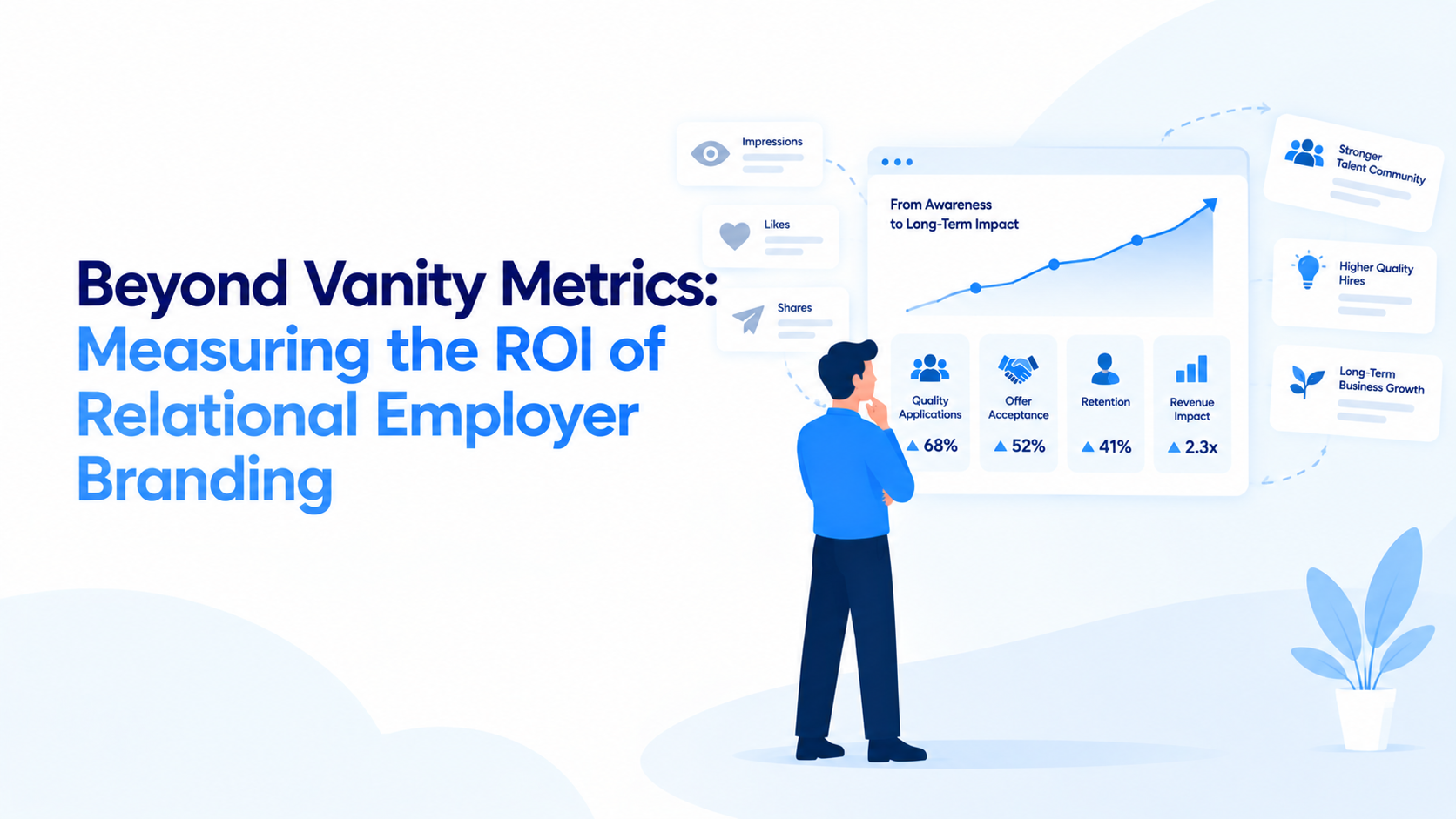
The final step in evolving social recruiting is to redefine the metrics of success. In a transactional system, success is measured by "Response Rates" and "InMail Conversion." In a relational system, these are vanity metrics that often signal a failure of precision. If a recruiter has a 50% response rate but none of the respondents are partners, the signal was too broad. The obsession with response rates is what the recruiting team is using to produce a "success" report, and that report is what the leadership is using to ignore the lack of quality in the pipeline.
To measure true efficacy, companies must track "Alignment Density"—the percentage of social engagements that result in high-maturity candidates who pass the first structural alignment check. If a high-fidelity signal is working, the total number of responses may actually decrease, while the quality of the conversations increases. This is the paradox of relational recruiting: the more precise the signal, the smaller the crowd. The reduction in noise is what the organization is using to produce a high-quality pipeline, and that pipeline is what the recruiting team is using to reclaim their time.
This iterative approach turns social recruiting into a strategic intelligence function. By analyzing which "Signals" (e.g., a specific technical challenge or a leadership philosophy) attract the most impactful partners, the company gains a deeper understanding of its own operational maturity. They begin to see exactly what combination of autonomy and complexity drives the highest level of performance in the market. This intelligence then informs the broader business strategy, as the company builds its operations around the needs of its most sovereign assets.
Ultimately, successful social recruiting is not about "finding people"; it is about "signaling alignment." It requires the courage to stop optimizing for the algorithm and to start optimizing for the partner. It requires the discipline to move from transactional sourcing to relational engagement. When an organization views its social presence as a partnership invitation, it ceases to struggle with a lack of talent. Instead, it finds itself surrounded by sovereign professionals who are not just working for a salary, but are invested in the structural success of the mission. This commitment to relational signaling is what the organization is using to produce an elite culture, and that culture is what the company is using to dominate its market. This is the only way to reduce candidate drop-off rates and ensure a memorable candidate experience in an era where high-impact talent has total sovereignty over their career choices. This transition is the bedrock of the shift to career architecture that defines the future of the global workforce.