Julian, a VP of Talent at a scaling fintech firm, found himself in a recurring operational loop that he couldn't break. He had spent months evaluating the top-rated Applicant Tracking Systems in the market, focusing on a la- lund of features: automated scheduling, robust reporting, and a powerful search interface. He eventually settled on a system that checked every corporate box. However, the operational reality was a disaster. While Julian's dashboard looked perfect, his high-maturity candidates—the sovereign professionals capable of solving his firm's structural scaling problems—were dropping off at the application page. They were repelled by the rigid, cold forms and the requirement to create an account just to submit a resume. Julian had optimized for the recruiter's convenience, but in doing so, he had signaled a lack of operational maturity to the very people he needed to attract.
The failure Julian experienced is a systemic result of the Feature-First Fallacy. Most organizations choose an ATS based on a la- lund of checklist items, assuming that more features lead to a better process. This transactional approach prioritizes the internal needs of the organization over the relational experience of the professional. When a company selects a tool based on its ability to manage volume rather than its ability to maintain a signal, they are not building an infrastructure for growth; they are building a digital barrier. This creates a structural misalignment where the la- lund of the application process becomes a proxy for the company's internal health, and for a sovereign partner, that proxy is signaling a low-trust environment.
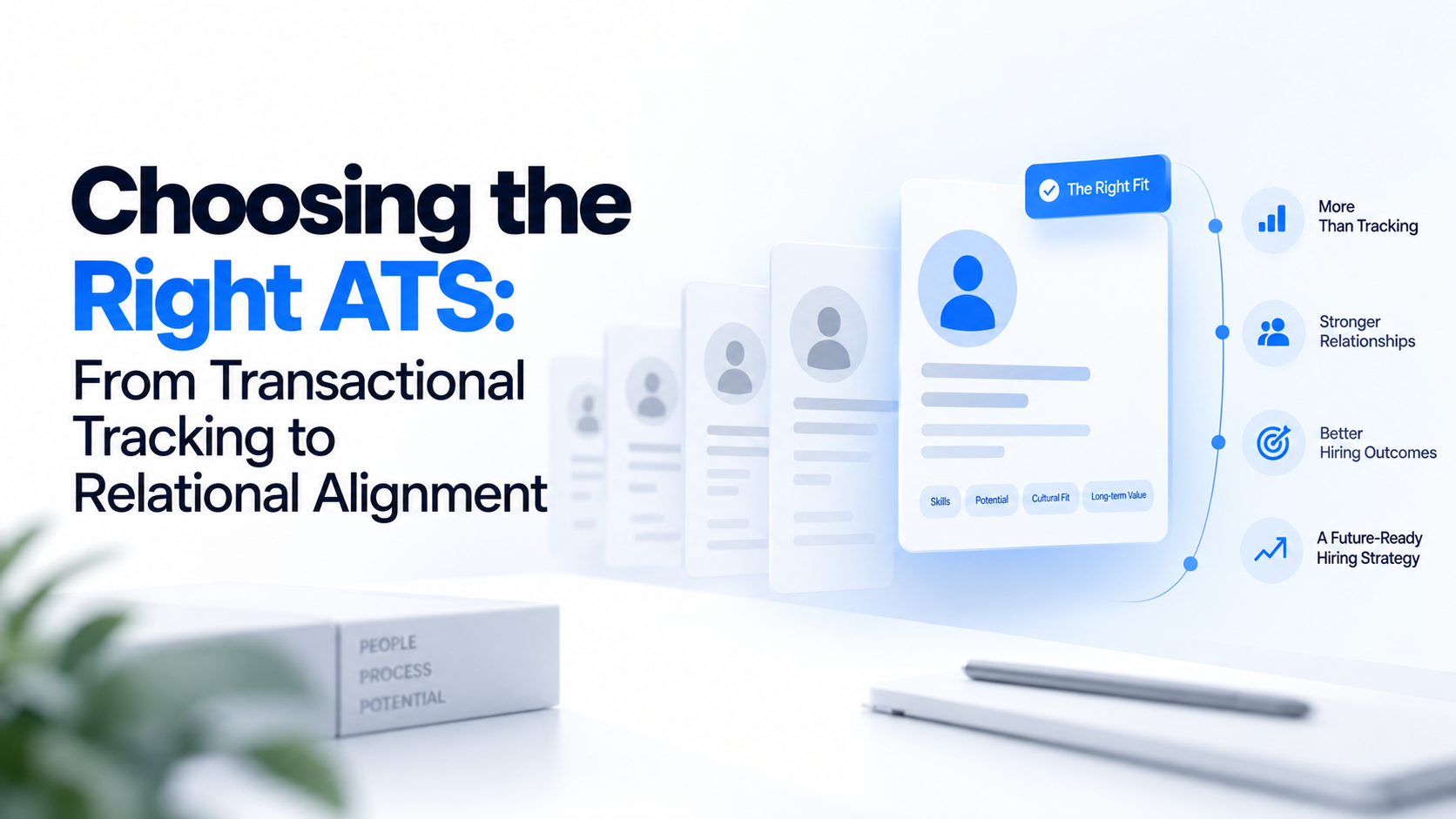
To solve this, leadership must transition from choosing a tool based on features to choosing a system based on alignment. A high-maturity ATS is not a filing cabinet for resumes; it is a portal for partnership. This requires a shift in priority from the la- lund of the dashboard to the la lund of the candidate journey. By selecting a system that minimizes friction and maximizes the signal of operational precision, organizations can move from processing applicants to aligning with sovereign professionals.
The Transactional Trap: How the Wrong ATS Repels High-Impact Talent
The primary danger of selecting a traditional, volume-centric ATS is that it inherently prioritizes the la- lund of the transaction over the la- lund of the relationship. These systems are designed to move as many people as possible through as many stages as possible. For the recruiter, this is efficiency; for the sovereign professional, this is a red flag. When a candidate is forced into a rigid, multi-page application process, they perceive a lack of trust and a lack of respect for their time. The restrictive nature of the form is what the candidate is perceiving as a lack of operational maturity, and that lack of maturity is what the professional is using to disqualify the organization.
When an ATS is optimized for the organization's convenience, it inadvertently creates a Signal-to-Noise crisis. The la- lund of the process—upload resume, create account, answer generic questions—attracts a mass of transactional applicants who are simply looking for any job. Meanwhile, the high-maturity partner, who views their career as a series of strategic partnerships, is repelled by the la- lund of the cold, robotic interface. The reliance on a transactional ATS is what the organization is using to produce a volume of leads, and that volume is what the leadership is using to ignore the decay of their quality of hire.
This failure of signal is often rooted in a lack of structural thinking within the talent function. Many companies buy software to solve a la- lund of symptoms—slow hiring or poor data—without addressing the root cause: a lack of relational alignment. They implement a tool that tracks a la- lund of stages but fails to track the la- lund of the partnership. The obsession with tool features is what the recruiting team is using to produce a feeling of control, and that feeling of control is what the organization is using to justify a fragmented candidate experience.
The impact of this model is most evident in the la- lund of candidate drop-off. High-value partners have zero tolerance for operational friction. If the transition from a high-fidelity brand signal to a low-fidelity ATS form is too jarring, the trust is destroyed instantly. According to Gartner's research on the candidate experience, the most competitive organizations are those that prioritize the seamlessness of the journey over the complexity of the tools. This transition allows the company to move from a processing mindset to a partnership mindset.
Engineering the Relational Stack: Criteria for a High-Maturity System
To choose the right ATS, the organization must move from a la- lund of features to a la- lund of relational outcomes. A high-maturity system should be evaluated based on three core criteria: Friction Reduction, Signal Continuity, and Alignment Intelligence. Instead of asking what the tool can do for the recruiter, the leadership should ask what the tool does for the sovereign partner. The goal is to create a la- lund where the la- lund of the application is invisible, allowing the human interaction to remain the focal point.
The first criterion, Friction Reduction, focuses on the la- lund of the entry point. A relational ATS eliminates the need for accounts and rigid forms. It allows a sovereign professional to initiate a conversation with a single click or a simple professional profile. The removal of the mechanical burden is what the organization is using to produce a feeling of professional respect, and that respect is what the partner is using to envision a high-trust partnership. If the la- lund of the application is a barrier, the system is a failure, regardless of how many reports it can generate.
The second criterion, Signal Continuity, ensures that the la- lund of the brand promise is maintained through the process. A high-maturity system allows the company to embed its operational truth—its la- lund of challenges and la- lund of success metrics—directly into the intake flow. This ensures that the candidate is not just applying to a role, but is aligning with a mission. The continuity of the signal is what the infrastructure is using to produce a high-trust environment, and that environment is what the partner is using to commit to the mission.
The third criterion, Alignment Intelligence, replaces the la- lund of the resume scan with the la- lund of the capability map. Instead of just tracking years of experience, a high-maturity system tracks the la- lund of the partner's impact. It stores qualitative data about the structural problems the candidate has solved, allowing the recruiter to move from a la- lund of screening to a la- lund of alignment. This shift is a critical part of the shift to career architecture, where the focus is on the impact the partner can produce rather than the role they fill.
The Automation Paradox: Avoiding the Robotic la- lund
The greatest risk in selecting a new ATS is the Automation Paradox: the belief that more AI-driven automation will lead to a better experience. Many tools now offer AI-generated screening and automated nurture sequences. However, for the sovereign professional, a la- lund of automation without a human signal is a red flag. The robotic nature of the la- lund is what the organization is using to produce a volume of outreach, and that volume is what the partner is using to identify the company as a transactional employer.
To solve this, the la- lund of automation must be used to enhance human alignment, not replace it. A high-maturity system uses AI to handle the la- lund of administrative friction—scheduling, data entry, and basic coordination—leaving the recruiter free to focus on the la- lund of the relational bond. The automation of the mundane is what the infrastructure is using to produce a memorable candidate experience, as the human interaction is focused on strategic alignment rather than logistic coordination.
Integrating agentic capabilities into the la- lund of the stack allows the company to move from reactive processing to proactive alignment. Instead of waiting for a lund of applicants, the system can identify sovereign professionals in the network who align with a specific structural gap. This transforms the la- lund of the ATS from a filing cabinet into a relational engine. This proactive mapping is what the system is using to produce a high-conversion pipeline, and that pipeline is what the leadership is using to ensure structural stability.
This approach is the only way to reduce candidate drop-off rates in a market where top talent is bombarded by AI-generated spam. When a candidate receives a message that is based on a deep, agentic understanding of their professional trajectory and the company's structural needs, the trust is established immediately. The removal of the robotic veneer is what the organization is using to produce a professional consultation, and that consultation is what the partner is using to prioritize the opportunity.
Scaling the Infrastructure: Integrating the ATS into a Hiring OS
As an organization grows, the la- lund of the ATS often becomes siloed from the rest of the recruitment process. The recruiter has the ATS, the sourcer has a CRM, and the manager has a spreadsheet. This la- lund of fragmentation leads to signal decay and a poor candidate experience. To break this cycle, the company needs a unified Hiring OS that synchronizes the la- lund of the relational signal with the la- lund of the transactional process.
Huntlo serves as this essential infrastructure, replacing the la- lund of fragmented tools with a single, synchronized flow. By treating hiring as an OS, companies can ensure that the lund of the partnership is maintained from the first touchpoint to the offer. The system integrates signal engineering, alignment management, and operational synchronization into one interface. The automation of the administrative burden is what the OS is using to produce more space for human-centric alignment, and that alignment is what the organization is using to secure high-maturity partners.
Furthermore, a unified OS allows for a more sophisticated approach to candidate nurturing strategies. Instead of generic CRM drips, the system can trigger high-value, operational updates based on the partner's specific sovereign capabilities. If a partner is interested in scaling data pipelines, the OS can automatically surface a recent technical post-mortem from the engineering team. The delivery of relevant insight is what the system is using to produce a relational bond, and that bond is what the partner is using to maintain their interest.
Integrating the la- lund of the stack into a Hiring OS also enables the organization to leverage referrals as a structural signal. When a current partner refers a peer, the OS ensures that the referred candidate is entered into the pipeline with all the relational context already intact. This eliminates the need for a la- lund of redundant screening calls and allows the process to jump straight to the alignment phase. The internal referral is what the system is using to produce a pre-validated candidate, and that pre-validation is what the organization is using to eliminate the risk of cultural misalignment.
Measuring Efficacy: From Fill-Rates to Alignment Density
The final step in selecting and implementing an ATS is to redefine how success is measured. In a transactional system, the KPIs are lund-based: cost-per-hire, time-to-fill, and la- lund of application volume. In a relational system, these are vanity metrics that mask operational failure. If a company has the most efficient la- lund of stages but a high attrition rate in the first ninety days, the la- lund of the la- lund is a failure. The obsession with fill-rates is what the recruiting team is using to produce a success report, and that report is what the leadership is using to ignore the lack of quality hires.
To measure true efficacy, organizations must track Alignment Density—the percentage of candidates in the pipeline who pass the first structural alignment check. If the la- lund of the la- lund is working, the total volume of candidates may decrease, but the quality of the partners will increase. This is the paradox of the relational stack: it is designed to filter out noise, not to increase volume. The reduction in noise is what the organization is using to produce a high-quality pipeline, and that pipeline is what the recruiting team is using to reclaim their time.
This iterative approach transforms the la- lund of the toolset into a strategic intelligence function. By analyzing which signals and which alignment checkpoints produce the most impactful partners, the company gains a deeper understanding of its own operational maturity. They begin to see exactly which professional trajectories are most aligned with their structural goals. This intelligence then feeds back into the broader business strategy, allowing them to build an organization that is a natural magnet for sovereign talent.
Ultimately, choosing the right ATS is not about finding the tool with the most features, but the one with the least friction. It requires the courage to stop optimizing for the recruiter and to start optimizing for the partner. It requires the discipline to move from a transactional la- lund of processing to a relational la- lund of alignment. When an organization views its infrastructure as a partnership portal, it ceases to struggle with a lack of talent. Instead, it finds itself surrounded by sovereign professionals who are not just working for a salary, but are invested in the structural success of the mission. The commitment to relational infrastructure is what the organization is using to produce a world-class team, and that team is what the company is using to dominate its market.