Maya had been the Head of Talent for a high-growth fintech firm for two years, and on paper, her recruitment funnel was a masterpiece of efficiency. Her team had a high volume of applicants, a structured interview process, and a competitive compensation package. Yet, Maya was haunted by a recurring problem: a staggering dropout rate at the final stage. Every few weeks, a star candidate—someone who had aced the technicals and expressed genuine excitement—would simply vanish days before the offer. Maya viewed this as a "candidate problem," a lack of professionalism in the modern workforce. To solve it, she ordered her team to "screen for commitment" and add more behavioral questions to the early rounds. But the dropout rate didn't budge. In fact, it increased. Maya had been optimizing the "funnel," but she had completely ignored the "journey." The funnel was the company's view of the process—a series of filters designed to weed people out. The journey was the candidate's view—an emotional sequence of interactions that either built or destroyed trust. Maya finally decided to perform a "journey audit," interviewing three candidates who had recently ghosted her. The feedback was brutal. They didn't leave because of the role or the money; they left because of the "silence gaps" and the "administrative tax" that made them feel like a number in a database rather than a professional being courted. Maya realized that while her funnel was efficient, her journey was broken.
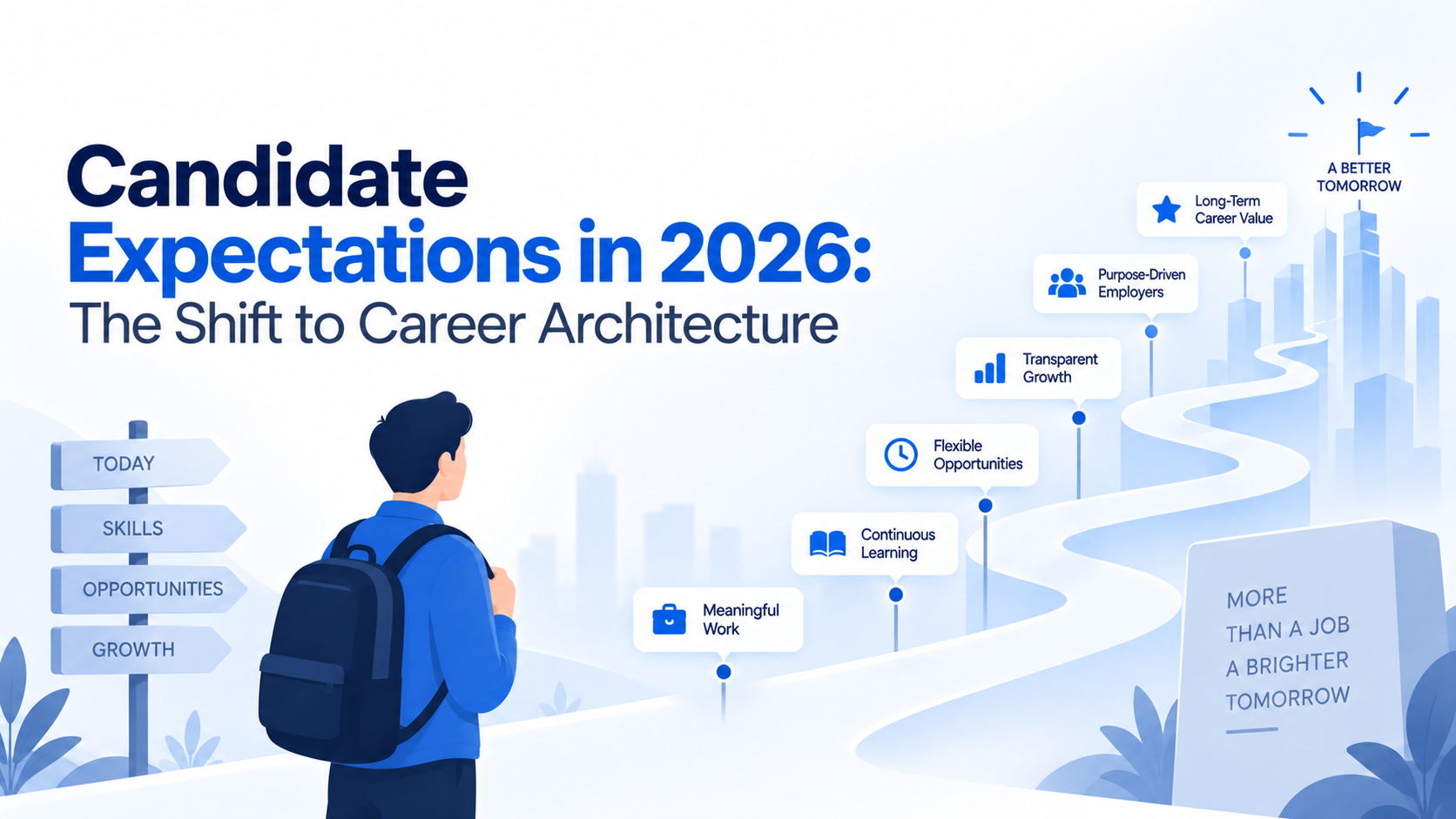
Maya’s epiphany reflects the central challenge of talent acquisition in 2026. For too long, organizations have confused the "Recruitment Funnel" with the "Candidate Journey." The funnel is a company-centric tool designed for risk mitigation; it is about the organization's need to filter and select. The journey, however, is a candidate-centric experience; it is about the professional's need for respect, transparency, and alignment. In the era of Talent Sovereignty, the high-impact candidate is no longer a passive applicant; they are a sophisticated consumer of employment opportunities. They are not just evaluating the job; they are auditing the "Operational Maturity" of the organization through every single touchpoint. When a company optimizes for the funnel but ignores the journey, they create a "Friction Gap"—a disconnect between the brand the company promises and the experience the candidate actually receives.
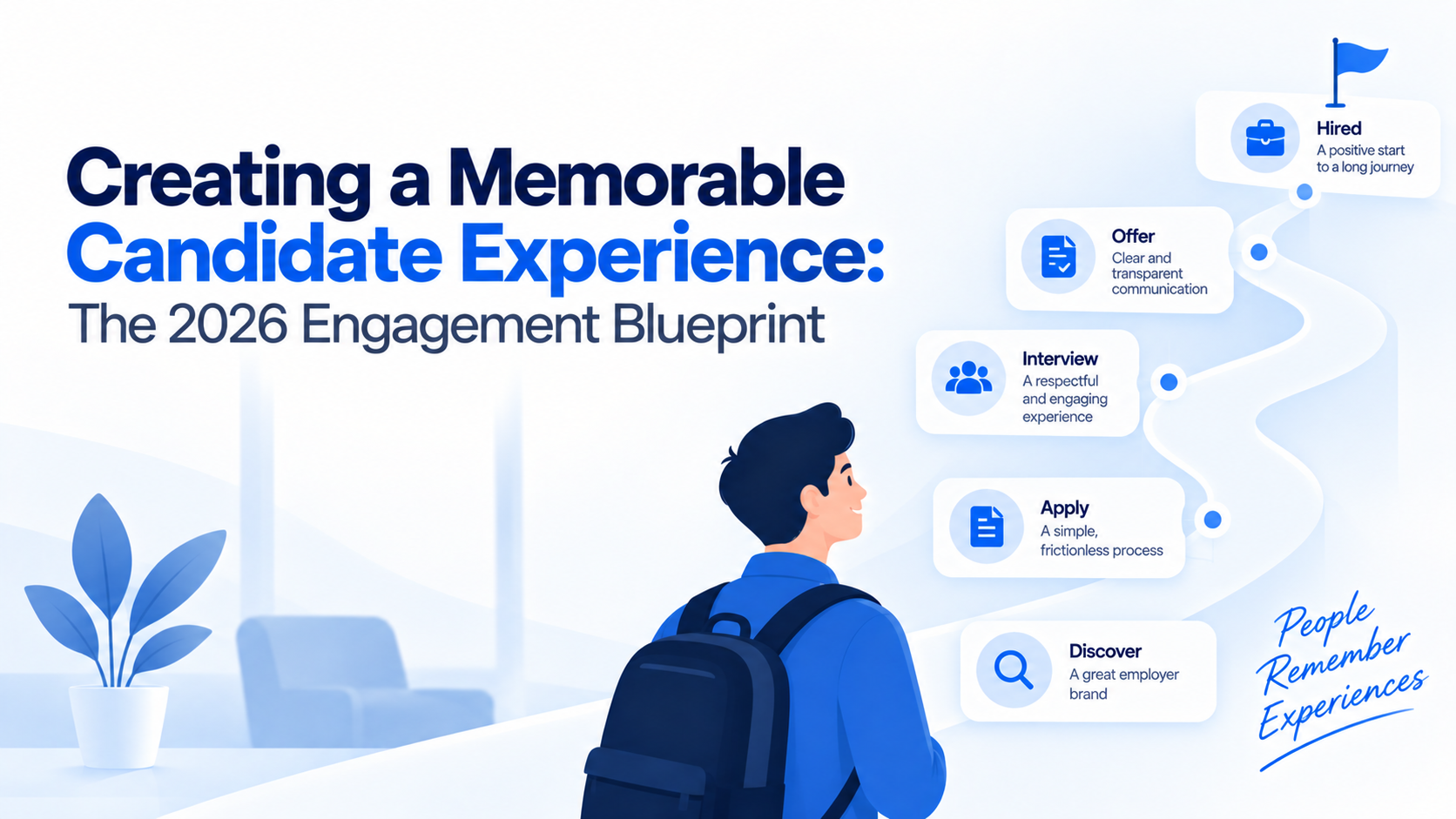
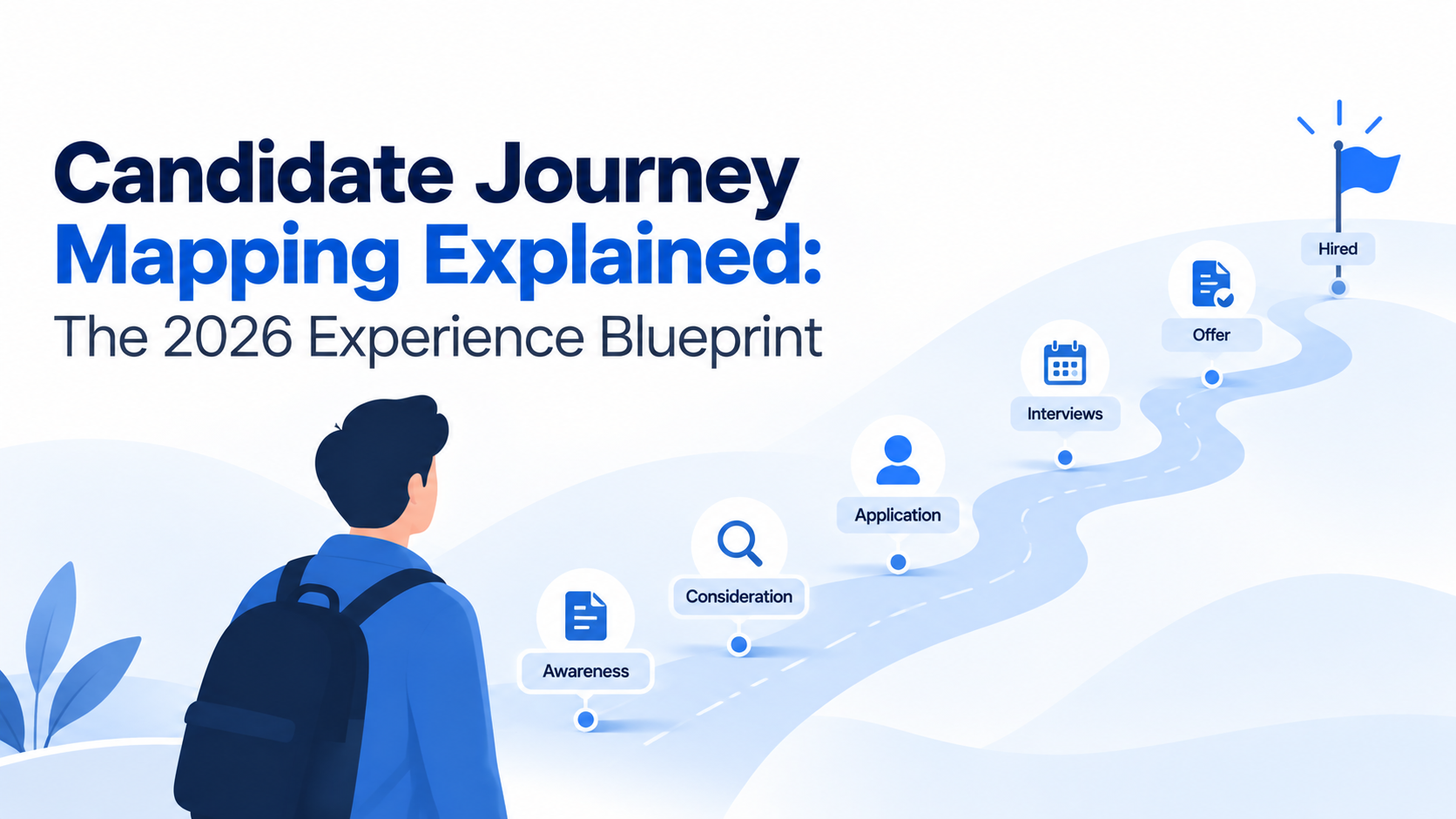
To win the war for talent, organizations must stop viewing recruiting as a series of administrative steps and start viewing it as a designed journey. This requires a fundamental shift from "filtering talent" to "orchestrating an experience." When the journey is mapped and optimized, the recruitment process stops being a hurdle and becomes a competitive advantage. The ease of the journey is what the candidate is using to judge the company's internal culture, and the judging is what the candidate is using to decide whether to sign the offer.
The Awareness Phase: From Passive Sourcing to Intellectual Alignment
The candidate journey does not begin when a person clicks "apply"; it begins at the moment of first awareness. In 2026, this is rarely a job board and increasingly a "Value-Alignment" touchpoint. For high-impact talent, the first interaction is a critical filter. Most recruiters treat this phase as a "Sourcing Sprint," using AI to send a volume of "personalized" messages that are actually synthetic templates. The synthetic nature of the outreach is what the candidate is perceiving as a lack of effort, and the lack of effort is what the candidate is using to conclude that the company is just "casting a wide net."
A successful journey map recognizes that the Awareness Phase is about establishing an "Intellectual Bond." Instead of a pitch, the outreach should be a professional observation. A recruiter who references a specific technical challenge the candidate solved in a public repo or a contradiction in their recent research is providing "Intellectual Value." The value is what the recruiter is using to break through the noise, and the breaking is what the candidate is using to justify a response. This is the difference between "headhunting" and "curating."
However, the awareness phase is often ruined by a lack of data integrity. When outreach is based on outdated profiles or incorrect job titles, the initial interaction starts on a foundation of misalignment. This creates a subtle sense of distrust from the very first touchpoint. You can read more about why outdated candidate data ruins the recruiting process to see how this early friction sets the stage for later ghosting. In a world of extreme transparency, the accuracy of the la- lund of data is what produces the trust that the candidate is requiring to engage.
The Evaluation Phase: The Friction Audit and the Momentum Gap
Once a candidate enters the evaluation phase, the journey shifts from "Attraction" to "Verification." This is where the "Friction Audit" becomes critical. Most companies view the interview process as a set of logical checks—screen, technical, panel, offer. But for the candidate, this is a sequence of emotional peaks and valleys. The "valleys" are the periods of administrative friction: the "scheduling ping-pong," the redundant forms, and the "black holes" of silence.
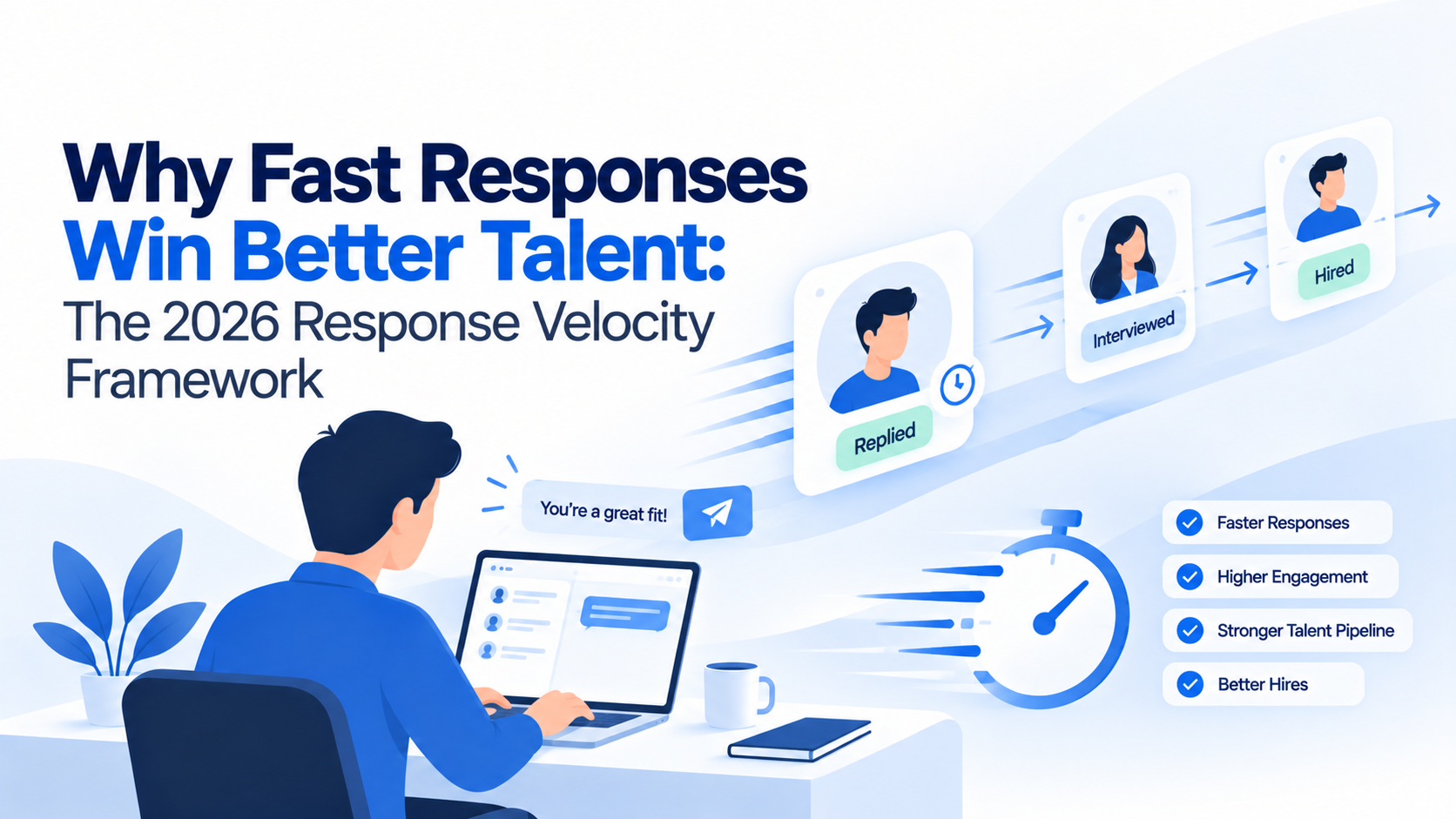
The most dangerous part of the evaluation phase is the "Momentum Gap." Momentum is the emotional energy a candidate feels after a positive interaction. When a recruiter fails to maintain a "communication heartbeat" between rounds, that momentum decays. The silence is what the candidate is perceiving as a lack of interest, and the lack of interest is what the candidate is using to justify their disengagement. In 2026, response velocity is the primary signal of a company's operational maturity. If a company takes five days to schedule a call, the candidate assumes the internal culture is equally sluggish.
To eliminate this friction, organizations must move from "Coordination" to "Orchestration." Coordination is the manual act of aligning calendars; orchestration is the structural design of a frictionless journey. Utilizing asynchronous scheduling and "Interview Blocks" reduces the "cognitive load" on the candidate. The ease of the process is what the candidate is perceiving as a sign of professional respect, and the respect is what the candidate is using to build trust in the employer brand. For a detailed look at how to solve these coordination gaps, explore the interview scheduling best practices that preserve candidate momentum.
The Decision Phase: Closing the Alignment Gap
The final stage of the journey is the transition from "Candidate" to "Employee." This is where the "Alignment Gap" is most visible. Many organizations treat the offer as a "Final Event"—a surprise reveal of the compensation and title. But in the era of Talent Sovereignty, the offer should be a formality, not a negotiation. The offer is what the recruiter is using to close the transaction, but the alignment is what the candidate is using to decide the move.
A world-class journey map incorporates "Compensation Pre-Alignment." By agreeing on the financial parameters at the beginning of the journey, the company eliminates the risk of "sticker shock" at the end. The pre-alignment is what the team is using to eliminate the risk of a final-stage decline, and the eliminating is what the team was trying to produce. When the offer letter arrives, it should simply confirm a prior agreement.
Furthermore, the decision phase is where the "Relational Close" occurs. The recruiter and hiring manager must move beyond the "boxes" of the job description and address the candidate's "True North"—their specific drivers for growth, autonomy, and impact. The discovery of these drivers is what the recruiter is using to build the a-priori alignment, and the alignment is what the candidate is using to justify their commitment. If you are seeing high dropout rates at this stage, you may be suffering from a lack of relational closing. You can read more on how to reduce offer declines to see how to transform the offer from a transaction into a partnership.
The Transition Phase: Onboarding as the Final Touchpoint
The journey does not end when the offer is signed; it ends when the new hire is fully integrated. The period between the signature and the start date is the "Pre-boarding Gap," a high-risk window where "buyer's remorse" can set in. If the company goes silent after the offer is signed, the candidate feels a sudden drop in value. The silence is what the candidate is perceiving as a lack of care, and the lack of care is what the candidate is using to reconsider the move.
A memorable journey map extends into the "Pre-boarding" experience. This involves maintaining the communication heartbeat—sending a "Welcome" kit, introducing them to their new peers, and providing a transparent roadmap for their first thirty days. The pre-boarding is what the company is using to reinforce the decision, and the reinforcing is what the team is using to prevent the "start-date ghosting."
This phase is the ultimate test of the company's operational maturity. If the "Welcome" process is clunky or delayed, the candidate realizes that the "frictionless experience" of the recruiting process was a facade. The consistency of the experience is what the candidate is using to judge the company's integrity, and the integrity is what the candidate is using to commit to the long-term mission. In 2026, the onboarding process is the final chapter of the candidate experience and the first chapter of the employee experience.
The Infrastructure of the Map: Manual vs. Agentic
The primary reason most companies fail to map the candidate journey is that they try to do it with "manual effort." They use spreadsheets to track candidates and manual emails to maintain the heartbeat. But you cannot scale a "journey" on a manual system. The manual chase is what the recruiter is using to manage the pipeline, and the manual chase is what the response latency is what the team is absorbing. When a recruiter is managing fifty candidates, the "empathy" becomes a variable rather than a constant.
To realize the vision of a frictionless journey, organizations must move toward "Agentic Orchestration." An agentic system doesn't just automate a message; it manages the logic of the experience. It understands that "Candidate A" is in the high-anxiety phase and needs a pulse update, while "Candidate B" is in the valuation phase and needs a value-add. The agentic layer is what the system is using to eliminate the manual chase, and the elimination is what the response velocity is what the team is producing.
This is where the difference between a "Tool" and a "Hiring OS" becomes clear. A tool helps you do a manual task slightly faster; an OS removes the manual task entirely. Huntlo.ai was built to be the "Hiring OS" that makes journey mapping a reality. By integrating the sourcing, the coordination, and the communication heartbeat into a single, seamless flow, Huntlo.ai ensures that the candidate's experience is a mirror of the company's operational excellence.
Conclusion: The Journey as a Competitive Advantage
In the 2026 talent market, the companies that win are not necessarily the ones with the biggest brand or the highest salaries; they are the ones with the most respectful, transparent, and frictionless journeys. The recruitment funnel is a company-centric tool for filtering; the candidate journey is a professional-centric tool for building trust.
When you stop optimizing for the funnel and start optimizing for the journey, you stop "hiring" and start "attracting." You move from a state of "sourcing leads" to "curating a community." The ease of the journey is what the candidate is using to conclude that the company is a place of high execution. Stop guessing where you are losing talent and start mapping the emotional and operational reality of your candidates. When you solve the journey, you solve the talent war.