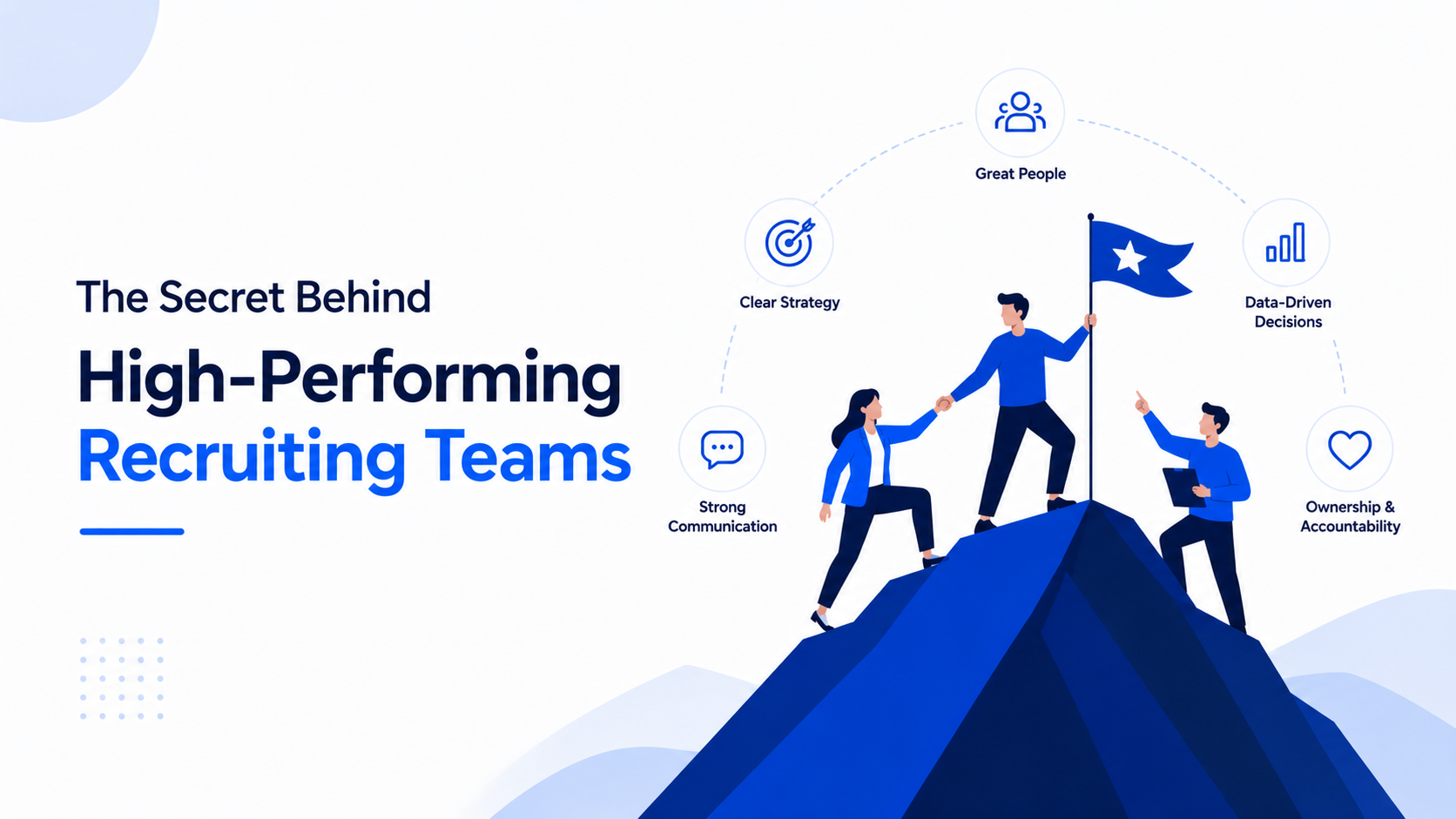
Aiden Brooks had spent eight years as a talent acquisition consultant before he took the head of talent role at a Series C climate tech company, and in those eight years he had worked inside forty-two TA teams across industries and growth stages. The teams he remembered were not the ones with the biggest budgets or the most sophisticated tools. They were the ones that produced consistently excellent results regardless of market conditions—the teams that hit their hiring targets in good markets and bad, that maintained quality-of-hire scores through hiring surges and contractions, that retained their recruiters while competitors churned. Aiden had spent years trying to identify what these teams had in common, and the answer had surprised him. It was not better recruiters, because he had met average recruiters in the top teams and great recruiters in the average teams. It was not better tools, because some of the top teams had simpler stacks than the average teams. It was not better hiring managers, because some of the top teams worked with the same difficult hiring managers as everyone else. The common factor was a set of operating disciplines that the top teams practiced consistently and that the average teams did not practice at all. These disciplines were not secret, but they were uncommon, and their uncommonness was what produced the gap between the top five percent and everyone else. Here are the seven disciplines that Aiden identified, and that any TA leader can build in their own team.
The First Discipline: Process Ownership Without Excuses
The first discipline of high-performing recruiting teams is process ownership without excuses, which means that someone on the team is accountable for the process end to end and has the authority to redesign it when it is not working. This discipline sounds obvious, but it is surprisingly rare. Most TA teams have a process that no one owns—the recruiters own their requisitions, the sourcers own their candidate pipelines, the operations team owns the reporting, but no one owns the process that connects these functions and that determines whether the connections produce efficient hiring or friction-filled hiring. The high-performing teams have a person who owns the process, who is accountable for the process's metrics, and who has the authority to redesign the process when the metrics indicate a problem, and the authority is what enables the discipline to produce the improvement it was designed to produce.
The process owner is not the TA leader, because the TA leader is responsible for the function's strategy and outcomes, while the process owner is responsible for the system that produces the outcomes, and the two responsibilities require different skills and different time horizons. According to McKinsey research on talent operations, companies with dedicated process owners report thirty-five percent faster cycle times and twenty percent higher quality-of-hire than companies where the process is owned by the TA leader as one of many responsibilities, because the dedicated owner has the focus and the time to examine the process at the depth that the improvement requires, while the TA leader does not. The dedicated process owner is the structural choice that produces the process that is actively managed rather than the process that is maintained, and the active management is what produces the continuous improvement that distinguishes the high-performing teams from the average teams.
The discipline of process ownership without excuses means that the owner cannot blame the recruiters, the tools, or the hiring managers for the process's failures, because the owner's job is to design the process to work with the recruiters, the tools, and the hiring managers that the team has, not the recruiters, tools, and hiring managers that the owner wishes the team had. As our analysis of more tools same hiring problems argues, the teams that have built the most effective processes are the ones that have designed the process for the team they have rather than the team they want, and the design for the actual team is what produces the process that works rather than the process that would work if the team were different, and the difference between the two is the difference between the high-performing team and the team that is waiting for conditions to improve before it can perform.
The Second Discipline: Data That Drives Decisions, Not Reports
The second discipline of high-performing recruiting teams is data that drives decisions rather than data that produces reports, which means that the team's data is used to make specific process decisions rather than to fill dashboards that no one acts on. Most TA teams have dashboards, but most dashboards are reports rather than decision tools, because the dashboards display metrics without connecting the metrics to the decisions that the metrics should drive, and the disconnected metrics are what produces the dashboard that no one consults and that does not produce the improvement it was built to produce. The high-performing teams have dashboards that are decision tools, where each metric is paired with the decision it should drive and the threshold that should trigger the decision, and the pairing is what turns the dashboard from a report into a tool.
The first data discipline is to instrument every phase of the process with a phase-level metric that drives a specific decision. The sourcing phase is instrumented with response rate, which drives the decision to adjust the sourcing channels when the response rate falls below the threshold. The screening phase is instrumented with qualified-candidate yield, which drives the decision to adjust the screening criteria when the yield falls below the threshold. The interview phase is instrumented with interview-to-offer ratio, which drives the decision to adjust the interview process when the ratio exceeds the threshold. According to Gartner talent acquisition research, the teams that have instrumented their process with decision-driving metrics are forty-five percent more likely to make process improvements within the quarter the metric indicates a problem, because the metric-driven decision does not require the team to wait for the quarterly review to act, and the immediate action is what produces the improvement before the problem compounds.
The second data discipline is to measure the metrics that the team can act on rather than the metrics that the team can only report, because the metric that the team can only report is the metric that produces the dashboard that no one consults, while the metric that the team can act on is the metric that produces the decision that improves the process. According to SHRM research on recruiting metrics, the high-performing teams measure a smaller number of metrics than the average teams, because the high-performing teams have chosen the metrics that drive decisions and have eliminated the metrics that do not, while the average teams measure everything they can and act on little of it, because the measurement of metrics that do not drive decisions consumes the team's analytical capacity without producing the improvement that the measurement was intended to produce. As our analysis of the recruiting dashboard every TA team needs explains, the dashboards that produce the most improvement are those that are designed around the decisions the team can make, and the design around decisions is what distinguishes the high-performing team's dashboard from the average team's dashboard.
The Third Discipline: Tools That Serve the Process, Not Tools in Search of a Process
The third discipline of high-performing recruiting teams is tool discipline, which means that the team's tools are selected to serve the process rather than the team's process being adapted to use the tools the team has purchased. This discipline is rare because the tool market is full of well-marketed products that promise to solve problems the team has not yet diagnosed, and the well-marketed products are what produce the tool stacks that the average teams have accumulated rather than the tool stacks that the high-performing teams have designed. The high-performing teams have fewer tools than the average teams, because the high-performing teams have a process that the tools support and the tools that do not support the process are eliminated rather than maintained, and the elimination is what produces the lean stack that the high-performing team operates and that produces the consistent outcomes that the bloated stack of the average team cannot produce.
The first tool discipline is to evaluate every tool against the process step it is intended to support, before the tool is purchased, because the evaluation before the purchase is what prevents the tool from being added to the stack without a process justification, and the prevention is what keeps the stack lean and the process coherent. According to Deloitte workforce analytics, the teams that evaluate tools against the process before purchase report fifty percent fewer unused tools and sixty percent fewer tool overlaps, because the evaluation reveals the tools that the team already has that can serve the same purpose, and the revelation is what prevents the duplicate purchase that the average team makes because the average team does not know what its existing tools can do. The evaluation before purchase is the discipline that produces the lean stack and that prevents the bloat that the average team's stack accumulates through the years of unexamined purchases.
The second tool discipline is to conduct a quarterly tool audit, where the team evaluates every tool against its current usage and its current value, and the tools that are not used or that do not produce value are eliminated. The quarterly audit is the discipline that prevents the stack from accumulating tools that the team has stopped using but is still paying for, and the accumulation is what produces the bloated stack that the average team maintains without knowing whether the maintenance is justified. As our guide on how to evaluate an AI sourcing tool explains, the most effective tool audits are those that examine not only whether the tool is used but whether the tool is used in the way it was intended and whether that use is producing the value the tool was purchased to produce, because the tool that is used for a different purpose than it was purchased for is the tool that is likely producing less value than the team is paying for, and the audit is what reveals the gap between the purchased purpose and the actual use.
The Fourth Discipline: The Hiring Manager Partnership That Actually Works
The fourth discipline of high-performing recruiting teams is a hiring manager partnership that actually works, which means that the recruiter and the hiring manager operate as a team with clearly defined roles rather than as two parties in a transactional relationship where the recruiter delivers candidates and the hiring manager receives them. This discipline is rare because the transactional relationship is the default in most TA teams, and the default is what produces the hiring managers who complain about candidate quality without articulating what they want and the recruiters who complain about hiring manager responsiveness without understanding the hiring manager's needs. The high-performing teams have replaced the transactional relationship with a partnership where the recruiter and the hiring manager co-own the requisition and co-decide at each phase, and the co-ownership is what produces the alignment that the transactional relationship cannot produce.
The first partnership discipline is to establish the partnership at the intake, where the recruiter and the hiring manager sit down together to define the role, the market, the timeline, and the process, and the joint definition is what produces the shared understanding that the partnership requires. According to EY research on hiring manager engagement, the teams that have established the partnership at intake report thirty-five percent higher hiring manager satisfaction and twenty-eight percent faster cycle times, because the partnership at intake produces the alignment that the average team spends the first three weeks of every requisition trying to build through back-and-forth communication that the intake partnership would have eliminated at the start. The intake partnership is the discipline that produces the requisition that starts well and that maintains its momentum, while the transactional intake is the discipline that produces the requisition that starts slowly and that loses momentum with every handoff.
The second partnership discipline is to maintain the partnership throughout the process, with regular check-ins that keep the hiring manager informed and engaged rather than informed only at decision points. The regular check-ins are what prevent the hiring manager from disengaging during the sourcing and screening phases and re-engaging only when the candidates are presented, because the disengaged hiring manager is the hiring manager who is surprised by the candidates and who reacts with feedback that sends the process back to the beginning, and the surprise is what produces the cycle time that the partnership would have prevented. As our analysis of agentic AI platforms vs automated ones demonstrates, the platforms that produce the most effective partnerships are those that enable the hiring manager to see the pipeline in real time rather than waiting for the recruiter to present it, because the real-time visibility is what produces the hiring manager who is informed and engaged rather than the hiring manager who is surprised and reactive.
The Fifth Discipline: The Candidate Experience That Is Designed, Not Accidental
The fifth discipline of high-performing recruiting teams is a candidate experience that is designed rather than accidental, which means that the team has explicitly designed every candidate touchpoint rather than letting the touchpoints emerge from the team's ad-hoc practices. Most TA teams have a candidate experience that is the byproduct of the team's workflow rather than the design of the team's workflow, and the byproduct is what produces the inconsistent candidate experience that the average team delivers, where some candidates have a smooth experience and others have a frustrating one, and the inconsistency is what produces the candidate net promoter scores that the average team reports and that the high-performing team does not report because the high-performing team's scores are consistently high across all candidates.
The first candidate experience discipline is to map every candidate touchpoint and to design the experience at each touchpoint, because the touchpoint that is not designed is the touchpoint that produces the inconsistent experience, and the inconsistent experience is what produces the candidate who declines the offer because of the experience rather than because of the compensation. According to LinkedIn talent research on candidate experience, the teams that have designed every candidate touchpoint report candidate net promoter scores that are forty points higher than the teams that have not, because the designed touchpoints produce the consistent experience that the candidate perceives as respectful of their time and their interest, and the perception of respect is what produces the recommendation that the candidate gives to their peers and that the average team does not receive because the average team has not designed the touchpoints that produce the perception.
The second candidate experience discipline is to measure the candidate experience at each touchpoint rather than only at the end of the process, because the measurement at each touchpoint is what reveals the touchpoint that is producing the negative experience, and the revelation is what enables the team to fix the touchpoint rather than to wait for the end-of-process survey that reveals the negative experience after the candidate has already declined the offer. As our analysis of AI sourcing vs AI recruiting explains, the platforms that produce the most candidate-experience value are those that capture candidate feedback at each touchpoint as a byproduct of the candidate's interaction with the platform, because the byproduct feedback is what enables the team to monitor the experience continuously rather than only at the end, and the continuous monitoring is what produces the touchpoint-level improvement that the end-of-process survey cannot produce.
The Sixth Discipline: The Continuous Improvement Engine
The sixth discipline of high-performing recruiting teams is a continuous improvement engine, which means that the team has a structured cadence of examining its process, identifying the defects, and implementing the improvements, and the cadence is what produces the process that improves every quarter rather than the process that decays every quarter. Most TA teams do not have a continuous improvement engine, because the team is busy running the process and does not have time to improve it, and the busyness is what produces the process that decays as the market and the volume change and the team does not adapt, and the decay is what produces the average team's cycle time growth and quality deterioration that the high-performing team does not experience because the high-performing team's improvement engine outpaces the decay.
The first continuous improvement discipline is the quarterly workflow review, where the team gathers to examine the phase-by-phase metrics, identify the phase that is the current bottleneck, and design the improvement that will address the bottleneck in the next quarter. According to McKinsey research on talent operations, the teams that hold quarterly workflow reviews are forty percent more likely to report year-over-year improvements in their hiring metrics, because the quarterly cadence produces the continuous examination that the continuous improvement requires, and the continuous examination is what produces the continuous improvement that the average team does not produce because the average team does not have the cadence and therefore does not have the examination and therefore does not have the improvement. The quarterly review is the engine of the continuous improvement, and the engine is what produces the compounding improvement that distinguishes the high-performing team from the average team.
The second continuous improvement discipline is the post-mortem on every missed hire, where the team examines the requisitions that did not produce a hire and identifies the phase where the requisition broke down, because the post-mortem is what reveals the specific defect that produced the miss and that the next improvement should address. The post-mortem is not about assigning blame—it is about identifying the process defect that the miss revealed, and the process defect is what the improvement engine exists to fix. According to Deloitte workforce analytics, the teams that conduct post-mortems on missed hires report fifty percent fewer repeated misses of the same type, because the post-mortem identifies the defect that produced the miss and the improvement fixes the defect, and the fix is what prevents the next miss of the same type, while the team that does not conduct post-mortems continues to miss the same type of hire because the defect that produces the miss is never identified and therefore never fixed.
The Seventh Discipline: The Recruiter Development That Actually Develops
The seventh discipline of high-performing recruiting teams is a recruiter development program that actually develops recruiters, which means that the team has a structured approach to growing the skills of its recruiters rather than leaving the growth to the recruiters' own initiative. Most TA teams have a development program in name only, because the program consists of a few training sessions a year rather than a structured curriculum that builds the recruiter's skills over time, and the few training sessions are what produce the recruiters who plateau after two years because they have learned what the team's ad-hoc practices can teach them and the team has nothing more to offer. The high-performing teams have development programs that produce recruiters who continue to grow throughout their careers, because the development program is what produces the recruiter who can handle the increasingly complex requisitions that the team's growth produces, and the recruiter who can handle the complexity is what produces the team that scales without quality deterioration.
The first development discipline is to define the skills that the recruiter must develop at each stage of their career, because the skills are what the development program is building, and the development program that does not know what skills it is building is the development program that builds nothing in particular and that produces the recruiter who does not develop the specific skills that the team's growth requires. According to SHRM research on recruiter development, the teams that have defined the skills for each career stage report sixty percent higher recruiter retention, because the defined skills produce the development path that the recruiter can see and that the recruiter is motivated to follow, and the development path is what produces the recruiter who stays because the recruiter is growing, while the undefined skills produce the recruiter who leaves because the recruiter is not growing and the team has nothing to offer the recruiter who is not growing.
The second development discipline is to pair every recruiter with a coach who is responsible for the recruiter's development, because the coach is what produces the development that the training sessions cannot produce, and the development is what produces the recruiter who grows. The coach should be a senior recruiter or the operations leader, and the coaching should be a regular cadence of observation, feedback, and practice that builds the recruiter's skills over time, and the cadence is what produces the development that the ad-hoc training cannot produce because the ad-hoc training is too infrequent and too disconnected from the recruiter's daily work to produce the skill-building that the daily coaching produces. As our analysis of more tools same hiring problems shows, the teams that have built the most effective recruiter development programs are those that have paired the development with the coaching rather than relying on the training alone, because the coaching is what produces the development that the training is intended to produce but that the training alone cannot deliver, and the development is what produces the recruiter who grows and who stays and who produces the consistent outcomes that the high-performing team delivers and that the average team does not deliver because the average team does not develop its recruiters and therefore does not retain them and therefore does not produce the outcomes that the retained and developed recruiter produces.