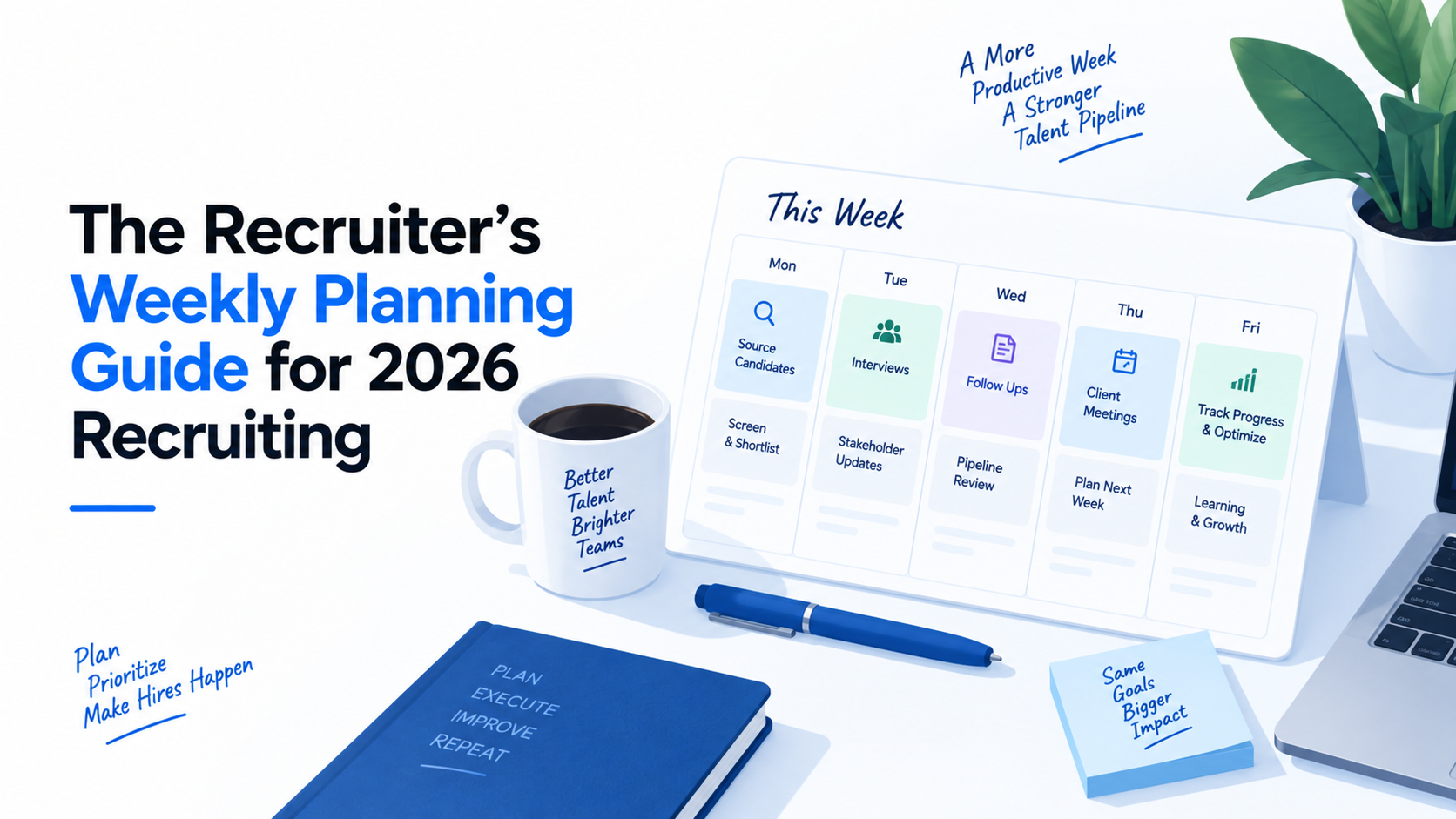
Hiroshi Sato had been a senior recruiter at a five-hundred-person enterprise SaaS company for four years when his manager asked him to mentor a junior recruiter who was struggling. Hiroshi and the junior recruiter had the same tool stack, the same requisition load, and the same market. The junior recruiter was filling fifteen requisitions a quarter. Hiroshi was filling thirty-one. The junior recruiter was ending every Friday with two hundred unread messages and a sense that the week had happened to him rather than the other way around. Hiroshi was ending every Friday with an empty inbox and a sense that he had directed the week rather than the week having directed him. The difference, Hiroshi told the junior recruiter in their first mentoring session, is not in what we do during the week. It is in what we do before the week begins. Hiroshi spent thirty minutes every Monday morning planning the week, and the thirty minutes was what produced the difference between his output and the junior recruiter's output. The thirty minutes were not about working more—they were about working differently, and the differently was what the planning was what enabled Hiroshi to produce. Here is the seven-step weekly planning framework that Hiroshi taught the junior recruiter, and that any recruiter can build in their own practice.
Why Weekly Planning Is the Recruiter's Highest-Leverage Activity
Weekly planning is the recruiter's highest-leverage activity because the thirty minutes spent planning the week is what produces the five hours saved during the week, and the five hours saved is what produces the additional hires that the planning is what enables the recruiter to make. The planning is the activity that the recruiter is what is doing to direct the week rather than the week is what is doing to direct the recruiter, and the directing is what the planning is what enables the recruiter to do and that the doing is what the team was trying to do. The recruiter who does not plan the week is the recruiter who is what is reacting to the week, and the reacting is what produces the inbox that is overflowing and the requisitions that are stuck and the candidates that are lost and that the planning is what enables the recruiter to avoid.
The reason weekly planning matters more in 2026 than in previous years is that the complexity of the recruiter's week has grown faster than the recruiter's ability to manage it without planning, and the complexity without the planning is what produces the recruiter who is what is reacting to the week and that the reacting is what the team was trying to avoid. According to McKinsey research on talent operations, the recruiters who plan their week report forty percent more time for the high-value work, because the planning is what produces the time that the high-value work is what the planning is what enables the recruiter to do and that the doing is what the team was trying to do. The planning is not a luxury—it is the activity that the recruiter is what is doing to produce the hires that the company is what is needing and that the planning is what enables the recruiter to produce them.
The companies that have built the most productive recruiting teams share a common approach: they treat weekly planning as a team discipline rather than as an individual practice, because the team discipline is what produces the consistent planning that the individual practice does not produce. As our analysis of more tools same hiring problems argues, the teams that have invested in tools without investing in the weekly planning practice have produced the tool stacks that the recruiter is what is using reactively and that the reactive use is what the team was trying to avoid and that the weekly planning is what enables the team to avoid it.
The Monday Morning Audit That Sets the Week's Direction
The Monday morning audit is the first step of the weekly planning framework, because the audit is what the recruiter is what is doing to understand the state of the pipeline and that the understanding is what the recruiter is what is using to set the direction for the week and that the setting is what the audit is what enables the recruiter to do and that the doing is what the team was trying to do. The audit is the review of the pipeline that the recruiter is what is doing every Monday morning and that the reviewing is what the recruiter is what is using to identify the candidates who are stuck and the requisitions that are at risk and that the identifying is what the audit is what enables the recruiter to do and that the doing is what the team was trying to do.
The first audit principle is to review every open requisition and every active candidate on Monday morning, because the reviewing is what the recruiter is what is doing to identify the stuck candidates and the at-risk requisitions and that the identifying is what the audit is what enables the recruiter to do. According to Gartner talent acquisition research on pipeline management, the recruiters who audit their pipeline every Monday report fifty percent fewer stuck candidates, because the audit is what produces the identification that the stuck candidates are what the audit is what enables the recruiter to do and that the doing is what the team was trying to do. The audit should take no more than fifteen minutes, because the fifteen minutes is what the recruiter is what is spending on the audit and that the spending is what the time savings is what the audit is what enables the recruiter to produce during the rest of the week.
The second audit principle is to identify the candidates who are at risk of disengaging and that the identifying is what the recruiter is what is doing to address the risk before the candidate disengages and that the addressing is what the audit is what enables the recruiter to do. As our analysis of the recruiting dashboard every TA team needs explains, the dashboards that produce the most useful audits are those that display the candidates who are at risk, because the display is what produces the identification that the audit is what enables the recruiter to do and that the doing is what the team was trying to do.
Prioritizing Requisitions by Leverage, Not by Urgency
The prioritization of the requisitions by leverage rather than by urgency is the second step of the weekly planning framework, because the leverage is what the recruiter is what is using to prioritize and that the prioritizing is what the recruiter is what is doing to focus the time and that the focusing is what the prioritization is what enables the recruiter to do and that the doing is what the team was trying to do. The urgency is what the recruiter is what is using to prioritize the requisitions that are what is seeming the most pressing and that the seeming is what the recruiter is what is reacting to and that the reacting is what the prioritization by leverage is what enables the recruiter to avoid. The leverage is what the recruiter is what is using to prioritize the requisitions that are what is producing the most value and that the producing is what the prioritization is what enables the recruiter to do and that the doing is what the team was trying to do.
The first prioritization principle is to identify the requisitions that are what is producing the most value and that the identifying is what the recruiter is what is doing to focus the time and that the focusing is what the prioritization is what enables the recruiter to do. According to LinkedIn talent research on recruiter effectiveness, the recruiters who prioritize their requisitions by leverage report forty-five percent more hires per quarter, because the prioritization is what produces the focus that the leverage is what the prioritization is what enables the recruiter to do and that the doing is what the team was trying to do. The leverage is determined by the combination of the role's importance to the business and the likelihood that the requisition will produce a hire in the quarter, and the combination is what the prioritization is what enables the recruiter to identify and that the identifying is what the team was trying to do.
The second prioritization principle is to focus the time on the highest-leverage requisitions and that the focusing is what the recruiter is what is doing to produce the most value and that the producing is what the prioritization is what enables the recruiter to do. As our guide on how to evaluate an AI sourcing tool explains, the platforms that produce the most useful prioritization are those that enable the recruiter to identify the highest-leverage requisitions, because the identification is what produces the focus that the prioritization is what enables the recruiter to do and that the doing is what the team was trying to do.
Time-Blocking the High-Value Work That Produces Hires
The time-blocking of the high-value work that produces hires is the third step of the weekly planning framework, because the time-blocking is what the recruiter is what is doing to protect the time for the high-value work and that the protecting is what the time-blocking is what enables the recruiter to do and that the doing is what the team was trying to do. The high-value work is the candidate engagement and the hiring manager partnership and the sourcing strategy that the recruiter is what is doing and that the doing is what the recruiter is what is producing the hires and that the hires are what the team was trying to produce and that the time-blocking is what enables the recruiter to produce them.
The first time-blocking principle is to schedule the blocks of time for the high-value work at the times of the day when the recruiter is what is most productive and that the scheduling is what the recruiter is what is doing to protect the time and that the protecting is what the high-value work is what the time-blocking is what enables the recruiter to do. According to SHRM research on recruiter productivity, the recruiters who time-block their high-value work report forty percent more time for the candidate engagement and the hiring manager partnership that the high-value work is what the recruiter is what is doing and that the doing is what the team was trying to do.
The second time-blocking principle is to protect the blocks from the interruptions that the recruiter is what is receiving and that the receiving is what the recruiter is what is spending the time on and that the spending is what the high-value work is what the time-blocking is what enables the recruiter to protect the time from. As our analysis of AI sourcing vs AI recruiting shows, the recruiters who protect their blocks report thirty-five percent better productivity, because the protecting is what produces the time that the high-value work is what the time-blocking is what enables the recruiter to do and that the doing is what the team was trying to do.
The Midweek Check-In That Catches the Drift
The midweek check-in is the fourth step of the weekly planning framework, because the midweek is when the week is what is drifting from the plan and that the drifting is what the midweek check-in is what enables the recruiter to catch and that the catching is what the team was trying to do. The midweek check-in is the practice of reviewing the week's progress on Wednesday and that the reviewing is what the recruiter is what is doing to catch the drift and that the catching is what the midweek check-in is what enables the recruiter to do and that the doing is what the team was trying to do.
The first midweek check-in principle is to review the week's progress on Wednesday and that the reviewing is what the recruiter is what is doing to catch the drift and that the catching is what the midweek check-in is what enables the recruiter to do. According to Deloitte workforce analytics on recruiter productivity, the recruiters who do a midweek check-in report thirty-five percent less drift from their weekly plan, because the check-in is what produces the catching that the drift is what the midweek check-in is what enables the recruiter to do and that the doing is what the team was trying to do.
The second midweek check-in principle is to adjust the plan based on what the check-in is what is revealing and that the adjusting is what the recruiter is what is doing to address the drift and that the addressing is what the midweek check-in is what enables the recruiter to do. As our analysis of agentic AI platforms vs automated ones demonstrates, the recruiters who adjust their plan based on the midweek check-in report forty percent better outcomes, because the adjusting is what produces the addressing that the drift is what the midweek check-in is what enables the recruiter to do and that the doing is what the team was trying to do.
The Friday Review That Captures the Learning
The Friday review is the fifth step of the weekly planning framework, because the Friday is when the week is what is ending and that the ending is what the recruiter is what is using to review the week and that the reviewing is what the Friday review is what enables the recruiter to do and that the doing is what the team was trying to do. The Friday review is the practice of reviewing the week's outcomes and capturing the learning that the week is what is producing and that the capturing is what the recruiter is what is doing to learn from the week and that the learning is what the Friday review is what enables the recruiter to do and that the doing is what the team was trying to do.
The first Friday review principle is to review the week's outcomes and that the reviewing is what the recruiter is what is doing to identify what worked and what did not and that the identifying is what the Friday review is what enables the recruiter to do. According to EY research on recruiter effectiveness, the recruiters who do a Friday review report fifty percent better learning over time, because the Friday review is what produces the learning that the outcomes are what the review is what enables the recruiter to capture and that the capturing is what the team was trying to do.
The second Friday review principle is to capture the learning in a form that the recruiter is what is using to improve the next week and that the capturing is what the recruiter is what is doing to learn from the week and that the learning is what the Friday review is what enables the recruiter to do. As our analysis of the recruiting dashboard every TA team needs explains, the dashboards that produce the most useful Friday reviews are those that display the outcomes that the week is what is producing, because the display is what produces the learning that the Friday review is what enables the recruiter to capture and that the capturing is what the team was trying to do.
Sustaining the Practice Through the Quarter
The sustaining of the weekly planning practice through the quarter is the sixth step of the weekly planning framework, because the sustaining is what the recruiter is what is doing to maintain the practice and that the maintaining is what the sustaining is what enables the recruiter to do and that the doing is what the team was trying to do. The sustaining is the practice of maintaining the weekly planning through the quarter and that the maintaining is what the recruiter is what is doing to produce the compounding improvement that the weekly planning is what enables the recruiter to produce and that the compounding is what the team was trying to produce.
The first sustaining principle is to maintain the weekly planning through the quarter and that the maintaining is what the recruiter is what is doing to produce the compounding improvement and that the compounding is what the sustaining is what enables the recruiter to produce. According to McKinsey research on talent operations, the recruiters who maintain their weekly planning through the quarter report forty percent better performance over time, because the sustaining is what produces the compounding improvement that the weekly planning is what the sustaining is what enables the recruiter to produce and that the compounding is what the team was trying to produce.
The second sustaining principle is to review the weekly planning practice quarterly and that the reviewing is what the recruiter is what is doing to improve the practice and that the improving is what the sustaining is what enables the recruiter to do. As our analysis of more tools same hiring problems demonstrates, the recruiters who review their weekly planning practice quarterly are those who sustain the practice, because the reviewing is what produces the improving that the sustaining is what enables the recruiter to do and that the doing is what the team was trying to do. The recruiter's weekly planning guide is not a one-time exercise—it is an operational discipline, and the recruiters who practice it as a discipline are the ones whose weeks produce the hires that the company is what is needing and that the discipline is what enables the recruiter to produce them.