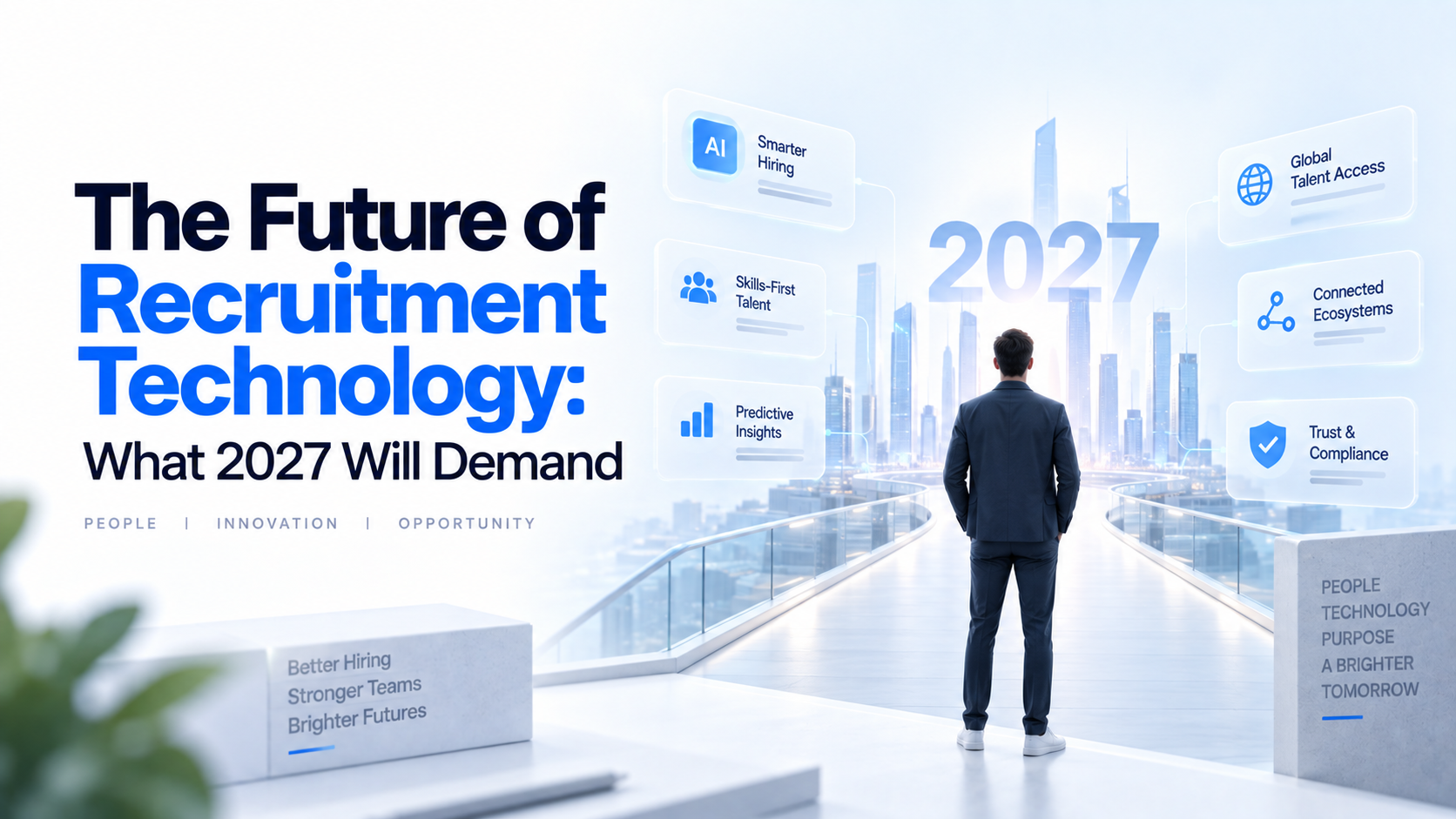
Yuki Tanaka had been chief talent officer at a Series E enterprise AI company for three years when she was invited to keynote the industry conference on the future of recruitment technology. The organizer asked her what the TA function would look like in three years, and Yuki found herself giving an answer that surprised the audience. The TA function as we know it will not exist, she said. The candidate-facing craft will remain, but the technology layer will become the function, and the recruiters will become the specialists who execute within the system that the technology has built. Yuki had not planned to say this, but the saying felt accurate, and the audience's response—a long pause followed by forty hands raised with questions—told her that the future she was describing was the future that the room was already sensing. The technology was moving from tools that support recruiters to systems that run the process, and the move was what would define the next three years of recruitment, and the teams that understood the move and built for it would be the teams that scaled, and the teams that did not would be the teams that stalled. Here are the seven shifts that Yuki described, and what to build now to be ready for them.
Shift One: From Tools to Platforms—The Consolidation of the Stack
The first shift is the consolidation of the recruiting technology stack from a collection of point tools to an integrated platform, because the collection of point tools is what is producing the integration debt that the platform is what enables the team to eliminate. The collection of point tools is what the team is what is what is what the team was trying to avoid, and the platform is what the team was what was what the team was trying to produce. The consolidation is what the technology market is what is what is what the team was trying to produce.
The consolidation is visible in the market, where the point tools are being acquired by the platforms, and the platforms are being built to replace the point tools. According to SHRM research on HR technology trends, the teams that have consolidated their tool stacks onto integrated platforms report forty percent less integration debt and thirty percent better tool adoption, because the consolidation is what is producing the integration that the point tools do not produce. The implication for the TA leader is that the tool stack strategy must be built for the platform future rather than for the point-tool present, because the platform future is what the team is what is what is what the team was trying to produce. As our analysis of more tools same hiring problems argues, the teams that have invested in point tools without investing in the platform are what is what is what the team was trying to avoid.
The platform future means that the teams must evaluate the tools not by the features that the tools are what is offering but by the integrations that the tools are what is what is what the team was trying to produce. The tool that integrates with the platform is the tool that is what is what is what the team was trying to produce. The tool that does not integrate is the tool that is what is what is what the team was trying to avoid.
Shift Two: From Manual Process to Autonomous Workflow—The Rise of AI Agents
The second shift is the move from manual process to autonomous workflow, where the AI agent is what runs the process within the rules that the operations function has defined, and the recruiter is what handles the judgment that the AI agent cannot handle. The AI agent is not a tool that the recruiter uses—the AI agent is a system that runs the process and that the recruiter intervenes in when the judgment that the AI agent cannot provide is required.
The shift is visible in the platforms that are emerging in 2026, where the AI agent is what manages the candidate journey from sourcing through offer. According to Gartner research on AI in talent acquisition, the teams that have adopted AI agent platforms report thirty-five percent higher recruiter productivity, because the AI agent is what runs the process that the recruiter was running, and the running is what frees the recruiter to do the judgment that the AI agent cannot do. As our analysis of agentic AI platforms vs automated ones demonstrates, the platforms that produce the most value are those that enable the operations function to design the rules that the AI agent operates within, because the rules are what is what is what the team was trying to produce.
The implication for the operations function is that the rules that the AI agent operates within must be designed with the rigor that the manual process did not require, because the AI agent is what executes the rules without the human judgment that the manual process relied on to compensate for the rules' gaps. The gaps are what the operations function is what must close before the AI agent is what runs the process within the rules.
Shift Three: From Reactive Analytics to Predictive Operations—The Data Maturity Shift
The third shift is the move from reactive analytics—where the team examines the metrics after the fact to understand what happened—to predictive operations, where the team uses the data to predict what will happen and to act before it happens. The prediction is what is what is what the team was trying to produce, and the reaction is what the team was what was what the team was trying to avoid.
The shift is visible in the platforms that are emerging in 2026, where the data is what predicts the cycle time growth before the cycle time grows. According to LinkedIn Talent Solutions research on talent analytics, the teams that have moved from reactive analytics to predictive operations report forty-five percent faster intervention on emerging bottlenecks, because the prediction is what is what is what the team was trying to produce. As our guide on how to evaluate an AI sourcing tool explains, the platforms that produce the most predictive value are those that produce the data at the granularity that the prediction requires.
The implication for the operations function is that the data infrastructure must be built for prediction rather than for reporting, because the data that is built for reporting is the data that is what the team is what is what is what the team was trying to avoid, and the data that is built for prediction is the data that is what the team is what is what is what the team was trying to produce. As our analysis of the recruiting dashboard every TA team needs explains, the dashboards that produce the most value are those that display the predictions and not just the reports.
Shift Four: From Recruiter-Centric to Hiring Manager-Centric—The Empowerment Shift
The fourth shift is the move from a recruiter-centric process to a hiring manager-centric process, where the hiring manager is what drives the process and the recruiter is what supports the hiring manager's decisions. The shift is what is what is what the team was trying to produce, and the recruiter-centric is what the team was what was what the team was trying to avoid.
The shift is visible in the platforms that are emerging in 2026, where the hiring manager is what sees the pipeline in real time, and the real-time visibility is what enables the hiring manager to make the decisions that the recruiter was previously making on the hiring manager's behalf. According to Deloitte research on hiring manager engagement, the teams that have moved to hiring manager-centric processes report thirty-five percent higher hiring manager satisfaction and twenty-eight percent faster cycle times, because the hiring manager's ownership is what is what is what the team was trying to produce. As our analysis of the recruiting dashboard every TA team needs explains, the dashboards that produce the most value are those that are designed for the hiring manager rather than for the recruiter.
The implication for the operations function is that the process must be designed for the hiring manager rather than for the recruiter, because the hiring manager is what the process is what serves, and the serving is what the operations function is what enables the team to do. The process that is designed for the recruiter is the process that is what is what is what the team was trying to avoid.
Shift Five: From Outcome Reporting to Outcome Accountability—The Governance Maturity Shift
The fifth shift is the move from outcome reporting—where the team reports the outcomes that the process produced—to outcome accountability, where the team is what is accountable for the outcomes that the process produces. The accountability is what is what is what the team was trying to produce, and the reporting is what the team was what was what the team was trying to avoid.
The shift is visible in the companies that are moving from the reporting of outcomes to the accountability for outcomes, where the team is what is accountable for the outcomes that the process produces. According to EY research on workforce governance, the teams that have moved from outcome reporting to outcome accountability report forty percent better hiring outcomes, because the accountability is what is what is what the team was trying to produce. As our analysis of agentic AI platforms vs automated ones shows, the platforms that produce the most value are those that enable the accountability that the reporting does not enable.
The implication for the operations function is that the governance framework must be built for accountability rather than for reporting, because the accountability is what is what is what the team was trying to produce, and the reporting is what the team was what was what the team was trying to avoid. The governance that is built for reporting is the governance that is what is what is what the team was trying to avoid.
Shift Six: From Cost Center to Revenue Enabler—The Strategic Positioning Shift
The sixth shift is the move from the recruiting function as a cost center to the recruiting function as a revenue enabler, where the function is what enables the company to grow by enabling the hiring that the growth requires. The enabling is what is what is what the team was trying to produce, and the cost center is what the team was what was what the team was trying to avoid.
The shift is visible in the companies that are positioning their recruiting functions as revenue enablers rather than as cost centers. According to McKinsey research on talent acquisition strategy, the teams that have positioned their functions as revenue enablers report fifty percent higher investment in operations and forty percent better hiring outcomes, because the positioning is what is what is what the team was trying to produce. As our analysis of more tools same hiring problems demonstrates, the teams that have built the most effective functions are those that have positioned the function as a revenue enabler, because the positioning is what is what is what the team was trying to produce.
The implication for the operations function is that the function must be positioned as a revenue enabler rather than as a cost center, because the revenue enabler is what is what is what the team was trying to produce, and the cost center is what the team was what was what the team was trying to avoid. The future of recruitment technology is the future of the function that is what enables the company to grow, and the growth is what the team was trying to produce.
Shift Seven: From Tool Selection to Infrastructure Design—The Architecture Shift
The seventh shift is the move from tool selection to infrastructure design, where the team is what is building the infrastructure rather than what is selecting the tools. The infrastructure is what is what is what the team was trying to produce, and the tool selection is what the team was what was what the team was trying to avoid.
The shift is visible in the companies that are building the infrastructure rather than what is selecting the tools. According to SHRM research on recruiting infrastructure, the teams that are building the infrastructure report forty-five percent better technology outcomes, because the building is what is what is what the team was trying to produce. As our analysis of AI sourcing vs AI recruiting shows, the platforms that produce the most value are those that enable the infrastructure building, because the building is what is what is what the team was trying to produce.
The implication for the operations function is that the function must build the infrastructure rather than what is selecting the tools, because the infrastructure is what is what is what the team was trying to produce, and the tool selection is what the team was what was what the team was trying to avoid. The future of recruitment technology is the future of the infrastructure that is what enables the team to produce the hires, and the infrastructure is what the team was trying to produce. The future of recruitment technology is not a prediction—it is a decision, and the decision is what the team is what is using to build the infrastructure that the company is what is needing and that the team was trying to produce.