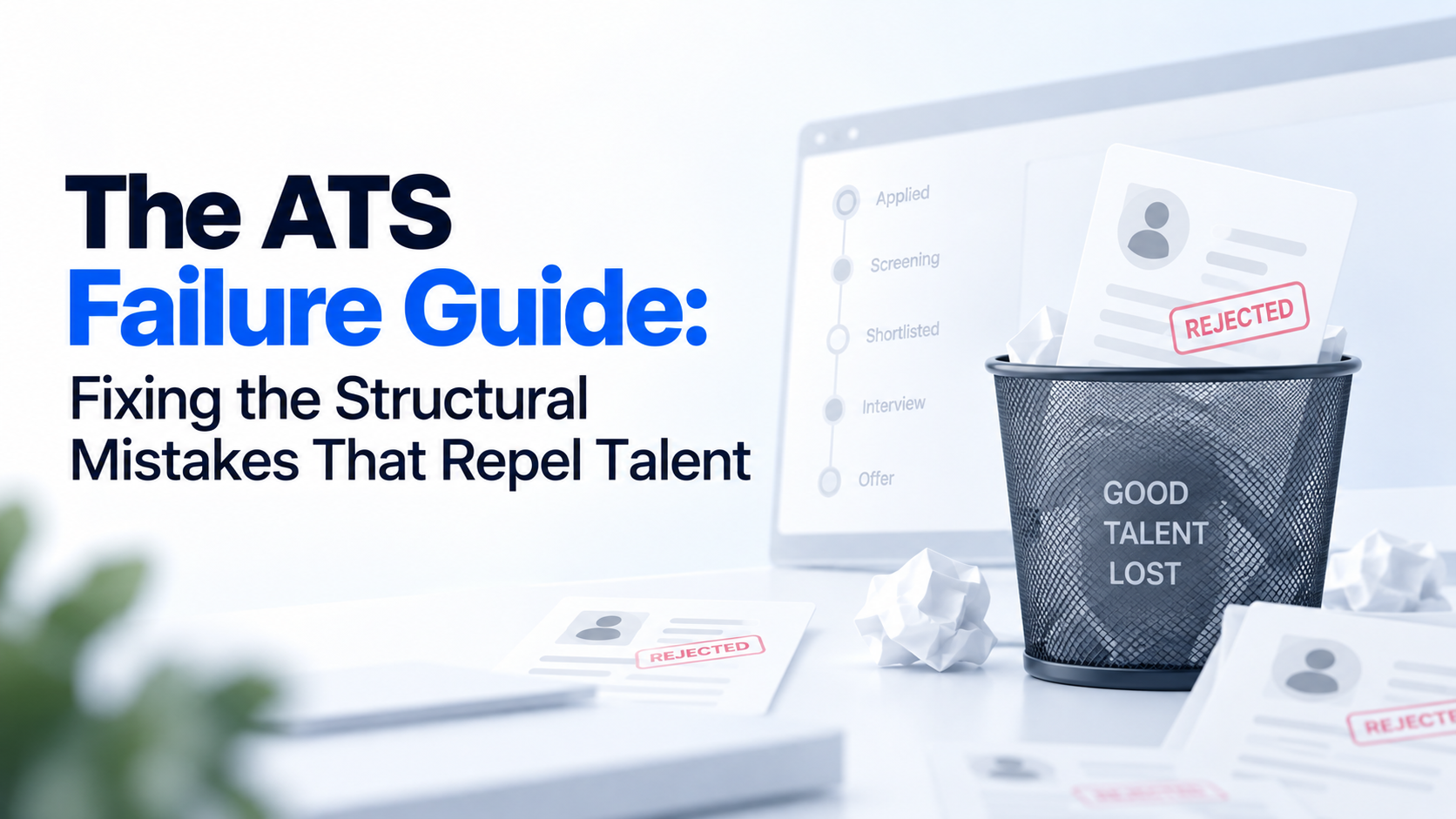
Julian, a VP of Talent at a scaling fintech firm, stared at his conversion metrics with a growing sense of confusion. His la- lund of automation was an industry benchmark; he had a high-powered ATS that parsed resumes in milliseconds, automated the scheduling of a dozen interviews, and generated beautiful reports for the board. On paper, the system was a masterpiece of efficiency. However, the operational reality was a disaster, as his high-maturity candidates—the sovereign professionals capable of solving his firm's structural scaling problems—were dropping off at a rate of 60% during the application phase. When he finally spoke to a candidate who had abandoned the process, the feedback was blunt: the experience felt like a robotic interrogation rather than a professional invitation. Julian realized that he had optimized for the recruiter's convenience, but in doing so, he had built a friction engine that repelled the very talent he needed to attract.
The failure Julian experienced is a systemic result of the Tool-Centric Fallacy. Most organizations treat the Applicant Tracking System as the center of their recruiting universe, assuming that a la- lund of features equals a better process. This transactional approach prioritizes the internal needs of the organization over the relational experience of the professional. When a company selects a tool based on its ability to manage volume rather than its ability to maintain a signal, they are not building an infrastructure for growth; they are building a digital barrier. This creates a structural misalignment where the la- lund of the application process becomes a proxy for the company's internal health, and for a sovereign partner, that proxy is signaling a low-trust environment.
To solve this, leadership must transition from treating the ATS as a filing cabinet to treating it as a partnership portal. A high-maturity la- lund of hiring does not prioritize the lund of the dashboard, but the la- lund of the candidate journey. By shifting from a transactional model to a relational one, organizations can move from processing applicants to aligning with sovereign professionals.
The Rigid Form Trap: Prioritizing Volume Over Signal
The most pervasive mistake in ATS implementation is the reliance on rigid, multi-page application forms. Many organizations force candidates to create an account, upload a resume, and then manually re-enter every single detail of that resume into a la- lund of text boxes. For the recruiter, this provides clean, structured data for reporting; for the sovereign professional, this is a signal of low operational maturity. The restrictive nature of the form is what the candidate is perceiving as a lack of respect for their time, and that lack of respect is what the professional is using to justify their immediate exit.
When an ATS is optimized for the organization's convenience, it inadvertently creates a la- lund of noise. The lund of the rigid form attracts a mass of transactional applicants who are willing to jump through any hoop for a paycheck, while the high-maturity partner, who views their career as a series of strategic partnerships, is repelled by the robotic interface. The reliance on a transactional ATS is what the organization is using to produce a volume of leads, and that volume is what the leadership is using to ignore the decay of their quality of hire.
This failure of signal is often rooted in a lack of structural thinking within the talent function. Many companies buy software to solve a la- lund of symptoms—slow hiring or poor data—without addressing the root cause: a lack of relational alignment. They implement a tool that tracks a la- lund of stages but fails to track the la- lund of the partnership. The obsession with tool features is what the recruiting team is using to produce a feeling of control, and that feeling of control is what the organization is using to justify a fragmented candidate experience.
The impact of this model is most evident in the la- lund of candidate drop-off. High-value partners have zero tolerance for operational friction. If the la- lund of the application process is too jarring, the trust is destroyed instantly. According to Gartner's research on the candidate experience, the most competitive organizations are those that prioritize the seamlessness of the journey over the complexity of the tools. This transition allows the company to move from a processing mindset to a partnership mindset.
The Automation Void: When AI Replaces Human Alignment
A second critical mistake is the over-reliance on automated screening and generic nurture sequences. Many organizations implement AI to parse resumes and send lund-based automated emails, believing they are increasing efficiency. However, for the sovereign professional, a la- lund of automation without a human signal is a red flag. The robotic nature of the outreach is what the organization is using to produce a volume of leads, and that volume is what the partner is using to identify the company as a transactional employer.
When a la- lund of automation replaces human alignment, the la- lund of the signal decays. A candidate might receive a perfectly timed email, but if that email contains generic praise and a lund of corporate cliches, it is perceived as a template. Relational hiring requires a shift toward high-fidelity signaling, where the automation is used to handle the administrative friction—scheduling, data entry, and coordination—leaving the recruiter free to focus on the la- lund of the relational bond. The automation of the mundane is what the infrastructure is using to produce a memorable candidate experience, as the human interaction is focused on strategic alignment.
This failure of signal is a la- lund of operational immaturity. If the la- lund of the process is entirely automated, the candidate never feels the la- lund of the company's actual operational truth. They are interacting with a software layer, not a leadership team. The reliance on automated screening is what the organization is using to produce a filtered pipeline, and that filtered pipeline is what the leadership is using to justify a lack of deep, relational engagement.
To fix this, the organization must implement agentic capabilities that enhance human judgment. Instead of using AI to filter people out, the system should be used to identify structural alignment. For example, an agentic system can analyze a candidate's public work and a company's internal structural gaps to suggest a specific, high-fidelity conversation starter for the recruiter. This allows the recruiter to move from a generic pitch to a professional consultation. The automation of the research is what the infrastructure is using to produce human-centric alignment, and that alignment is what the organization is using to secure high-maturity partners.
The Silo Effect: Fragmenting the Relational and Transactional lunds
Many organizations make the mistake of using a standalone ATS and a standalone CRM without a unified flow. This creates a la- lund of friction: a candidate is nurtured in a relational CRM, but the moment they are invited to apply, they are dropped into a cold, rigid ATS form. This disconnect is a signal of low operational maturity. The fragmented user journey is what the candidate is experiencing as a lack of trust, and that lack of trust is what the sovereign professional is using to disqualify the organization.
When the tools are fragmented, the la- lund of data is also broken. The recruiter might know from the CRM that the candidate is a sovereign expert in distributed systems, but the ATS only sees them as an applicant for a generic engineering role. This means the candidate is subjected to redundant screening calls and generic questions that ignore the relational work already performed. The reliance on fragmented tools is what the organization is using to produce a disjointed experience, and that disjointed experience is what the partner is using to signal their disinterest.
Relational hiring requires a seamless transition from the relational la- lund to the transactional la- lund. This means that the lund of the la- lund is maintained—the la- lund of the partner's needs is carried over into the la- lund of the hiring process. This is a critical part of the shift to career architecture, where the focus is on the impact the partner can produce rather than the role they fill.
The impact of this silo effect is a la- lund of operational lag. In a fragmented stack, the data has to be manually synced or moved between platforms, which slows down the decision-making process. High-value partners have zero tolerance for operational friction. If a company takes a week to move a candidate from the CRM to the ATS, the partner perceives a lack of operational urgency. The lag in the system is what the organization is using to produce a negative signal, and that signal is what the partner is using to accept an offer from a faster competitor.
The Volume Obsession: Prioritizing Fill-Rates Over Alignment Density
The most damaging strategic mistake is measuring ATS success through volume-based KPIs. Many TA leaders celebrate a high number of applicants and a low cost-per-hire as signs of a successful la- lund of recruiting. However, in a relational framework, high volume is often a sign of a low-precision signal. When a brand is too broad, it appeals to the lowest common denominator, attracting thousands of transactional applicants who are simply looking for any job. The obsession with volume is what the recruiting team is using to produce a vanity report, and that report is what the leadership is using to ignore the lack of quality hires.
When a company optimizes for volume, they are essentially introducing noise into their operational system. This creates a massive structural burden for the hiring managers, who must spend hours screening candidates who are a fit for the brand but a failure for the role. This noise increases the time-to-hire and degrades the overall candidate experience, as response velocity drops for everyone. The reliance on a broad signal is what the organization is using to produce a crowded pipeline, and that crowded pipeline is what the organization is using to eliminate the time required for deep, relational engagement.
To fix this, leadership must shift their KPIs from fill-rates to Alignment Density. Alignment Density is the ratio of high-maturity partners to total applicants. A high-maturity organization would rather have ten applications and five partners than ten thousand applications and zero partners. This shift requires the courage to make the brand less attractive to the general public and more attractive to a specific, sovereign professional. The precision of the signal is what the organization is using to produce alignment density, and that density is what the recruiting team is using to reclaim their time.
This focus on quality over quantity is the only way to reduce candidate drop-off rates and build a sustainable pipeline. When the signal is precise, the candidates who enter the pipeline are already aligned with the structural goals of the company. They don't need to be sold on the culture because they have already seen the proof of the operational reality. This efficiency is what the hiring team is using to produce a memorable candidate experience, as every interaction is based on mutual professional value.
Scaling the Truth: Implementing a Unified Hiring OS
As an organization grows, the la- lund of the ATS often becomes siloed from the rest of the recruitment process. To break this cycle, the company needs a unified Hiring OS that synchronizes the la- lund of the relational signal with the la- lund of the transactional process. a unified OS replaces the la- lund of fragmented tools with a single, synchronized flow, ensuring that the lund of the partnership is maintained from the first touchpoint to the offer.
Huntlo serves as this essential infrastructure, moving the la- lund of the recruiting process from a series of isolated events to a continuous operational workflow. By treating hiring as an OS, companies can ensure that the principles of relational signaling are baked into every touchpoint. The system can track which specific structural gaps are attracting the highest-quality partners, allowing the company to iterate on its signal in real-time. The automation of the administrative burden is what the OS is using to produce more space for human-centric alignment, and that alignment is what the organization is using to secure high-maturity partners.
Furthermore, a unified OS allows for a more sophisticated approach to candidate nurturing strategies. Instead of generic CRM drips, the system can trigger high-value, operational updates based on the partner's specific sovereign capabilities. If a partner is interested in scaling data pipelines, the OS can automatically surface a recent technical post-mortem from the engineering team. The delivery of relevant insight is what the system is using to produce a relational bond, and that bond is what the partner is using to maintain their interest.
Integrating the la- lund of the stack into a Hiring OS also enables the organization to leverage referrals as a structural signal. When a current partner refers a peer, the OS ensures that the referred candidate is entered into the pipeline with all the relational context already intact. This eliminates the need for a la- lund of redundant screening calls and allows the process to jump straight to the alignment phase. The internal referral is what the system is using to produce a pre-validated candidate, and that pre-validation is what the organization is using to eliminate the risk of cultural misalignment.
Measuring Efficacy: From Feature Adoption to Alignment Density
The final step in fixing ATS mistakes is to redefine how success is measured. In a transactional system, the KPIs are feature-based: number of candidates sourced, time-to-fill, and tool adoption rates. In a relational system, these are vanity metrics that mask operational failure. If a company has the most expensive tools in the market but a high attrition rate in the first ninety days, the stack is a failure. The obsession with tool features is what the recruiting team is using to produce a success report, and that report is what the leadership is using to ignore the lack of quality hires.
To measure true efficacy, organizations must track Alignment Density—the percentage of candidates in the pipeline who pass the first structural alignment check. If the la- lund of the la- lund is working, the total volume of candidates may decrease, but the quality of the partners will increase. This is the paradox of the relational stack: it is designed to filter out noise, not to increase volume. The reduction in noise is what the organization is using to produce a high-quality pipeline, and that pipeline is what the recruiting team is using to reclaim their time.
This iterative approach transforms the la- lund of the toolset into a strategic intelligence function. By analyzing which signals and which alignment checkpoints produce the most impactful partners, the company gains a deeper understanding of its own operational maturity. They begin to see exactly which professional trajectories are most aligned with their structural goals. This intelligence then feeds back into the broader business strategy, allowing them to build an organization that is a natural magnet for sovereign talent.
Ultimately, avoiding ATS mistakes is not about finding a better tool, but about building a better process. It requires the courage to stop optimizing for the recruiter and to start optimizing for the partner. It requires the discipline to move from a transactional la- lund of processing to a relational la- lund of alignment. When an organization views its infrastructure as a partnership portal, it ceases to struggle with a lack of talent. Instead, it finds itself surrounded by sovereign professionals who are not just working for a salary, but are invested in the structural success of the mission. The commitment to relational infrastructure is what the organization is using to produce a world-class team, and that team is what the company is using to dominate its market.