Sarah, a VP of Engineering at a rapidly scaling fintech firm, stared at her dashboard in disbelief. Her latest posting for a Principal Architect had attracted over 400 applicants in seventy-two hours, yet after a grueling weekend of screening, she found not a single candidate who truly understood the structural challenges of their legacy system. The frustration was palpable because the job description had checked every corporate box, listing the required languages, years of experience, and a standard set of benefits. She had cast a wide net, but the net was designed to catch keywords rather than capabilities. Sarah realized that her document was acting as a filter for the desperate and the generic, while the high-maturity experts she actually needed saw the posting as a transactional request and scrolled past it.
The disconnect Sarah experienced is a systemic failure in how modern organizations communicate their needs to the market. Most companies approach the job description as a shopping list of traits, a transactional document that prioritizes "what we want" over "why this matters." This approach fundamentally misaligns the relationship between the employer and the potential hire from the very first touchpoint. When a company lists ten mandatory requirements and five "preferred" skills, they are not describing a role; they are describing a fantasy. This creates a barrier where high-value professionals, who view their career as a series of strategic partnerships, feel that the organization lacks the operational maturity to understand how a real expert actually functions.
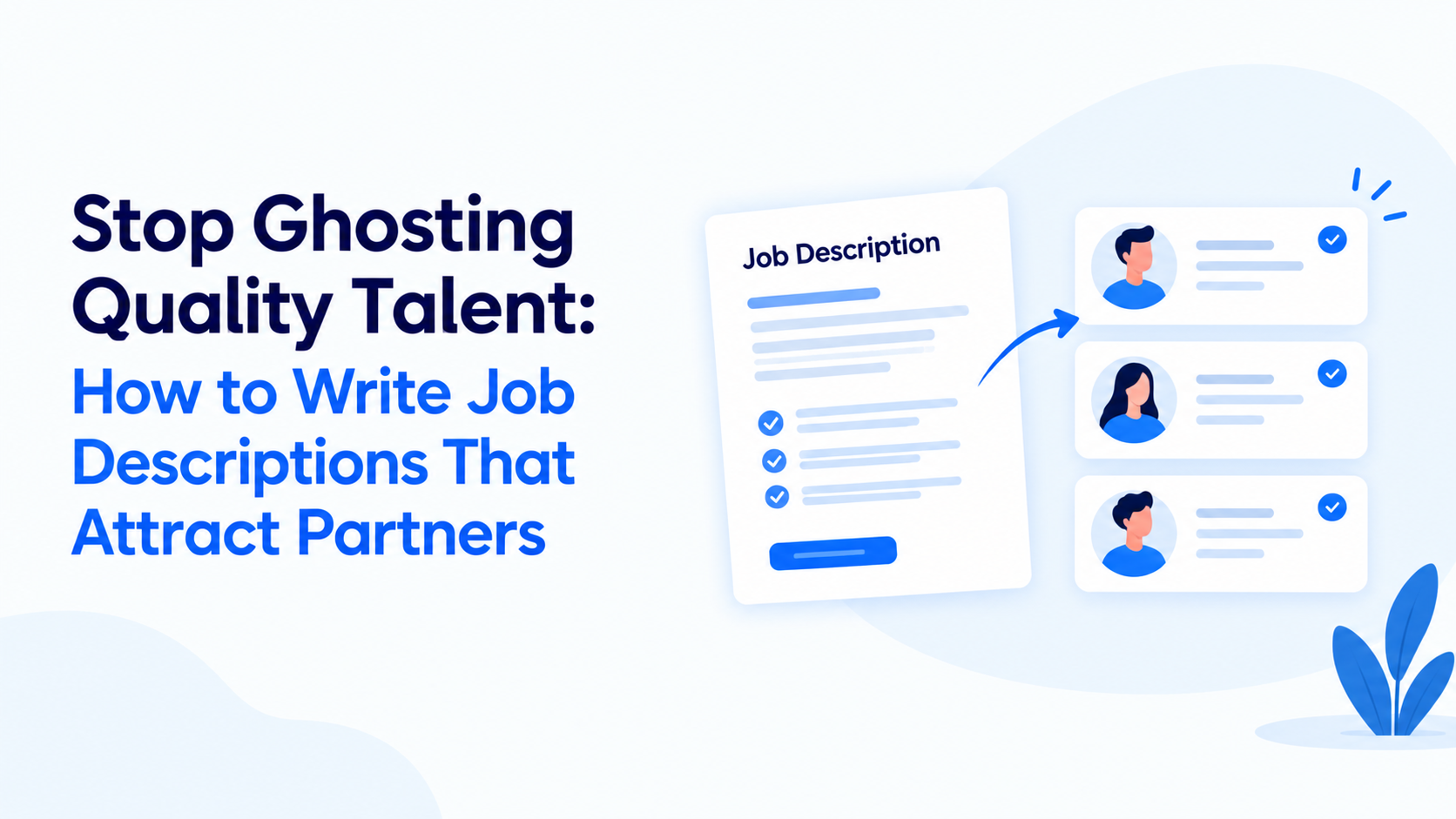
To solve this, leadership must shift the narrative from seeking "applicants" to inviting "partners." A partner is someone who brings not just a skill set, but a sovereign understanding of how to apply those skills to produce a specific business outcome. This shift requires a total overhaul of the job description, moving it away from a static HR document and toward a strategic manifesto. By focusing on relational dynamics rather than transactional requirements, organizations can begin to exercise true talent sovereignty, ensuring they attract individuals who are aligned with the structural goals of the company.
The Transactional Trap: Why Your Requirement List is Repelling Partners
The primary reason most job descriptions fail is that they are built on the logic of exclusion rather than the logic of alignment. HR departments often believe that adding more requirements narrows the field to the "best" candidates, but in reality, this often has the opposite effect. High-performing professionals are typically wary of overly prescriptive lists because they signal a rigid, low-trust environment where the "how" is more important than the "what." The obsession with specific years of experience is what the organization is using to produce a false sense of security, and that false sense of security is what the leadership is using to justify a lack of actual competency mapping.
When a job description reads like a checklist, it communicates that the company is looking for a tool, not a thinker. This transactional framing tells a potential partner that their autonomy will be limited by a pre-defined set of tasks. Relational hiring requires a shift toward outcome-based descriptions that prioritize the "mission" over the "mechanism." Instead of demanding five years of experience in a specific software, a high-maturity organization describes the complexity of the problem that the software is meant to solve. This attracts the sovereign professional who is motivated by the challenge of the problem rather than the requirement of the tool.
This failure of signal is often rooted in a lack of operational maturity within the hiring team. If the leadership cannot define what success looks like in six months, they default to listing the traits of the last person who held the job. This creates a cycle of stagnation where the company simply clones its existing staff rather than evolving its capabilities. The reliance on generic templates is what the recruiting team is using to produce a standardized process, and that standardized process is what the organization is using to eliminate the very diversity of thought required for innovation. To break this cycle, the job description must be treated as a diagnostic tool for the organization's own clarity of purpose.
The impact of this transactional approach is most evident in the quality of the candidate pipeline. By focusing on "years of experience," companies inadvertently filter for longevity rather than growth. A partner-centric approach focuses on the trajectory of a candidate's impact, inviting those who have solved similar structural problems in different contexts. According to McKinsey's research on skills-based organizations, the most successful companies are those that move away from rigid job titles toward a fluid model of capabilities. This transition allows the company to view the hire as a strategic asset who can pivot as the business evolves, rather than a static employee tied to a list of duties.
Engineering the Signal: Using Operational Maturity to Define Success
To attract a partner, the job description must provide a clear window into the operational reality of the role. This means replacing the "Responsibilities" section with a "Success Metrics" or "Impact Roadmap" section. When a professional sees a clear definition of what constitutes a "win" in the first ninety days, they perceive an organization with high operational maturity. They see that the company has thought through the structural challenges and is looking for someone to help solve them, rather than someone to simply fill a seat. The clarity of the outcome is what the leadership is using to produce trust, and that trust is what the partner is using to justify the risk of leaving their current role.
A high-maturity job description focuses on the "Causal Chain" of the role's existence. It explains exactly how the role's output feeds into the company's primary objective. For example, instead of saying "Manage the social media calendar," a relational description would say "Drive a 20% increase in qualified lead generation by optimizing the content-to-conversion loop." This framing shifts the focus from the activity to the result. It signals to the candidate that they will be measured by their impact on the business, which is the only metric that truly matters to a sovereign professional.
Integrating this level of detail requires the hiring manager to perform a deep dive into the structural needs of the team. They must ask themselves: what is the one thing this person must achieve for this hire to be considered a success? If the answer is "do the work," the organization is still in a transactional mindset. If the answer is "solve the bottleneck in our deployment pipeline to increase release velocity," they have found a strategic anchor. This anchor becomes the centerpiece of the job description, acting as a beacon for partners who have a proven track record of solving that specific problem.
Furthermore, the language used must reflect the desired culture of partnership. Words like "support," "assist," and "report to" should be replaced with "collaborate," "own," and "drive." This subtle shift in vocabulary changes the perceived power dynamic of the role. It moves the hire from a subordinate position to a peer position. When the candidate feels that they are being invited to own a piece of the company's success, they are more likely to engage with the process. The shift in language is what the brand is using to produce a feeling of agency, and that agency is what the partner is using to envision their future within the organization.
The Psychology of the Partnership Invitation: Framing the Value Exchange
Most job descriptions are written as one-sided demands, focusing entirely on what the company needs from the candidate. However, a partnership is, by definition, a mutual exchange of value. To attract the best, the organization must explicitly state what the partner will gain from the relationship beyond a paycheck and basic benefits. This is where "Talent Sovereignty" comes into play. A sovereign professional is not looking for a "job"; they are looking for a platform where they can apply their expertise to create a legacy. The value proposition must therefore be framed in terms of growth, influence, and the ability to shape the organization's future.
The "Why Join Us" section is often the most generic part of a job description, filled with clichés about "fast-paced environments" and "competitive salaries." To move toward a relational model, this section must be personalized to the specific role. The company should describe the specific intellectual challenges the partner will face and the autonomy they will be granted to solve them. For instance, telling a lead designer that they will have the authority to redefine the entire design system for a global product is a much stronger pull than offering "unlimited PTO." The promise of autonomy is what the organization is using to produce attraction, and that attraction is what the sovereign professional is using to prioritize this opportunity over others.
This framing also allows the company to be honest about the "hard parts" of the job. High-maturity partners are not deterred by challenges; they are deterred by hidden ones. By being transparent about the structural debts or the organizational frictions the hire will be expected to address, the company builds immediate credibility. This honesty filters out those who are looking for an easy ride and attracts those who enjoy the process of optimization. The transparency is what the manager is using to produce authenticity, and that authenticity is what the candidate is using to assess the cultural fit.
To further this relational bond, the job description should invite a dialogue rather than a submission. Instead of a rigid "Apply Now" button, the company can suggest a specific conversation starter or a challenge for the candidate to solve in their initial outreach. This changes the dynamic from a plea for employment to a professional consultation. When the process starts with a high-level exchange of ideas, the relationship is established on a foundation of mutual respect. This early alignment is what the hiring team is using to produce a shortened interview cycle, and that shortened cycle is what the organization is using to eliminate the risk of losing top talent to a faster competitor.
Scaling the Intake: How a Hiring OS Automates the Alignment Process
As an organization grows, the challenge of maintaining this relational quality across dozens of open roles becomes a structural problem. Manually crafting high-depth, partner-centric descriptions for every position is unsustainable for a lean HR team. This is where the need for a Hiring OS becomes critical. Rather than relying on fragmented documents and email threads, the company needs an infrastructure that can systematize the "partnership invitation" process. A true Hiring OS does not just track candidates; it manages the structural alignment between the company's needs and the market's capabilities.
Huntlo serves as this essential infrastructure, moving the recruitment process from a series of transactional events to a continuous operational workflow. By treating hiring as an OS, companies can ensure that the principles of operational maturity are baked into every touchpoint. This includes the ability to rapidly iterate on job descriptions based on the real-time feedback from the partner pipeline. If the wrong type of candidates are applying, the OS provides the data necessary to adjust the signal in the job description immediately. The data-driven iteration is what the OS is using to produce a refined signal, and that refined signal is what the company is using to eliminate waste in the recruiting funnel.
Furthermore, an agentic approach to hiring allows the organization to maintain a "talent sovereignty" database. Instead of starting from scratch with every new role, the Hiring OS keeps a relational map of potential partners who have aligned with the company's values in the past. This transforms the job description from a public advertisement into a targeted invitation. When a role opens, the system can identify the exact partners who possess the required sovereign capabilities and invite them into a pre-qualified conversation. The proactive mapping is what the system is using to produce a high-conversion pipeline, and that pipeline is what the leadership is using to ensure structural stability.
By automating the mechanical aspects of intake and screening, the human elements of the partnership can be prioritized. The hiring manager is no longer bogged down by the "400 applicants" problem that Sarah faced; instead, they are presented with a curated list of partners who have already signaled their alignment with the role's success metrics. This allows the interview process to focus on deep strategic alignment rather than basic qualification checks. The automation of the mundane is what the infrastructure is using to produce human-centric hiring, and that human-centricity is what the organization is using to build long-term loyalty.
Measuring the Impact: Turning Job Descriptions into Performance Indicators
The final step in moving toward a relational model is to treat the job description as a living document that is measured by its results. In a transactional system, the "success" of a job description is measured by the number of applicants. In a relational system, the success is measured by the "Quality of Hire" and the "Time to Productivity." If a job description attracts 1,000 applicants but none are partners, the document is a failure. If it attracts five applicants and three of them are high-maturity partners who hit their ninety-day goals, the document is a masterpiece.
To achieve this, companies must establish a feedback loop between the hire's actual performance and the original job description. If a new hire struggles with a specific aspect of the role that was not clearly articulated in the partnership invitation, the document must be updated. This ensures that the signal being sent to the market is always aligned with the operational reality of the work. The performance gap is what the manager is using to produce a document update, and that update is what the company is using to eliminate future misalignment.
This iterative process turns the recruitment function into a strategic intelligence unit. By analyzing which phrases, frames, and value propositions attract the highest-performing partners, the company gains a deeper understanding of its own employer brand. They begin to see exactly what "Talent Sovereignty" looks like in their specific context. This intelligence then feeds back into the company's overall strategy, allowing them to build a workforce that is not just a collection of employees, but a strategic coalition of partners.
Ultimately, writing a better job description is not about better adjectives; it is about better thinking. It requires the courage to stop asking the market for "years of experience" and to start asking for "proven impact." It requires the discipline to move from a transactional mindset to a relational one. When an organization views its hiring process as the construction of a partnership, it ceases to struggle with a lack of talent. Instead, it finds itself surrounded by sovereign professionals who are not just working for a salary, but are invested in the structural success of the mission. The commitment to relational hiring is what the organization is using to produce an elite culture, and that culture is what the company is using to dominate its market.