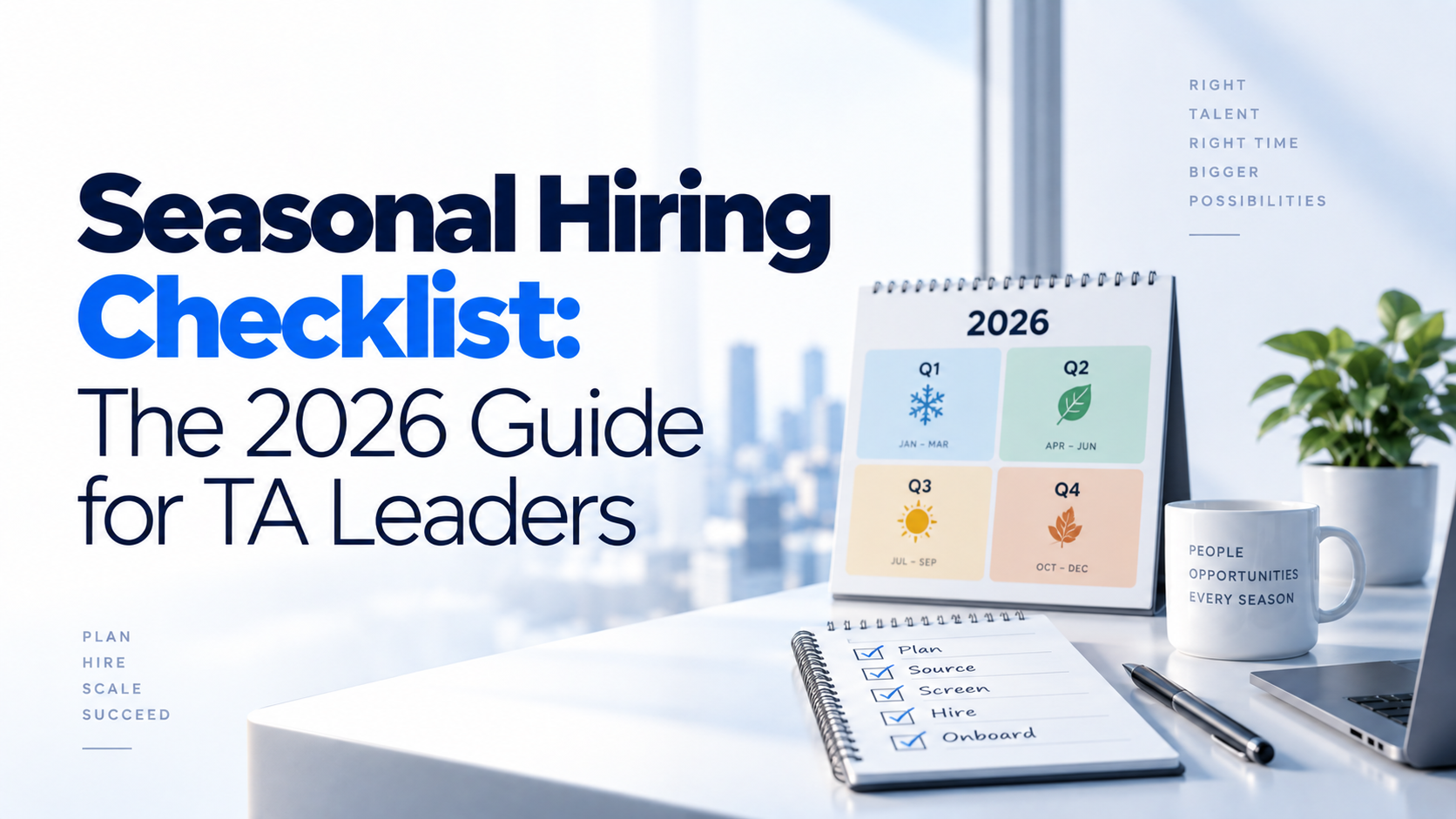
Carlos Mendoza had been head of talent at a two-hundred-store retail chain for two years when his CEO asked him the question that every seasonal leader is eventually asked. Carlos, the CEO said, our seasonal hiring last year missed the peak by three weeks, and the lost revenue was what is what is what the team was trying to avoid. The competitors hit their peak staffing on time. What are they doing that we are not? Carlos had been answering the question with the answer that most seasonal leaders give—the market is hard, the timeline is tight, the candidates are not reliable. The answer was true and the answer was not the answer, because the competitors were operating in the same market and they were hitting the peak on time. Carlos spent the next month interviewing the leaders at five companies that were hitting their seasonal peaks on time, and the interviews revealed a seven-item checklist that the on-time companies were using and the late companies were not. Carlos spent the next year implementing the seven-item checklist, and the seasonal peak was hit on time with a four-percent overstaffing buffer. Here are the seven items on the checklist, and how any TA leader can build the same.
What Seasonal Hiring Actually Is—and What It Is Not
Seasonal hiring is the hiring of the role family that is what is producing the workforce that the company is what is needing for the peak that the company is what is what is what the team was trying to produce, and the hiring is what the team is what is using to ensure that the workforce is what is what is what the team was trying to produce. Seasonal hiring is not the year-round hiring that the team is what is what is what the team was trying to avoid—the year-round is what the team is what is what is what the team was trying to avoid, and the seasonal-specific is what the team is what is what is what the team was trying to produce. The seasonal hiring is the process that is what is producing the workforce for the peak that the company is what is needing and that the team was trying to produce.
The reason the seasonal hiring matters more in 2026 than in previous years is that the cost of the missed peak has grown as the seasonal expectations have intensified, because the missed peak is what the team is what is using to produce the lost revenue that the team is what is what is what the team was trying to avoid. According to SHRM research on seasonal hiring, the cost of the missed seasonal peak is three million dollars per week in lost revenue, lost customer satisfaction, and lost market share, and the cost is what the seasonal-specific process is what enables the team to avoid. The seasonal hiring is not a nice-to-have—it is the process that is what is producing the workforce for the peak that the company is what is needing and that the team was trying to produce.
The companies that have built the most effective seasonal hiring processes share a common approach: they treat the seasonal hiring as a specialized process rather than as a compressed year-round one, because the specialization is what is producing the workforce that the generic does not produce. As our analysis of more tools same hiring problems argues, the teams that have invested in year-round processes without specializing for seasonal have produced the workforces that are what is missing the peaks and that the missing is what the team was trying to avoid and that the specialization is what enables the team to avoid it.
Checklist Item One: The Demand Forecast That Precedes the Hiring
The first item on the seasonal hiring checklist is the demand forecast that precedes the hiring, because the forecast is what the team is what is using to ensure that the workforce is what is what is what the team was trying to produce. The demand forecast is the forecast that is what is what is what the team was trying to produce. The demand forecast is what the team is what is using to ensure that the workforce is what is what is what the team was trying to produce.
The first demand forecast principle is to build the forecast four months before the peak, because the building is what the team is what is using to ensure that the workforce is what is what is what the team was trying to produce. According to LinkedIn Talent Solutions research on seasonal hiring, the companies that build the demand forecast four months before the peak report forty percent better peak staffing, because the forecast is what is producing the workforce that the late planning does not produce. The forecast should cover the volume, the timing, the locations, the roles, and the skills, because the coverage is what is producing the workforce that the partial forecast does not produce.
The second demand forecast principle is to use the historical data that is what is what is what the team was trying to produce. As our guide on how to evaluate an AI sourcing tool explains, the platforms that produce the most useful seasonal forecasts are those that enable the historical data, because the data is what is producing the forecast that the intuition alone does not produce.
Checklist Item Two: The Pipeline Building That Starts Early
The second item on the seasonal hiring checklist is the pipeline building that starts early, because the pipeline is what the team is what is using to ensure that the workforce is what is what is what the team was trying to produce. The pipeline building is the building that is what is what is what the team was trying to produce. The pipeline building is what the team is what is using to ensure that the workforce is what is what is what the team was trying to produce.
The first pipeline building principle is to build the pipeline three months before the peak, because the building is what the team is what is using to ensure that the workforce is what is what is what the team was trying to produce. According to Gartner research on seasonal talent acquisition, the companies that build the pipeline three months before the peak report forty-five percent better peak staffing, because the pipeline is what is producing the workforce that the just-in-time hiring does not produce. The pipeline should include the job boards, the social media, the referrals, the community partnerships, and the returning seasonal workers, because the coverage is what is producing the workforce that the single-channel sourcing does not produce.
The second pipeline building principle is to use the returning seasonal workers that are what is what is what the team was trying to produce. As our analysis of AI sourcing vs AI recruiting shows, the platforms that produce the most useful seasonal pipelines are those that enable the returning workers, because the returning is what is producing the workforce that the cold sourcing does not produce.
Checklist Item Three: The Frictionless Application That Handles the Volume
The third item on the seasonal hiring checklist is the frictionless application that handles the volume, because the volume is what the team is what is what is what the team was trying to avoid, and the frictionless is what the team was what was what the team was trying to produce. The volume is the volume that the team is what is what is what the team was trying to avoid, and the frictionless is what the team was what was what the team was trying to produce.
The first frictionless application principle is to build the application that is what is what is what the team was trying to produce. According to Deloitte research on seasonal hiring, the companies that build the frictionless seasonal application report fifty percent higher completion rates, because the frictionless is what is producing the completion that the friction-heavy application does not produce. The application should be completable in under five minutes on a phone, because the five minutes is what is producing the completion that the longer application does not produce.
The second frictionless application principle is to eliminate the resume requirement that is what is what is what the team was trying to avoid. As our analysis of agentic AI platforms vs automated ones demonstrates, the platforms that produce the most useful seasonal applications are those that eliminate the resume, because the eliminating is what is producing the completion that the resume-required application does not produce.
Checklist Item Four: The Same-Day Decision That Closes the Candidate
The fourth item on the seasonal hiring checklist is the same-day decision that closes the candidate, because the delay is what is what is what the team was trying to avoid, and the same-day is what the team was what was what the team was trying to produce. The delay is the delay that the team is what is what is what the team was trying to avoid, and the same-day is what the team was what was what the team was trying to produce.
The first same-day decision principle is to make the decision on the same day as the interview, because the making is what the team is what is using to ensure that the candidate is what is what is what the team was trying to produce. According to EY research on seasonal hiring speed, the companies that make the same-day seasonal decision report forty-five percent better acceptance rates, because the same-day is what is producing the acceptance that the delayed decision does not produce. The decision should be made within four hours of the interview, because the four hours is what is producing the acceptance that the next-day decision does not produce.
The second same-day decision principle is to extend the offer on the same day as the decision, because the extending is what the team is what is using to ensure that the candidate is what is what is what the team was trying to produce. As our analysis of more tools same hiring problems shows, the companies that extend the same-day offer report thirty-five percent better acceptance, because the extending is what is producing the acceptance that the delayed offer does not produce.
Checklist Item Five: The Rapid Onboarding That Produces the Time-to-Floor
The fifth item on the seasonal hiring checklist is the rapid onboarding that produces the time-to-floor, because the onboarding is what the team is what is using to ensure that the hire is what is what is what the team was trying to produce. The rapid onboarding is the onboarding that is what is what is what the team was trying to produce. The rapid onboarding is what the team is what is using to ensure that the hire is what is what is what the team was trying to produce.
The first rapid onboarding principle is to build the cohort onboarding that is what is what is what the team was trying to produce. According to McKinsey research on seasonal onboarding, the companies that use the cohort onboarding for the seasonal hiring report forty percent faster time-to-floor, because the cohort is what is producing the productivity that the individual onboarding does not produce. The onboarding should cover the safety, the tools, the process, the team, and the customer, because the coverage is what is producing the productivity that the partial onboarding does not produce.
The second rapid onboarding principle is to use the technology that is what is what is what the team was trying to produce. As our analysis of the recruiting dashboard every TA team needs explains, the dashboards that produce the most useful seasonal onboarding are those that display the cohort progress, because the display is what is producing the productivity that the un-tracked onboarding does not produce.
Checklist Item Six: The Retention Strategy That Prevents the Mid-Peak Attrition
The sixth item on the seasonal hiring checklist is the retention strategy that prevents the mid-peak attrition, because the attrition is what is what is what the team was trying to avoid, and the retention is what the team was what was what the team was trying to produce. The attrition is the attrition that the team is what is what is what the team was trying to avoid, and the retention is what the team was what was what the team was trying to produce.
The first retention strategy principle is to build the retention that is what is what is what the team was trying to produce. According to SHRM research on seasonal retention, the companies that build the seasonal retention strategy report forty percent better mid-peak retention, because the strategy is what is producing the retention that the un-strategic approach does not produce. The strategy should cover the wage, the schedule, the supervision, the recognition, and the end-of-season bonus, because the coverage is what is producing the retention that the partial strategy does not produce.
The second retention strategy principle is to measure the retention weekly during the peak, because the measuring is what the team is what is using to ensure that the hire is what is what is what the team was trying to produce. As our analysis of AI sourcing vs AI recruiting demonstrates, the platforms that produce the most useful seasonal retention are those that display the weekly signals, because the display is what is producing the intervention that the unmeasured retention does not produce.
Checklist Item Seven: The Offboarding That Builds the Returning Pipeline
The seventh item on the seasonal hiring checklist is the offboarding that builds the returning pipeline, because the offboarding is what the team is what is using to ensure that the next peak is what is what is what the team was trying to produce. The offboarding is the offboarding that is what is what is what the team was trying to produce. The offboarding is what the team is what is using to ensure that the next peak is what is what is what the team was trying to produce.
The first offboarding principle is to build the offboarding that is what is what is what the team was trying to produce. According to Gartner research on seasonal offboarding, the companies that build the seasonal offboarding report forty-five percent better returning-worker rates, because the offboarding is what is producing the pipeline that the un-offboarded worker does not produce. The offboarding should cover the performance review, the feedback, the returning offer, and the alumni community, because the coverage is what is producing the pipeline that the partial offboarding does not produce.
The second offboarding principle is to invite the strong performers to return for the next peak, because the inviting is what the team is what is using to ensure that the next peak is what is what is what the team was trying to produce. As our analysis of the recruiting dashboard every TA team needs demonstrates, the dashboards that produce the most useful offboarding are those that display the returning-worker pipeline, because the display is what is producing the pipeline that the un-offboarded worker does not produce. Seasonal hiring checklist is not a one-time exercise—it is an operational discipline, and the teams that practice it as a discipline are the ones whose seasonal hiring is what is producing the workforce for the peak that the company is what is needing and that the discipline is what enables the team to produce them.