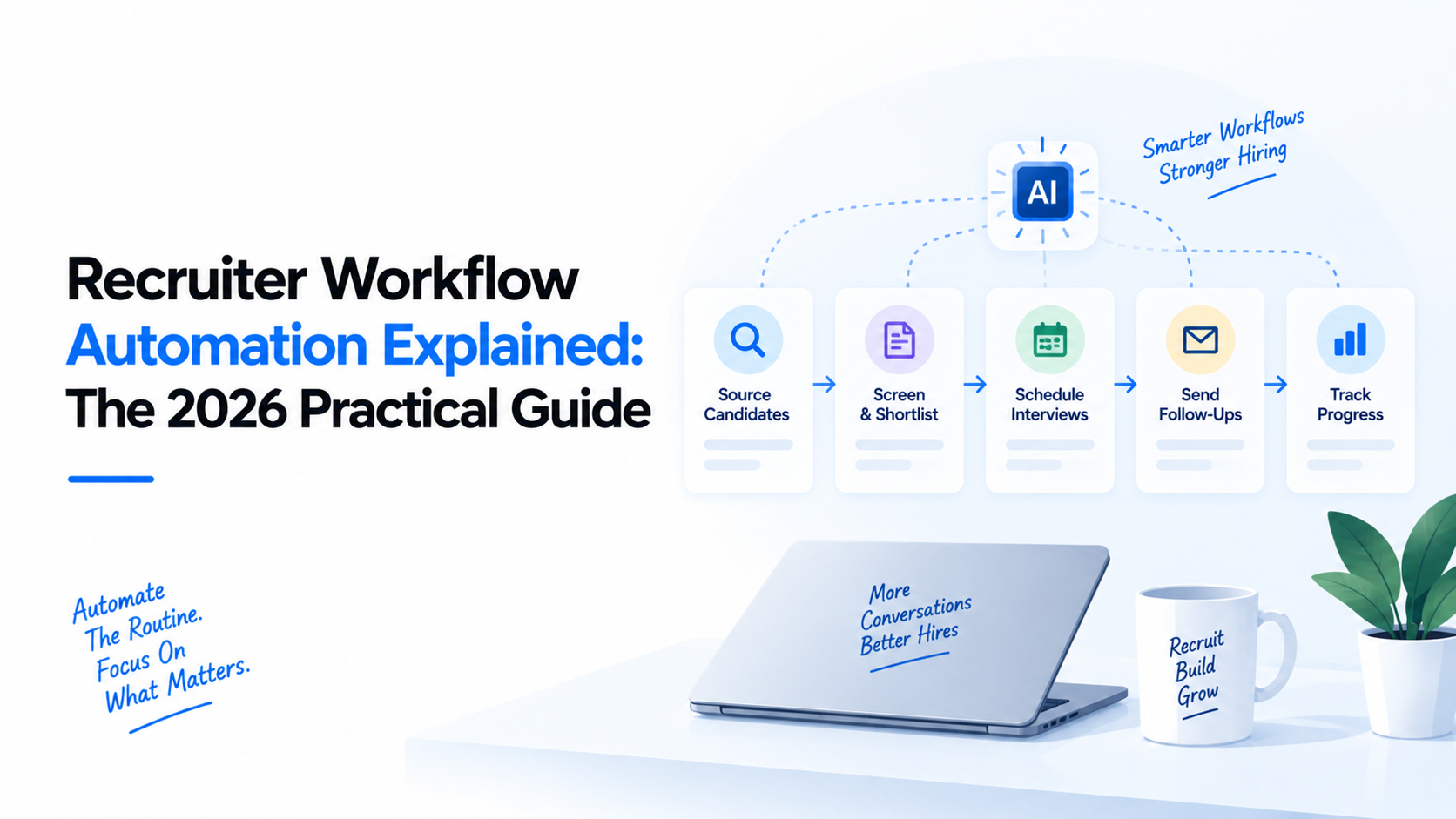
Liang Chen had been head of talent operations at a seven-hundred-person enterprise SaaS company for two years when he was asked to present the team's automation strategy to the board. The deck had twelve slides, each describing a tool the team had purchased and the tasks the tool was automating. The CFO interrupted him on slide seven. Liang, the CFO said, you have shown me twelve tools and twelve sets of automated tasks. What I want to know is whether the candidates are moving through the process faster. Liang paused, because the question was the question he had been afraid of. The team had automated tasks. The team had not automated workflows. The tasks were the individual activities that the recruiter was performing, and the automation of the tasks was what the team had done. The workflows were the sequences of activities that moved the candidate from one phase to the next, and the automation of the workflows was what the team had not done, and the not doing was what was producing the cycle time that the CFO was asking about. Liang spent the next quarter rebuilding the automation strategy around workflows rather than tasks, and the workflow automation produced the cycle time reduction that the task automation had not. Here is the guide he used, and the seven workflow automations that actually reduce cycle time.
Why Workflow Automation Is Different from Task Automation
Workflow automation is different from task automation because the workflow is the sequence of activities that moves the candidate from one phase to the next, and the automation of the workflow is what produces the cycle time reduction that the task automation does not produce. The task is the individual activity that the recruiter is what is performing, and the automation of the task is what eliminates the manual work of the task. The workflow is the sequence of tasks that produces the phase transition, and the automation of the workflow is what eliminates the manual work of the phase transition and that the elimination is what produces the cycle time reduction that the task automation does not produce. The distinction matters because the task automation produces the time savings for the recruiter, while the workflow automation produces the time savings for the candidate, and the candidate's time is what the cycle time is what the team is what is trying to reduce.
The reason the distinction matters more in 2026 than in previous years is that the volume of tasks has grown faster than the recruiter's capacity to perform them, and the task automation has been applied to the tasks without addressing the workflow that the tasks are part of, and the result is the team that has automated the tasks without reducing the cycle time. According to McKinsey research on talent operations, the teams that have automated tasks report fifteen percent cycle time reduction, while the teams that have automated workflows report forty-five percent cycle time reduction, because the workflow automation is what produces the cycle time reduction that the task automation does not produce and that the cycle time is what the team was trying to reduce.
The companies that have built the most effective workflow automation share a common approach: they treat the workflow as the unit of automation rather than the task, because the workflow is what produces the cycle time reduction that the task does not produce. As our analysis of more tools same hiring problems argues, the teams that have invested in task automation without investing in workflow automation have produced the tool stacks that the tasks are automated within and that the workflows are not automated and that the not automating is what produces the cycle time that the team was trying to reduce and that the workflow automation is what enables the team to reduce it.
The Seven Workflow Automations That Actually Reduce Cycle Time
The seven workflow automations that actually reduce cycle time are the requisition-to-sourcing workflow, the application-to-screening workflow, the screening-to-interview workflow, the interview-to-decision workflow, the decision-to-offer workflow, the offer-to-acceptance workflow, and the acceptance-to-onboarding workflow. Each workflow automation produces a specific cycle time reduction that the other workflow automations cannot produce, and the seven workflow automations together produce the cumulative cycle time reduction that the operations function was designed to deliver. The requisition-to-sourcing workflow automation produces the cycle time reduction that comes from moving the requisition to the sourcing phase without the manual handoff, and the moving is what produces the cycle time that the workflow automation is what enables the team to produce.
The remaining six workflow automations are the automations that produce the cycle time reductions that the first one does not produce. The application-to-screening workflow automation produces the cycle time reduction that comes from moving the application to the screening phase without the manual review, and the moving is what produces the cycle time that the workflow automation is what enables the team to produce. According to Gartner talent acquisition research on workflow automation, the teams that have automated the seven workflows report fifty percent cycle time reduction, because the workflow automation is what produces the cycle time reduction that the task automation does not produce and that the cycle time is what the team was trying to reduce. The seven workflow automations are interdependent, and the team that automates one workflow without automating the others is the team that produces the cycle time reduction that the other workflows undermine. As our analysis of the recruiting dashboard every TA team needs explains, the dashboards that produce the most useful workflow automation are those that display the cycle time at each phase, because the display is what enables the team to see the workflows that the automation is what is producing and that the seeing is what the team was trying to do.
The Requisition-to-Sourcing Workflow That Eliminates the Intake Delay
The requisition-to-sourcing workflow automation is the automation that eliminates the intake delay, because the intake delay is what the workflow is what is producing and that the producing is what the team is what is absorbing and that the absorbing is what the workflow automation is what enables the team to eliminate. The intake delay is the time that the requisition is what is spending between the approval and the sourcing, and the time is what the workflow is what is producing and that the producing is what the team is what is absorbing and that the absorbing is what the workflow automation is what enables the team to eliminate. The requisition-to-sourcing workflow is the sequence of activities that moves the requisition from the approval to the sourcing, and the automation of the workflow is what eliminates the manual handoff that is what the team is what is absorbing and that the absorbing is what the team was trying to eliminate.
The first requisition-to-sourcing workflow principle is to automate the handoff from the approval to the sourcing, because the handoff is what the team is what is doing manually and that the doing is what the team is what is spending the time on and that the spending is what the workflow automation is what enables the team to eliminate. According to SHRM research on requisition management, the teams that automate the requisition-to-sourcing handoff report forty percent less intake delay, because the automation is what produces the elimination that the manual handoff does not produce and that the elimination is what the team was trying to produce. The automation should trigger the sourcing as soon as the requisition is what is approved, because the triggering is what produces the elimination that the manual handoff does not produce and that the elimination is what the team was trying to produce.
The second requisition-to-sourcing workflow principle is to automate the assignment of the requisition to the recruiter, because the assignment is what the team is what is doing manually and that the doing is what the team is what is spending the time on and that the spending is what the workflow automation is what enables the team to eliminate. As our guide on how to evaluate an AI sourcing tool explains, the platforms that produce the most useful requisition-to-sourcing workflow are those that automate the assignment, because the automation is what produces the elimination that the manual assignment does not produce and that the elimination is what the team was trying to produce.
The Application-to-Screening Workflow That Eliminates the Review Delay
The application-to-screening workflow automation is the automation that eliminates the review delay, because the review delay is what the workflow is what is producing and that the producing is what the team is what is absorbing and that the absorbing is what the workflow automation is what enables the team to eliminate. The review delay is the time that the application is what is spending between the submission and the screening, and the time is what the workflow is what is producing and that the producing is what the team is what is absorbing and that the absorbing is what the workflow automation is what enables the team to eliminate. The application-to-screening workflow is the sequence of activities that moves the application from the submission to the screening, and the automation of the workflow is what eliminates the manual review that is what the team is what is absorbing and that the absorbing is what the team was trying to eliminate.
The first application-to-screening workflow principle is to automate the screening of the application, because the screening is what the team is what is doing manually and that the doing is what the team is what is spending the time on and that the spending is what the workflow automation is what enables the team to eliminate. According to LinkedIn talent research on screening automation, the teams that automate the application-to-screening workflow report sixty percent less review delay, because the automation is what produces the elimination that the manual review does not produce and that the elimination is what the team was trying to produce. The automation should screen the application against the job requirements and rank the candidates, because the screening and the ranking are what produce the elimination that the manual review does not produce and that the elimination is what the team was trying to produce.
The second application-to-screening workflow principle is to automate the advancement of the qualified candidates to the interview phase, because the advancement is what the team is what is doing manually and that the doing is what the team is what is spending the time on and that the spending is what the workflow automation is what enables the team to eliminate. As our analysis of AI sourcing vs AI recruiting shows, the platforms that produce the most useful application-to-screening workflow are those that automate the advancement, because the automation is what produces the elimination that the manual advancement does not produce and that the elimination is what the team was trying to produce.
The Interview-to-Decision Workflow That Eliminates the Decision Delay
The interview-to-decision workflow automation is the automation that eliminates the decision delay, because the decision delay is what the workflow is what is producing and that the producing is what the team is what is absorbing and that the absorbing is what the workflow automation is what enables the team to eliminate. The decision delay is the time that the candidate is what is spending between the final interview and the decision, and the time is what the workflow is what is producing and that the producing is what the team is what is absorbing and that the absorbing is what the workflow automation is what enables the team to eliminate. The interview-to-decision workflow is the sequence of activities that moves the candidate from the final interview to the decision, and the automation of the workflow is what eliminates the manual decision process that is what the team is what is absorbing and that the absorbing is what the team was trying to eliminate.
The first interview-to-decision workflow principle is to automate the collection of the interview feedback, because the collection is what the team is what is doing manually and that the doing is what the team is what is spending the time on and that the spending is what the workflow automation is what enables the team to eliminate. According to Deloitte workforce analytics on interview feedback, the teams that automate the feedback collection report fifty percent less decision delay, because the automation is what produces the elimination that the manual collection does not produce and that the elimination is what the team was trying to produce. The automation should collect the feedback in the structured form that the decision is what is requiring, because the structured form is what produces the elimination that the unstructured feedback does not produce and that the elimination is what the team was trying to produce.
The second interview-to-decision workflow principle is to automate the calibration of the feedback, because the calibration is what the team is what is doing manually and that the doing is what the team is what is spending the time on and that the spending is what the workflow automation is what enables the team to eliminate. As our analysis of agentic AI platforms vs automated ones demonstrates, the platforms that produce the most useful interview-to-decision workflow are those that automate the calibration, because the automation is what produces the elimination that the manual calibration does not produce and that the elimination is what the team was trying to produce.
The Decision-to-Offer Workflow That Eliminates the Offer Delay
The decision-to-offer workflow automation is the automation that eliminates the offer delay, because the offer delay is what the workflow is what is producing and that the producing is what the team is what is absorbing and that the absorbing is what the workflow automation is what enables the team to eliminate. The offer delay is the time that the candidate is what is spending between the decision and the offer, and the time is what the workflow is what is producing and that the producing is what the team is what is absorbing and that the absorbing is what the workflow automation is what enables the team to eliminate. The decision-to-offer workflow is the sequence of activities that moves the candidate from the decision to the offer, and the automation of the workflow is what eliminates the manual offer process that is what the team is what is absorbing and that the absorbing is what the team was trying to eliminate.
The first decision-to-offer workflow principle is to automate the offer letter generation, because the generation is what the team is what is doing manually and that the doing is what the team is what is spending the time on and that the spending is what the workflow automation is what enables the team to eliminate. According to EY research on offer management, the teams that automate the offer letter generation report sixty percent less offer delay, because the automation is what produces the elimination that the manual generation does not produce and that the elimination is what the team was trying to produce. The automation should generate the offer letter from the template that the team is what is using, because the template is what produces the elimination that the manual drafting does not produce and that the elimination is what the team was trying to produce.
The second decision-to-offer workflow principle is to automate the offer approval within the pre-approved range, because the approval is what the team is what is doing manually and that the doing is what the team is what is spending the time on and that the spending is what the workflow automation is what enables the team to eliminate. As our analysis of more tools same hiring problems shows, the platforms that produce the most useful decision-to-offer workflow are those that automate the approval within the pre-approved range, because the automation is what produces the elimination that the manual approval does not produce and that the elimination is what the team was trying to produce.
The Offer-to-Acceptance Workflow That Maintains the Candidate Engagement
The offer-to-acceptance workflow automation is the automation that maintains the candidate engagement, because the engagement is what the candidate is what is perceiving as the company's interest and that the perception is what the acceptance is what the workflow is what enables the team to maintain and that the maintaining is what the team was trying to do. The offer-to-acceptance workflow is the sequence of activities that moves the candidate from the offer to the acceptance, and the automation of the workflow is what maintains the engagement that the manual workflow is what is losing and that the losing is what the team was trying to avoid.
The first offer-to-acceptance workflow principle is to automate the follow-up communications that the candidate is what is receiving, because the communications are what the candidate is what is perceiving as the company's interest and that the perception is what the engagement is what the workflow is what enables the team to maintain. According to McKinsey research on offer acceptance, the teams that automate the offer-to-acceptance workflow report thirty-five percent higher acceptance rates, because the automation is what produces the engagement that the manual workflow is what is losing and that the losing is what the team was trying to avoid and that the automation is what enables the team to avoid it.
The second offer-to-acceptance workflow principle is to automate the scheduling of the offer call with the hiring manager, because the scheduling is what the team is what is doing manually and that the doing is what the team is what is spending the time on and that the spending is what the workflow automation is what enables the team to eliminate. As our analysis of the recruiting dashboard every TA team needs explains, the platforms that produce the most useful offer-to-acceptance workflow are those that automate the scheduling, because the automation is what produces the elimination that the manual scheduling does not produce and that the elimination is what the team was trying to produce.
The Acceptance-to-Onboarding Workflow That Eliminates the Handoff Delay
The acceptance-to-onboarding workflow automation is the automation that eliminates the handoff delay, because the handoff delay is what the workflow is what is producing and that the producing is what the team is what is absorbing and that the absorbing is what the workflow automation is what enables the team to eliminate. The handoff delay is the time that the new hire is what is spending between the acceptance and the start, and the time is what the workflow is what is producing and that the producing is what the team is what is absorbing and that the absorbing is what the workflow automation is what enables the team to eliminate. The acceptance-to-onboarding workflow is the sequence of activities that moves the new hire from the acceptance to the start, and the automation of the workflow is what eliminates the manual handoff that is what the team is what is absorbing and that the absorbing is what the team was trying to eliminate.
The first acceptance-to-onboarding workflow principle is to automate the handoff from the recruiter to the HR and the hiring manager, because the handoff is what the team is what is doing manually and that the doing is what the team is what is spending the time on and that the spending is what the workflow automation is what enables the team to eliminate. According to Gartner talent acquisition research on onboarding, the teams that automate the acceptance-to-onboarding workflow report forty percent less handoff delay, because the automation is what produces the elimination that the manual handoff does not produce and that the elimination is what the team was trying to produce. The automation should trigger the onboarding process as soon as the offer is what is accepted, because the triggering is what produces the elimination that the manual handoff does not produce and that the elimination is what the team was trying to produce.
The second acceptance-to-onboarding workflow principle is to automate the communications that the new hire is what is receiving between the acceptance and the start, because the communications are what the new hire is what is perceiving as the company's welcome and that the perception is what the engagement is what the workflow is what enables the team to maintain. As our analysis of AI sourcing vs AI recruiting demonstrates, the platforms that produce the most useful acceptance-to-onboarding workflow are those that automate the communications, because the automation is what produces the engagement that the manual workflow is what is losing and that the losing is what the team was trying to avoid and that the automation is what enables the team to avoid it. Recruiter workflow automation is not a one-time project—it is an operational discipline, and the teams that practice it as a discipline are the ones whose recruiters have the time to do the work that produces hires and that the discipline is what enables the recruiters to do