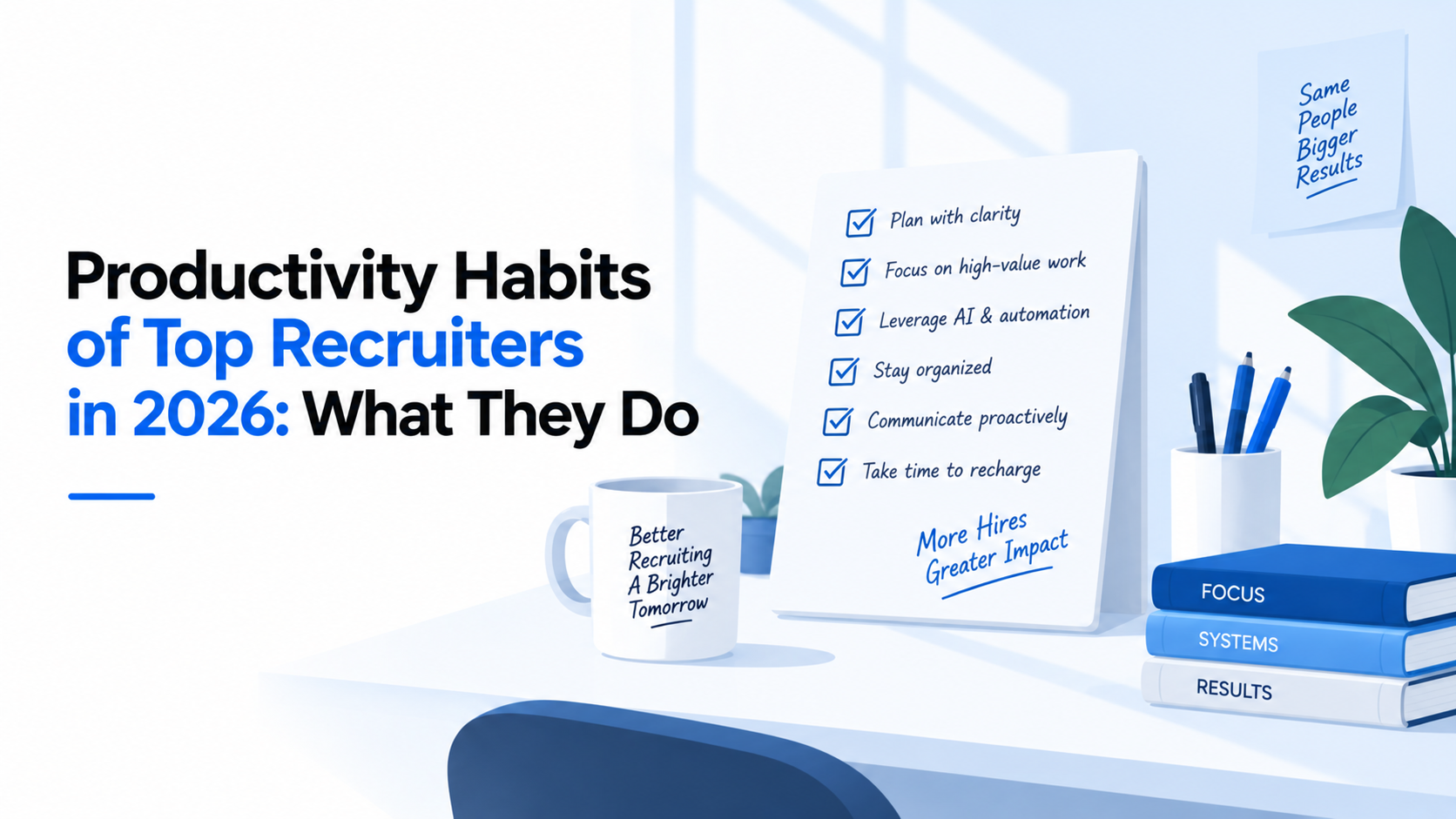
Priya Anand had been recruiting for twelve years when she was asked to mentor a cohort of junior recruiters at her company, and the mentoring forced her to articulate what she had been doing intuitively for a decade. The junior recruiters asked her how she managed to fill thirty-five requisitions a quarter when the team average was twenty-two, how she maintained an offer acceptance rate of eighty-seven percent when the team average was sixty-eight percent, and how she ended every day with an empty inbox when her colleagues ended every day with three hundred unread messages. Priya's first answer was that she did not work more hours—she worked the same forty-five hours that the rest of the team worked. Her second answer was that she had built a set of habits over the years that the rest of the team had not built, and the habits were what produced the productivity gap. The habits were not secret, but they were uncommon, and their uncommonness was what produced the gap between the top ten percent of recruiters and everyone else. The habits were not about working harder—they were about working differently, and the differently was what the habits were what enabled Priya to produce and that the team was what was trying to produce and that the habits are what enable the team to produce it. Here are the seven habits that Priya articulated and that any recruiter can build in their own practice.
Habit One: The Block Scheduling That Protects the High-Value Work
The first habit of top recruiters is the block scheduling that protects the high-value work, because the high-value work is what the recruiter is what is doing that produces the hires and that the doing is what the block scheduling is what enables the recruiter to do and that the doing is what the team was trying to do. The block scheduling is the practice of scheduling the blocks of time for the high-value work and that the scheduling is what the recruiter is what is doing to protect the time and that the protecting is what the high-value work is what the block scheduling is what enables the recruiter to do and that the doing is what the team was trying to do. The high-value work is the candidate engagement and the hiring manager partnership and the sourcing strategy that the recruiter is what is doing and that the doing is what the recruiter is what is producing the hires and that the hires are what the team was trying to produce and that the block scheduling is what enables the recruiter to produce them.
The first block scheduling principle is to schedule the blocks of time for the high-value work at the times of the day when the recruiter is what is most productive and that the scheduling is what the recruiter is what is doing to protect the time and that the protecting is what the high-value work is what the block scheduling is what enables the recruiter to do. According to McKinsey research on talent operations, the recruiters who block-schedule their high-value work report forty percent more time for the candidate engagement and the hiring manager partnership that the high-value work is what the recruiter is what is doing and that the doing is what the team was trying to do and that the block scheduling is what enables the recruiter to do it.
The second block scheduling principle is to protect the blocks from the interruptions that the recruiter is what is receiving and that the receiving is what the recruiter is what is spending the time on and that the spending is what the high-value work is what the block scheduling is what enables the recruiter to protect the time from. As our analysis of more tools same hiring problems argues, the recruiters who protect their blocks report thirty-five percent better productivity, because the protecting is what produces the time that the high-value work is what the block scheduling is what enables the recruiter to do and that the doing is what the team was trying to do and that the protecting is what enables the recruiter to do it.
Habit Two: The Daily Pipeline Review That Catches the Bottlenecks
The second habit of top recruiters is the daily pipeline review that catches the bottlenecks, because the bottlenecks are what the recruiter is what is catching before they become the cycle time that the team is what is trying to avoid and that the catching is what the daily pipeline review is what enables the recruiter to do and that the doing is what the team was trying to do. The daily pipeline review is the practice of reviewing the pipeline every day to identify the bottlenecks that are forming and that the identifying is what the recruiter is what is doing to catch the bottlenecks before they become the cycle time and that the catching is what the daily pipeline review is what enables the recruiter to do and that the doing is what the team was trying to do.
The first daily pipeline review principle is to review the pipeline every morning to identify the candidates who are what is stuck and that the identifying is what the recruiter is what is doing to catch the stuck candidates before they become the lost candidates and that the catching is what the daily pipeline review is what enables the recruiter to do. According to Gartner talent acquisition research on pipeline management, the recruiters who review their pipeline daily report fifty percent fewer candidates stuck in the process, because the daily review is what produces the catching that the stuck candidates are what the daily review is what enables the recruiter to do and that the doing is what the team was trying to do.
The second daily pipeline review principle is to act on the bottlenecks that the review is what is revealing and that the acting is what the recruiter is what is doing to address the bottlenecks before they become the cycle time and that the addressing is what the daily pipeline review is what enables the recruiter to do. As our analysis of the recruiting dashboard every TA team needs explains, the dashboards that produce the most useful pipeline reviews are those that display the bottlenecks that the daily review is what is revealing, because the display is what produces the catching that the daily review is what enables the recruiter to do and that the doing is what the team was trying to do.
Habit Three: The Prioritization That Focuses on the Highest-Leverage Requisitions
The third habit of top recruiters is the prioritization that focuses on the highest-leverage requisitions, because the highest-leverage requisitions are what the recruiter is what is focusing on and that the focusing is what the prioritization is what enables the recruiter to do and that the doing is what the team was trying to do. The prioritization is the practice of identifying the requisitions that are what is producing the most value and that the identifying is what the recruiter is what is doing to focus the time and that the focusing is what the prioritization is what enables the recruiter to do and that the doing is what the team was trying to do. The highest-leverage requisitions are the requisitions that are what is producing the most value, and the value is what the prioritization is what enables the recruiter to identify and that the identifying is what the team was trying to do.
The first prioritization principle is to identify the requisitions that are what is producing the most value and that the identifying is what the recruiter is what is doing to focus the time and that the focusing is what the prioritization is what enables the recruiter to do. According to LinkedIn talent research on recruiter effectiveness, the recruiters who prioritize their requisitions report forty-five percent more hires per quarter, because the prioritization is what produces the focus that the highest-leverage requisitions are what the prioritization is what enables the recruiter to do and that the doing is what the team was trying to do.
The second prioritization principle is to focus the time on the highest-leverage requisitions and that the focusing is what the recruiter is what is doing to produce the most value and that the producing is what the prioritization is what enables the recruiter to do. As our guide on how to evaluate an AI sourcing tool explains, the platforms that produce the most useful prioritization are those that enable the recruiter to identify the highest-leverage requisitions, because the identification is what produces the focus that the prioritization is what enables the recruiter to do and that the doing is what the team was trying to do.
Habit Four: The Documentation That Enables the Team to Scale
The fourth habit of top recruiters is the documentation that enables the team to scale, because the documentation is what the recruiter is what is producing that enables the team to learn from the recruiter's practice and that the learning is what the documentation is what enables the team to do and that the doing is what the team was trying to do. The documentation is the practice of documenting the practices that the recruiter is what is using and that the documenting is what the recruiter is what is doing to enable the team to learn and that the learning is what the documentation is what enables the team to do and that the doing is what the team was trying to do.
The first documentation principle is to document the practices that the recruiter is what is using and that the documenting is what the recruiter is what is doing to enable the team to learn and that the learning is what the documentation is what enables the team to do. According to SHRM research on recruiter documentation, the recruiters who document their practices report sixty percent faster ramp-up for the junior recruiters, because the documentation is what produces the learning that the team is what the documentation is what enables the team to do and that the doing is what the team was trying to do.
The second documentation principle is to share the documentation with the team and that the sharing is what the recruiter is what is doing to enable the team to learn and that the learning is what the documentation is what enables the team to do and that the doing is what the team was trying to do. As our analysis of AI sourcing vs AI recruiting shows, the documentation that produces the most team value is the documentation that is shared, because the sharing is what produces the learning that the team is what the documentation is what enables the team to do and that the doing is what the team was trying to do.
Habit Five: The Tool Discipline That Avoids the Stack Bloat
The fifth habit of top recruiters is the tool discipline that avoids the stack bloat, because the stack bloat is what the recruiter is what is avoiding and that the avoiding is what the tool discipline is what enables the recruiter to do and that the doing is what the team was trying to do. The tool discipline is the practice of using the tools that are what is producing the value and that the using is what the recruiter is what is doing to avoid the stack bloat and that the avoiding is what the tool discipline is what enables the recruiter to do and that the doing is what the team was trying to do.
The first tool discipline principle is to use the tools that are what is producing the value and that the using is what the recruiter is what is doing to avoid the stack bloat and that the avoiding is what the tool discipline is what enables the recruiter to do. According to Deloitte workforce analytics on recruiter productivity, the recruiters who practice tool discipline report forty percent less time on tool management, because the tool discipline is what produces the time that the recruiter is what is avoiding the stack bloat and that the avoiding is what the tool discipline is what enables the recruiter to do and that the doing is what the team was trying to do.
The second tool discipline principle is to eliminate the tools that are what is not producing the value and that the eliminating is what the recruiter is what is doing to avoid the stack bloat and that the avoiding is what the tool discipline is what enables the recruiter to do. As our analysis of agentic AI platforms vs automated ones demonstrates, the recruiters who practice tool discipline are those who eliminate the tools that are not producing the value, because the eliminating is what produces the time that the recruiter is what is avoiding the stack bloat and that the avoiding is what the tool discipline is what enables the recruiter to do and that the doing is what the team was trying to do.
Habit Six: The Hiring Manager Partnership That Reduces the Back-and-Forth
The sixth habit of top recruiters is the hiring manager partnership that reduces the back-and-forth, because the back-and-forth is what the recruiter is what is avoiding and that the avoiding is what the hiring manager partnership is what enables the recruiter to do and that the doing is what the team was trying to do. The hiring manager partnership is the practice of building the relationship with the hiring manager that enables the recruiter to reduce the back-and-forth and that the building is what the recruiter is what is doing to reduce the back-and-forth and that the reducing is what the hiring manager partnership is what enables the recruiter to do and that the doing is what the team was trying to do.
The first hiring manager partnership principle is to build the relationship with the hiring manager that enables the recruiter to reduce the back-and-forth and that the building is what the recruiter is what is doing to reduce the back-and-forth and that the reducing is what the hiring manager partnership is what enables the recruiter to do. According to EY research on hiring manager engagement, the recruiters who build the hiring manager partnership report thirty-five percent less time on hiring manager communication, because the partnership is what produces the time that the recruiter is what is avoiding the back-and-forth and that the avoiding is what the hiring manager partnership is what enables the recruiter to do and that the doing is what the team was trying to do.
The second hiring manager partnership principle is to maintain the partnership throughout the process and that the maintaining is what the recruiter is what is doing to reduce the back-and-forth and that the reducing is what the hiring manager partnership is what enables the recruiter to do. As our analysis of the recruiting dashboard every TA team needs explains, the dashboards that produce the most useful hiring manager partnerships are those that enable the recruiter to maintain the partnership, because the maintaining is what produces the time that the recruiter is what is avoiding the back-and-forth and that the avoiding is what the hiring manager partnership is what enables the recruiter to do and that the doing is what the team was trying to do.
Habit Seven: The Continuous Learning That Keeps the Recruiter Ahead of the Market
The seventh habit of top recruiters is the continuous learning that keeps the recruiter ahead of the market, because the market is what is changing and that the changing is what the recruiter is what is adapting to and that the adapting is what the continuous learning is what enables the recruiter to do and that the doing is what the team was trying to do. The continuous learning is the practice of learning the new practices and the new tools and the new market conditions that the recruiter is what is adapting to and that the learning is what the recruiter is what is doing to stay ahead of the market and that the staying ahead is what the continuous learning is what enables the recruiter to do and that the doing is what the team was trying to do.
The first continuous learning principle is to learn the new practices that the market is what is producing and that the learning is what the recruiter is what is doing to stay ahead of the market and that the staying ahead is what the continuous learning is what enables the recruiter to do. According to McKinsey research on talent operations, the recruiters who practice continuous learning report fifty percent better performance over time, because the continuous learning is what produces the adaptation that the recruiter is what is staying ahead of the market and that the staying ahead is what the continuous learning is what enables the recruiter to do and that the doing is what the team was trying to do.
The second continuous learning principle is to learn the new tools that the market is what is producing and that the learning is what the recruiter is what is doing to stay ahead of the market and that the staying ahead is what the continuous learning is what enables the recruiter to do. As our analysis of AI sourcing vs AI recruiting shows, the recruiters who practice continuous learning are those who learn the new tools that the market is producing, because the learning is what produces the staying ahead that the continuous learning is what enables the recruiter to do and that the doing is what the team was trying to do. The productivity habits of top recruiters are not a set of techniques that the recruiter is what is using—they are a discipline that the recruiter is what is practicing, and the practicing is what produces the productivity that the habits are what enable the recruiter to produce and that the productivity is what the team was trying to produce and that the discipline is what enables the recruiter to produce it.