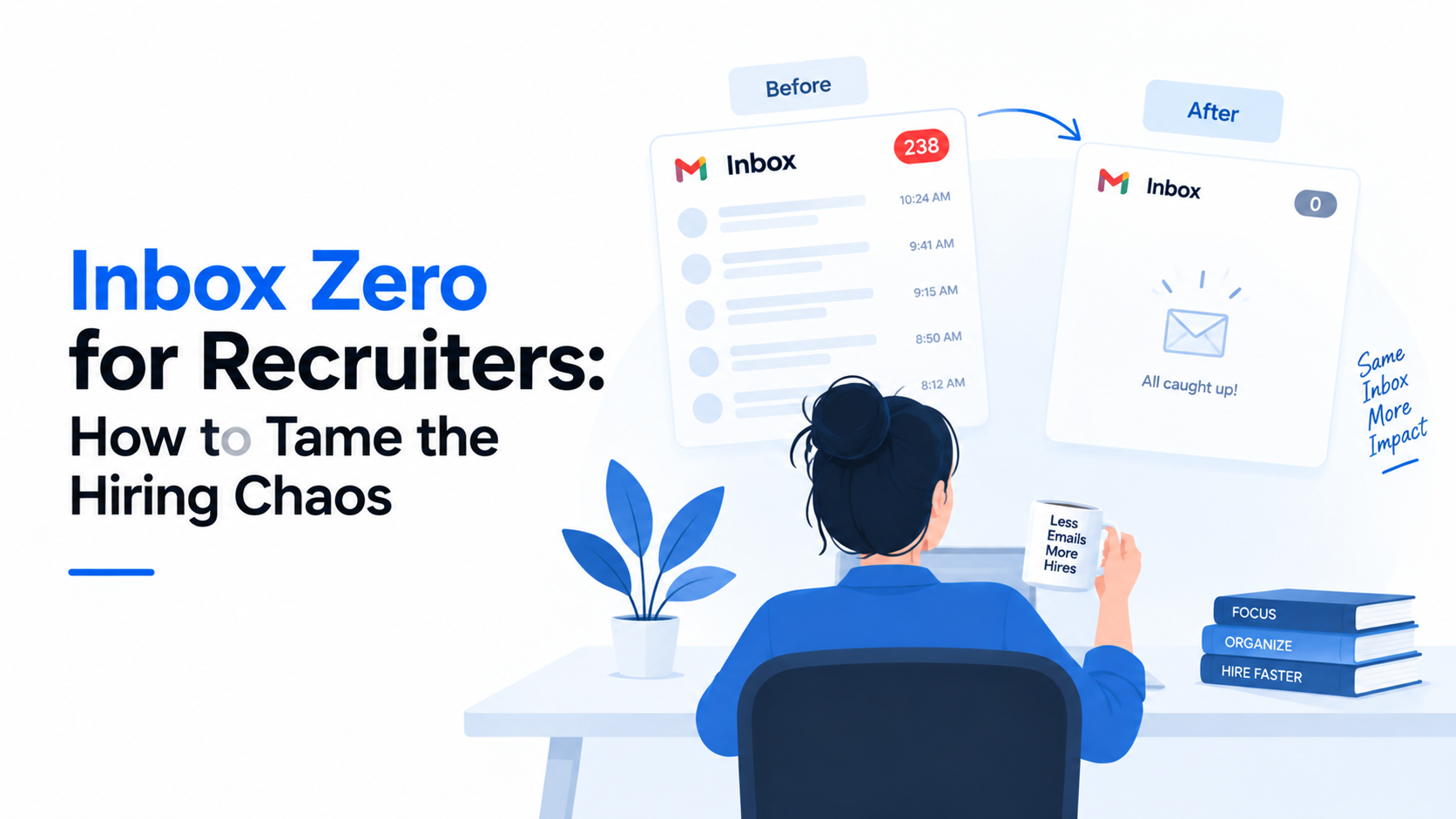
Mei Lin Tan had been a senior recruiter at a Series D enterprise AI company for two years when her manager asked her to mentor a junior recruiter who was drowning in email. The junior recruiter had four thousand unread messages in her inbox, was responding to candidates three days after they reached out, and was losing candidates to faster competitors regularly. Mei Lin, by contrast, ended every day with fewer than twenty messages in her inbox, responded to candidates within four hours, and had the highest offer acceptance rate on the team. The junior recruiter asked Mei Lin what tool she used, what template system she had built, what time-block discipline she followed. Mei Lin's answer surprised her. The inbox is not the problem, Mei Lin said. The inbox is the symptom. Every message in your inbox is a message that your process should have handled without requiring a message. The candidates who email you to ask about their application status are emailing because your process does not tell them their status. The hiring managers who email you to ask for an update are emailing because your dashboard does not show them the update. The sourcers who email you to ask which candidates to advance are emailing because your screening criteria are not documented. The inbox is where the broken process produces its visible evidence, and the inbox cannot be fixed without fixing the process that produces it. Here are the seven practices Mei Lin used to fix the process and reach inbox zero every day.
Why Recruiter Inboxes Are Where Hiring Speed Goes to Die
A recruiter's inbox is the place where the broken hiring process produces its visible evidence, because every message in the inbox is a message that the process should have handled without requiring a message, and the accumulation of the messages is what produces the inbox that the recruiter cannot keep up with and that the candidates who are waiting for responses are losing patience with and that the hiring managers who are waiting for updates are losing confidence with. The inbox is not the problem—the inbox is the symptom, and the symptom is what the recruiter is what is trying to manage and that the management is what the team is what should be fixing the process that produces the symptom and that the fixing is what the team was trying to do and that the process is what enables the team to do it.
The cost of an overflowing recruiter inbox is not just the recruiter's time—it is the candidates who are lost because the response time is too long, the hiring managers who are frustrated because the updates are not provided, and the requisitions that sit open because the communication is not happening. According to McKinsey research on talent operations, the average recruiter spends forty-two percent of their time on email, and the time is what the inbox is what is consuming and that the consumption is what the team is what should be eliminating and that the elimination is what the team was trying to do and that the process is what enables the team to do it. The time that the recruiter spends on email is the time that the recruiter is not spending on the candidate engagement and the hiring manager partnership that the email is what the recruiter is what should be doing and that the email is what the recruiter is what is preventing the recruiter from doing and that the process is what enables the team to do it.
The companies that have built the most productive recruiting teams share a common approach: they treat the inbox as a diagnostic rather than as a workload, because the inbox is what reveals the process defects that the team should be fixing and that the fixing is what produces the inbox that the recruiter can keep up with and that the keeping up is what the team was trying to do and that the process is what enables the team to do it. As our analysis of more tools same hiring problems argues, the teams that have invested in tools without fixing the process that produces the inbox have produced the tool stacks that the email is what the recruiter is what is still using and that the email is what the recruiter is what is still drowning in and that the process is what enables the team to fix it.
Practice One: Automate the Status Updates That Produce the Most Email
The first practice is the automation of the status updates that produce the most email, because the status updates are the messages that the process should be sending automatically and that the recruiter is what is sending manually and that the manual sending is what is consuming the recruiter's time and that the automation is what enables the team to eliminate the manual sending and that the elimination is what the team was trying to do and that the automation is what enables the team to do it. The status update is the message that the candidate is what is asking for and that the process is what should be providing without the candidate asking and that the providing is what the automation is what enables the team to do and that the team was trying to do and that the automation is what enables the team to do it.
The first automation principle is to set up automated status updates at every phase of the process, because the candidate is what is asking for the status at every phase and that the asking is what the email is what the candidate is what is sending and that the email is what the recruiter is what is receiving and that the receiving is what the recruiter is what is spending time on and that the automation is what enables the team to eliminate the email and that the elimination is what the team was trying to do. According to LinkedIn talent research on candidate communication, the teams that have set up automated status updates report sixty percent fewer candidate status emails, because the automation is what produces the status that the candidate is what is asking for and that the asking is what the email is what the candidate is what is sending and that the email is what the recruiter is what is receiving and that the automation is what enables the team to eliminate the email and that the elimination is what the team was trying to do.
The second automation principle is to make the automated status updates informative rather than generic, because the generic status update is the status update that the candidate is what is ignoring and that the ignoring is what the candidate is what is sending the email to ask for the specific status and that the specific status is what the informative update is what the automation is what enables the team to provide and that the providing is what the team was trying to do. As our guide on how to evaluate an AI sourcing tool explains, the platforms that produce the most useful status updates are those that provide the specific status that the candidate is what is asking for, because the specific status is what produces the candidate's satisfaction that the generic status does not produce and that the satisfaction is what the automation is what enables the team to produce and that the team was trying to produce and that the platform is what enables the team to produce it.
Practice Two: Create Self-Service Visibility for Candidates and Hiring Managers
The second practice is the creation of self-service visibility for the candidates and the hiring managers, because the visibility is what enables the candidate and the hiring manager to see the information that they are what is asking for and that the asking is what the email is what the candidate and the hiring manager are what is sending and that the email is what the recruiter is what is receiving and that the receiving is what the recruiter is what is spending time on and that the visibility is what enables the team to eliminate the email and that the elimination is what the team was trying to do. The self-service visibility is the visibility that the candidate and the hiring manager can access without asking the recruiter, and the access is what the visibility is what enables the candidate and the hiring manager to do and that the access is what the team was trying to do and that the visibility is what enables the team to do it.
The first visibility principle is to give the hiring manager a real-time view of the pipeline, because the hiring manager is what is asking for the pipeline update and that the asking is what the email is what the hiring manager is what is sending and that the email is what the recruiter is what is receiving and that the receiving is what the recruiter is what is spending time on and that the visibility is what enables the team to eliminate the email. According to Gartner talent acquisition research on hiring manager engagement, the teams that have given the hiring manager a real-time view of the pipeline report forty-five percent fewer hiring manager update emails, because the visibility is what produces the update that the hiring manager is what is asking for and that the asking is what the email is what the hiring manager is what is sending and that the email is what the recruiter is what is receiving and that the visibility is what enables the team to eliminate the email.
The second visibility principle is to give the candidate a real-time view of their application status, because the candidate is what is asking for their status and that the asking is what the email is what the candidate is what is sending and that the email is what the recruiter is what is receiving and that the receiving is what the recruiter is what is spending time on and that the visibility is what enables the team to eliminate the email. As our analysis of the recruiting dashboard every TA team needs explains, the dashboards that produce the most inbox reduction are those that are designed for the candidate and the hiring manager, because the design is what produces the visibility that the email is what the recruiter is what is receiving and that the visibility is what enables the team to eliminate the email and that the elimination is what the team was trying to do.
Practice Three: Document the Decisions That Produce the Most Email
The third practice is the documentation of the decisions that produce the most email, because the decisions are the decisions that the process is what is requiring the recruiter to make and that the making is what the recruiter is what is asking the hiring manager and the sourcer and the operations team to help with and that the asking is what the email is what the recruiter is what is sending and that the email is what the team is what is receiving and that the documentation is what enables the team to eliminate the email. The decisions that produce the most email are the screening decisions and the interview decisions, because the decisions are the decisions that the recruiter is what is making every day and that the making is what the recruiter is what is asking for help with and that the asking is what the email is what the recruiter is what is sending.
The first documentation principle is to document the screening criteria, because the screening criteria are the criteria that the recruiter is what is using to make the screening decision and that the using is what the recruiter is what is asking the hiring manager to help with and that the asking is what the email is what the recruiter is what is sending and that the email is what the hiring manager is what is receiving and that the documentation is what enables the team to eliminate the email. According to SHRM research on screening criteria, the teams that have documented their screening criteria report fifty percent fewer screening-related emails, because the documentation is what produces the criteria that the recruiter is what is using to make the screening decision and that the using is what the recruiter is what is asking for help with and that the asking is what the email is what the recruiter is what is sending and that the documentation is what enables the team to eliminate the email.
The second documentation principle is to document the interview evaluation criteria, because the interview evaluation criteria are the criteria that the interviewer is what is using to make the interview evaluation and that the using is what the interviewer is what is asking the recruiter to help with and that the asking is what the email is what the interviewer is what is sending and that the email is what the recruiter is what is receiving and that the documentation is what enables the team to eliminate the email. As our analysis of AI sourcing vs AI recruiting explains, the platforms that produce the most inbox reduction are those that enable the documentation of the evaluation criteria, because the documentation is what produces the criteria that the interviewer is what is using to make the evaluation and that the using is what the interviewer is what is asking for help with and that the asking is what the email is what the interviewer is what is sending and that the documentation is what enables the team to eliminate the email.
Practice Four: Use Templates for the Messages That Cannot Be Automated
The fourth practice is the use of templates for the messages that cannot be automated, because the templates are what the recruiter is what is using to respond to the messages that the process is what is requiring the recruiter to send and that the sending is what the recruiter is what is spending time on and that the templates are what enable the team to reduce the time and that the reduction is what the team was trying to do and that the templates are what enable the team to do it. The templates are not the automation—the templates are the pre-written messages that the recruiter is what is using to respond to the messages that the process is what is requiring the recruiter to send and that the sending is what the templates are what enable the team to reduce the time and that the reduction is what the team was trying to do.
The first template principle is to build templates for the most common messages, because the common messages are the messages that the recruiter is what is sending most often and that the sending is what the recruiter is what is spending the most time on and that the templates are what enable the team to reduce the time. According to Deloitte workforce analytics on recruiter productivity, the teams that have built templates for the most common messages report thirty-five percent less time on email, because the templates are what produce the time reduction that the team was trying to produce and that the templates are what enable the team to produce it. The templates should be personalized to the candidate and the role, because the personalization is what produces the candidate experience that the generic template does not produce and that the experience is what the team was trying to produce and that the templates are what enable the team to produce it.
The second template principle is to build templates for the messages that the hiring manager is what is sending, because the hiring manager is what is sending the messages that the recruiter is what is receiving and that the receiving is what the recruiter is what is spending time on and that the templates are what enable the team to reduce the time. As our analysis of agentic AI platforms vs automated ones demonstrates, the platforms that produce the most inbox reduction are those that enable the templates for the hiring manager, because the templates are what produce the time reduction that the hiring manager is what is sending the messages that the recruiter is what is receiving and that the receiving is what the recruiter is what is spending time on and that the templates are what enable the team to reduce the time and that the reduction is what the team was trying to do.
Practice Five: Time-Block the Inbox Rather Than Living in It
The fifth practice is the time-blocking of the inbox rather than living in it, because the living in the inbox is what the recruiter is what is doing and that the doing is what the recruiter is what is spending the time on and that the time-blocking is what enables the team to reduce the time and that the reduction is what the team was trying to do. The time-blocking is the practice of checking the inbox at specific times of the day rather than continuously, because the continuous checking is what the recruiter is what is doing and that the doing is what the recruiter is what is spending the time on and that the time-blocking is what enables the team to reduce the time and that the reduction is what the team was trying to do.
The first time-blocking principle is to check the inbox three times a day—morning, midday, and end of day—because the three times are what the recruiter is what is checking the inbox and that the checking is what the recruiter is what is spending the time on and that the time-blocking is what enables the team to reduce the time. According to EY research on recruiter productivity, the recruiters who time-block their inbox report forty percent more time for the high-value work, because the time-blocking is what produces the time that the high-value work is what the recruiter is what is spending the time on and that the time-blocking is what enables the team to produce the time and that the time is what the team was trying to produce and that the time-blocking is what enables the team to produce it.
The second time-blocking principle is to respond to the messages in the inbox during the time-blocked periods rather than continuously, because the continuous responding is what the recruiter is what is doing and that the doing is what the recruiter is what is spending the time on and that the time-blocking is what enables the team to reduce the time and that the reduction is what the team was trying to do. The response time should be within four hours, because the four hours is what the candidate is what is expecting and that the expecting is what the candidate is what is losing patience with and that the four hours is what the time-blocking is what enables the team to provide and that the providing is what the team was trying to do.
Practice Six: Use AI to Draft the Responses That Require Judgment
The sixth practice is the use of AI to draft the responses that require judgment, because the responses that require judgment are the responses that the recruiter is what is spending the most time on and that the AI is what enables the team to reduce the time and that the reduction is what the team was trying to do. The AI is not the replacement for the recruiter—the AI is the tool that the recruiter is what is using to draft the responses that require judgment and that the drafting is what the recruiter is what is spending the time on and that the AI is what enables the team to reduce the time and that the reduction is what the team was trying to do.
The first AI principle is to use AI to draft the responses to the messages that the recruiter is what is receiving and that the receiving is what the recruiter is what is spending the time on and that the AI is what enables the team to reduce the time. According to McKinsey research on talent operations, the recruiters who use AI to draft responses report forty-five percent less time on email, because the AI is what produces the drafts that the recruiter is what is editing and that the editing is what the recruiter is what is spending the time on and that the AI is what enables the team to reduce the time and that the reduction is what the team was trying to do.
The second AI principle is to use AI to draft the responses that are specific to the candidate and the role, because the specificity is what the candidate is what is expecting and that the expecting is what the candidate is what is losing patience with and that the specificity is what the AI is what enables the team to provide and that the providing is what the team was trying to do. As our analysis of AI sourcing vs AI recruiting shows, the platforms that produce the most useful AI drafting are those that enable the specificity that the candidate is what is expecting, because the specificity is what produces the candidate experience that the generic response does not produce and that the experience is what the team was trying to produce and that the AI is what enables the team to produce it.
Practice Seven: Fix the Process That Produces the Email
The seventh practice is the fixing of the process that produces the email, because the process is what is producing the email and that the producing is what the recruiter is what is receiving and that the receiving is what the recruiter is what is spending the time on and that the fixing is what enables the team to eliminate the email at the source and that the elimination is what the team was trying to do. The fixing is the practice that produces the inbox zero that the team is what is trying to achieve, because the fixing is what produces the process that does not produce the email and that the not producing is what the inbox zero is what the team is what is achieving and that the fixing is what enables the team to achieve it.
The first fixing principle is to examine the inbox regularly to identify the messages that the process is what is producing and that the producing is what the recruiter is what is receiving and that the fixing is what enables the team to eliminate the email at the source. According to Gartner talent acquisition research, the teams that examine their inbox regularly to identify the process defects that the inbox is what is revealing report fifty percent faster process improvement, because the examination is what produces the identification that the fixing is what enables the team to do and that the fixing is what the team was trying to do and that the examination is what enables the team to do it.
The second fixing principle is to fix the process that produces the email rather than to manage the email that the process is what is producing, because the managing is what the recruiter is what is doing and that the doing is what the recruiter is what is spending the time on and that the fixing is what enables the team to eliminate the email at the source. As our analysis of more tools same hiring problems demonstrates, the teams that have built the most effective inbox management practices are those that fix the process rather than manage the email, because the fixing is what produces the inbox zero that the managing does not produce, and the inbox zero is what the fixing is what enables the team to produce and that the team was trying to produce and that the fixing is what enables the team to produce it. Inbox zero for recruiters is not a productivity hack—it is an operational discipline, and the teams that practice it as a discipline are the ones whose recruiters have the time to do the candidate engagement and the hiring manager partnership that the inbox is what was preventing the recruiters from doing and that the discipline is what enables the recruiters to do.