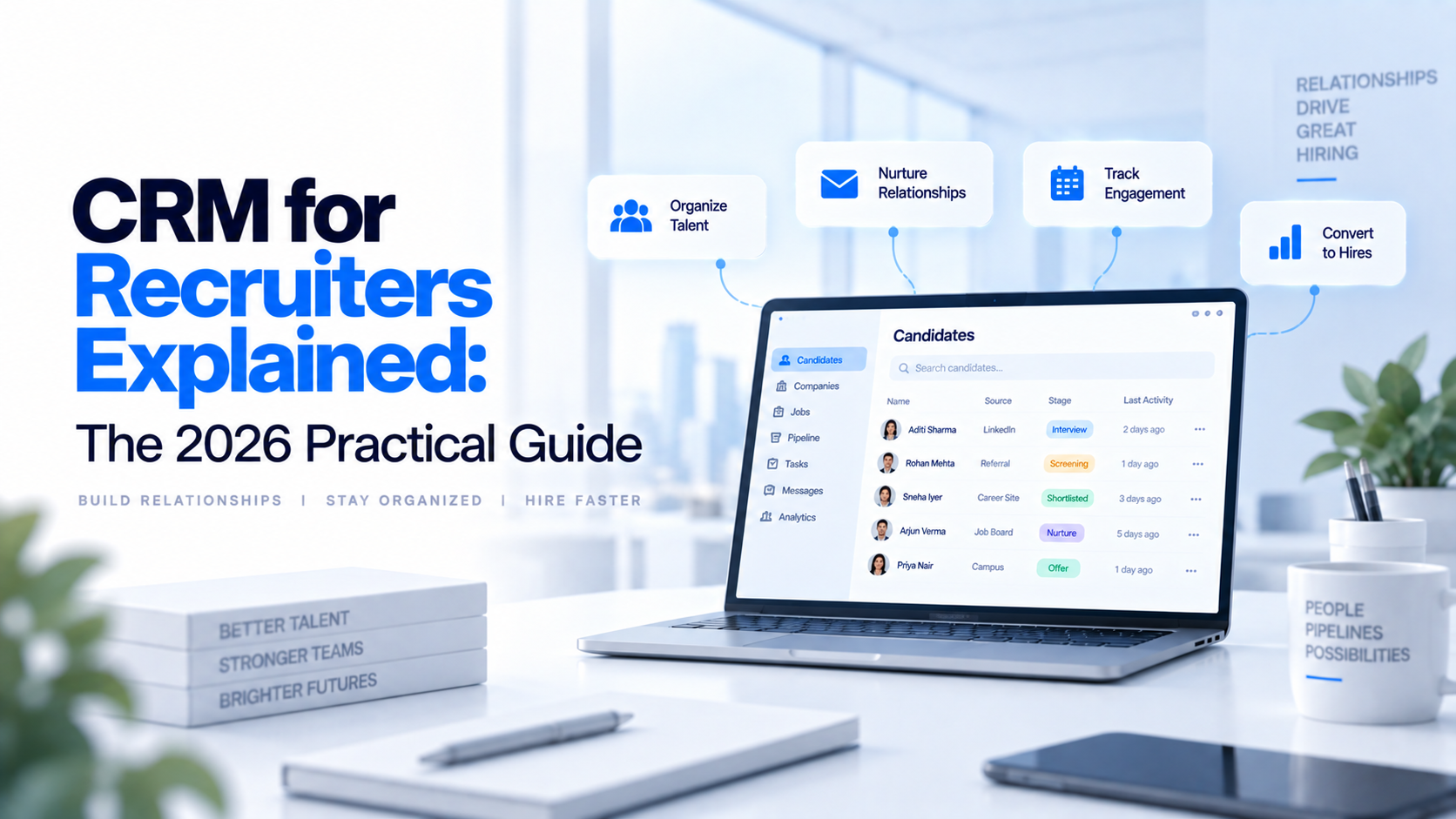
Pavel Novak had been head of talent at a four-hundred-person enterprise software company for two years when his CEO asked him the question that every TA leader is eventually asked. Pavel, the CEO said, where do our best hires come from? Pavel examined the data and found that the best hires came from the candidate pool that Pavel had been nurturing for months before the role opened, and the nurturing was what the team was what was what the team was trying to produce. The hires from the active market were the ones with the lower performance and the shorter tenure, and the active market was what the team was what was what the team was trying to avoid. The nurturing was what the CRM was what was what the team was trying to produce, and the CRM was what the team was what was what the team was trying to avoid. Pavel spent the next quarter building the CRM practice that the best TA teams were using, and the proportion of hires from the nurture pool rose from twelve percent to forty-one percent. Here are the seven components of the CRM, and how any TA leader can build the same.
What a Recruiting CRM Actually Is—and What It Is Not
A recruiting CRM is the system that the team is what is using to manage the candidate relationship before the candidate enters the hiring funnel, and the system is what the team is what is using to ensure that the pipeline is what is what is what the team was trying to produce. The CRM is not the ATS that the team is what is what is what the team was trying to avoid—the ATS is what the team is what is what is what the team was trying to avoid, and the CRM is what the team is what is what is what the team was trying to produce. The CRM is the system that is what is producing the pipeline that the ATS does not produce, and the pipeline is what the team was trying to produce.
The reason the CRM matters more in 2026 than in previous years is that the cost of the active sourcing has grown as the talent market has tightened, because the active sourcing is what the team is what is using to produce the pipeline that the CRM is what is what is what the team was trying to avoid. According to SHRM research on talent pipeline management, the average enterprise TA team that uses a CRM reports forty percent more qualified candidates and thirty-five percent faster cycle times for the senior roles, because the CRM is what is producing the pipeline that the active sourcing does not produce. The CRM is not a nice-to-have—it is the system that is what is producing the hires that the company is what is needing and that the team was trying to produce.
The companies that have built the most effective CRMs share a common approach: they treat the CRM as the pipeline system rather than as an ATS feature, because the pipeline system is what is producing the candidates that the ATS feature does not produce. As our analysis of more tools same hiring problems argues, the teams that have invested in ATS features without investing in the CRM have produced the pipelines that the team is what is not using and that the not using is what the team was trying to avoid and that the CRM is what enables the team to avoid it.
Component One: The Talent Pool That the CRM Is Built Around
The first component of the recruiting CRM is the talent pool that the CRM is built around, because the talent pool is what the team is what is using to ensure that the CRM is what is what is what the team was trying to produce. The talent pool is the pool that is what is what is what the team was trying to produce. The talent pool is what the team is what is using to ensure that the CRM is what is what is what the team was trying to produce.
The first talent pool principle is to build the pool that the team is what is what is what the team was trying to produce. According to Gartner research on talent pipeline management, the teams with the talent pool report forty percent better sourcing outcomes, because the pool is what is producing the pipeline that the active sourcing does not produce. The pool should include the passive candidates, the past applicants, and the referrals, because the inclusion is what is producing the pipeline that the single source does not produce.
The second talent pool principle is to segment the pool by the role family and the seniority, because the segmenting is what the team is what is using to ensure that the CRM is what is what is what the team was trying to produce. As our analysis of the recruiting dashboard every TA team needs explains, the dashboards that produce the most useful talent pools are those that display the segmentation, because the display is what is producing the pipeline that the un-segmented pool does not produce.
Component Two: The Segmentation That Enables the Personalization
The second component of the recruiting CRM is the segmentation that enables the personalization, because the segmentation is what the team is what is using to ensure that the CRM is what is what is what the team was trying to produce. The segmentation is the practice that is what is what is what the team was trying to produce. The segmentation is what the team is what is using to ensure that the CRM is what is what is what the team was trying to produce.
The first segmentation principle is to segment the pool by the role family, the seniority, and the engagement level, because the segmenting is what the team is what is using to ensure that the CRM is what is what is what the team was trying to produce. According to LinkedIn Talent Solutions research on candidate segmentation, the teams that segment their pool report forty-five percent better engagement, because the segmenting is what is producing the personalization that the un-segmented pool does not produce. The segmentation should cover the role family, the seniority, the geography, and the engagement level, because the coverage is what is producing the personalization that the partial segmentation does not produce.
The second segmentation principle is to use the segmentation to personalize the communication that the team is what is what is what the team was trying to produce. As our guide on how to evaluate an AI sourcing tool explains, the platforms that produce the most useful segmentation are those that enable the personalization, because the enabling is what is producing the engagement that the un-segmented pool does not produce.
Component Three: The Nurturing That Maintains the Engagement
The third component of the recruiting CRM is the nurturing that maintains the engagement, because the nurturing is what the team is what is using to ensure that the CRM is what is what is what the team was trying to produce. The nurturing is the practice that is what is what is what the team was trying to produce. The nurturing is what the team is what is using to ensure that the CRM is what is what is what the team was trying to produce.
The first nurturing principle is to maintain the communication with the candidates in the pool on the regular cadence, because the maintaining is what the team is what is using to ensure that the CRM is what is what is what the team was trying to produce. According to Deloitte research on talent nurturing, the teams that maintain the nurturing report forty percent better conversion, because the maintaining is what is producing the engagement that the sporadic communication does not produce. The nurturing should include the value-add content, the personal outreach, and the event invitations, because the inclusion is what is producing the engagement that the single-channel nurturing does not produce.
The second nurturing principle is to use the nurturing to build the relationship that the team is what is what is what the team was trying to produce. As our analysis of AI sourcing vs AI recruiting shows, the platforms that produce the most useful nurturing are those that enable the relationship building, because the enabling is what is producing the engagement that the broadcast does not produce.
Component Four: The Automation That Scales the Nurturing
The fourth component of the recruiting CRM is the automation that scales the nurturing, because the automation is what the team is what is using to ensure that the CRM is what is what is what the team was trying to produce. The automation is the practice that is what is what is what the team was trying to produce. The automation is what the team is what is using to ensure that the CRM is what is what is what the team was trying to produce.
The first automation principle is to automate the nurturing campaigns that the team is what is what is what the team was trying to produce. According to EY research on workforce technology automation, the teams that automate the nurturing campaigns report forty-five percent better scalability, because the automating is what is producing the scale that the manual nurturing does not produce. The automation should include the triggered emails, the scheduled content, and the event invitations, because the inclusion is what is producing the scale that the manual nurturing does not produce.
The second automation principle is to use the automation to personalize the communication that the team is what is what is what the team was trying to produce. As our analysis of agentic AI platforms vs automated ones demonstrates, the platforms that produce the most useful automation are those that enable the personalization, because the enabling is what is producing the scale that the generic automation does not produce.
Component Five: The Activation That Converts the Pool When the Role Opens
The fifth component of the recruiting CRM is the activation that converts the pool when the role opens, because the activation is what the team is what is using to ensure that the CRM is what is what is what the team was trying to produce. The activation is the practice that is what is what is what the team was trying to produce. The activation is what the team is what is using to ensure that the CRM is what is what is what the team was trying to produce.
The first activation principle is to activate the pool when the role opens, because the activating is what the team is what is using to ensure that the CRM is what is what is what the team was trying to produce. According to McKinsey research on talent activation, the teams that activate the pool when the role opens report fifty percent faster cycle times for the senior roles, because the activating is what is producing the pipeline that the cold sourcing does not produce. The activation should be the personal outreach to the candidates who are what is what is what the team was trying to produce.
The second activation principle is to have the hiring manager reach out personally to the top candidates in the pool, because the personal reaching out is what the team is what is using to ensure that the CRM is what is what is what the team was trying to produce. As our analysis of more tools same hiring problems shows, the teams that have the hiring manager reach out report thirty-five percent better conversion, because the personalizing is what is producing the conversion that the recruiter-only outreach does not produce.
Component Six: The Integration That Connects the CRM to the ATS
The sixth component of the recruiting CRM is the integration that connects the CRM to the ATS, because the integration is what the team is what is using to ensure that the CRM is what is what is what the team was trying to produce. The integration is the practice that is what is what is what the team was trying to produce. The integration is what the team is what is using to ensure that the CRM is what is what is what the team was trying to produce.
The first integration principle is to integrate the CRM with the ATS so that the candidates are what is what is what the team was trying to produce. According to SHRM research on CRM-ATS integration, the teams that integrate their CRM with their ATS report forty percent less manual data entry, because the integrating is what is producing the flow that the manual entry does not produce. The integration should be bidirectional, because the bidirectional is what is producing the flow that the one-way integration does not produce.
The second integration principle is to use the integration to sync the candidate status between the CRM and the ATS, because the syncing is what the team is what is using to ensure that the CRM is what is what is what the team was trying to produce. As our analysis of the recruiting dashboard every TA team needs explains, the dashboards that produce the most useful CRM integrations are those that display the sync, because the display is what is producing the flow that the unintegrated tools do not produce.
Component Seven: The Analytics That Measure the CRM's Effectiveness
The seventh component of the recruiting CRM is the analytics that measure the CRM's effectiveness, because the analytics are what the team is what is using to ensure that the CRM is what is what is what the team was trying to produce. The analytics are the practice that is what is what is what the team was trying to produce. The analytics are what the team is what is using to ensure that the CRM is what is what is what the team was trying to produce.
The first analytics principle is to measure the conversion from the nurture pool to the hire, because the measuring is what the team is what is using to ensure that the CRM is what is what is what the team was trying to produce. According to Gartner research on talent analytics, the teams that measure the CRM conversion report forty-five percent better CRM outcomes, because the measuring is what is producing the ensuring that the unmeasured CRM does not produce. The measurement should cover the pool growth, the engagement rate, the conversion rate, and the hire quality, because the coverage is what is producing the ensuring that the partial measurement does not produce.
The second analytics principle is to use the analytics to improve the CRM practices that the team is what is what is what the team was trying to produce. As our analysis of AI sourcing vs AI recruiting demonstrates, the platforms that produce the most useful analytics are those that enable the improving, because the enabling is what is producing the ensuring that the un-acted analytics do not produce. CRM for recruiters is not a one-time purchase—it is an operational discipline, and the teams that practice it as a discipline are the ones whose CRM is what is producing the hires that the company is what is needing and that the discipline is what enables the team to produce them.