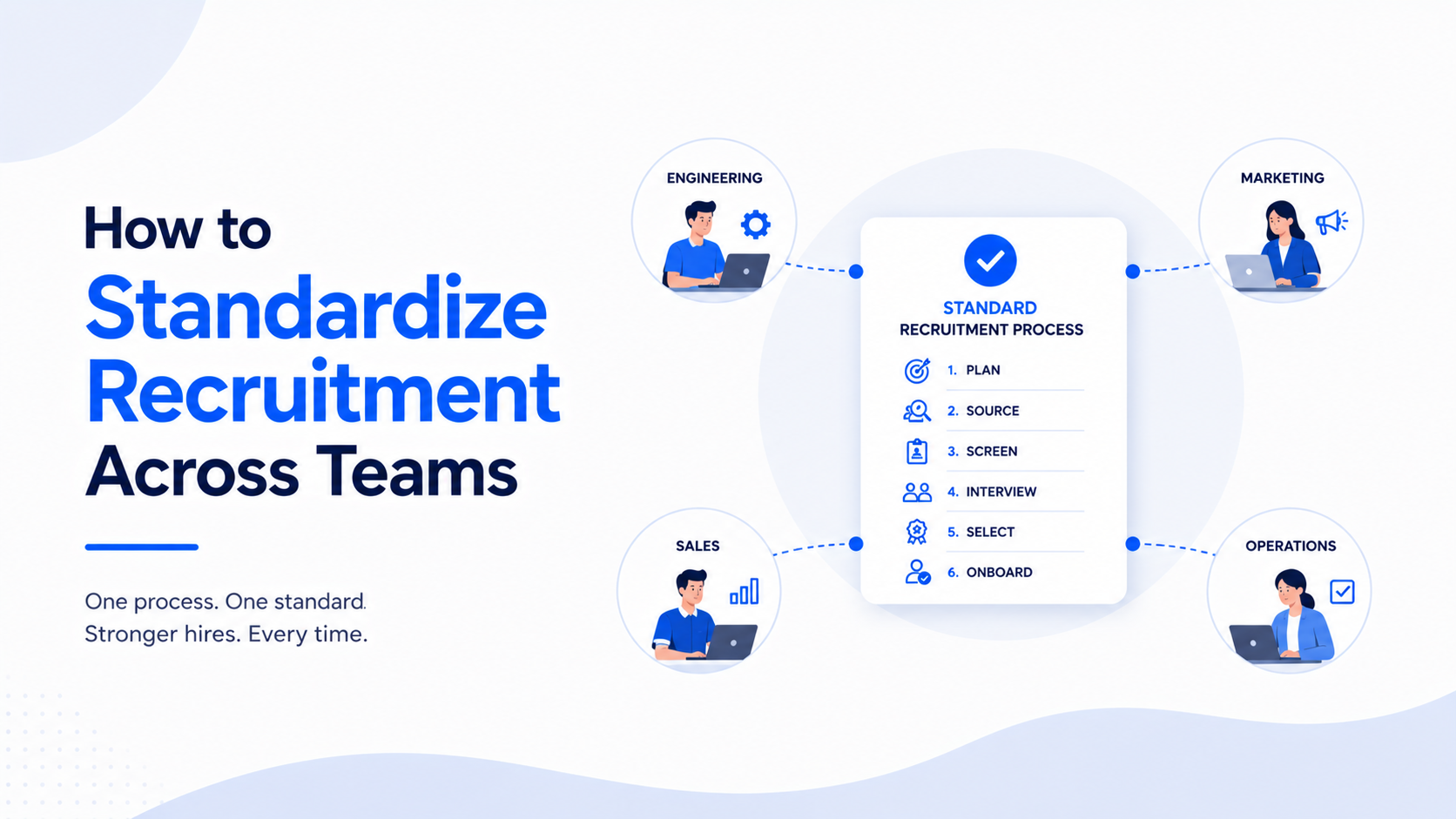
Lin Wei had been promoted to Global Head of Talent Acquisition at a fifteen-hundred-person enterprise SaaS company three months earlier, and the problem she had been hired to solve was sitting in her inbox in the form of an email from the CFO. Why does it take us forty-two days to hire a software engineer in Bangalore and twenty-six days to hire the same role in Dublin, with a thirty percent difference in cost-per-hire and a fifteen-point gap in offer acceptance rate? Lin had asked the same question of her three regional TA leaders, and she had gotten three different answers, each of which was internally consistent and none of which agreed with the others. The Bangalore leader blamed the market. The Dublin leader credited the process. The Boston leader said it was the tool stack. Lin realized, as she read the three responses, that the company did not have a recruiting function. It had three recruiting functions, each with its own process, its own tools, its own metrics, and its own definition of what good looked like, and the three functions produced three different outcomes because they were three different systems rather than one system operating in three markets. Standardization was the answer, but standardization done wrong would kill the local judgment that made each team effective in its market. Here is the framework Lin used to standardize what should be standard and to leave local what should be local.
What Standardization Actually Means in a Multi-Team TA Function
Standardization in a multi-team TA function is not the elimination of variation. It is the deliberate choice of which variations to eliminate and which to preserve, because some variations reflect local market conditions that must be respected while other variations reflect process drift that must be corrected, and the failure to distinguish between the two is what produces the standardization that kills local judgment or the autonomy that produces inconsistent outcomes. The standardized recruitment function is not the one where every team does everything the same way. It is the one where every team does the same things the same way and the different things differently, and the clarity about which is which is what produces the function that scales without losing the local effectiveness that each team has built in its market.
The first thing to understand about standardization is that it is a means, not an end. The end is consistent outcomes across teams, and standardization is the means that produces consistent outcomes only when the variation in process is the cause of the variation in outcomes, which is sometimes true and sometimes not. According to McKinsey research on talent operations, sixty percent of the variation in hiring outcomes across teams in the same company is caused by process variation, while forty percent is caused by market variation, which means that standardization can address sixty percent of the variation and cannot address the remaining forty percent, and the team that tries to standardize the forty percent that the market drives will produce a standardized process that performs worse in each market than the local process did, because the standardized process ignores the local conditions that the local process was designed to address. The discipline of standardization begins with the diagnosis of which variation is process and which is market, because the diagnosis is what enables the team to standardize the right things and to leave the right things local.
The second thing to understand is that standardization is a continuum, not a binary. A team can standardize the process steps, the tools, the metrics, the templates, or the definitions of good, and each of these can be standardized independently, which means that standardization is a set of choices rather than a single choice, and the set of choices that produces the right standardization for one company will not produce the right standardization for another. As our analysis of more tools same hiring problems argues, the teams that have standardized their tool stacks without standardizing their processes have produced the worst of both worlds, because the standardized tool is used differently by each team, and the different use produces the different outcomes that the standardization was intended to eliminate, while the standardized tool has eliminated the local flexibility that the local process needed to address the local market conditions that the standardized tool does not account for.
The Case for Standardization—and the Case Against Over-Standardization
The case for standardization is straightforward and well-documented. Standardized processes produce consistent candidate experiences, which produce consistent candidate net promoter scores, which produce consistent employer brand perception, which produces consistent applicant quality across the teams. Standardized processes produce comparable metrics, which enable the global TA leader to identify the team that is performing best and to learn from its practices, which is impossible when each team measures different things in different ways. Standardized processes produce operational efficiency, because the team that standardizes its templates and tools does not duplicate the work of template creation and tool evaluation in each region, and the elimination of the duplicate work produces the capacity that the team can redirect to the higher-value work of candidate engagement and hiring manager partnership. The case for standardization is the case for any operational discipline—the elimination of variation that does not produce value, and the discipline of the elimination is what produces the operational efficiency that the discipline is intended to produce.
The case against over-standardization is less documented but equally important. Over-standardization produces the process that is optimized for the average market and that performs worse than the local process in every market, because the average market is not any actual market, and the process that works in the average does not work in any of the markets that the average was computed from. According to Gartner talent acquisition research, the companies that have over-standardized their recruiting processes report fifteen percent higher candidate decline rates in markets where the standardized process does not match local expectations, because the candidate in each market has expectations that the local process was designed to meet and that the standardized process does not meet, and the unmet expectations produce the decline that the local process would have prevented. The over-standardization is what produces the function that performs worse after standardization than it performed before, because the standardization eliminated the local practices that produced the local performance without replacing them with practices that produced equivalent performance in each local market.
The discipline of standardization is the discipline of finding the line between the process that should be standard and the practice that should be local, and the line is not always obvious, because the line moves with the role, the market, and the company's stage. The line is found through the structured examination of each process step, where the team asks whether the variation in the step reflects a local market condition that should be respected or a process drift that should be corrected, and the answer is not always clear and must be revisited as the market and the company evolve. The standardization that is not revisited is the standardization that becomes the over-standardization, because the local condition that justified the local practice may no longer exist, and the standardization that should now be applied is not applied because the team has not revisited the decision and the local practice has been preserved through inertia rather than through justification. The discipline of standardization is the discipline of revisiting the line, and the revisiting is what keeps the standardization healthy as the company and the market change.
The Core Process Every Team Should Share
The core process that every team in a multi-team TA function should share is the seven-phase hiring workflow: requisition intake, sourcing, screening, interview, decision, offer, onboarding. These seven phases should be standard across every team, because they describe the basic architecture of how any hiring process works, and the standardization of the architecture is what enables the metrics that are comparable across teams and the improvements that can be shared across teams. The core process is not a detailed prescription of how each phase is executed—it is a framework that names the phases, defines the handoffs between phases, and assigns an owner to each phase, and the framework is what every team should share while the execution within each phase is what each team should adapt to its local market, role mix, and hiring manager preferences.
The first standard within the core process is the definition of each phase's inputs and outputs, because the definition is what enables the handoff between phases to be measured and managed, and the measurable handoff is what produces the comparable metrics that the multi-team function requires. According to SHRM research on recruiting process standardization, the teams that have standardized the inputs and outputs of each phase report forty percent better cross-team comparability of metrics, because the standardization enables each team to measure the same thing, and the same measurement is what produces the comparable metrics that the global TA leader can use to identify the best practices and to share them across the teams. The standardization of the inputs and outputs is the foundation of the comparable metrics, and the comparable metrics are the foundation of the cross-team learning that the multi-team function exists to enable.
The second standard within the core process is the metric definition, because the metric that is defined differently by each team is the metric that cannot be compared across teams, and the metric that cannot be compared is the metric that cannot be used to identify the best practice or to share it. The metric definitions should specify what is measured, how it is measured, when it is measured, and how it is segmented, because each of these decisions affects the metric's value and the comparison requires the value to be computed the same way by each team. As our analysis of the recruiting dashboard every TA team needs explains, the dashboards that produce the most cross-team learning are those that are built on standardized metric definitions, because the standardized definitions enable the dashboards to be compared across teams and the comparison is what produces the learning that the dashboard was built to enable, while the dashboards built on local definitions cannot be compared and therefore cannot produce the learning that the multi-team function exists to produce.
Role-Specific Variations: Where Standardization Stops
Standardization stops at the role-specific variation, because the role-specific variation is what the local team knows and what the standardized process cannot anticipate, and the elimination of the role-specific variation is what produces the standardized process that performs worse than the local process for the specific role. The role-specific variation is most pronounced in the sourcing and screening phases, where the channels that produce qualified candidates vary by role and where the screening criteria that distinguish qualified from unqualified candidates vary by role, and the variation is what the local team has learned through years of hiring for the specific role and what the standardized process cannot replicate without the local learning. The standardization that eliminates the role-specific variation is the standardization that produces the process that does not work for the role, and the process that does not work is what produces the candidate decline and the cycle time growth that the standardization was intended to eliminate.
The first role-specific variation to preserve is the sourcing channel mix, because the channels that produce qualified candidates for one role in one market are not the channels that produce qualified candidates for a different role in a different market, and the standardization of the channel mix is what produces the standardized sourcing that produces fewer qualified candidates than the local sourcing did. According to LinkedIn talent research on sourcing effectiveness, the sourcing channel mix that produces the best results varies by thirty-five percent across role families and by twenty percent across geographies, which means that the standardized channel mix can produce at most sixty-five percent of the qualified-candidate volume that the local channel mix produced, and the thirty-five percent reduction in qualified candidates is what produces the cycle time growth and the candidate decline that the standardization was intended to eliminate. The preservation of the role-specific channel mix is what enables the standardized process to perform as well as the local process, because the local channel mix is what the local performance was built on, and the preservation is what enables the standardization to add value through the standardization of the rest of the process rather than to destroy value through the standardization of the part that should remain local.
The second role-specific variation to preserve is the interview structure, because the interview structure that works for one role does not work for another, and the standardization of the interview structure is what produces the interview process that does not evaluate the candidate properly for the specific role. The engineering role that requires a technical assessment, the sales role that requires a role-play, the executive role that requires a panel interview—each of these roles requires a different interview structure, and the standardization that ignores the difference is the standardization that produces the interview process that does not identify the qualified candidate and that produces the hire that does not perform. As our analysis of AI sourcing vs AI recruiting explains, the platforms that support the most effective multi-team standardization are those that enable role-specific interview structures within a standardized interview framework, because the framework enables the comparability while the structure enables the role-specific evaluation, and the combination of the framework and the structure is what produces the standardization that adds value rather than the standardization that destroys it.
The Operating System That Enables Standardization
The operating system that enables standardization is the combination of process documentation, tool stack, and data infrastructure that the multi-team function uses to run its standardized process, and the operating system is what determines whether the standardization produces the consistent outcomes it was designed to produce or whether the standardization produces the inconsistent outcomes that the broken operating system produces. The operating system is not the process—it is the infrastructure that the process runs on, and the infrastructure that is not standardized produces the process that is not standardized regardless of the documentation, because the team that uses different tools to run the same documented process is the team that runs different processes in practice, and the different processes produce the different outcomes that the standardization was intended to eliminate.
The first component of the operating system is the tool stack, because the tool stack that is not standardized is the tool stack that produces the data that is not comparable and the process that is not consistent, and the non-comparable data and the inconsistent process are what produce the variation that the standardization was intended to eliminate. According to Deloitte workforce analytics on TA tooling, the multi-team functions that have standardized their tool stacks report forty-five percent better cross-team metric comparability and thirty percent faster cycle time improvement, because the standardized tool stack produces the comparable data and the consistent process that the cross-team learning and the continuous improvement require, and the learning and the improvement are what produce the compounding value that the standardization was intended to produce. The standardized tool stack is the foundation of the operating system, and the foundation is what enables the rest of the operating system to produce the value that the standardization was built to deliver.
The second component of the operating system is the data infrastructure, because the data infrastructure that is not standardized is the data infrastructure that produces the metrics that are not comparable and the insights that are not transferable, and the non-comparable metrics and the non-transferable insights are what produce the function that does not learn across teams and that does not improve over time. The data infrastructure should standardize the metric definitions, the data collection, the data segmentation, and the reporting, because each of these is what enables the metrics to be compared and the insights to be transferred, and the comparison and the transfer are what produce the cross-team learning that the multi-team function exists to enable. As our guide on how to evaluate an AI sourcing tool explains, the platforms that produce the most effective standardization are those that produce standardized data as a byproduct of the process, because the byproduct data enables the comparison without requiring the separate data collection that the team would otherwise have to absorb and that the standardized tool eliminates.
Rolling Out Standardization Without Killing Team Autonomy
The rollout of standardization is the phase where the standardization succeeds or fails, because the rollout that is done poorly produces the standardization that the teams resist and that the resistance undermines, and the rollout that is done well produces the standardization that the teams adopt and that the adoption enables. The rollout must be done as a co-creation rather than a directive, because the directive produces the standardization that the teams comply with in letter and undermine in spirit, while the co-creation produces the standardization that the teams own and that the ownership produces the adoption that the standardization's value depends on. The co-creation is slower than the directive, because the co-creation requires the participation of each team and the participation takes time, but the co-creation is what produces the standardization that sticks while the directive is what produces the standardization that fades as soon as the global TA leader stops enforcing it.
The first rollout principle is to involve the local teams in the design of the standardization, because the involvement is what produces the standardization that the teams recognize as their own and that the recognition produces the adoption, and the standardization that the teams recognize as their own is the standardization that the teams maintain without enforcement, while the standardization that is imposed is the standardization that the teams maintain only with enforcement and that the enforcement costs the global team the bandwidth that the standardization was intended to free. According to EY research on change management in TA, the standardization rollouts that involve the local teams in the design are sixty percent more likely to be adopted and maintained without enforcement, because the involvement produces the ownership that the maintenance without enforcement requires, and the ownership is what produces the standardization that scales without the enforcement overhead that the directive standardization requires and that the global team cannot sustain over time.
The second rollout principle is to phase the standardization so that the teams can adopt the standards incrementally rather than all at once, because the incremental adoption is what enables the teams to integrate each standard into their practice before the next standard is introduced, and the integration is what produces the standard that is adopted in practice rather than the standard that is documented but not followed. The phasing should start with the standards that produce the most value with the least disruption—the metric definitions, the phase naming, the handoff specifications—because these standards produce the comparability that the cross-team learning requires, and the comparability is what produces the value that justifies the subsequent standards that require more disruption. As our analysis of agentic AI platforms vs automated ones shows, the platforms that produce the most effective standardization are those that enable incremental adoption, because the incremental adoption is what produces the standardization that the teams can absorb and that the absorption is what produces the standardization that sticks rather than the standardization that the teams reject and that the rejection is what produces the standardization that fails.
Sustaining Standardization as the Company Grows
The standardization that is sustained is the standardization that is revisited, because the standardization that is not revisited is the standardization that becomes the over-standardization as the market and the company change, and the over-standardization is what produces the function that performs worse over time rather than the function that performs better over time. The sustaining discipline is the regular review of the standardization, where the global team and the local teams examine each standard and ask whether the standard still serves the purpose it was designed to serve, and the question is what produces the standardization that is continuously adapted to the changing conditions and that the adaptation is what produces the standardization that compounds in value rather than the standardization that decays into the over-standardization that the company eventually abandons.
The first sustaining practice is the annual standardization review, where the global team and the local teams gather to examine the standards and to identify the standards that should be updated, the standards that should be eliminated, and the new standards that should be introduced, because the annual cadence is what produces the standardization that is continuously adapted and that the adaptation is what produces the standardization that compounds in value. According to McKinsey research on talent operations, the multi-team functions that hold annual standardization reviews report fifty percent better year-over-year improvement in their cross-team hiring metrics, because the annual review produces the standardization that is adapted to the current conditions rather than the standardization that is adapted to the conditions that existed when the standard was introduced and that no longer exist and that the unadapted standard produces the over-standardization that the annual review is designed to prevent.
The second sustaining practice is the local team's feedback loop, where the local teams regularly report on the standards that are working and the standards that are not, because the local team is the team that uses the standard and that knows whether the standard is producing the value it was designed to produce, and the local team's feedback is what enables the global team to update the standards that are not working and to preserve the standards that are. The feedback loop should be a regular cadence rather than an annual survey, because the regular cadence is what produces the feedback that is current and that the current feedback is what produces the standardization that is continuously adapted rather than the standardization that is reviewed only when the annual review arrives and that the year between reviews produces the over-standardization that the regular feedback would have caught and corrected before it became the over-standardization that the annual review must address. The sustaining of standardization is the discipline of the regular feedback and the regular review, and the discipline is what produces the standardization that scales with the company rather than the standardization that the company outgrows and that the outgrowing is what produces the function that performs worse as it scales rather than the function that performs better as it scales and that the better performance is what the standardization was built to deliver.