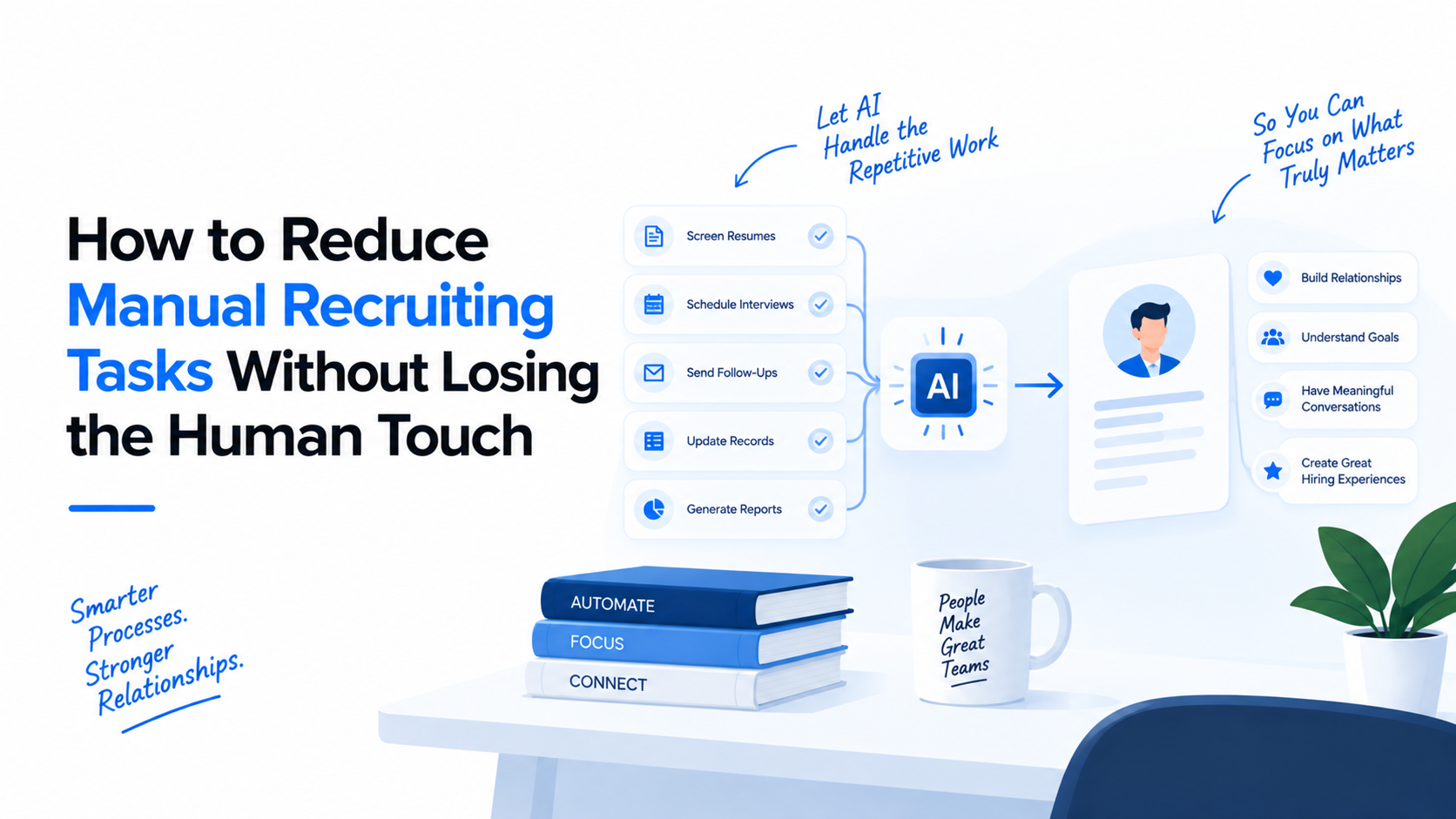
Thandiwe Moyo had been head of talent at a Series C enterprise software company for eleven months when she noticed the pattern that every TA leader eventually notices. Her recruiters were working harder than ever, the team had more tools than ever, and the manual work had not decreased. The tools that were supposed to eliminate the manual work had each introduced their own manual work—the prompts to write, the dashboards to configure, the integrations to maintain, the outputs to verify. The team had eleven tools in its stack, and each tool required an estimated two to three hours of manual work per week to operate, and the cumulative manual work was consuming thirty-five hours of recruiter time per week—almost a full additional recruiter. Thandiwe realized that the team had been automating the wrong things, and the wrong automation was what was producing the manual work that the automation was supposed to eliminate. She spent the next quarter building a framework for reducing the manual tasks at their root—by eliminating the work that should not exist, by automating the work that should not be done by humans, and by integrating the tools that were producing the duplicate work. The framework reduced the team's manual work by fifty-five percent in one quarter, and the freed time was redirected to the candidate conversations that produced the hires. Here is the framework she used.
Why Manual Recruiting Tasks Persist Even After Automation Investment
Manual recruiting tasks persist even after automation investment because the automation is what is being applied to the wrong work, and the wrong work is what the team is what is automating and that the automating is what is producing the manual work that the automation was supposed to eliminate. The wrong work is the work that should not exist in the first place—the duplicate data entry, the unnecessary approval, the redundant communication—and the automation of the wrong work is what produces the new manual work that the automation itself requires. The right automation is the automation that eliminates the work at its root by eliminating the process step that produces the work, and the elimination is what the framework is what enables the team to do and that the doing is what the team was trying to do.
The first reason manual tasks persist is that the automation is what is being applied to the task rather than to the process, and the task-level automation is what produces the manual work of operating the automation, while the process-level automation is what produces the elimination of the process step that produces the task. According to McKinsey research on talent operations, the teams that have automated at the task level report fifteen percent manual work reduction, while the teams that have automated at the process level report fifty-five percent manual work reduction, because the process-level automation is what produces the elimination that the task-level automation does not produce and that the elimination is what the team was trying to produce.
The second reason manual tasks persist is that the tools are what is being added without being integrated, and the unintegrated tools are what produce the manual work of moving data between them. As our analysis of more tools same hiring problems argues, the teams that have added tools without integrating them have produced the manual work that the integration was supposed to eliminate, and the manual work is what the team was trying to eliminate and that the integration is what enables the team to eliminate it. The manual task is not the task that the tool was supposed to eliminate—the manual task is the task that the tool introduced, and the introduction is what the framework is what enables the team to address and that the addressing is what the team was trying to do.
Step One: Audit the Manual Work to Find What Actually Consumes the Time
The first step of the framework is the audit of the manual work to find what actually consumes the time, because the audit is what the team is what is doing to understand the manual work and that the understanding is what the team is what is using to identify the work that the framework is what is eliminating and that the eliminating is what the team was trying to do. The audit is the practice of tracking every task that the recruiter is what is performing for two weeks and that the tracking is what the team is what is using to identify the manual work that the framework is what is eliminating and that the eliminating is what the team was trying to do.
The first audit principle is to track every task for two weeks, because the two weeks is what produces the data that the team is what is using to identify the manual work and that the identifying is what the audit is what enables the team to do. According to Gartner talent acquisition research on productivity, the teams that audit their manual work report forty percent better automation outcomes, because the audit is what produces the identification that the manual work is what the audit is what enables the team to do and that the identifying is what the team was trying to do. The audit should categorize the tasks by the type of work and the time each consumed, because the categorization is what produces the insight that the team is what is using to prioritize the automation and that the prioritizing is what the team was trying to do.
The second audit principle is to identify the tasks that are what is not producing the value and that the identifying is what the team is what is using to prioritize the elimination and that the prioritizing is what the audit is what enables the team to do. As our guide on how to evaluate an AI sourcing tool explains, the audits that produce the most useful automation are those that identify the tasks that are not producing value, because the identification is what produces the prioritization that the audit is what enables the team to do and that the prioritizing is what the team was trying to do.
Step Two: Eliminate the Work That Should Not Exist Before Automating Anything
The second step of the framework is the elimination of the work that should not exist before automating anything, because the elimination is what the team is what is doing to remove the work at its root and that the removing is what the framework is what enables the team to do and that the doing is what the team was trying to do. The work that should not exist is the work that the process is what is producing and that the producing is what the team is what is absorbing and that the absorbing is what the elimination is what enables the team to eliminate. The work that should not exist is the work that the process step is what is producing and that the process step is what the elimination is what enables the team to remove and that the removing is what the team was trying to do.
The first elimination principle is to remove the process steps that are what is producing the work that should not exist and that the removing is what the team is what is doing to eliminate the work at its root and that the eliminating is what the framework is what enables the team to do. According to SHRM research on process improvement, the teams that eliminate the work that should not exist before automating report fifty percent better outcomes, because the elimination is what produces the removal that the automation does not produce and that the removal is what the team was trying to do. The work that should not exist includes the duplicate approvals, the redundant communications, and the unnecessary reports, and each of these is what the elimination is what enables the team to remove and that the removing is what the team was trying to do.
The second elimination principle is to consolidate the process steps that are what is producing the duplicate work and that the consolidating is what the team is what is doing to eliminate the duplicate work at its root and that the eliminating is what the framework is what enables the team to do. As our analysis of the recruiting dashboard every TA team needs explains, the dashboards that produce the most useful elimination are those that display the duplicate work, because the display is what produces the identification that the elimination is what enables the team to do and that the identifying is what the team was trying to do.
Step Three: Automate the Repetitive Work That Cannot Be Eliminated
The third step of the framework is the automation of the repetitive work that cannot be eliminated, because the repetitive work is what the team is what is automating and that the automating is what the framework is what enables the team to do and that the doing is what the team was trying to do. The repetitive work that cannot be eliminated is the work that the process is what is requiring and that the requiring is what the team is what is absorbing and that the absorbing is what the automation is what enables the team to eliminate. The repetitive work is the work that the automation is what is doing and that the doing is what the recruiter is what is not doing and that the not doing is what the time savings is what the automation is what enables the team to produce.
The first automation principle is to automate the repetitive work that the recruiter is what is doing and that the doing is what the recruiter is what is spending the time on and that the spending is what the automation is what enables the team to eliminate. According to LinkedIn talent research on recruiting automation, the teams that automate the repetitive work report forty percent less time on manual tasks, because the automation is what produces the elimination that the manual work is what the automation is what enables the team to do and that the doing is what the team was trying to do. The repetitive work includes the scheduling, the application acknowledgment, the status update, and the feedback collection, and each of these is what the automation is what enables the team to eliminate and that the eliminating is what the team was trying to do.
The second automation principle is to automate the work at the process level rather than at the task level, because the process-level automation is what produces the elimination that the task-level automation does not produce and that the elimination is what the team was trying to do. As our analysis of agentic AI platforms vs automated ones demonstrates, the platforms that produce the most useful automation are those that automate the process rather than the task, because the process-level automation is what produces the elimination that the task-level automation does not produce and that the elimination is what the team was trying to produce.
Step Four: Integrate the Tools to Eliminate the Cross-Tool Manual Work
The fourth step of the framework is the integration of the tools to eliminate the cross-tool manual work, because the cross-tool manual work is what the team is what is doing to move the data between the tools and that the doing is what the team is what is spending the time on and that the spending is what the integration is what enables the team to eliminate. The cross-tool manual work is the work that the unintegrated tools are what is producing and that the producing is what the team is what is absorbing and that the absorbing is what the integration is what enables the team to eliminate. The integration is what the framework is what enables the team to do and that the doing is what the team was trying to do.
The first integration principle is to integrate the tools so that the data is what is flowing automatically and that the integrating is what the team is what is doing to eliminate the cross-tool manual work and that the eliminating is what the integration is what enables the team to do. According to Deloitte workforce analytics on tool integration, the teams that integrate their tools report forty-five percent less time on cross-tool data management, because the integration is what produces the flow that the manual data entry does not produce and that the flow is what the time savings is what the integration is what enables the team to produce and that the team was trying to produce.
The second integration principle is to consolidate the tools that are what is duplicating the data and that the consolidating is what the team is what is doing to eliminate the cross-tool reconciliation and that the eliminating is what the consolidation is what enables the team to do. As our analysis of AI sourcing vs AI recruiting shows, the tool consolidation that produces the most time savings is the consolidation that eliminates the duplicate data, because the elimination is what produces the time savings that the duplicate data does not produce and that the time savings is what the team was trying to produce.
Step Five: Use AI for the High-Volume Work That Exceeds Human Capacity
The fifth step of the framework is the use of AI for the high-volume work that exceeds human capacity, because the high-volume work is what the team is what is using the AI for and that the using is what the framework is what enables the team to do and that the doing is what the team was trying to do. The high-volume work is the work that the team is what is doing at the volume that the human cannot do at scale and that the doing is what the AI is what enables the team to eliminate and that the eliminating is what the team was trying to do. The AI is not the replacement for the recruiter—the AI is the tool that the team is what is using to handle the volume that the human cannot handle at scale and that the handling is what the AI is what enables the team to do and that the doing is what the team was trying to do.
The first AI principle is to use the AI for the screening that the recruiter is what is doing at the volume that the human cannot do at scale and that the doing is what the AI is what enables the team to eliminate and that the eliminating is what the team was trying to do. According to EY research on AI in recruiting, the teams that use AI for screening report sixty percent less time on application review, because the AI is what produces the screening that the human cannot do at scale and that the screening is what the time savings is what the AI is what enables the team to produce and that the team was trying to produce.
The second AI principle is to use the AI for the sourcing that the recruiter is what is doing at the volume that the human cannot do at scale and that the doing is what the AI is what enables the team to eliminate and that the eliminating is what the team was trying to do. As our analysis of AI sourcing vs AI recruiting demonstrates, the AI sourcing tools that produce the most time savings are those that find and engage the candidates at the volume that the human cannot, because the volume is what produces the time savings that the human sourcing does not produce and that the time savings is what the team was trying to produce.
Step Six: Empower the Recruiter to Make the Decisions Without the Manual Approvals
The sixth step of the framework is the empowerment of the recruiter to make the decisions without the manual approvals, because the manual approvals are what the recruiter is what is waiting for and that the waiting is what the recruiter is what is spending the time on and that the spending is what the empowerment is what enables the team to eliminate. The manual approval is the step that the process is what is requiring and that the requiring is what the recruiter is what is waiting for and that the waiting is what the empowerment is what enables the team to eliminate. The empowerment is what the framework is what enables the team to do and that the doing is what the team was trying to do.
The first empowerment principle is to pre-approve the decisions that the recruiter is what is making and that the pre-approving is what the team is what is doing to eliminate the manual approvals and that the eliminating is what the empowerment is what enables the team to do. According to McKinsey research on decision rights, the teams that pre-approve the decisions report thirty-five percent less time on approval cycles, because the pre-approval is what produces the elimination that the manual approval does not produce and that the elimination is what the team was trying to produce. The pre-approval should cover the compensation ranges and the offer extensions within the ranges, because the pre-approval is what enables the recruiter to make the decisions without the manual approvals and that the making is what the team was trying to do.
The second empowerment principle is to delegate the decisions to the recruiter and that the delegating is what the team is what is doing to eliminate the manual approvals and that the eliminating is what the empowerment is what enables the team to do. As our analysis of agentic AI platforms vs automated ones shows, the platforms that produce the most useful empowerment are those that enable the recruiter to make the decisions, because the enabling is what produces the elimination that the manual approval does not produce and that the elimination is what the team was trying to produce.
Step Seven: Measure the Reduction and Sustain It Through the Quarter
The seventh step of the framework is the measurement of the reduction and the sustaining of it through the quarter, because the measurement is what the team is what is doing to ensure that the reduction is what is happening and that the ensuring is what the framework is what enables the team to do and that the doing is what the team was trying to do. The measurement is the practice of tracking the manual work over time and that the tracking is what the team is what is using to ensure that the reduction is what is happening and that the ensuring is what the measurement is what enables the team to do and that the doing is what the team was trying to do.
The first measurement principle is to track the manual work over time and that the tracking is what the team is what is doing to ensure that the reduction is what is happening and that the ensuring is what the measurement is what enables the team to do. According to Gartner talent acquisition research on productivity measurement, the teams that track their manual work over time report fifty percent better sustainability of the reduction, because the tracking is what produces the ensuring that the reduction is what the measurement is what enables the team to do and that the ensuring is what the team was trying to do.
The second measurement principle is to sustain the reduction through the quarter and that the sustaining is what the team is what is doing to maintain the reduction and that the maintaining is what the framework is what enables the team to do and that the doing is what the team was trying to do. As our analysis of more tools same hiring problems demonstrates, the teams that sustain the reduction through the quarter are those that measure the reduction regularly, because the measuring is what produces the sustaining that the framework is what enables the team to do and that the sustaining is what the team was trying to do. Reducing manual recruiting tasks is not a one-time project—it is an operational discipline, and the teams that practice it as a discipline are the ones whose recruiters have the time to do the work that actually produces hires and that the discipline is what enables the recruiters to do.