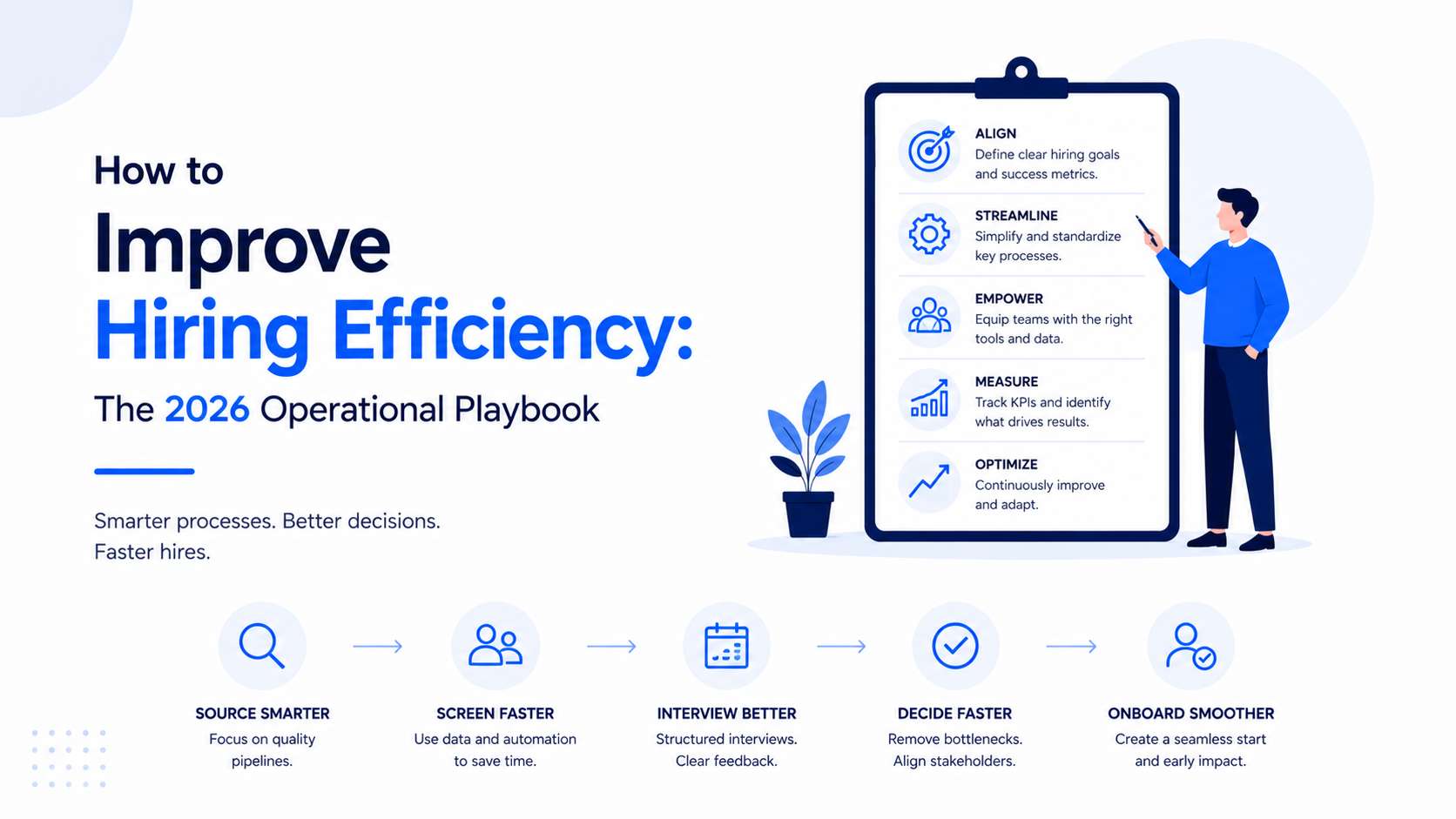
Tomás Almeida had been head of talent at an eight-hundred-person logistics platform for fourteen months when his COO asked him to reduce time-to-fill by thirty percent without increasing the recruiting budget. Tomás's first instinct was the instinct that most TA leaders have in this situation: he would ask the team to work faster. More sourcing activity per week. More screens per day. Tighter interview scheduling. The instinct was wrong, and Tomás knew it was wrong because he had tried it twice before at previous companies and it had produced the same result each time. The team worked harder for six weeks, the metrics improved marginally, and then the team burned out and the metrics returned to their previous levels—or worse. The cycle time was not a function of effort. It was a function of structure. Somewhere in the hiring process, structural waste was converting thirty days of work into sixty days of cycle time, and no amount of recruiter effort could remove waste that was built into the process itself. Tomás decided to do what he should have done at his previous companies: to diagnose the structural waste before trying to improve the efficiency, and to attack the waste rather than the effort. The diagnosis revealed that sixty percent of the cycle time was queue time—time that candidates spent waiting for the process to move them forward—and the queue time was what the structural fixes eliminated, producing the thirty percent cycle time reduction the COO had asked for without burning out the team. Here is the playbook Tomás used.
What Hiring Efficiency Actually Means in 2026
Hiring efficiency is the ratio of hiring output to hiring input, and it is measured by how many hires the function produces per unit of resources consumed—recruiter time, tool spend, agency fees, and cycle time. It is not the same as hiring speed, because speed is one component of efficiency but not the whole of it, and a function that produces fast hires at high cost is less efficient than a function that produces slightly slower hires at low cost, depending on the cost of the unfilled role. It is not the same as hiring volume, because volume is the output without reference to the input, and a function that produces many hires by spending many resources is not necessarily more efficient than a function that produces fewer hires with fewer resources. Efficiency is the ratio, and the ratio is what the operations function is what enables the team to improve, and the improvement is what the operations function was designed to deliver.
The reason efficiency matters more in 2026 than in previous years is that the cost of an inefficient hiring function has grown as the talent market has tightened and the competition for qualified candidates has intensified. According to McKinsey research on talent operations, the cost of an unfilled role has grown by forty percent in the last three years, because the role's absence produces the lost productivity and the lost revenue that the role was supposed to produce, and the loss is what the efficiency is what enables the team to recover by filling the role faster and at lower cost. The efficiency is not a vanity metric—it is the metric that connects the hiring function's performance to the company's financial performance, and the connection is what justifies the hiring function's budget and the investment that the function requires to operate at the efficiency that the company's financial performance requires.
The companies that have improved their hiring efficiency share a common approach: they treat efficiency as a structural property of the process rather than as a behavioral property of the recruiters, because the structural efficiency is what produces the sustainable improvement while the behavioral efficiency is what produces the temporary improvement that fades when the team's effort returns to its baseline. As our analysis of more tools same hiring problems argues, the teams that have invested in tools without investing in structural efficiency have produced the tool stacks that produce more activity without more efficiency, because the tools amplify the process rather than improving it, and the amplified process is what produces the activity that the efficiency was supposed to produce and that the activity does not produce and that the structural efficiency is what enables the team to produce.
The Seven Levers of Hiring Efficiency
The seven levers of hiring efficiency are process design, bottleneck elimination, automation, data infrastructure, tool integration, hiring manager partnership, and continuous improvement, and each lever produces a specific efficiency gain that the other levers cannot produce, and the seven levers together produce the cumulative efficiency improvement that the operations function was designed to deliver. The process design lever produces the efficiency gain that comes from removing the steps that do not add value, and the removal is what produces the cycle time reduction that the process design is what enables. The bottleneck elimination lever produces the efficiency gain that comes from identifying and addressing the phase that is limiting the throughput, and the addressing is what produces the throughput increase that the bottleneck elimination is what enables. The automation lever produces the efficiency gain that comes from removing the repetitive work that the recruiters were doing and that the automation can do, and the removal is what produces the capacity that the automation is what enables.
The four remaining levers are the levers that produce the efficiency gains that the first three levers cannot produce. The data infrastructure lever produces the efficiency gain that comes from measuring the process at the phase level, because the measurement is what produces the visibility that the improvement requires. According to Gartner talent acquisition research, the teams that have invested in data infrastructure report thirty-five percent better efficiency improvements, because the data is what produces the visibility that the improvement requires, and the visibility is what produces the decisions that the improvement depends on. The tool integration lever produces the efficiency gain that comes from removing the manual data entry that the unintegrated tools require, and the removal is what produces the capacity that the integration is what enables. The hiring manager partnership lever produces the efficiency gain that comes from reducing the back-and-forth between recruiter and hiring manager that the unclear partnership produces, and the reduction is what produces the cycle time that the partnership is what enables. The continuous improvement lever produces the efficiency gain that comes from the regular cadence of examination and redesign that the continuous improvement is what produces, and the cadence is what produces the compounding efficiency that the one-time improvement does not produce.
The seven levers are interdependent, and the team that pulls one lever without pulling the others is the team that produces the efficiency gain that the other levers undermine. As our analysis of the recruiting dashboard every TA team needs explains, the dashboards that produce the most efficiency are those that display the metrics for all seven levers, because the display is what enables the team to see the interaction between the levers and that the interaction is what produces the efficiency that the levers together produce and that the levers separately do not produce and that the team was trying to produce and that the seven levers together are what enable the team to produce it.
Process Design: Removing the Work That Does Not Add Value
The process design lever is the lever that produces the largest efficiency gain because it removes the work that does not add value, and the removal is what produces the cycle time and the capacity that the process design is what enables. The process design begins with the mapping of the current process, because the map is what reveals the steps that do not add value, and the steps that do not add value are the steps that the process design is what enables the team to eliminate, and the elimination is what produces the efficiency gain that the process design is what delivers. The steps that do not add value are typically the steps that were added to address a specific problem that no longer exists, and the steps have been maintained through inertia rather than through the value they produce, and the inertia is what the process design is what enables the team to overcome.
The first process design principle is to eliminate the steps that do not add value before trying to improve the steps that do, because the elimination is what produces the efficiency gain that the improvement cannot produce, and the elimination is cheaper than the improvement because the elimination removes the work while the improvement optimizes the work, and the removal is what produces the larger efficiency gain. According to SHRM research on process improvement, the teams that have eliminated the non-value-adding steps before improving the value-adding steps report forty percent larger efficiency gains, because the elimination is what produces the cycle time and the capacity that the improvement cannot produce, and the cycle time and the capacity are what the efficiency is what the team was trying to produce and that the elimination is what enables the team to produce it.
The second process design principle is to consolidate the steps that can be consolidated, because the consolidation is what removes the handoffs that the separate steps produce, and the handoffs are what produce the queue time that the consolidation is what enables the team to eliminate. As our guide on how to evaluate an AI sourcing tool explains, the platforms that produce the most efficiency are those that enable the consolidation of the steps that the separate tools were performing, because the consolidation is what removes the handoffs that the separate tools produce, and the handoffs are what produce the queue time that the consolidation is what enables the team to eliminate and that the queue time is what the efficiency is what the team was trying to produce and that the consolidation is what enables the team to produce it.
Bottleneck Elimination: Where the Throughput Is Limited
The bottleneck elimination lever is the lever that produces the efficiency gain that comes from identifying and addressing the phase that is limiting the throughput of the entire process, and the addressing is what produces the throughput increase that the bottleneck elimination is what enables. The bottleneck is the phase whose capacity is lower than the demand on it, and the bottleneck is what determines the throughput of the entire process, and the bottleneck is what the operations function is what enables the team to identify and eliminate, and the elimination is what produces the throughput increase that the bottleneck elimination is what delivers.
The first bottleneck elimination principle is to measure the queue time at each phase, because the queue time is what reveals the bottleneck, and the phase with the longest queue time is the bottleneck, and the measurement is what the operations function is what enables the team to do and that the measurement is what produces the identification that the bottleneck elimination is what the team was trying to do and that the measurement is what enables the team to do it. According to Deloitte workforce analytics on bottleneck identification, the teams that measure queue time at each phase report fifty percent faster bottleneck identification, because the queue time is what reveals the bottleneck, and the revelation is what produces the elimination that the identification enables.
The second bottleneck elimination principle is to address the bottleneck by expanding its capacity rather than by adding capacity to the non-bottleneck phases, because the capacity added to the non-bottleneck phases is the capacity that the system cannot use, and the unused capacity is what produces the cost without the throughput that the team was trying to produce. As our analysis of agentic AI platforms vs automated ones demonstrates, the platforms that produce the most throughput improvement are those that expand the bottleneck's capacity, because the expansion is what produces the throughput increase that the team was trying to produce, and the throughput increase is what the bottleneck elimination is what enables the team to produce and that the expansion is what enables the team to produce it.
Automation: Removing the Repetitive Work That Consumes Recruiter Time
The automation lever is the lever that produces the efficiency gain that comes from removing the repetitive work that the recruiters were doing and that the automation can do, and the removal is what produces the capacity that the automation is what enables the team to redirect to the higher-value work that the automation cannot do. The automation is not about replacing recruiters—it is about removing the work that the recruiters should not have been doing in the first place, and the removal is what produces the capacity that the automation is what enables the team to redirect to the candidate engagement and the hiring manager partnership that the automation cannot do and that the recruiters are what the team is what enables the team to do.
The first automation principle is to automate the tasks that are genuinely repetitive and low-judgment, because the automation of these tasks is what produces the capacity that the automation is what enables the team to redirect to the higher-value work. According to LinkedIn talent research on recruiting automation, the teams that have automated the repetitive tasks report twenty-five to thirty percent more recruiter time for the high-value work, because the automation is what removes the work that the recruiters should not have been doing, and the removal is what produces the capacity that the automation is what enables the team to redirect. The repetitive tasks include the scheduling, the application acknowledgments, the status updates, and the interview feedback collection, and each of these is what the automation is what enables the team to remove from the recruiter's workflow and that the removal is what produces the capacity that the automation is what enables the team to redirect.
The second automation principle is to use AI for the high-volume tasks that exceed human capacity, not as a replacement for human judgment, because the AI is what handles the volume that the human cannot handle at scale, and the human is what handles the judgment that the AI cannot handle at all. As our analysis of AI sourcing vs AI recruiting explains, the most effective automation is the automation that finds the right division of labor between AI and humans, because the division is what produces the efficiency that the automation alone or the human alone cannot produce, and the division is what the operations function is what enables the team to design and that the design is what produces the efficiency that the automation is what enables the team to produce.
Data Infrastructure: The Visibility That Improvement Requires
The data infrastructure lever is the lever that produces the efficiency gain that comes from measuring the process at the phase level, because the measurement is what produces the visibility that the improvement requires, and the visibility is what produces the decisions that the improvement depends on. The data infrastructure is what enables the team to see the process as a system rather than as a series of disconnected phases, and the seeing is what produces the improvement that the system is what enables the team to produce and that the disconnected phases do not produce and that the data infrastructure is what enables the team to see and that the seeing is what produces the improvement that the data infrastructure is what enables the team to produce.
The first data infrastructure principle is to instrument every phase of the process with a phase-level metric, because the phase-level metric is what reveals the phase that the improvement should target, and the targeting is what produces the improvement that the aggregate metric does not produce. According to EY research on hiring analytics, the teams that have instrumented every phase with a phase-level metric report forty-five percent better improvement targeting, because the phase-level metric is what reveals the phase that the improvement should target, and the targeting is what produces the improvement that the aggregate metric does not produce, because the aggregate metric hides the phase that the improvement should target and that the hiding is what produces the improvement that does not target the phase that the improvement should target.
The second data infrastructure principle is to segment the metrics by the dimensions that matter for decision-making, because the aggregate metric hides the variation that the decision requires, and the segmentation is what reveals the variation that the decision depends on. The segmentation should be by role family, seniority, geography, and sourcing channel, because each of these dimensions produces the variation that the decision requires, and the variation is what the segmentation is what enables the team to see and that the seeing is what produces the decision that the segmentation is what enables the team to make and that the decision is what produces the improvement that the data infrastructure is what enables the team to produce and that the team was trying to produce and that the data infrastructure is what enables the team to produce it.
Hiring Manager Partnership: Reducing the Back-and-Forth
The hiring manager partnership lever is the lever that produces the efficiency gain that comes from reducing the back-and-forth between the recruiter and the hiring manager that the unclear partnership produces, and the reduction is what produces the cycle time that the partnership is what enables. The back-and-forth is what produces the queue time that the partnership is what enables the team to eliminate, and the elimination is what produces the cycle time that the partnership is what enables the team to produce and that the team was trying to produce and that the partnership is what enables the team to produce it.
The first hiring manager partnership principle is to establish the partnership at the intake, where the recruiter and the hiring manager sit down together to define the role, the market, the timeline, and the process, and the joint definition is what produces the shared understanding that the partnership requires. According to McKinsey research on hiring manager engagement, the teams that have established the partnership at intake report thirty-five percent faster cycle times, because the partnership at intake is what produces the alignment that the average team spends the first three weeks of every requisition trying to build through the back-and-forth that the intake partnership would have eliminated at the start.
The second hiring manager partnership principle is to maintain the partnership throughout the process, with regular check-ins that keep the hiring manager informed and engaged rather than informed only at decision points, because the regular check-ins are what prevent the hiring manager from disengaging during the sourcing and screening phases and re-engaging only when the candidates are presented, and the disengagement is what produces the cycle time that the partnership is what enables the team to eliminate and that the elimination is what produces the cycle time that the partnership is what enables the team to produce and that the team was trying to produce and that the partnership is what enables the team to produce it. As our analysis of more tools same hiring problems demonstrates, the teams that have built the most effective hiring manager partnerships are those that have invested in the partnership rather than in the tools that the partnership is supposed to support, because the partnership is what produces the efficiency that the tools cannot produce without the partnership and that the tools are what the team was trying to use to produce the efficiency that the partnership is what enables the team to produce and that the partnership is what the team should have been investing in all along.
Continuous Improvement: The Discipline That Compounds Efficiency
The continuous improvement lever is the lever that produces the efficiency gain that compounds over time, because the continuous improvement is what produces the cadence of examination and redesign that the compounding efficiency requires, and the cadence is what produces the compounding efficiency that the one-time improvement does not produce. The continuous improvement is what distinguishes the team that improves every quarter from the team that improves once and then plateaus, and the distinction is what the operations function is what enables the team to make and that the continuous improvement is what enables the team to make it.
The first continuous improvement principle is the quarterly workflow review, where the team gathers to examine the phase-by-phase metrics, identify the phase that is the current bottleneck, and design the improvement that will address the bottleneck in the next quarter. According to Gartner talent acquisition research, the teams that hold quarterly workflow reviews are forty percent more likely to report year-over-year efficiency improvements, because the quarterly cadence is what produces the continuous examination that the continuous improvement requires, and the continuous examination is what produces the continuous improvement that the quarterly review is what enables the team to produce and that the team was trying to produce and that the quarterly review is what enables the team to produce it.
The second continuous improvement principle is the post-mortem on every missed hire, where the team examines the requisitions that did not produce a hire and identifies the phase where the requisition broke down, because the post-mortem is what reveals the specific defect that produced the miss and that the next improvement should address. The post-mortem is not about assigning blame—it is about identifying the process defect that the miss revealed, and the process defect is what the continuous improvement is what enables the team to fix and that the fix is what produces the efficiency that the post-mortem is what enables the team to produce and that the team was trying to produce and that the continuous improvement is what enables the team to produce it. As our analysis of the recruiting dashboard every TA team needs explains, the dashboards that support the most effective continuous improvement are those that display the metrics that the quarterly review and the post-mortem require, because the metrics are what enable the team to identify the bottleneck and the defect and that the identification is what produces the improvement that the continuous improvement is what enables the team to produce and that the team was trying to produce and that the continuous improvement is what enables the team to produce it and that the efficiency is what the team was trying to produce and that the continuous improvement is what enables the team to produce it. Hiring efficiency is not a one-time achievement. It is an operational discipline, and the teams that practice it as a discipline are the ones whose hiring functions compound in efficiency over time and that the compounding is what produces the hiring function that scales with the company rather than the hiring function that breaks under the company's growth and that the discipline is what enables the function to scale and that the scaling is what the operations function was designed to enable and that the team was trying to enable and that the continuous improvement is what enables the team to enable it.