Frontline hiring moves fast.
Retail teams, logistics companies, staffing firms, operations teams, and workforce-heavy businesses often hire at scale under tight timelines.
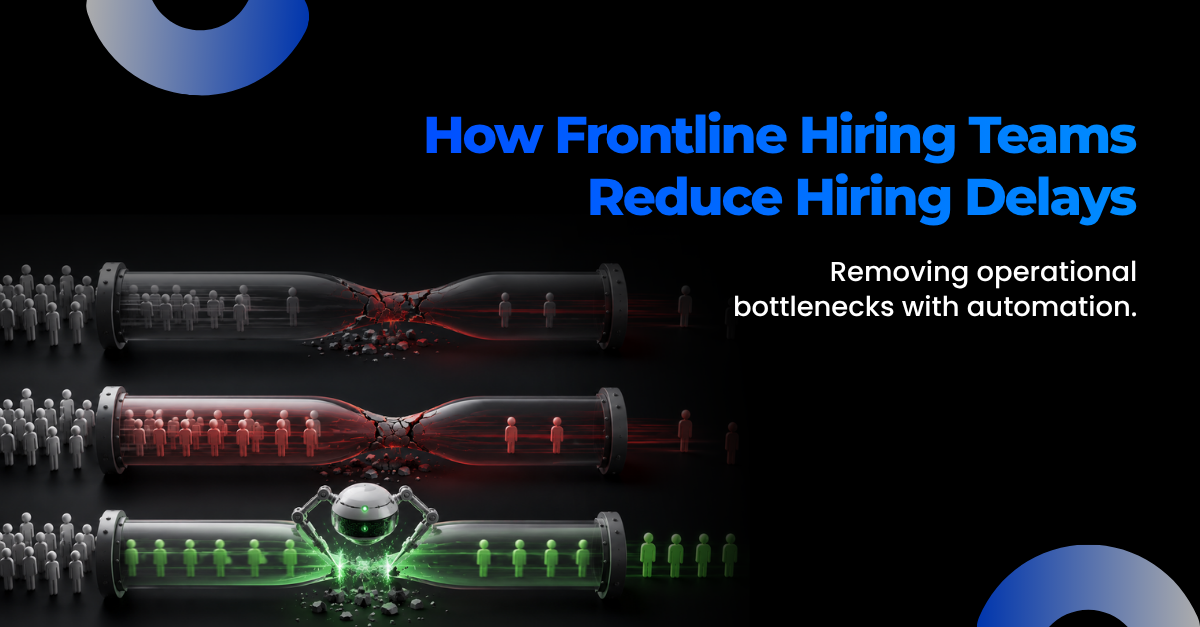
But many hiring delays happen because recruiting operations remain manual.
Candidate follow-ups slow down.
Screening becomes inconsistent.
Communication gaps increase.
Modern hiring teams increasingly use AI and workflow automation to reduce hiring delays and improve recruiter productivity.
Why Do Frontline Hiring Teams Face Hiring Delays?
Common bottlenecks:
Manual screening processes
Candidate follow-up delays
Recruiter bandwidth limitations
Communication gaps
Scheduling bottlenecks
Candidate drop-offs
High hiring volume
As hiring demand increases, operational inefficiencies become expensive.
What Does a Faster Hiring Workflow Look Like?
Traditional hiring workflow:
Application
↓
Manual Screening
↓
Recruiter Follow-up
↓
Interview Coordination
↓
Offer Rollout
↓
Onboarding
Modern hiring workflow:
Application
↓
AI Screening
↓
Communication Automation
↓
Interview Workflow
↓
Candidate Engagement
↓
Hiring Optimization
How Can AI Improve Frontline Hiring?
Candidate Screening
Reduce repetitive recruiter work.
Candidate Communication
Improve communication speed and consistency.
Recruiter Productivity
Allow recruiters to focus on hiring decisions.
Hiring Visibility
Improve workflow tracking and hiring operations.
Candidate Experience
Reduce delays and improve engagement.
What Features Should Frontline Hiring Teams Look For?
Before selecting hiring software, evaluate:
✓ Communication automation
✓ Candidate engagement systems
✓ AI screening workflows
✓ Workflow visibility
✓ Hiring analytics
✓ Multi-channel communication
✓ Recruiter productivity workflows
Which Industries Benefit Most?
Automation is especially useful for:
Logistics hiring
Retail workforce hiring
Staffing firms
Warehouse operations hiring
Delivery workforce hiring
High-volume operations hiring
FAQ
Why does frontline hiring slow down?
Manual workflows and communication bottlenecks often create delays.
Can AI reduce hiring delays?
Yes. AI improves communication speed, screening efficiency, and recruiter productivity.
Does automation improve candidate experience?
Yes. Faster communication improves hiring consistency and engagement.
Final Thoughts
Frontline hiring speed increasingly determines business performance.
Organizations that automate hiring workflows often improve recruiter efficiency, reduce delays, and build stronger hiring operations.
Modern hiring increasingly depends on workflow automation powered by AI.