Meta Title: Future Skills Every Recruiter Should Look For in 2026
Meta Description: The skills that predicted performance five years ago no longer predict it. The skills that predict performance in 2026 and beyond are different, and the recruiter who is screening for the old skills is what is what is what the team was trying to avoid. Learn the seven future skills that the most effective recruiters are looking for.
Keywords: future skills, recruiter skills, hiring for future skills, talent acquisition skills, future of work skills, recruiting operations, skills-based hiring, talent operations, workforce skills, recruiting best practices
Excerpt: The skills that predicted performance in 2020 are not the skills that predict performance in 2026. The recruiter who is still screening for the old skills is hiring for a world that no longer exists. Here is the guide to the seven future skills that the most effective recruiters are looking for, and how to assess each.
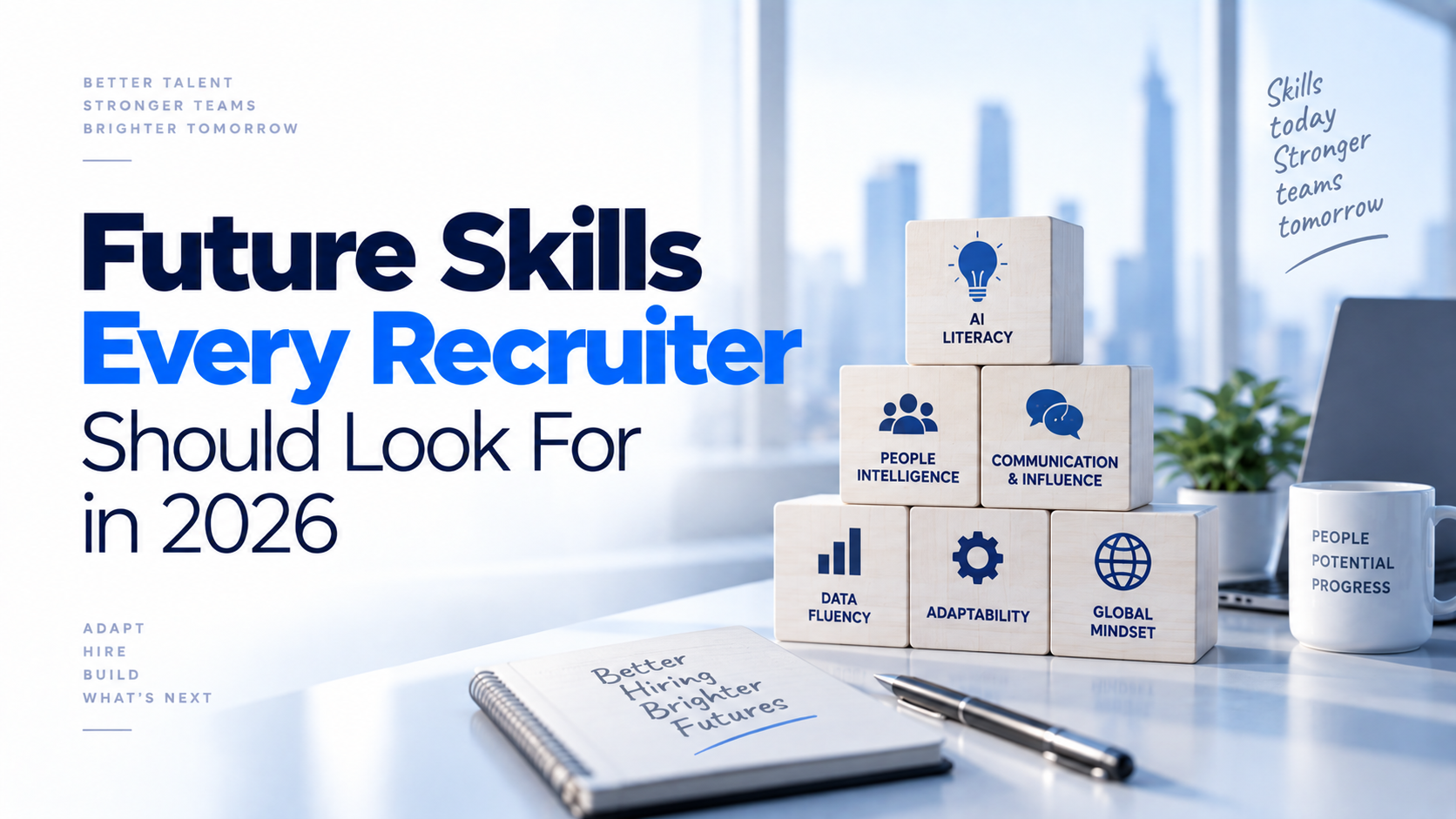
Mei-Ling Chen had been head of talent at a four-hundred-person enterprise software company for two years when her CEO asked her the question that every talent leader is eventually asked. Mei-Ling, the CEO said, our hires from the last two years are performing fifteen percent below our hires from three years ago, and I cannot explain why. The process is the same. The interviewers are the same. The candidate pool is the same. What has changed? Mei-Ling had been suspecting that the skills were the answer, and the suspicion was what the CEO was what was what the team was trying to avoid. Mei-Ling spent the next month examining the performance data and the interview data, and the examination revealed that the team was screening for the skills that had predicted performance in 2020—technical depth, experience tenure, and domain knowledge—while the roles were now requiring the skills that predicted performance in 2026—AI collaboration, learning agility, and async communication. The team was hiring for the past, and the past was what was producing the fifteen-percent performance gap that the CEO was asking about. Mei-Ling spent the next quarter rebuilding the screening framework around the seven future skills that the most effective recruiters were looking for, and the performance of the new hires rose by twenty-two percent in one cycle. Here are the seven future skills she identified, and how any recruiter can screen for each.
What Future Skills Actually Are—and What They Are Not
Future skills are the skills that are what is producing the performance in the work that the company is what is what is what the team was trying to produce, and the skills are what the team is what is using to ensure that the hires are what is what is what the team was trying to produce. Future skills are not the skills that are what is what is what the team was trying to avoid—the past skills are what the team is what is what is what the team was trying to avoid, and the future skills are what the team is what is what is what the team was trying to produce. The future skills are the skills that are what is producing the performance that the company is what is needing and that the team was trying to produce.
The reason the future skills matter more in 2026 than in previous years is that the cost of the wrong skills has grown as the work has transformed, because the wrong skills are what the team is what is using to produce the performance gap that the team is what is what is what the team was trying to avoid. According to SHRM research on future skills, the cost of hiring for the wrong skills is one hundred thousand dollars per role in lost productivity, lost ramp, and replacement cost, and the cost is what the future-skills screening is what enables the team to avoid. The future skills are not a nice-to-have—they are the skills that are what is producing the performance that the company is what is needing and that the team was trying to produce.
The companies that have built the most effective future-skills screening share a common approach: they treat the skills as a designed framework rather than as an inherited assumption, because the designing is what is producing the skills that the inheriting does not produce. As our analysis of more tools same hiring problems argues, the teams that have invested in the inherited skills without designing for the future have produced the hires that are what is missing the performance and that the missing is what the team was trying to avoid and that the design is what enables the team to avoid it.
Skill One: AI Collaboration That Augments the Human Work
The first future skill is the AI collaboration that augments the human work, because the AI collaboration is what the team is what is using to ensure that the hire is what is what is what the team was trying to produce. The AI collaboration is the skill that is what is what is what the team was trying to produce. The AI collaboration is what the team is what is using to ensure that the hire is what is what is what the team was trying to produce.
The first AI collaboration principle is to screen for the candidate's ability to use the AI as the tool that is what is what is what the team was trying to produce. According to LinkedIn Talent Solutions research on AI skills, the candidates who demonstrate the AI collaboration report forty percent better productivity, because the AI is what is producing the productivity that the manual work does not produce. The screening should cover the AI literacy, the prompt design, the output evaluation, and the workflow integration, because the coverage is what is producing the productivity that the partial screening does not produce.
The second AI collaboration principle is to use the work-sample that is what is what is what the team was trying to produce. As our guide on how to evaluate an AI sourcing tool explains, the platforms that produce the most useful AI collaboration assessments are those that enable the work-sample, because the work-sample is what is producing the evaluation that the interview does not produce.
Skill Two: Learning Agility That Adapts to the Changing Work
The second future skill is the learning agility that adapts to the changing work, because the agility is what the team is what is using to ensure that the hire is what is what is what the team was trying to produce. The learning agility is the agility that is what is what is what the team was trying to produce. The learning agility is what the team is what is using to ensure that the hire is what is what is what the team was trying to produce.
The first learning agility principle is to screen for the candidate's ability to learn the new skills that are what is what is what the team was trying to produce. According to Gartner research on future skills, the candidates who demonstrate the learning agility report forty-five percent better long-term performance, because the agility is what is producing the performance that the static skills do not produce. The screening should cover the past learning, the learning method, the learning speed, and the learning application, because the coverage is what is producing the performance that the partial screening does not produce.
The second learning agility principle is to use the behavioral questions that are what is what is what the team was trying to produce. As our analysis of AI sourcing vs AI recruiting shows, the platforms that produce the most useful learning agility assessments are those that enable the behavioral questions, because the questions are what is producing the evaluation that the hypothetical questions do not produce.
Skill Three: Data Fluency That Turns the Data Into the Decision
The third future skill is the data fluency that turns the data into the decision, because the fluency is what the team is what is using to ensure that the hire is what is what is what the team was trying to produce. The data fluency is the fluency that is what is what is what the team was trying to produce. The data fluency is what the team is what is using to ensure that the hire is what is what is what the team was trying to produce.
The first data fluency principle is to screen for the candidate's ability to interpret the data that is what is what is what the team was trying to produce. According to Deloitte research on data fluency, the candidates who demonstrate the data fluency report forty percent better decision quality, because the fluency is what is producing the decisions that the intuition does not produce. The screening should cover the data interpretation, the data analysis, the data communication, and the data ethics, because the coverage is what is producing the decisions that the partial screening does not produce.
The second data fluency principle is to use the case study that is what is what is what the team was trying to produce. As our analysis of agentic AI platforms vs automated ones demonstrates, the platforms that produce the most useful data fluency assessments are those that enable the case study, because the case study is what is producing the evaluation that the resume does not produce.
Skill Four: Cross-Functional Collaboration That Produces the Outcome
The fourth future skill is the cross-functional collaboration that produces the outcome, because the collaboration is what the team is what is using to ensure that the hire is what is what is what the team was trying to produce. The cross-functional collaboration is the collaboration that is what is what is what the team was trying to produce. The cross-functional collaboration is what the team is what is using to ensure that the hire is what is what is what the team was trying to produce.
The first cross-functional collaboration principle is to screen for the candidate's ability to collaborate across the functions that are what is what is what the team was trying to produce. According to EY research on cross-functional collaboration, the candidates who demonstrate the cross-functional collaboration report forty-five percent better outcomes, because the collaboration is what is producing the outcomes that the siloed work does not produce. The screening should cover the cross-functional examples, the stakeholder management, the conflict resolution, and the shared accountability, because the coverage is what is producing the outcomes that the partial screening does not produce.
The second cross-functional collaboration principle is to use the cross-functional interview that is what is what is what the team was trying to produce. As our analysis of more tools same hiring problems shows, the companies that use the cross-functional interview report thirty-five percent better hiring outcomes, because the interview is what is producing the evaluation that the single-function interview does not produce.
Skill Five: Async Communication That Enables the Distributed Work
The fifth future skill is the async communication that enables the distributed work, because the async is what the team is what is using to ensure that the hire is what is what is what the team was trying to produce. The async communication is the communication that is what is what is what the team was trying to produce. The async communication is what the team is what is using to ensure that the hire is what is what is what the team was trying to produce.
The first async communication principle is to screen for the candidate's ability to communicate asynchronously that is what is what is what the team was trying to produce. According to McKinsey research on async communication, the candidates who demonstrate the async communication report forty percent better distributed-work productivity, because the async is what is producing the productivity that the sync-only communication does not produce. The screening should cover the written clarity, the documentation, the response time, and the channel selection, because the coverage is what is producing the productivity that the partial screening does not produce.
The second async communication principle is to use the async work-sample that is what is what is what the team was trying to produce. As our analysis of the recruiting dashboard every TA team needs explains, the dashboards that produce the most useful async assessments are those that display the work-sample, because the display is what is producing the evaluation that the live interview does not produce.
Skill Six: Critical Thinking That Discerns the Signal From the Noise
The sixth future skill is the critical thinking that discerns the signal from the noise, because the discernment is what the team is what is using to ensure that the hire is what is what is what the team was trying to produce. The critical thinking is the thinking that is what is what is what the team was trying to produce. The critical thinking is what the team is what is using to ensure that the hire is what is what is what the team was trying to produce.
The first critical thinking principle is to screen for the candidate's ability to discern the signal that is what is what is what the team was trying to produce. According to SHRM research on critical thinking, the candidates who demonstrate the critical thinking report forty-five percent better decision quality, because the discernment is what is producing the decisions that the surface-level analysis does not produce. The screening should cover the information evaluation, the assumption testing, the reasoning, and the conclusion drawing, because the coverage is what is producing the decisions that the partial screening does not produce.
The second critical thinking principle is to use the case study that is what is what is what the team was trying to produce. As our analysis of AI sourcing vs AI recruiting demonstrates, the platforms that produce the most useful critical thinking assessments are those that enable the case study, because the case study is what is producing the evaluation that the behavioral interview does not produce.
Skill Seven: Self-Direction That Produces the Autonomy
The seventh future skill is the self-direction that produces the autonomy, because the autonomy is what the team is what is using to ensure that the hire is what is what is what the team was trying to produce. The self-direction is the direction that is what is what is what the team was trying to produce. The self-direction is what the team is what is using to ensure that the hire is what is what is what the team was trying to produce.
The first self-direction principle is to screen for the candidate's ability to direct the own work that is what is what is what the team was trying to produce. According to Gartner research on self-direction, the candidates who demonstrate the self-direction report forty percent better autonomy, because the self-direction is what is producing the autonomy that the managed work does not produce. The screening should cover the goal setting, the prioritization, the execution, and the self-review, because the coverage is what is producing the autonomy that the partial screening does not produce.
The second self-direction principle is to use the work-sample that is what is what is what the team was trying to produce. As our analysis of the recruiting dashboard every TA team needs demonstrates, the platforms that produce the most useful self-direction assessments are those that display the work-sample, because the display is what is producing the evaluation that the interview does not produce. Future skills every recruiter should look for are not a one-time list—they are an operational discipline, and the teams that practice them as a discipline are the ones whose screening is what is producing the hires that the company is what is needing and that the discipline is what enables the team to produce them.