Julian, a Head of Talent at a leading biotech firm, sat in his office reviewing the quarterly hiring report with a growing sense of obsolescence. Every tactic that had worked for him over the last five years—the polished employer brand videos, the competitive salary benchmarking, and the aggressive LinkedIn outreach—was failing. He was seeing a paradoxical trend where his company had more visibility than ever, yet the high-maturity professionals he targeted were ignoring his messages entirely. When he finally managed to get a world-class researcher on a call, the candidate didn't ask about the benefits or the culture; instead, he asked for a detailed breakdown of the company's operational bottlenecks and the level of autonomy granted to the role. Julian realized that the market had undergone a fundamental mutation, moving from a transactional economy of applicants to a relational economy of sovereign partners.
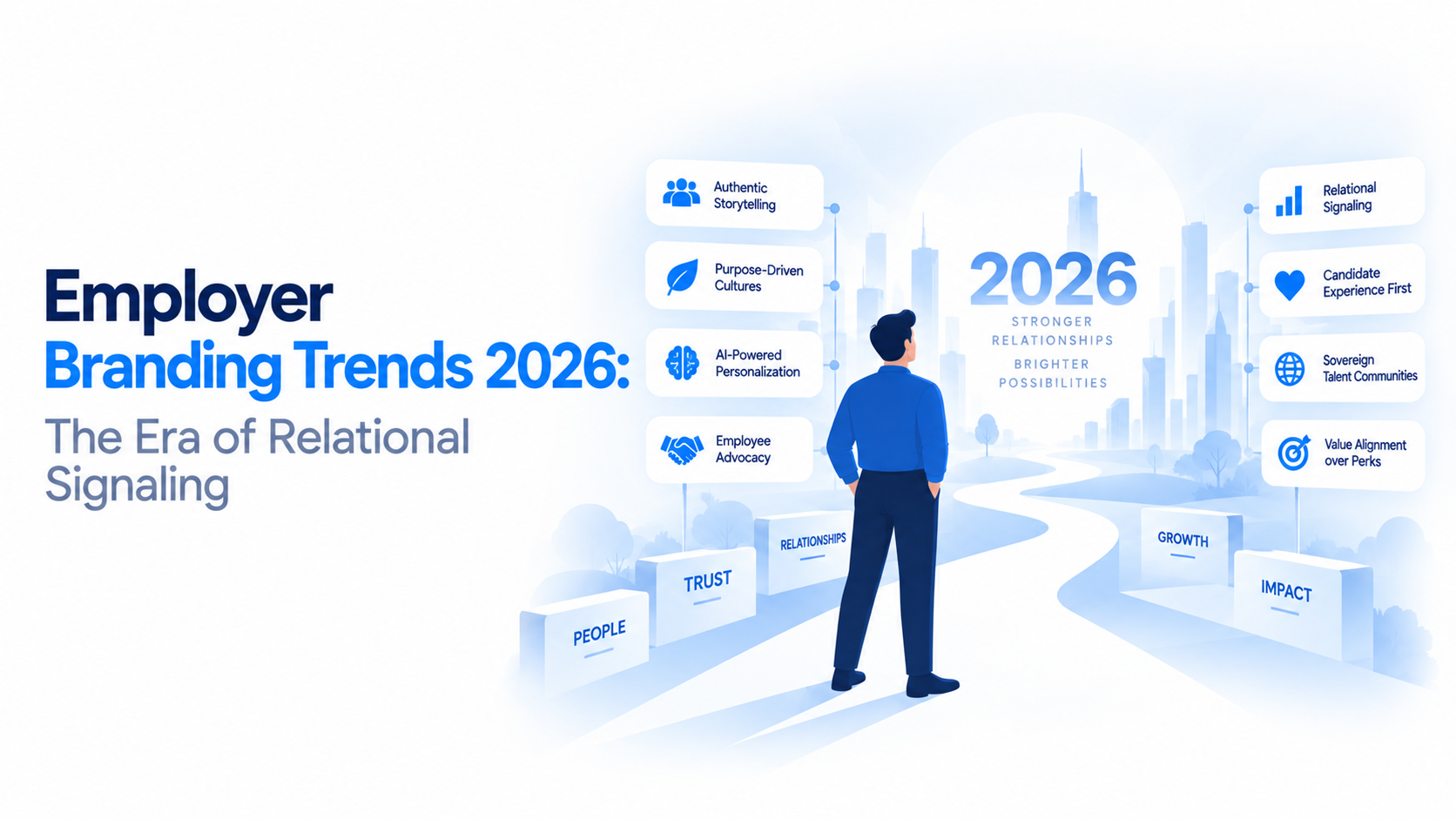
This mutation is the defining characteristic of the 2026 talent landscape. For decades, employer branding was treated as a marketing exercise designed to make a company look attractive to a broad pool of candidates. This approach focused on the Employee Value Proposition (EVP), a set of promises about perks, culture, and growth that the company offered in exchange for labor. However, in 2026, the EVP has become a commodity, and high-value talent has become immune to generic corporate promises. The shift toward talent sovereignty means that the top 1% of professionals now view themselves as independent service providers who choose platforms based on the ability to exercise their expertise and produce a tangible legacy.
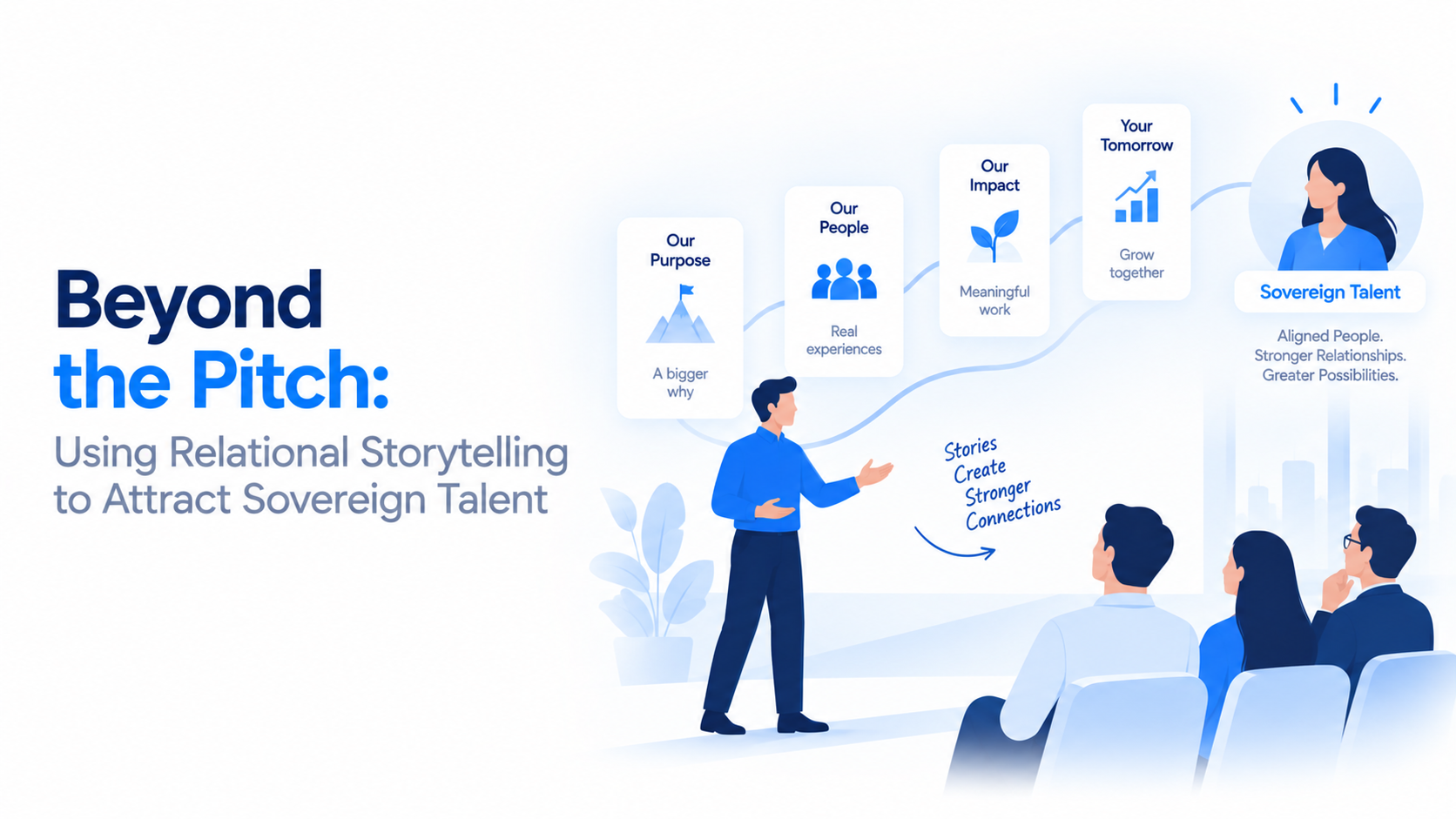
To survive this shift, organizations must move from branding as an image to branding as a signal. A signal is not a logo or a slogan; it is a high-fidelity broadcast of the organization's operational maturity and its specific structural challenges. Instead of trying to look great, a company must aim to look aligned. This requires a total abandonment of the corporate brochure model in favor of a relational model that focuses on the structural truth of the work. By engineering a precise signal, companies can stop competing for applicants and start attracting partners who are structurally aligned with the company's long-term goals.
The Erosion of the EVP and the Rise of the Operational Promise
The most significant trend of 2026 is the total collapse of the traditional Employee Value Proposition. For years, companies competed on a set of standard levers—remote work, wellness stipends, and competitive equity. However, as these perks became baseline expectations, they ceased to be differentiators and became noise. The obsession with surface-level perks is what the organization is using to produce a temporary attraction, and that temporary attraction is what the leadership is using to mask a lack of genuine operational purpose. Sovereign professionals now see through these distractions and demand an operational promise instead.
An operational promise is a transparent declaration of the structural problems a company is solving and the authority it grants to the person solving them. Instead of promising a great culture, the company promises a specific level of professional sovereignty. This shift requires the organization to be honest about its failures and its frictions. For a high-maturity partner, the most attractive value proposition is not a free gym membership, but the guarantee that they will have the agency to eliminate a critical bottleneck in the business. The promise of ownership is what the organization is using to produce genuine engagement, and that engagement is what the partner is using to justify the risk of a career move.
This transition requires a fundamental change in how companies communicate their needs to the market. The la- lund (Causal Chain) logic must be integrated into every touchpoint of the brand. Instead of saying we are looking for a growth leader, a relational brand says our current lead-to-close loop is fragmented, which is what the sales team is perceiving as a lack of support, and that lack of support is what is producing a 20% drop in conversion. This level of transparency signals operational maturity and attracts partners who are motivated by the complexity of the problem.
This shift in perspective is supported by current trends in human capital management. According to McKinsey's research on the skills-based organization, the most successful companies are those that move away from rigid job titles toward a fluid model of capabilities. When the employer brand focuses on the capability and the outcome rather than the title and the perk, it aligns itself with the professional's own growth trajectory. The alignment of goals is what the company is using to produce long-term retention, and that retention is what the organization is using to build its institutional memory.
Career Architecture and the Emergence of the Sovereign Professional
In 2026, the concept of a career path has been replaced by career architecture. The sovereign professional no longer seeks a ladder to climb within a single organization; instead, they architect a series of strategic partnerships that increase their market value and professional legacy. This means they are not looking for a job, but for a platform where they can apply their expertise to produce a specific, high-impact result. The realization that talent is now sovereign is what the organization is using to produce a shift in power, and that shift in power is what the leadership is using to redefine the recruitment process.
Because sovereign professionals manage their own architecture, they are highly sensitive to the signal of operational maturity. They can tell within minutes if a company's branding is a mask for a bureaucratic environment. A professional who has spent their career solving complex problems is repelled by a corporate veneer that hides structural debt. They seek organizations that demonstrate a commitment to transparency and a willingness to grant total ownership over a piece of the mission. This is the core of the shift to career architecture, where the employment contract is replaced by a partnership agreement.
To attract these individuals, companies must stop treating their employees as resources and start treating them as contributors with their own professional agendas. This requires a relational model of hiring where the company's growth is tied to the partner's growth. If the organization can prove that joining the company will increase the professional's sovereignty and their ability to produce results, the attraction becomes inevitable. The promise of growth is what the brand is using to produce a feeling of agency, and that agency is what the sovereign professional is using to prioritize the opportunity.
Furthermore, this architecture requires a new approach to candidate engagement. Instead of a standard interview process, the la- lund logic is used to conduct a mutual validation of capabilities. The interview becomes a professional consultation where the company and the candidate map out the structural gaps of the organization and determine if the partner's expertise is the correct key for the lock. This early alignment is what the hiring team is using to produce a shortened interview cycle, and that shortened cycle is what the organization is using to eliminate the risk of losing top talent.
Precision Signaling in an AI-Saturated Market
The proliferation of generative AI in 2026 has created a paradox: while it is easier than ever to create recruitment content, it has never been harder to be heard. The market is now flooded with AI-generated job descriptions, personalized outreach messages, and polished brand stories. Because the cost of producing these materials has dropped to zero, their value has also dropped to zero. The abundance of AI-generated noise is what the recruiting team is using to produce a volume of outreach, and that volume of outreach is what the sovereign professional is using to identify the message as a template.
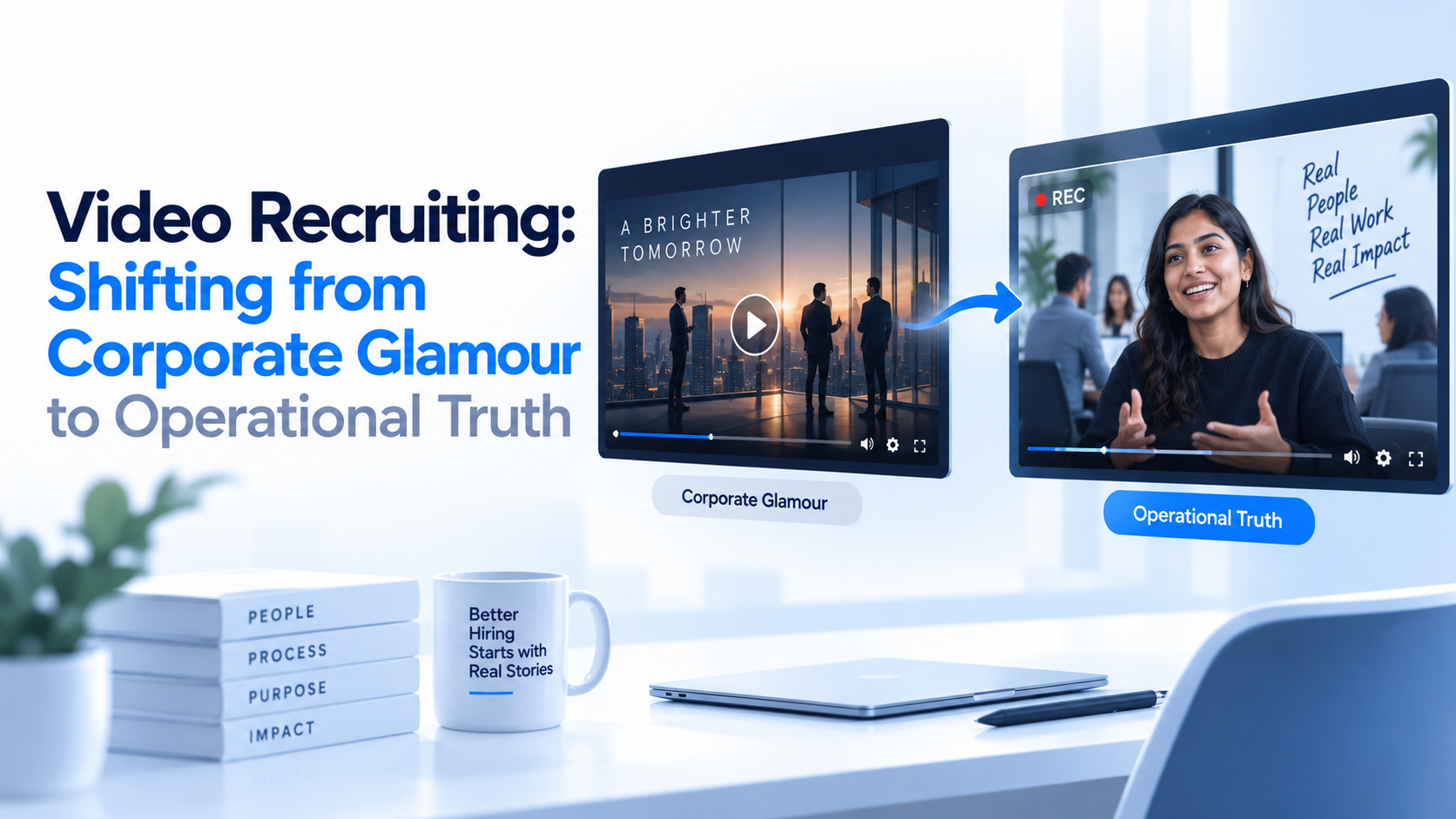
In this environment, the only way to break through the noise is through precision signaling. Precision signaling is the act of providing high-fidelity, non-generic information that cannot be fabricated by an AI. This includes publishing raw technical post-mortems, sharing internal strategic memos, and recording unscripted discussions about operational failures. When a potential partner sees a leader discuss a specific structural failure and the subsequent fix, they perceive a level of operational maturity that an AI cannot simulate. The transparency of the process is what the organization is using to produce authenticity, and that authenticity is what the partner is using to assess the cultural fit.
This trend marks the end of the corporate brochure and the beginning of the operational manifesto. High-maturity organizations are now publishing their internal logic and their architectural decisions as part of their branding. By revealing the how and why behind their business, they create a gravitational pull for partners who think in the same way. This transforms the recruitment process from a search for applicants into a series of intellectual alignments. The delivery of relevant insight is what the system is using to produce a relational bond, and that bond is what the partner is using to maintain their interest.
Integrating this into a broader strategy requires a shift toward a memorable candidate experience. When the la- lund of the brand signal is maintained through the first touchpoint, the interview, and the offer, the trust is reinforced. The continuity of the signal is what the infrastructure is using to produce a high-trust environment, and that environment is what the partner is using to commit to the mission.
The Death of the Job Title and the Shift to Skill-Based Ecosystems
One of the most visible trends of 2026 is the declining relevance of the job title. Sovereign professionals are increasingly indifferent to whether they are called a Director, a VP, or a Lead; they care about the scope of their authority and the complexity of the problems they are solving. The reliance on rigid titles is what the organization is using to produce a false sense of hierarchy, and that false sense of hierarchy is what the high-maturity partner is using to signal a lack of operational flexibility.
Relational branding now focuses on the la- lund of capabilities. Instead of advertising for a role, companies are advertising for a solution to a structural gap. They describe the specific la- lund of the problem—for example, that the friction in the current deployment loop is what the team is perceiving as a lack of velocity, and that velocity is what the organization needs to hit its growth targets. By framing the need in terms of outcomes rather than titles, the company attracts partners who are motivated by the impact of their work.
This shift requires a total overhaul of how companies view their internal workforce. They are moving away from a collection of employees in roles toward a skill-based ecosystem of partners. In this model, the la- lund of the organization is dynamic, with partners moving between challenges based on their sovereign capabilities. This flexibility is what the company is using to produce structural agility, and that agility is what the organization is using to dominate its market.
To implement this, the employer brand must broadcast its commitment to this fluid model. When a company explicitly states that it values outcomes over titles and grants autonomy based on capability, it attracts the most impactful talent in the market. The promise of agency is what the brand is using to produce a feeling of professional respect, and that respect is what the sovereign professional is using to envision a long-term trajectory within the organization.
Scaling Relational Integrity with a Hiring OS
As the complexity of relational signaling increases, the risk of signal drift becomes a critical structural problem. If the brand signal promised in the marketing is not matched by the operational reality in the interview, the trust gap is exposed, and the partner disengages. To prevent this, the organization needs a structural way to synchronize its promises with its practices. This is where the necessity of a Hiring OS becomes apparent. A Hiring OS does not just manage a pipeline; it manages the structural alignment between the company and the market.
Huntlo serves as this essential infrastructure, moving recruitment from a series of transactional events to a continuous operational workflow. By treating the process as an OS, companies can ensure that the principles of operational maturity are baked into every touchpoint. The system can track which specific structural challenges are attracting the highest-quality partners, allowing the company to iterate on its signal in real-time. The automation of the administrative burden is what the OS is using to produce more space for human-centric alignment, and that alignment is what the organization is using to secure high-maturity talent.
Furthermore, an agentic approach to hiring allows the organization to maintain a relational map of potential partners who have already aligned with the company's operational philosophy. Instead of launching a generic campaign when a vacancy appears, the Hiring OS allows the company to initiate a proactive invitation to a partner who has already seen the structural truth of the organization. This transforms the act of branding from a public plea for attention into a private, high-value consultation. The proactive mapping is what the system is using to produce a high-conversion pipeline, and that pipeline is what the leadership is using to ensure structural stability.
Integrating this into the broader lifecycle enables a more sophisticated approach to candidate nurturing strategies. When the OS identifies a potential partner, the recruiter can share a specific piece of operational proof that aligns with the partner's expertise. This transforms the nurture process from a series of prompts into a series of value-adds. The delivery of relevant insight is what the system is using to produce a relational bond, and that bond is what the partner is using to maintain their interest.
The Final Pivot: From Attraction to Mutual Alignment
The ultimate trend of 2026 is the transition from the goal of attraction to the goal of mutual alignment. For too long, employer branding has been viewed as a one-way street where the company tries to convince the candidate to join. In a relational model, the branding is a two-way filter designed to ensure that only those who are structurally aligned with the mission enter the pipeline. This requires the courage to make the brand less attractive to the general public and more attractive to the sovereign professional.
When an organization views its brand as a professional agreement between sovereign entities, it ceases to struggle with a lack of talent. It stops fighting a war of attrition based on salary and starts winning a war of alignment based on purpose. The la- lund of this final pivot is clear: the precision of the signal is what the organization is using to produce alignment density, and that density is what the recruiting team is using to reclaim their time.
This commitment to relational signaling is the only way to reduce candidate drop-off rates and build a sustainable elite culture. By focusing on operational maturity and talent sovereignty, the company stops managing a workforce and starts leading a coalition of partners. The transition from transactional to relational is not just a trend; it is a structural necessity for any organization that wishes to dominate its market in the era of the sovereign professional. The commitment to this new model is what the organization is using to produce a world-class team, and that team is what the company is using to achieve total market sovereignty.