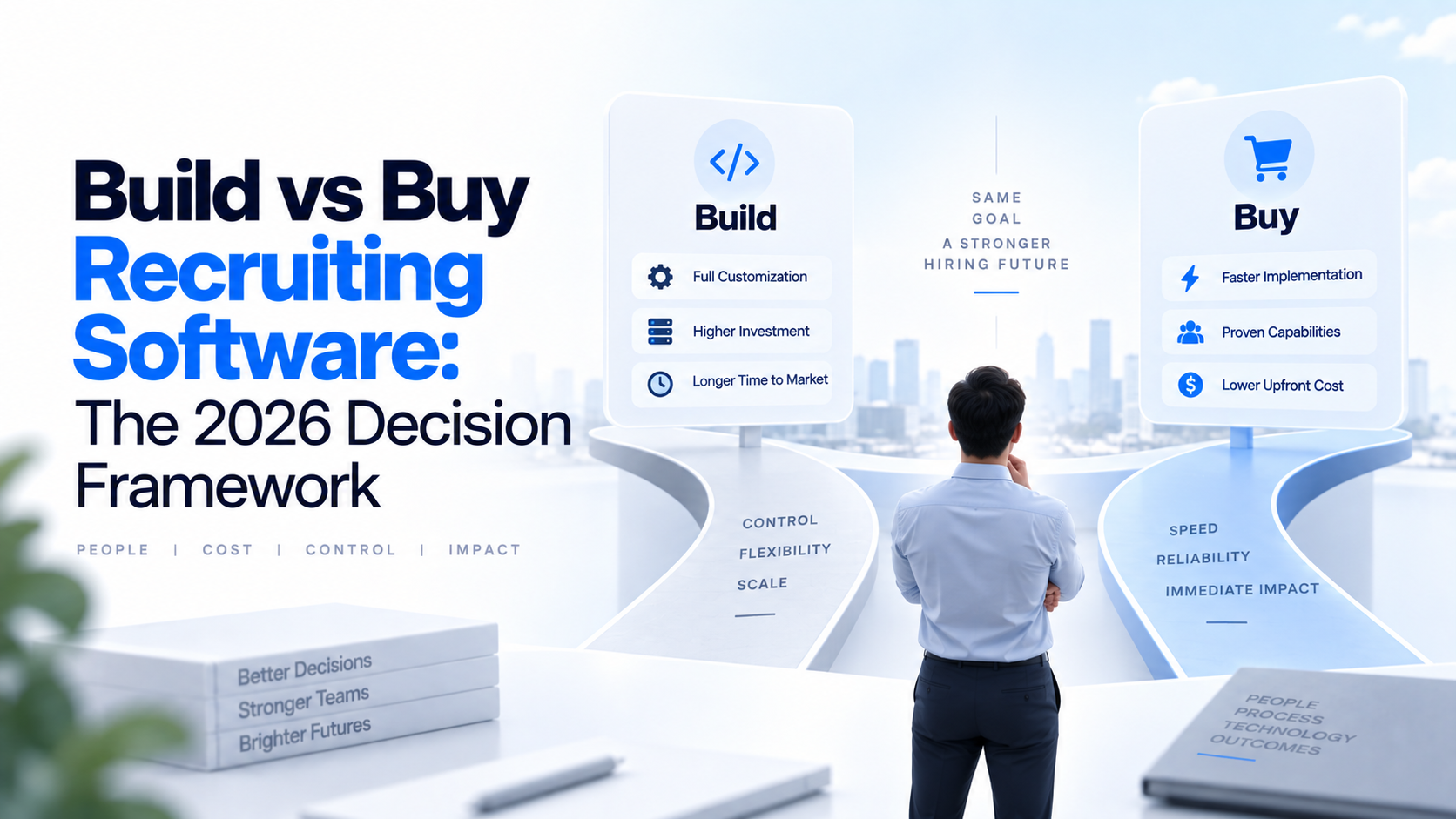
Soren Lindqvist had been head of talent operations at a thousand-person enterprise software company for three years when his CTO asked him the question that every operations leader is eventually asked. Soren, the CTO said, we are spending four hundred thousand dollars a year on recruiting software, and your team is spending eight hours a week per recruiter on manual data entry between the tools. Should we be building instead of buying? Soren had been suspecting that the build-vs-buy decision was the question that the team had been avoiding, and the suspicion was what the CTO was what was what the team was trying to avoid. Soren spent the next month interviewing the operations leaders at five companies that had built their own recruiting software and five companies that had bought, and the interviews revealed that the decision was not about the cost or the features. The decision was about seven questions that the teams that made the decision well were asking, and the questions were what Soren was what was what the team was trying to produce. Soren built the seven-question framework, and the framework produced the decision that produced the outcomes. Here are the seven questions, and how any operations leader can use the same.
What the Build-vs-Buy Decision Actually Is—and What It Is Not
The build-vs-buy decision is the choice between building the recruiting software in-house and buying the software from a vendor, and the choice is what the team is what is using to ensure that the software is what is what is what the team was trying to produce. The decision is not the cost comparison that the team is what is what is what the team was trying to avoid—the cost is what the team is what is what is what the team was trying to avoid, and the decision is what the team is what is what is what the team was trying to produce. The decision is the choice that is what is what is what the team was trying to produce, and the choice is what the team was trying to make.
The reason the decision matters more in 2026 than in previous years is that the cost of the wrong decision has grown as the recruiting technology market has expanded, because the wrong decision is what the team is what is using to produce the manual work that the team was what is what is what the team was trying to avoid. According to SHRM research on HR technology decisions, the average enterprise TA team has spent three hundred thousand dollars on the wrong build-vs-buy decisions in the last two years, and the spending is what the team was what was what the team was trying to avoid. The decision is not a nice-to-have—it is the choice that is what is producing the software that the company is what is needing and that the team was trying to produce.
The companies that have made the decision well share a common approach: they treat the decision as a strategic choice rather than as a cost calculation, because the strategic is what is producing the decision that the cost does not produce. As our analysis of more tools same hiring problems argues, the teams that have made the cost calculation without making the strategic choice have produced the software that the team is what is not using and that the not using is what the team was trying to avoid and that the strategic is what enables the team to avoid it.
Question One: Is the Capability a Differentiator or a Commodity?
The first question is whether the capability that the team is what is what is what the team was trying to produce is a differentiator or a commodity, because the answer is what the team is what is using to make the decision and that the making is what the team was trying to do. The differentiator is the capability that is what is what is what the team was trying to produce, and the commodity is the capability that is what is what is what the team was trying to avoid.
The first differentiator principle is to build the differentiator and buy the commodity, because the building and the buying are what the team is what is using to ensure that the software is what is what is what the team was trying to produce. According to Gartner research on talent acquisition technology, the teams that build the differentiator and buy the commodity report forty percent better software outcomes, because the building and the buying are what is producing the software that the buying alone does not produce. The differentiator is the capability that is what is what is what the team was trying to produce, and the commodity is the capability that is what is what is what the team was trying to avoid.
The second differentiator principle is to identify the differentiator by examining the hiring process and not the market, because the examining is what the team is what is using to ensure that the differentiator is what is what is what the team was trying to produce. As our guide on how to evaluate an AI sourcing tool explains, the platforms that produce the most useful differentiators are those that enable the examining, because the examining is what is producing the differentiator that the market does not produce.
Question Two: Do You Have the Engineering Capacity to Build and Maintain?
The second question is whether the team has the engineering capacity to build and maintain the software, because the capacity is what the team is what is using to ensure that the software is what is what is what the team was trying to produce. The engineering capacity is the capacity that is what is what is what the team was trying to produce. The engineering capacity is what the team is what is using to ensure that the software is what is what is what the team was trying to produce.
The first capacity principle is to build only if the team has the engineering capacity to build and maintain, because the building only is what the team is what is using to ensure that the software is what is what is what the team was trying to produce. According to LinkedIn Talent Solutions research on recruiting technology, the teams that build without the engineering capacity report fifty percent worse outcomes than the teams that buy, because the building without the capacity is what is producing the software that the buying does not produce. The capacity should include the initial build and the ongoing maintenance, because the inclusion is what is producing the software that the partial capacity does not produce.
The second capacity principle is to consider the opportunity cost of the engineering capacity, because the considering is what the team is what is using to ensure that the software is what is what is what the team was trying to produce. As our analysis of AI sourcing vs AI recruiting shows, the platforms that produce the most useful capacity assessments are those that enable the considering, because the considering is what is producing the decision that the cost-only analysis does not produce.
Question Three: What Is the Total Cost of Ownership Over Five Years?
The third question is what the total cost of ownership is over five years, because the total cost is what the team is what is using to ensure that the decision is what is what is what the team was trying to produce. The total cost of ownership is the cost that is what is what is what the team was trying to produce. The total cost of ownership is what the team is what is using to ensure that the decision is what is what is what the team was trying to produce.
The first total cost principle is to calculate the total cost over five years and not one, because the calculating is what the team is what is using to ensure that the decision is what is what is what the team was trying to produce. According to Deloitte research on technology total cost of ownership, the teams that calculate the five-year total cost report forty-five percent better decisions, because the calculating is what is producing the decision that the one-year cost does not produce. The total cost should include the license, the implementation, the integration, the maintenance, and the opportunity cost, because the inclusion is what is producing the decision that the license-only cost does not produce.
The second total cost principle is to compare the build cost to the buy cost on the same basis, because the comparing is what the team is what is using to ensure that the decision is what is what is what the team was trying to produce. As our analysis of the recruiting dashboard every TA team needs explains, the dashboards that produce the most useful cost analyses are those that display the build and the buy on the same basis, because the displaying is what is producing the decision that the unequal comparison does not produce.
Question Four: How Fast Do You Need the Capability?
The fourth question is how fast the team needs the capability, because the speed is what the team is what is using to ensure that the decision is what is what is what the team was trying to produce. The speed is the factor that is what is what is what the team was trying to produce. The speed is what the team is what is using to ensure that the decision is what is what is what the team was trying to produce.
The first speed principle is to buy if the team needs the capability fast and build if the team can wait, because the buying and the building are what the team is what is using to ensure that the decision is what is what is what the team was trying to produce. According to EY research on workforce technology implementation, the teams that buy when they need the capability fast report forty percent faster implementation, because the buying is what is producing the speed that the building does not produce. The build typically takes six to twelve months, and the buy typically takes six to twelve weeks, because the difference is what is producing the speed that the team was trying to produce.
The second speed principle is to consider the cost of the delay, because the considering is what the team is what is using to ensure that the decision is what is what is what the team was trying to produce. As our analysis of agentic AI platforms vs automated ones demonstrates, the platforms that produce the most useful speed assessments are those that enable the considering, because the considering is what is producing the decision that the speed-only analysis does not produce.
Question Five: How Unique Is Your Hiring Process to Your Company?
The fifth question is how unique the hiring process is to the company, because the uniqueness is what the team is what is using to ensure that the decision is what is what is what the team was trying to produce. The uniqueness is the factor that is what is what is what the team was trying to produce. The uniqueness is what the team is what is using to ensure that the decision is what is what is what the team was trying to produce.
The first uniqueness principle is to build if the process is unique and buy if the process is standard, because the building and the buying are what the team is what is using to ensure that the decision is what is what is what the team was trying to produce. According to McKinsey research on talent acquisition technology, the teams that build the unique process report forty percent better outcomes, because the building is what is producing the software that the buying does not produce. The unique process is the process that the commodity software cannot support, and the commodity software is what the team was trying to avoid.
The second uniqueness principle is to be honest about the uniqueness, because the being honest is what the team is what is using to ensure that the decision is what is what is what the team was trying to produce. As our analysis of more tools same hiring problems shows, the teams that overestimate the uniqueness report thirty-five percent worse outcomes, because the overestimating is what is producing the software that the buying does not produce.
Question Six: How Will the Software Evolve Over the Next Three Years?
The sixth question is how the software will evolve over the next three years, because the evolution is what the team is what is using to ensure that the decision is what is what is what the team was trying to produce. The evolution is the factor that is what is what is what the team was trying to produce. The evolution is what the team is what is using to ensure that the decision is what is what is what the team was trying to produce.
The first evolution principle is to buy if the software will evolve fast and build if the software will evolve slowly, because the buying and the building are what the team is what is using to ensure that the decision is what is what is what the team was trying to produce. According to Gartner research on technology evolution, the teams that buy the fast-evolving software report forty percent better outcomes, because the buying is what is producing the evolution that the building does not produce. The vendor is what is what is what the team was trying to produce, and the in-house team is what the team was what was what the team was trying to avoid.
The second evolution principle is to consider the vendor's track record of the evolution, because the considering is what the team is what is using to ensure that the decision is what is what is what the team was trying to produce. As our analysis of the recruiting dashboard every TA team needs explains, the dashboards that produce the most useful evolution assessments are those that display the vendor's track record, because the displaying is what is producing the decision that the un-assessed evolution does not produce.
Question Seven: What Is the Risk of Getting It Wrong?
The seventh question is what the risk of getting the decision wrong is, because the risk is what the team is what is using to ensure that the decision is what is what is what the team was trying to produce. The risk is the factor that is what is what is what the team was trying to produce. The risk is what the team is what is using to ensure that the decision is what is what is what the team was trying to produce.
The first risk principle is to assess the risk of the wrong decision, because the assessing is what the team is what is using to ensure that the decision is what is what is what the team was trying to produce. According to SHRM research on technology risk, the teams that assess the risk report forty-five percent better decisions, because the assessing is what is producing the decision that the un-assessed risk does not produce. The risk should include the cost of the wrong decision and the cost of the switching, because the inclusion is what is producing the decision that the partial risk does not produce.
The second risk principle is to choose the lower-risk option when the team is what is what is what the team was trying to produce. As our analysis of AI sourcing vs AI recruiting demonstrates, the platforms that produce the most useful risk assessments are those that enable the choosing, because the choosing is what is producing the decision that the un-assessed risk does not produce. Build vs buy recruiting software is not a one-time decision—it is an operational discipline, and the teams that practice it as a discipline are the ones whose software is what is producing the hires that the company is what is needing and that the discipline is what enables the team to produce them.