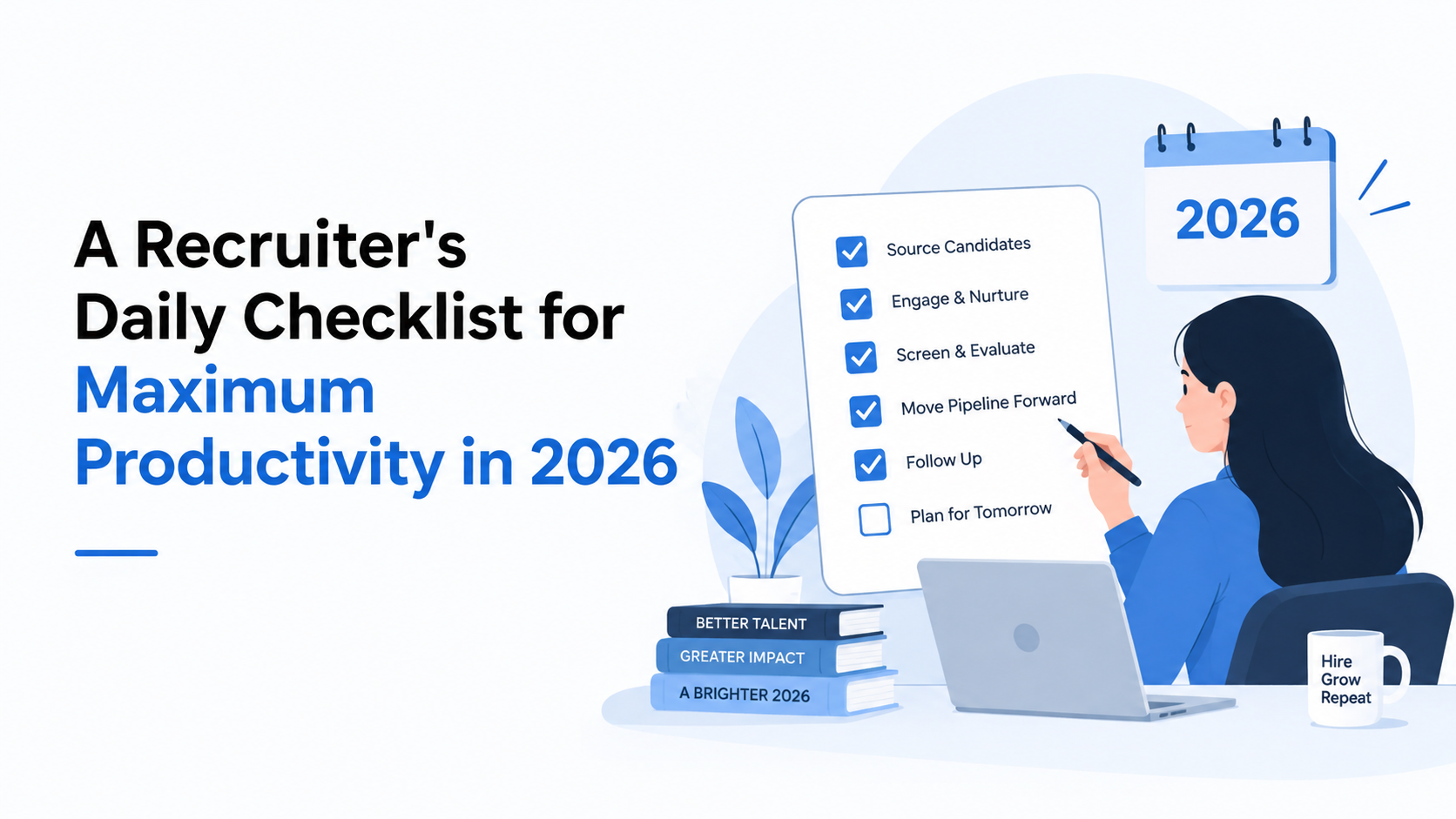
Watch two recruiters working the same desk, with the same tools, sourcing the same types of candidates for the same clients. One consistently fills 10 to 12 roles per quarter. The other struggles to close 4. The difference is rarely about effort. Both recruiters are busy all day. The difference is about structure. The high-performing recruiter follows a daily routine that front-loads the highest-value activities—candidate outreach, hiring manager alignment, and offer-stage management—during the hours when attention and energy are at their peak. The lower-performing recruiter reacts to whatever lands in their inbox, spends their best morning hours on administrative tasks, and finds that by the time they get to sourcing, the candidates they want to reach have already started their workday and are less responsive. Productivity in recruiting is not about working more. It is about sequencing your day so that the activities with the greatest impact on placement outcomes get the most time, the best energy, and the least interruption. This checklist is built from the observed routines of consistently high-performing recruiters and is designed to be adopted starting tomorrow.
Morning Block: High-Value Outreach and Pipeline Review
The first 90 minutes of the day are the most productive window a recruiter has, and the most common mistake is spending them on email and administrative tasks. Candidates are most responsive to outreach between 8:00 and 10:00 AM, before their own meetings consume their day. Hiring managers are most available for quick alignment conversations before their calendar fills up. The morning block should be protected ruthlessly from meetings, Slack notifications, and any activity that does not directly generate candidate engagement or advance an active search. This means closing email, silencing notifications, and working from a pre-planned list of outreach targets that was prepared the evening before.
The morning block should follow a specific sequence. First, 15 minutes reviewing pipeline status for your three to five most critical active searches—checking which candidates are at which stage, who needs a follow-up, and where the pipeline is thin. This quick scan ensures that your outreach is targeted toward the searches that matter most. Second, 60 minutes of dedicated candidate outreach—new sourcing messages, follow-ups with candidates who have gone quiet, and scheduling requests for candidates ready to advance. The goal is to send 25 to 40 personalized outreach messages during this block, each one referencing something specific about the candidate's background or career trajectory. LinkedIn response rate data shows that personalized messages receive 2 to 3 times the response rate of generic templates, making this investment in personalization one of the highest-return activities a recruiter can perform. Third, 15 minutes of hiring manager communication—quick updates on pipeline status, candidate feedback reminders, and any escalations that need attention.
The morning block is also the right time for competitive intelligence gathering. While reviewing candidate profiles and outreach responses, recruiters naturally encounter information about market movement—who is hiring, who is leaving, which companies are growing. SHRM talent acquisition best practices recommend capturing this intelligence in a structured format rather than letting it evaporate. A simple market notes section in your CRM or a shared team document that captures observations about competitor activity, compensation trends, and talent availability ensures that this valuable byproduct of sourcing work contributes to strategic conversations with clients and hiring managers.
Mid-Morning: Interview Coordination and Candidate Advancement
After the high-value outreach block, the next priority is advancing candidates through the process. This includes reviewing new applications and responses, scheduling interviews, preparing interview briefs, and conducting phone screens or first-round video interviews. These activities are time-sensitive because delays at any stage reduce candidate engagement and increase the probability of withdrawal. A candidate who applied on Monday and has not heard back by Thursday has already formed a negative impression of your process, regardless of how strong your employer brand is.
Interview scheduling should be automated wherever possible. Deloitte workforce research shows that manual interview scheduling consumes an average of 45 to 90 minutes per requisition per week for recruiting coordinators and recruiters. Self-scheduling tools that allow candidates to select from available interview slots reduce this to under 10 minutes per requisition and accelerate the time-to-interview by days. If your organization has not invested in automated scheduling, this is oneC opportunity where the ROI is immediate and measurable. If automated scheduling is not available, the mid-morning block should include a concentrated scheduling sprint where the recruiter coordinates as many interviews as possible in a single session rather than handling them one at a time throughout the day.
Phone screens and first-round interviews conducted during this block should follow a structured format. A consistent set of 8 to 10 questions for each role type, with a standardized scoring rubric, ensures that the screening process produces reliable evaluations and comparable data across candidates. McKinsey hiring process research shows that structured phone screens improve the predictive validity of the screening stage by 25 to 35 percent compared to unstructured conversations. This means the candidates you advance from structured screens are more likely to perform well in subsequent interviews and ultimately succeed in the role—directly improving your placement rate and reducing the number of interviews needed per hire.
Midday: Hiring Manager Collaboration and Feedback Collection
The middle of the day is the natural time for hiring manager interaction because most managers have completed their most focused morning work and are more accessible for recruiting-related conversations. This block should include three activities: collecting interview feedback from recent interviews, presenting new candidates for review, and conducting intake meetings for new requisitions. Each of these activities has a direct impact on pipeline velocity—the speed at which candidates move from one stage to the next—and pipeline velocity is one of the strongest predictors of recruiting success.
Collecting interview feedback is the activity most vulnerable to delay, and delay at this stage is one of the most common causes of candidate withdrawal. Gartner talent acquisition research found that the average time between a candidate interview and hiring manager feedback is 3.5 business days—and that every additional day of delay reduces the probability of the candidate remaining engaged by approximately 8 percent. The most productive recruiters do not wait for feedback. They follow up within 24 hours with a specific, time-bound request: "I would love to get your thoughts on the two candidates we interviewed yesterday. Can I grab 10 minutes at 2 PM today, or would you prefer to send feedback via email?" This proactive follow-up is not pestering—it is professional accountability that respects the candidate's time and the search's momentum.
Presenting new candidates to hiring managers during this block is most effective when done with a structured shortlist format. Rather than sending a resume with a one-line note, the productive recruiter presents each candidate with a brief summary of their relevant experience, assessment results, salary expectations, and availability—along with a specific comparison to the ideal candidate profile discussed in the intake meeting. This structured presentation format accelerates the hiring manager's evaluation by reducing the cognitive work required to assess each candidate and by surfacing the information most relevant to the decision. EY hiring efficiency research shows that structured candidate presentations reduce the time from candidate submission to hiring manager response by 40 to 50 percent compared to unstructured resume forwarding.
Afternoon: Deep Sourcing and Market Research
The afternoon is the right time for deep sourcing work that requires research, creativity, and strategic thinking. By this point in the day, the reactive tasks—outreach responses, scheduling, hiring manager communication—have largely been handled. The recruiter can now focus on building pipeline for future searches, researching new talent pools, and developing sourcing strategies for hard-to-fill roles. This proactive sourcing is what separates recruiters who always have a strong pipeline from those who are constantly scrambling to find candidates when a new requisition arrives.
Deep sourcing should target specific talent communities and skill sets rather than running generic searches across job boards. The most productive recruiters maintain a list of 10 to 15 talent communities—specific GitHub repositories, industry Slack channels, conference attendee lists, professional associations, and university alumni networks—where the candidates they most want to place are concentrated. They dedicate their deep sourcing time to engaging with these communities, building relationships, and identifying passive candidates who are not actively looking but would be open to the right opportunity. LinkedIn talent sourcing data shows that candidates identified through community engagement convert to interviews at 2.5 times the rate of candidates found through job board searches, because the recruiter has already established a point of connection and context before the outreach.
This block is also the time to evaluate and optimize your sourcing tools. Are your AI-powered sourcing platforms producing candidates who advance through the screening stage? Are your boolean search strings returning relevant results, or do they need refinement for current market conditions? Are the AI sourcing tools you are using delivering better outcomes than manual sourcing for the role types you are targeting? Periodic evaluation ensures that your sourcing technology investment is producing a return and that you are not relying on tools that have fallen behind the market. The most productive recruiters treat their sourcing tools the way a craftsperson treats their instruments—maintaining them, calibrating them, and replacing them when better options become available.
Late Afternoon: Offer Management and Candidate Closing
The late afternoon is when offer-stage activities deserve focus. This includes preparing offer packages, conducting offer calls, following up with candidates who have received offers, and managing candidates through the notice period. These activities are the highest-stakes moments in the recruiting process because they represent the culmination of all prior investment. Losing a candidate at the offer stage is the most expensive failure in the funnel, and the late afternoon block should be structured to maximize close rates.
Offer calls should always be conducted by phone or video—never by email alone. A verbal offer delivered with genuine enthusiasm, specific reasons why the candidate was chosen, and a clear picture of what success in the role looks like creates an emotional connection that an email cannot replicate. McKinsey research on candidate decision-making shows that candidates who receive a personal offer call are 35 to 45 percent more likely to accept compared to those who receive only a written offer, even when the compensation is identical. The phone call transforms a transactional exchange into a relationship moment, and relationships are what drive acceptance decisions.
Counteroffer management should begin before the offer is extended, not after the candidate calls to say they have received one. The most productive recruiters discuss the counteroffer possibility during the interview process, prepare candidates for the conversation they will have with their current manager, and schedule a check-in call within 24 hours of the offer acceptance to reinforce the decision. SHRM data indicates that candidates who have been prepared for counteroffers are 40 to 50 percent less likely to accept them compared to candidates who are caught off guard. This preparation is a five-minute conversation that can save weeks of re-sourcing effort.
End of Day: Planning Tomorrow and Updating Records
The final 20 to 30 minutes of the day should be dedicated to two activities: planning tomorrow's priority list and updating candidate records. Planning tomorrow means reviewing your active searches, identifying the three to five most important actions for the next morning block, and preparing the outreach list so you can start the day executing rather than planning. This preparation ensures that the most valuable 90 minutes of tomorrow are spent on high-impact activities from the first minute, not on figuring out what to do. The most productive recruiters never start their day wondering what to work on first. They already know, because they decided the night before.
Updating candidate records is the administrative task that most recruiters defer until it becomes overwhelming. But accurate, up-to-date records are the foundation of everything else on this checklist. Pipeline reviews are only useful if the pipeline data is current. Hiring manager presentations are only effective if candidate notes reflect the latest interactions. Sourcing strategies are only optimized if the outcomes of previous outreach are recorded so patterns can be identified. Deloitte data management research shows that recruiters who update records daily spend an average of 15 minutes per day on data entry, while those who batch updates weekly spend over 2 hours per session and have significantly higher error rates. Daily updates are faster, more accurate, and less burdensome than weekly batches.
The end-of-day planning routine should also include a quick win review—identifying one or two things that went well today and one thing to improve tomorrow. This micro-reflection takes 2 minutes and creates a continuous improvement loop that compounds over time. Recruiters who practice this daily reflection report steady improvements in their key metrics—placement rate, time-to-submit, offer acceptance rate—because they are constantly making small adjustments based on what they learned that day rather than repeating the same patterns week after week.
Weekly Review: Strategic Adjustments and Pipeline Health Check
The daily checklist ensures operational excellence. The weekly review ensures strategic alignment. Every Friday afternoon—or Monday morning before the daily routine begins—high-performing recruiters conduct a 30 to 60 minute strategic review that covers four areas: pipeline health by search, sourcing channel performance, hiring manager relationship status, and upcoming search priorities. This weekly cadence prevents the common trap of tactical myopia, where the recruiter is so focused on today's tasks that they miss emerging pipeline gaps or shifts in client needs.
Pipeline health by search means reviewing every active requisition and assessing whether the pipeline has enough qualified candidates at each stage to meet the hiring timeline. Gartner recommends a minimum pipeline coverage ratio of 3:1—three qualified candidates in the pipeline for every one hire needed. If any search falls below this ratio, the next week's sourcing plan should prioritize that search. Sourcing channel performance means reviewing which channels produced the most qualified candidates and placements this week, and whether any channels that are consuming budget are underperforming. This weekly channel review catches ROI problems early, before an underperforming channel burns through a full quarter's budget.
Hiring manager relationship status means assessing the quality of your partnership with each hiring manager. Are they providing timely feedback? Are they available for intake meetings? Do their requirements remain stable or are they constantly shifting? A hiring manager who is consistently slow with feedback or keeps changing the job requirements is not just a process bottleneck—they are a placement risk that needs to be managed proactively. Agentic AI platforms can help manage some of this complexity by automating routine hiring manager interactions, but the strategic relationship management still requires the recruiter's personal attention and judgment.
Adapting the Checklist to Your Context
This checklist is a framework, not a rigid prescription. Every recruiter operates in a different context—different time zones, different candidate populations, different hiring manager expectations, different technology stacks. The key principles are universal—front-load high-value outreach, protect your morning block, advance candidates proactively, prepare tomorrow today—but the specific timing and emphasis should be adjusted based on your reality. A recruiter working with candidates on the US West Coast might shift their outreach block later in the morning to align with candidate availability. A recruiter in a high-volume, low-complexity environment might spend less time on deep sourcing and more on screening and scheduling. A recruiter working with executive candidates might front-load relationship-building calls over transactional outreach.
McKinsey productivity research emphasizes that the most effective daily routines are the ones that become automatic through repetition. A checklist that requires constant conscious effort to follow will be abandoned within weeks. A checklist that becomes habitual—where the recruiter naturally reaches for their outreach list at 8 AM without thinking about it—produces sustained productivity gains over months and years. The way to build this automaticity is to start with a simplified version of the checklist—perhaps just the morning outreach block and the end-of-day planning routine—and then add additional elements as the initial habits solidify. Trying to adopt every element simultaneously is the most common reason productivity routines fail. Start small, build momentum, and expand gradually. The recruiters who follow this approach consistently outperform those who attempt a complete routine overhaul on day one, because sustainable habits always beat unsustainable ambition.